
 English
 Українська
 Български
 Hrvatski
 Čeština
 Dansk
Dansk Nederlands
 Eesti
Eesti Suomi
Suomi Français
 Deutsch
 Ελληνικα
 Magyar
 Íslenska
 Italiano
 Latviešu
 Lietuvos
 Polski
 Português
 Română
 Русский
 Српски
 Slovenčina
 Slovenščina
 Español
 Svenska
 Türkçe
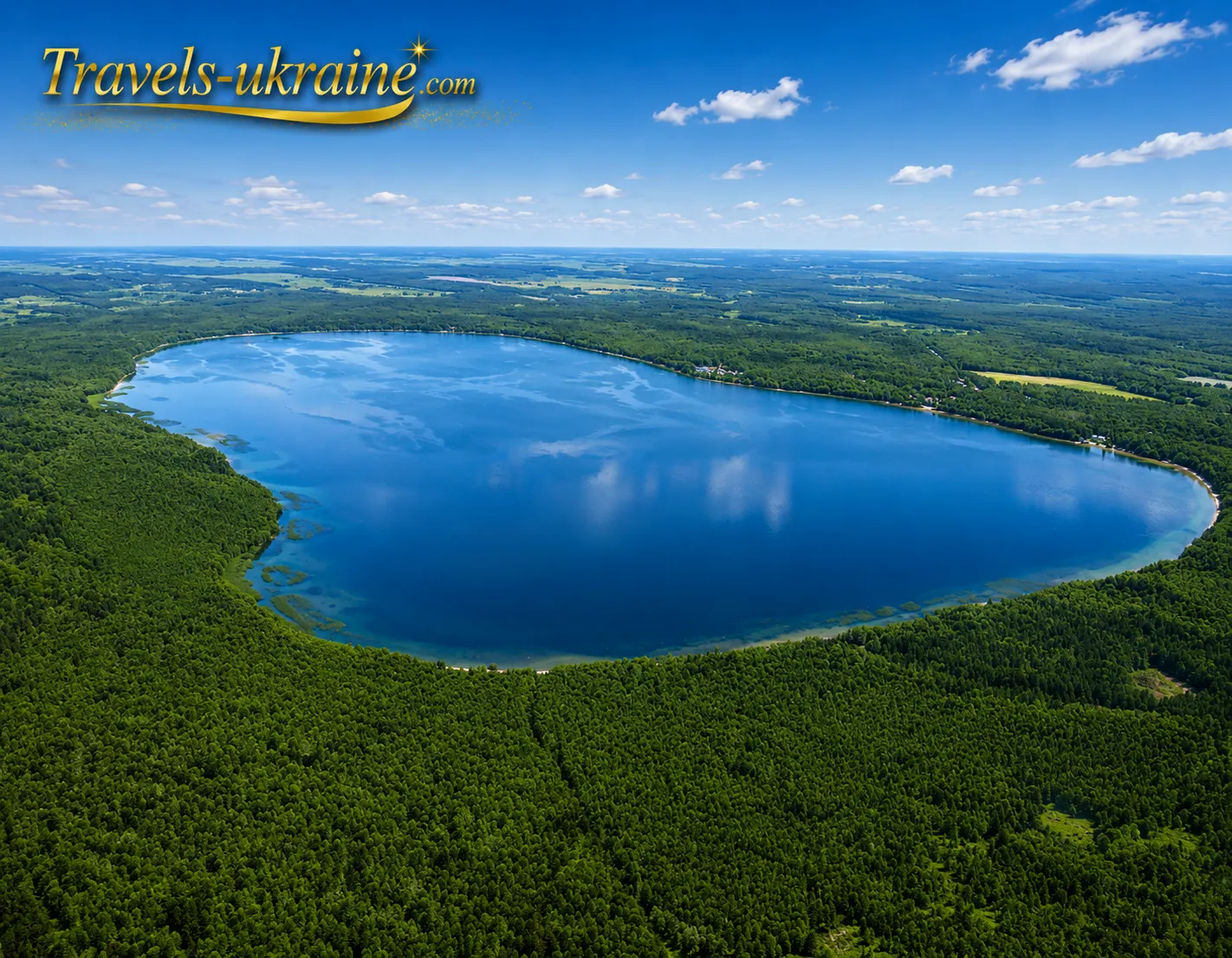
White Lake is one of those natural places in Ukraine that people visit not only for swimming or beautiful photographs, but also for a special sense of calm. There is no urban bustle here, no noisy promenades and no random tourist chaos. Instead, there is clear water, the gentle air of Polissia, pine forests, sandy shores and the kind of silence that is rarely found at popular holiday destinations.
The water has brought this natural retreat particular fame: it is soft to the touch, transparent and has unusual properties, which is why White Lake is often called the glycerine lake of the Rivne region. Its natural composition includes organic compounds that create this delicate “glycerine” effect — after swimming, the skin feels softer, while simply being in the water brings a sense of lightness. It is thanks to this feature that Polissia’s best-known lake has gained a reputation as a place where an ordinary lakeside break is combined with a feeling of well-being.
Why visit White Lake in the Varash district
The lake near the village of Rudka is ideal for travellers seeking a natural atmosphere rather than a lively resort. In the warmer months, you can swim, walk along forest paths, observe nature, enjoy a picnic or simply spend a few hours by the water without a fixed plan. For many visitors, this very simplicity becomes the greatest value of the trip.
This place is particularly appealing because it combines several travel advantages at once: it is suitable for a short trip, naturally beautiful, known for its unusual water, surrounded by Polissian landscapes and filled with a sense of space and tranquillity. White Lake in the Styr River basin is connected to the natural systems of Polissia, so it feels not like an isolated body of water, but part of a vast living landscape of forests, wetlands, birds, fish and seasonal changes in nature. This destination is therefore ideal:
- For families — a peaceful lakeside break with walks, swimming and a picnic by the water.
- For weekend travellers — a convenient idea for a short escape into nature without a complicated route.
- For ecotourism enthusiasts — an opportunity to experience the nature of Polissia without unnecessarily disturbing its rhythm.
- For those seeking silence — a lake surrounded by forest, where you will want to switch off your phone and simply spend time beside the water.
What this travel guide covers
In this article, we take a detailed look at where White Lake is located, how to reach it from different directions, what makes its “glycerine” water special, what to see nearby, which rules and practical points to consider before travelling, and how to plan a travel route so that your journey is comfortable and safe. We also explore the history of the area, its natural features and infrastructure, camping advice, environmentally responsible behaviour and common questions travellers have before their visit.
White Lake is more than just a point on the map of the Rivne region. It is a natural body of water that teaches you to slow down, look more closely and appreciate Ukrainian landscapes without unnecessary noise. Whether you are looking for a lakeside camping spot, a peaceful weekend escape or a first introduction to the nature of Polissia, this destination certainly deserves your attention.
The history and natural features of White Lake in the Rivne region
The history of White Lake begins not with chronicles or famous tourist routes, but with the nature of Polissia. This karst lake formed over a long period under the influence of groundwater, chalk deposits and natural processes that gradually created a deep basin filled with clean, soft and luminous water. This is why White Lake in the Rivne region should be seen not only as a holiday destination, but as a natural place with its own geological history and untamed character.
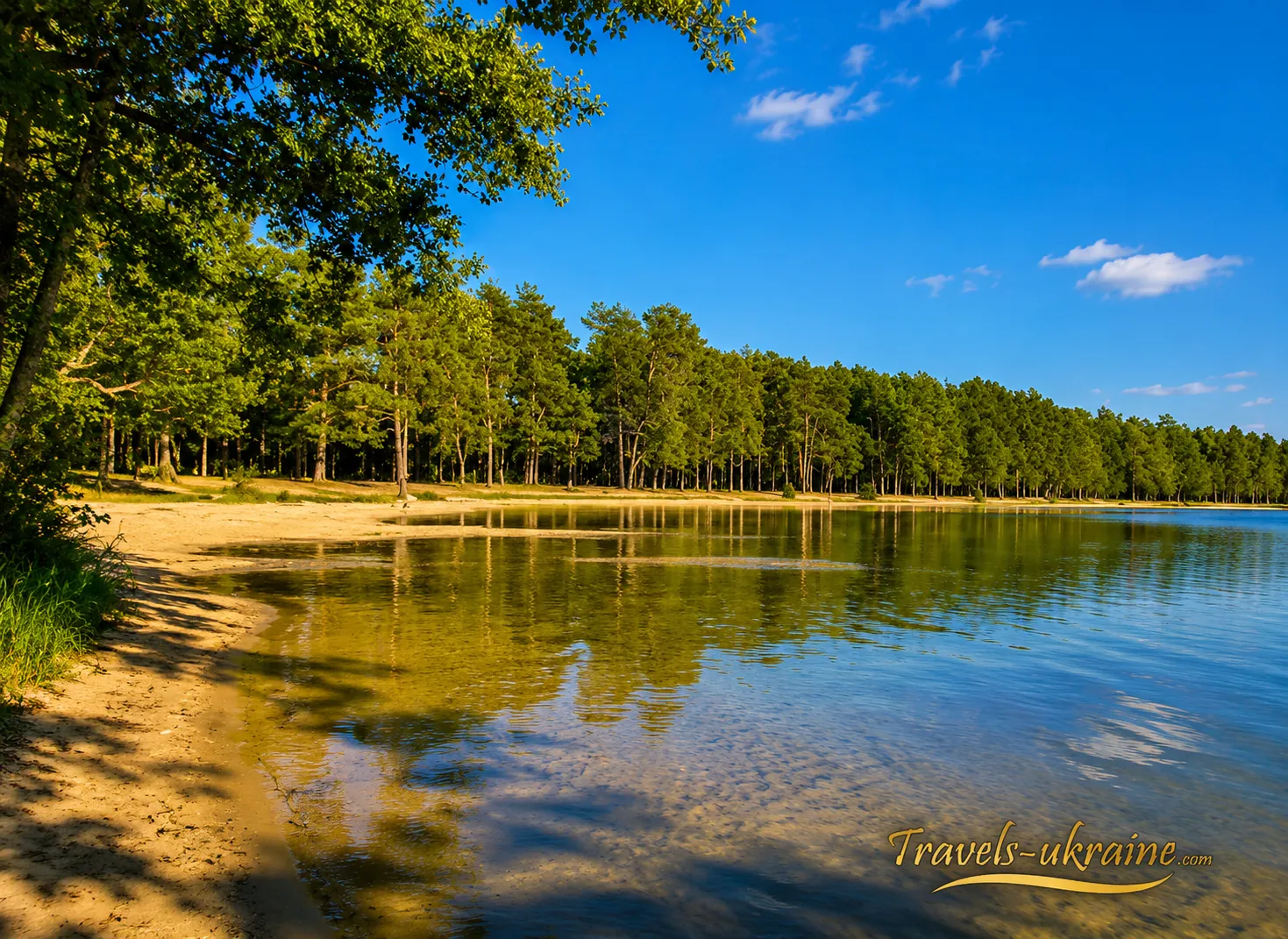
To a traveller, the name “White Lake” sounds simple and poetic, yet it reflects a specific natural feature. The lake bed has a pale colour because of the chalk deposits, making the water appear clearer and brighter than in many other lakes of Polissia. Combined with stretches of sandy shore, pine forest and open sky, this creates the distinctive scenery that has made the lake one of the best-known bodies of water in the region.
It is important to understand that “white” in the name does not describe the literal colour of the water. The water is neither milky nor cloudy. On the contrary, it is attractive precisely because of its clarity, softness and unusual pale tint, which results from the natural composition of the lake bed and changing light conditions. At different times of day, the lake can look completely different: silvery and calm in the morning, bright and open at midday, and deeper, darker and almost mirror-like in the evening.
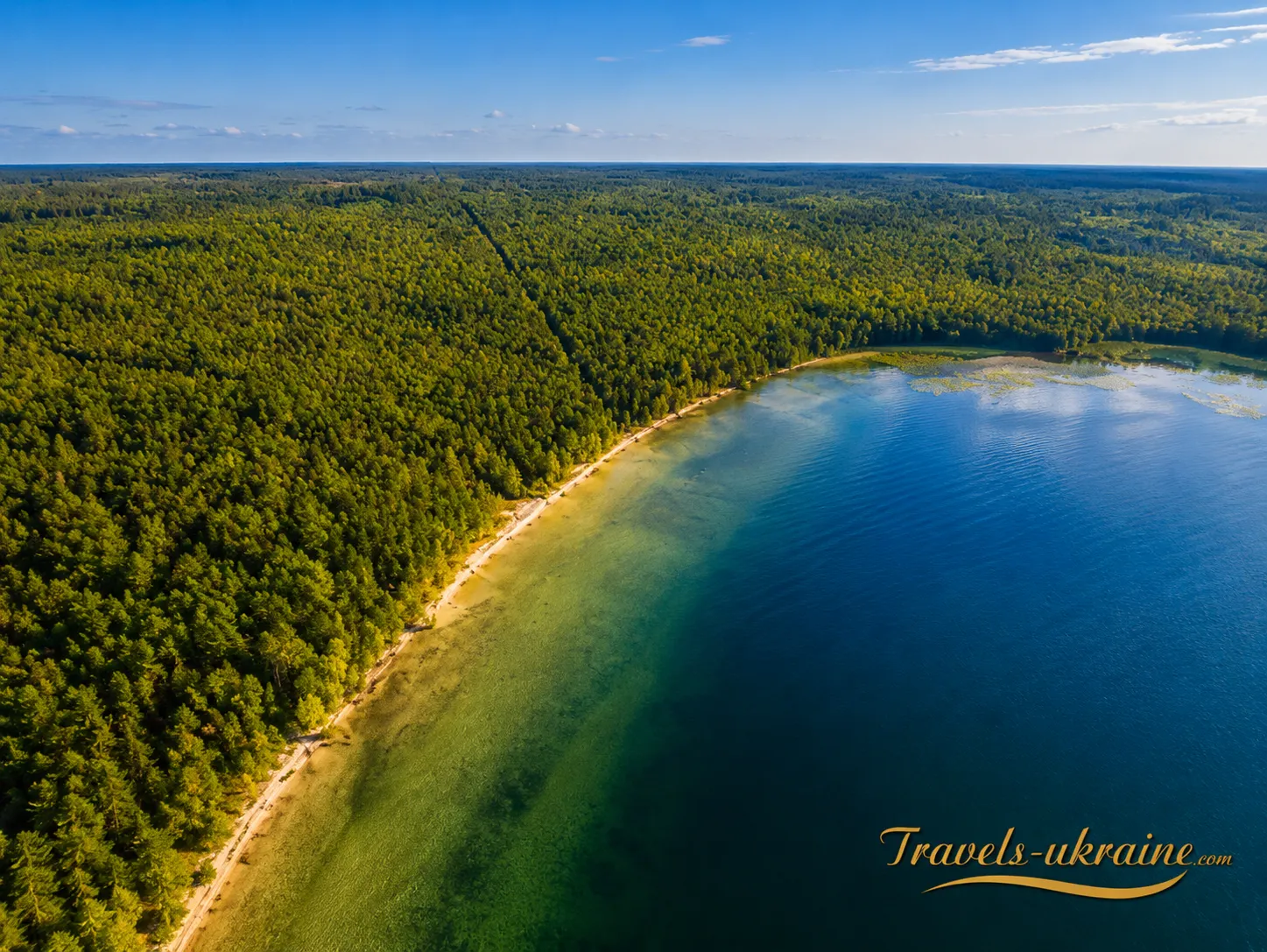
Hydrographically, White Lake belongs to the Styr River basin and covers an area of approximately 453 hectares. To put this into perspective, it is not simply another Polissian lake, but the second-largest lake in the Rivne region. Its scale is what makes it so impressive: standing on the shore, the water seems broad, open and almost endless, while the line of forest on the opposite side only enhances the sense of natural depth and silence.
The picturesque lake consists of two funnel-shaped basins that together form a single natural body of water. This feature explains its character, underwater relief and the noticeable variation in depth across different parts of the lake. The bottom is far from uniform: beneath the calm surface lies a complex natural landscape shaped by groundwater, chalk deposits and long geological processes. The maximum depth of White Lake therefore continues to interest travellers and researchers. Different sources cite figures of around 22 and 26 metres, while the greatest recorded depth reaches 34 metres. Some individual areas may appear even deeper.
How White Lake became a tourist destination in the Rivne region
White Lake did not become popular in a single season or through high-profile advertising. At first, this Polissian lake was well known mainly to local residents, anglers, visitors from nearby villages and those who had spent their summers here for years. Genuine tourist interest began to grow when the internet revealed its power: photographs of transparent water, pine-covered shores and morning mist, along with videos of soft light over the lake, spread quickly across social media, travel pages and blogs.
People saw these images and increasingly asked themselves a simple question: can scenery like this really be found in Ukraine? This is how White Lake near Rudka gradually evolved from a local recreation spot into a recognisable tourist destination in the Rivne region. The photographs and videos showed more than a beautiful view — they conveyed the atmosphere: clear water, silence, forest freshness, a broad expanse of water and a feeling of space often missing from city life. The internet achieved what word-of-mouth recommendations once did, sharing the emotion of the place with thousands of people at once.
Interest in the lake later grew further with the development of tourism in the region. The Rivne region increasingly came to be seen not simply as an area to pass through, but as a destination for nature-based holidays, short weekend trips, camping and family breaks. Against this background, White Lake in the Varash district became particularly prominent: it combines accessibility, a large surface area, forested shores, opportunities to relax by the water and its own natural “legend”, unlike that of any other lake in Ukraine.
The water itself has played a special part in the lake’s popularity, earning it the frequent nickname glycerine lake. Laboratory studies have reportedly confirmed the absence of harmful bacteria in the water, as well as an elevated glycerine content of more than 6 milligrams per litre. This characteristic is said to explain the softness of the water and the “silky” sensation often described by visitors after swimming. As a result, the lake has gained a reputation as a place where an ordinary lakeside holiday is combined with a sense of natural rejuvenation.
At the same time, it is important to discuss this responsibly: White Lake should not be regarded as a medical resort or a substitute for treatment. Its value lies in the natural composition of the water, the clean air, the silence of the forest and the opportunity to restore your energy while spending time closer to nature.
What to remember about the history of White Lake
- White Lake is of karst origin, so its natural shape and depth are connected with ancient geological processes.
- The lake’s name is linked to its pale bed, which gives the water its characteristic clear, whitish tint.
- White Lake in Polissia has long been part of the natural life of the area, rather than merely a modern tourist destination.
- The lake’s popularity has grown because of its soft “glycerine” water, forest atmosphere and opportunities for a peaceful break beside the water.
- Protected status: White Lake forms part of the Biloozerskyi Nature Reserve.
The history of White Lake is therefore a combination of geology, nature, local memory and the gradual transformation of a quiet body of water into a well-known tourist destination in the Rivne region. This is precisely where its special charm lies: the lake does not feel as though it was created for tourists. It existed long before popular travel routes appeared, and that is why it retains such a strong sense of authenticity.
White Lake: a quick guide for travellers before visiting
White Lake in Polissia is best visited with an understanding of its natural character. This is not a conventional urban resort with neat avenues, dense development and services available at every turn. It is a large lake surrounded by forest, where water, air, space and silence take centre stage. A trip here will therefore especially appeal to those who value eco-friendly recreation, lake swimming, camping or a peaceful weekend escape.
By its very nature, this unique body of water is suited not to rushing or noisy entertainment, but to a slower rhythm: walking along the shore, swimming, observing nature, reading beside the water, enjoying a morning coffee in the fresh air or spending an evening near your tent. This is when the lake reveals itself at its best.
- Type of destination: natural lake, Polissian body of water and ecotourism location.
- Suitable for: families, couples, friends, weekend travellers, campers and anyone who enjoys peaceful natural surroundings.
- Best season: late spring, summer and early autumn, when the weather is comfortable for walking, swimming and spending time by the water.
- Trip format: a day trip, a weekend or several days with an overnight stay at a recreation centre or in a tent.
If your aim is simply to see White Lake, walk along the shore, take a few photographs and experience the atmosphere, several hours will be enough. However, such a trip will feel more like an introduction than a complete break. To truly appreciate the character of the place, plan at least half a day: arrive without rushing, spend time beside the water, walk through the forest, enjoy a light picnic and wait for the evening light over the lake.
Your budget will depend on the type of trip you choose. The simplest option is a one-day journey in your own car, with snacks, water, a picnic blanket and minimal travel costs. A more comfortable choice is an overnight stay at a White Lake recreation centre or in a cottage near the water. Nature lovers may prefer a separate option — camping in a tent — but this should be planned responsibly and only in authorised areas.
Before travelling, remember to budget for fuel or other transport, food, accommodation, gazebo hire and any additional services you may need. During the high season, prices and availability can change quickly, so it is best to book accommodation or confirm the conditions in advance. White Lake is especially popular in summer, and warm weekends tend to attract the largest number of visitors.
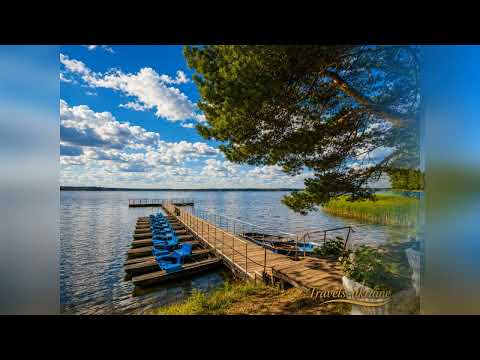
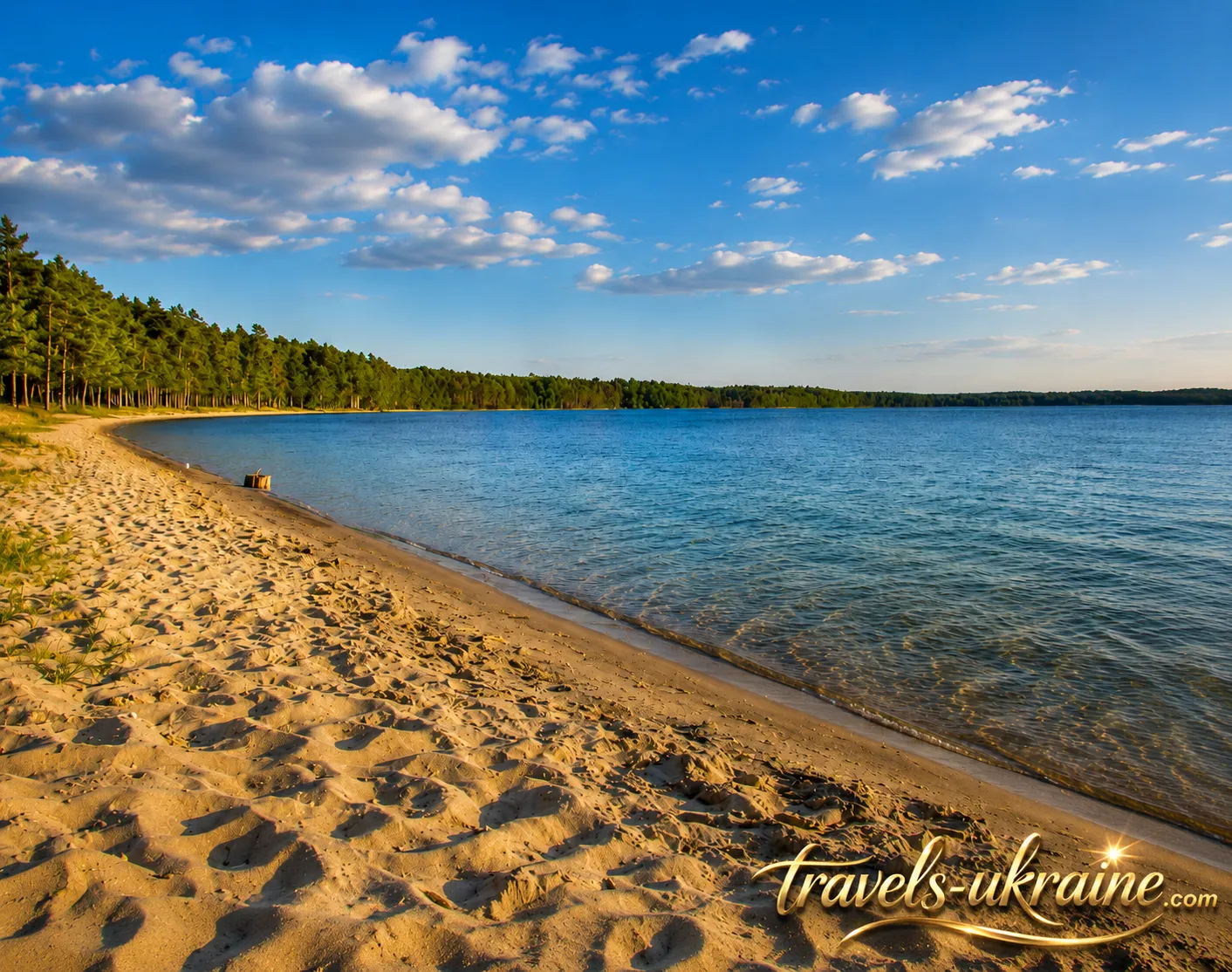
Photo and video gallery
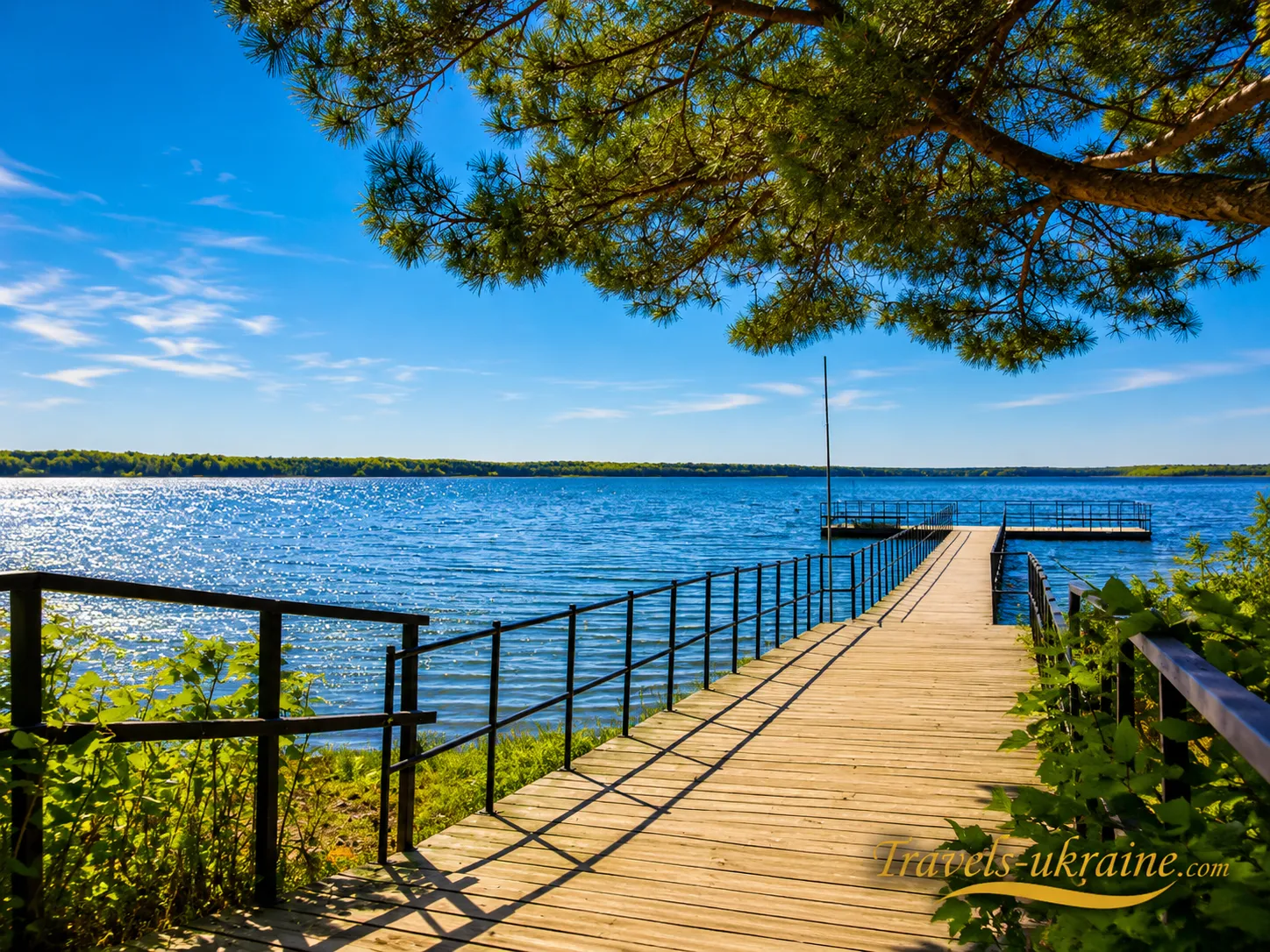
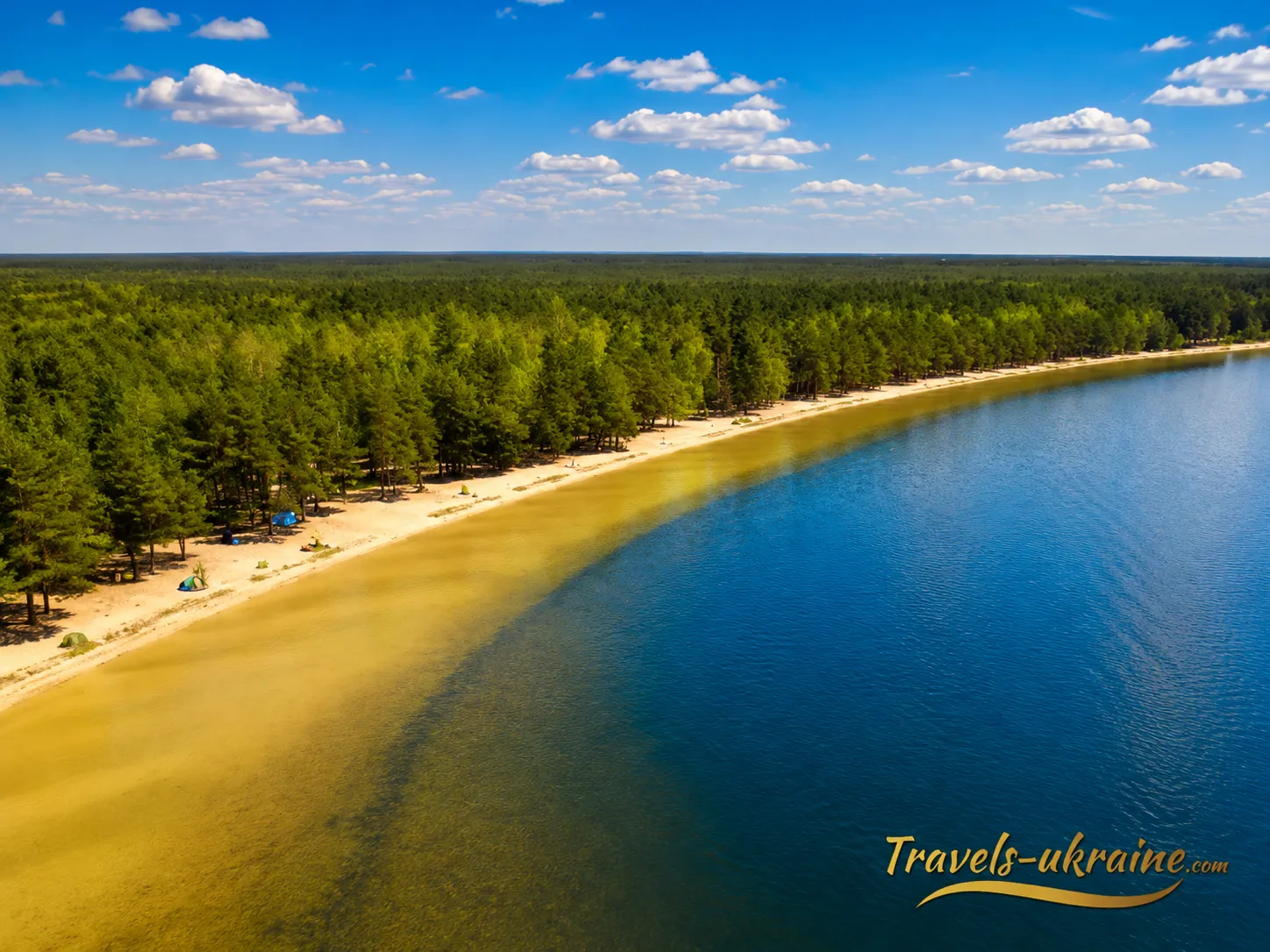
Interesting facts about White Lake in the Rivne region
This picturesque lake in Polissia is fascinating for more than its clear water, sandy shores and forest silence. Over time, a rich collection of stories, observations and local tales has grown around the lake, making it feel even more alive to visitors. Some facts can be explained by geology, water chemistry and natural processes; others survive as legends passed from person to person, adding a particular sense of mystery.
It is in these details that White Lake reveals its deeper character. It is no longer simply a place for swimming or a picnic, but somewhere where the real features of the landscape intertwine with imagination, local memory and travellers’ stories. Here, it is easy to understand how a single lake can simultaneously be an ecotourism destination, a setting for family holidays and photography trips, and a source of legends.
Fact one: White Lake is the best-known body of water in the Rivne region
White Lake in the Rivne region is regarded as one of the area’s most prominent natural attractions. Its scale is apparent as soon as you reach the shore: the surface does not feel enclosed or narrow. Instead, it opens into a wide expanse where the sky, pine forest and transparent water seem to merge into a single Polissian landscape. This combination of natural beauty has made White Lake a place increasingly discussed not only within the Rivne region, but far beyond it.
Interestingly, in terms of attention on social media, travel blogs and summer itineraries, White Lake now confidently competes with Volyn’s famous lake destinations — the Shatsk Lakes and Lake Svityaz itself. While Svityaz has long been considered a classic Ukrainian lakeside destination, the lake in the Rivne region offers a different attraction: soft “glycerine” water, a pale lake bed, forest silence and the atmosphere of a less commercialised yet wonderfully vibrant natural place. This is why many travellers looking for new destinations for a weekend trip increasingly choose this Polissian lake instead of the familiar route to Volyn.
This variety is an important advantage for visitors. White Lake offers different holiday moods: closer to the developed areas, there are more people, services and facilities; farther from the busier zones, there is more silence, nature and a sense of seclusion. You can easily spend a few hours by the water, enjoy a picnic, stay in a tent or plan an entire weekend trip. This flexibility makes White Lake one of the most appealing alternatives to the popular lake resorts of western Ukraine.
Fact two: glycerine water has become the lake’s main attraction
The best-known feature of White Lake is its soft “glycerine” water. Because of the reported elevated glycerine content, this Polissian body of water is often called a healing lake in the Rivne region. The water feels pleasant and silky to the touch, gentler than that of many ordinary lakes, and after swimming it leaves a sense of freshness, lightness and softer skin. This natural quality has become the lake’s main attraction and has gradually turned it into one of the Rivne region’s best-known lakeside destinations.
Over time, special historical tales have also formed around the water. They say that when these lands were under Polish rule, a narrow-gauge railway was built to White Lake. It was used to transport not only timber, but also lake water, which was carried in large tankers to Warsaw. The story becomes even more remarkable with the mention of the wife of Poland’s head of state: according to the tale, this soft “glycerine” water was delivered specifically for her therapeutic baths.
Of course, this story should be regarded neither as a dry archival document nor merely as a legend, but as an event that may have occurred. It clearly shows how long people have noticed the unusual properties of White Lake’s water and how highly they valued it. After all, few natural lakes are surrounded by a story about water that may have been transported specially to the capital of another country for the well-being of a woman from the highest political circles.
It is also worth noting that the story of White Lake’s water being transported to Warsaw should not be dismissed entirely. The history of Ukrainian lands includes many examples of natural resources — fertile soil, forests, mineral raw materials and water — attracting the special attention of different authorities and administrations. Even discussions about the removal of Ukrainian black soil during wartime illustrate how valuable Ukraine’s natural resources have been considered. The account of transporting “glycerine” water from White Lake therefore does not sound like an impossible fantasy, but like a story that may well have had a basis in reality.
Fact three: White Lake follows the rhythm of wild Polissia
This Polissian lake in the Rivne region is not an isolated body of water, but part of a much larger landscape. It is surrounded by forests, wetlands, sandy shores and natural areas important to local flora and fauna. This is why a visit here is not only about swimming, but also about looking carefully around you: listening to birds, noticing plants near the water and watching the light change over the lake throughout the day.
This is where the place’s special value lies. A break at White Lake is not only about a sun lounger, swimming or photographs. It is an opportunity to experience living nature, where every season has its own character. In spring, you can sense the forest awakening; in summer, the warmth of the water and the scent of pine; and in autumn, the silence, clear air and gentle colours along the shore.
These interesting facts help visitors see the lake in greater depth rather than only at surface level. It attracts people not merely through its clean water or online popularity, but through its own character: natural, slightly mysterious, peaceful and unmistakably Polissian. That is why White Lake in the Varash district remains a place people wish to return to — not only for a holiday, but also for the feeling of living history.
What to see and do at White Lake
At White Lake, impressions are not measured by the number of attractions or loud entertainments. Its greatest strength lies in nature, space and silence. There is no need to rush here; instead, allow the place to reveal itself gradually: first take in the broad expanse of water, then breathe in the scent of the pine forest, walk along the shore, touch the soft “glycerine” water and only then understand why this Polissian lake has become so popular with travellers.
A holiday here can take many different forms. For some, it means swimming and sunbathing; for others, camping by the lake, a picnic in the shade of the trees, a morning walk, a photo shoot on the shore or a peaceful weekend trip. White Lake is equally well suited to family holidays, romantic breaks and trips with friends, especially when you are looking for genuine contact with nature rather than noise.
Swimming and relaxing beside clear water
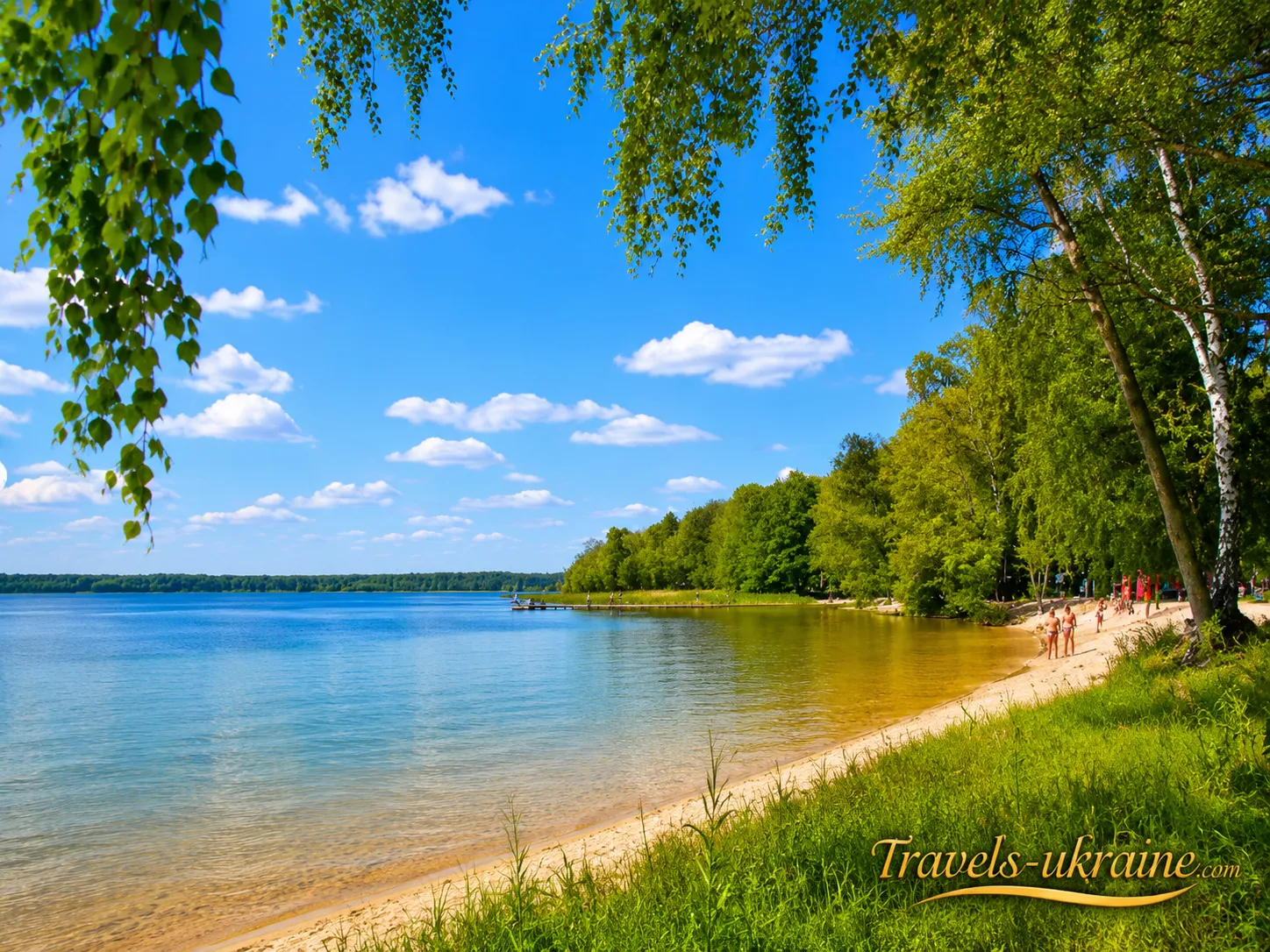
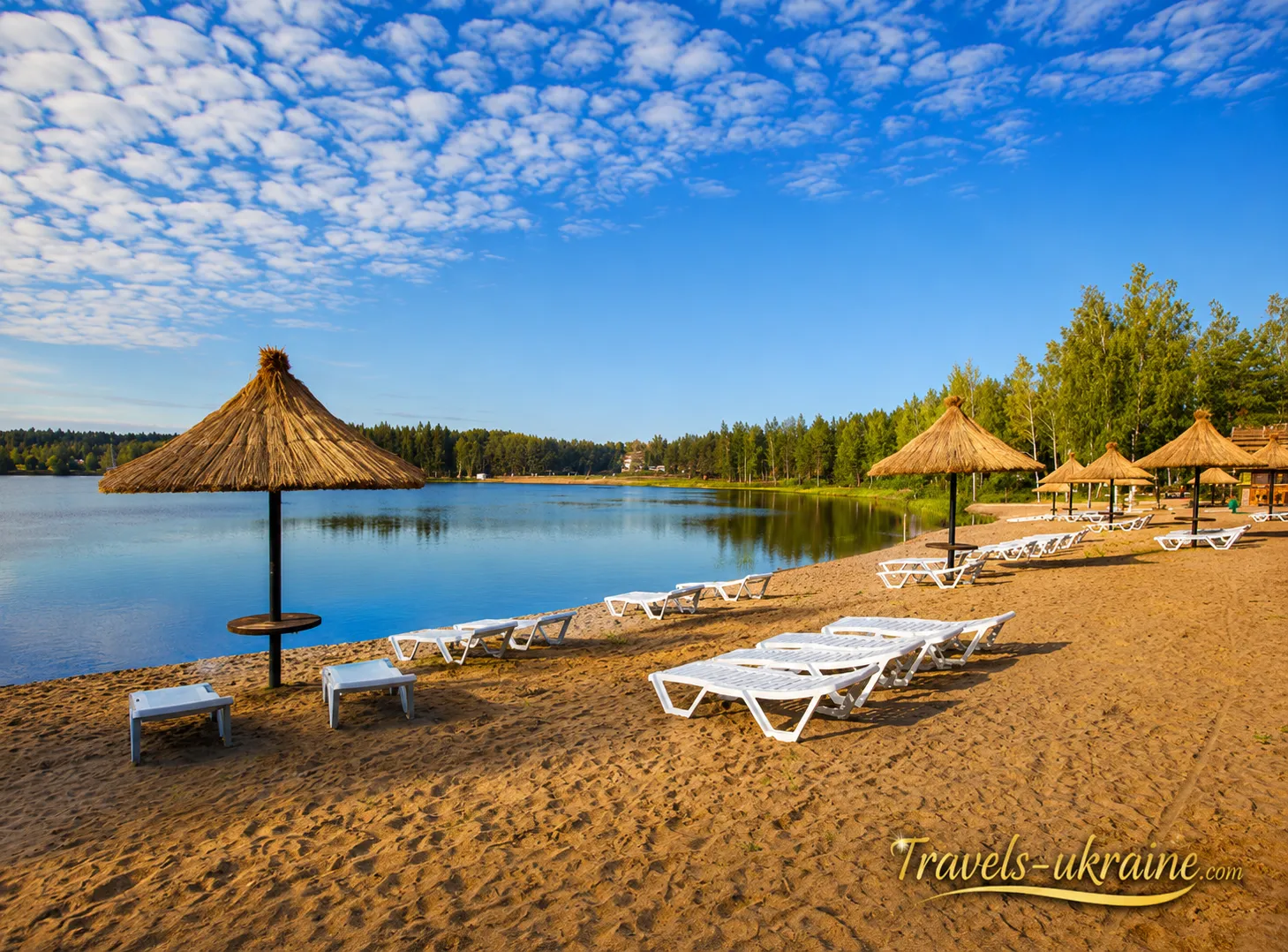
The main reason people visit during the warmer months is swimming. The water in White Lake has a distinctive softness and feels pleasant to the touch, without the harsh sensation of hard water, while leaving a light feeling of freshness. This natural feature turns an ordinary outdoor break into a memorable travel experience.
For safe swimming, it is best to choose familiar, open and properly prepared sections of the shore. White Lake is significantly deep and has an uneven lake bed, so you should not swim far from shore without experience, jump into the water in unfamiliar places or leave children unattended. The safest approach is calm swimming near the shore, using authorised bathing areas and always putting personal safety first.
Walking along the shore of White Lake through the Polissian forest
Simply walking along the shore is a pleasure in itself. The lakeside has a strong natural character: pine trees, sandy stretches, forest shade, the scent of needles, birdsong and an expanse of water that constantly changes with the light. There is no need to seek out a complicated route — sometimes a slow walk is enough to experience the atmosphere of the place.
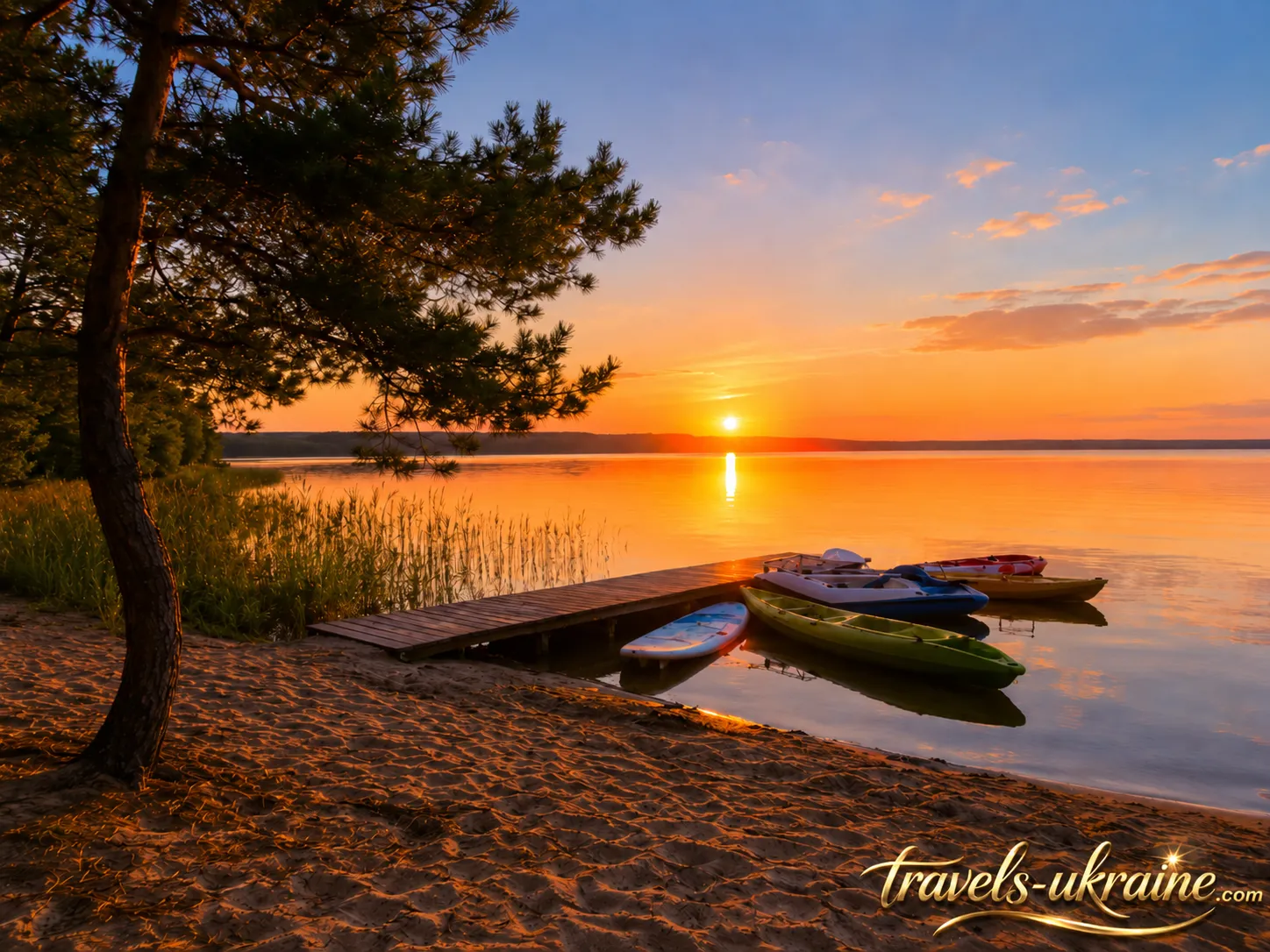
The loveliest hours for walking are morning and evening. In the morning, a light haze may hover above the water, the forest feels cooler and the lake becomes almost mirror-like. By evening, the light softens, the water grows darker and the shore takes on a particular stillness. It is at these moments that White Lake in the Rivne region reveals itself most fully to those who have come not only to swim, but also to experience living nature. The lake is highly photogenic, and it is worth capturing not only classic lakeside shots but also smaller details: waves reaching the shore, sunlight glinting on the water, mist above the surface, footprints in the sand, boats and the evening sky.
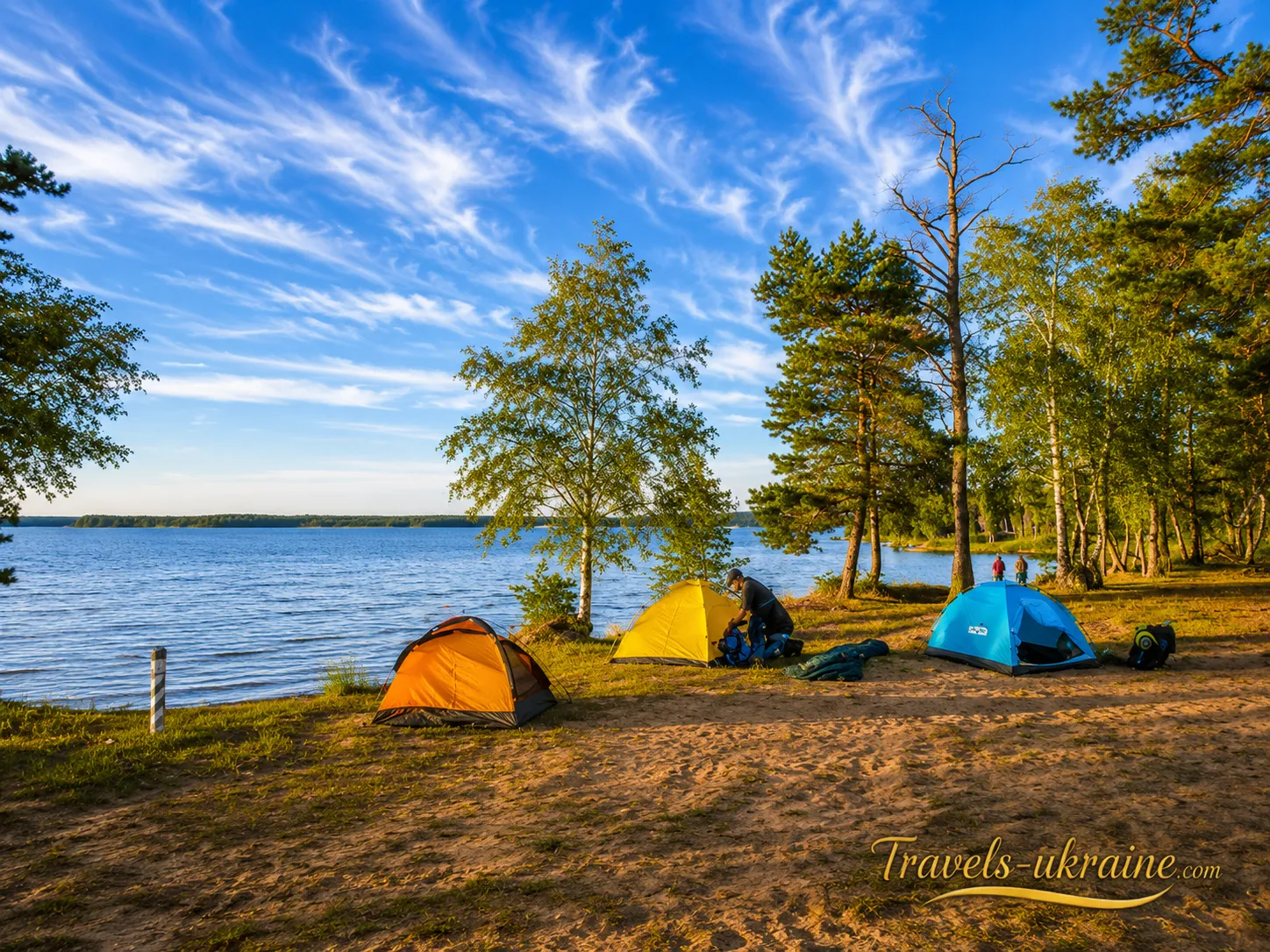
Camping at White Lake and staying in a tent
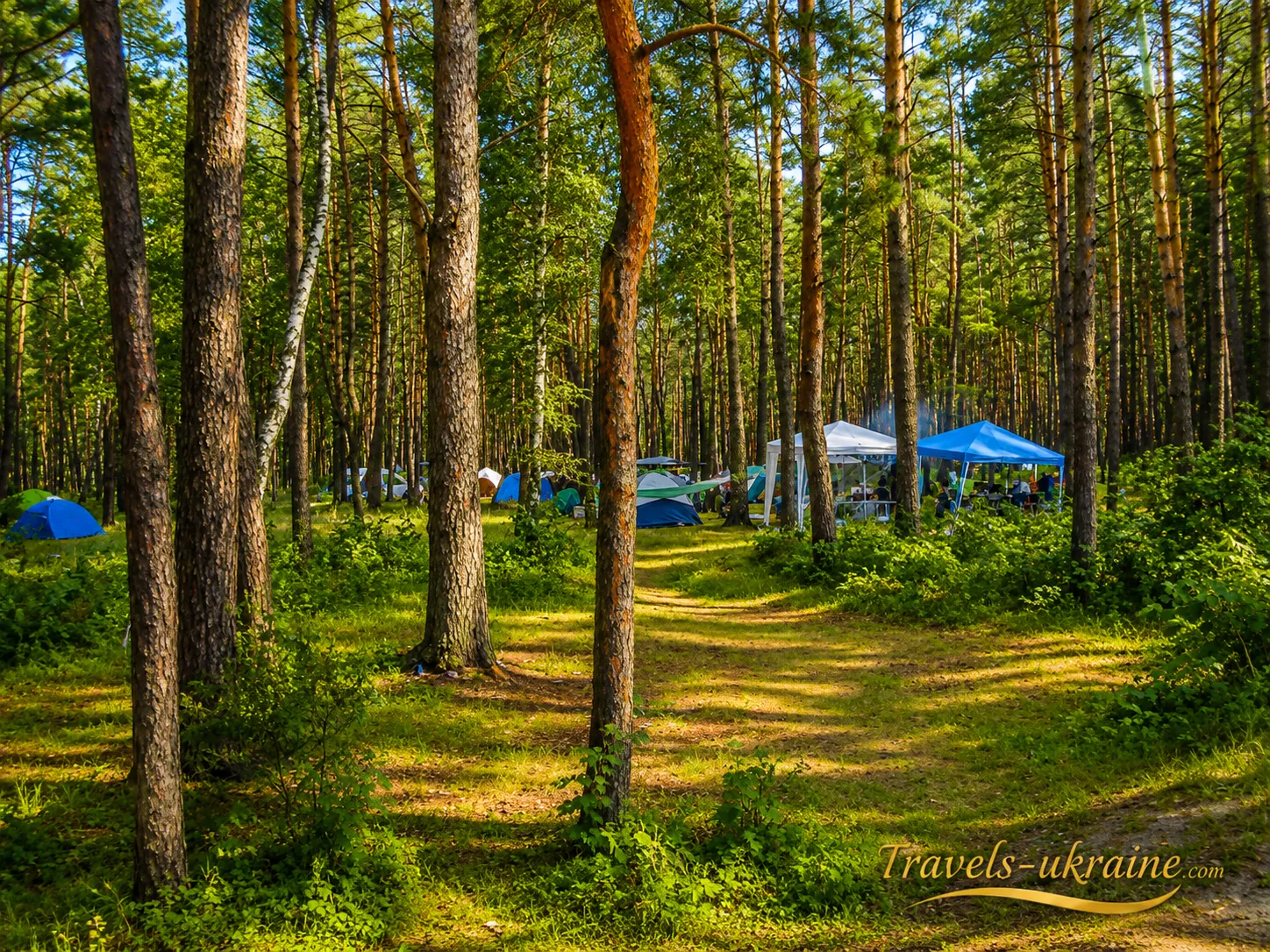
Camping beside the lake is one of the most popular options for those who want to stay longer than a few hours. It gives you the chance to see the lake not only during the day, but also in the evening, when the flow of visitors quietens, sunset reflections appear on the water and the surrounding forest begins to sound entirely different.
At the same time, this type of trip requires responsibility. Before travelling, find out where tents may be pitched, whether any camping pitches are available, whether there is access to drinking water and sanitary facilities, where you can park, and what rules apply to fires. White Lake is connected with a protected natural area, so it is important not to leave litter, damage vegetation or allow your holiday to place uncontrolled pressure on the environment.
A picnic at White Lake: a simple option for families and friends
If you are not planning to stay overnight, a picnic by the lake is an excellent choice. All you need is a blanket, water, food, a few essentials for comfort and a suitable place to settle. White Lake near the village of Rudka is well suited to this kind of day out, allowing you to combine a short trip, swimming, a walk and several hours of peaceful relaxation in nature.
Arrange your picnic so that the shore remains just as clean after you leave as it was when you arrived. Take all rubbish away with you, minimise single-use plastics and store food in a way that does not attract animals or pollute the area. This is a simple but essential part of responsible outdoor recreation.
Active recreation at White Lake
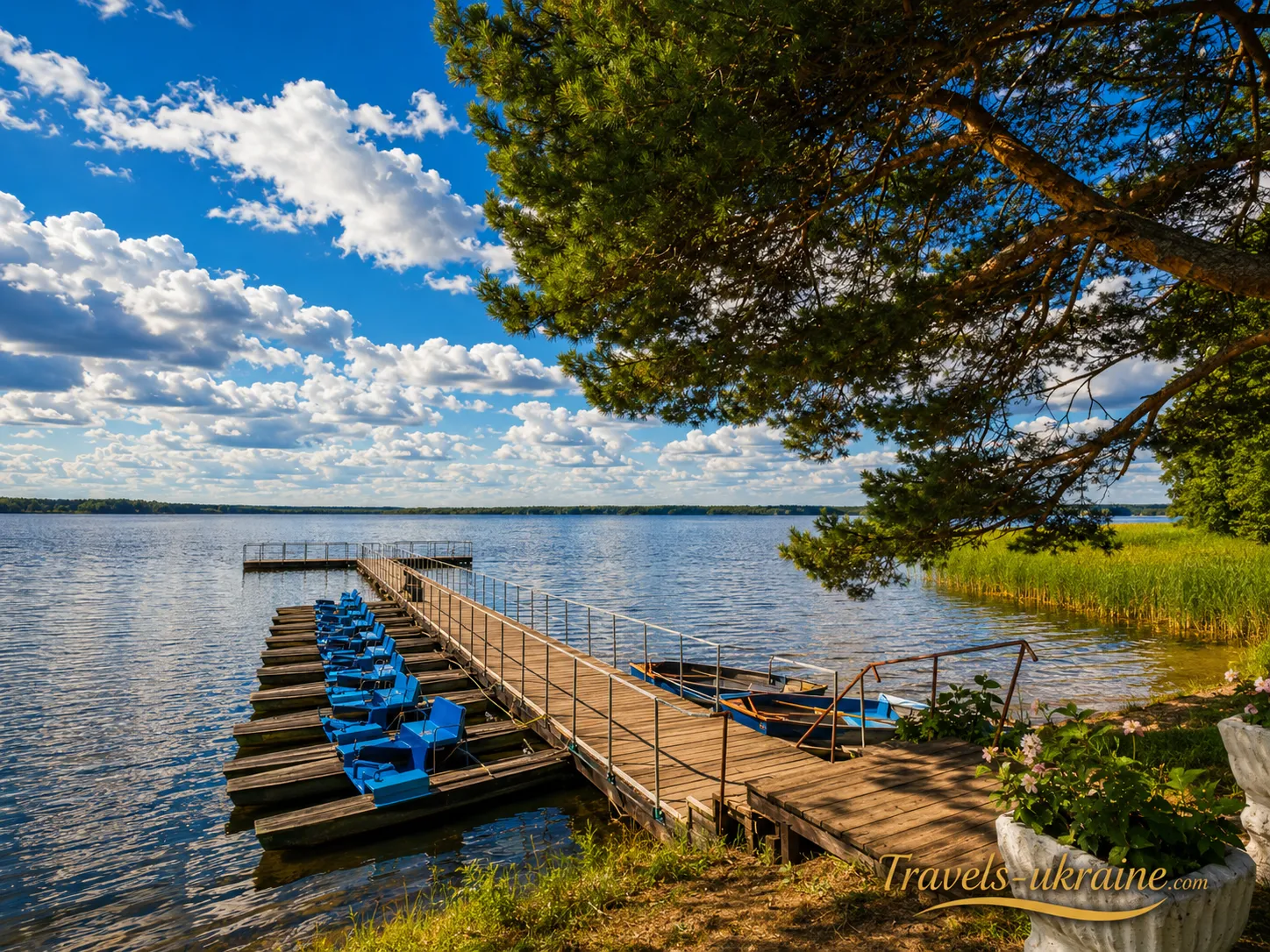
During the season, various forms of active recreation may be available around White Lake: watercraft, sports equipment, beach games, volleyball, forest walks, berry and mushroom picking, fishing, cycling routes and short trips through the surrounding area. Specific options depend on recreation centres, the season, weather conditions and current rules, so it is best to check directly with your accommodation provider or the official pages of the relevant locations before travelling.
It is important to keep a sense of balance when planning active pursuits. White Lake is first and foremost a natural body of water surrounded by forest, not a sports park. The best experience comes from combining a little swimming, some movement, a walk, a peaceful outdoor lunch and unhurried time. This kind of journey leaves the most pleasant memories after you return home.
Ideas for things to do at White Lake
- Swim in the soft “glycerine” water and experience the lake’s main natural feature.
- Walk along the shore and see the Polissian forest, sandy stretches and broad expanse of water.
- Enjoy a picnic by the lake without rushing, noise or unnecessary pressure on nature.
- Stay in a tent in an authorised area and experience the evening atmosphere of White Lake.
- Take photographs or videos at sunrise, in the evening or whenever the water changes colour.
- Spend a day away from the pace of the city — with a book, a walk, a swim and silence by the water.
- Add some activities to your break: boats, pedal boats, SUP boards, kayaks and diving.
A lake surrounded by forest is a place where you do not need to invent a complicated programme. Its best experiences come from simple things: clear water, forest air, warm sand, an unhurried walk and the chance to spend time in nature without unnecessary noise. This is why ecotourism at White Lake is so well suited to those seeking not entertainment for its own sake, but genuine restoration among the landscapes of Polissia.
Rules and etiquette for visiting White Lake
White Lake in the Rivne region is more than a popular place for a complete outdoor break, picnic or weekend trip. Above all, it is a living natural environment where the water, forest, sandy shores, waterside vegetation and silence create a very delicate balance. Your time here should therefore begin not with the question “where is the most convenient place to settle?”, but with a simple understanding: after our visit, the lake should remain just as clean and peaceful as we found it.
White Lake becomes more popular every year, and this has two sides. On the one hand, more people discover its unique water, natural surroundings and opportunities for a wonderful break. On the other, pressure increases on the shore, forest areas, beaches, camping sites and access roads. Responsible visitor behaviour is therefore just as important as the infrastructure itself.
The first rule at White Lake is simple: everything you bring with you must be taken away again. Bottles, bags, tissues, disposable tableware, food scraps, charcoal, food packaging and small pieces of plastic must not be left on the shore, in the forest or near a parking or camping area. Even a single discarded bottle spoils the appearance of a natural setting, while large quantities of rubbish can quickly turn a picturesque forest lake into an ordinary littered recreation area.
Respect the silence and other visitors
Many people come to the lake not for loud music, but for peace. For some, it is a family holiday; for others, a romantic trip or an opportunity to enjoy silence after a demanding working week or year. Loud speakers, shouting at night, aggressive entertainment and noisy groups can therefore spoil the experience for other visitors and disrupt the natural atmosphere.
Good etiquette is simple: keep music at a level only your own group can hear, avoid making noise at night, do not occupy other people’s space and do not make those nearby uncomfortable. This Polissian lake is especially beautiful in its silence: in the sound of the waves, the rustle of pine trees, birdsong in the morning and the evening calm over the water. Do not drown out this natural music with loud noise.
Camping at White Lake: tents, fire and responsibility
Eco-friendly camping can be wonderfully atmospheric, but only when organised responsibly. Before pitching a tent, check where camping is allowed, whether the area is subject to a special conservation regime, whether sanitary facilities are available nearby and whether there is a safe place to park. Pitching a tent anywhere you please, trampling vegetation or blocking access to the water is harmful both to nature and to other visitors.
Fire deserves particular attention. In forest and waterside areas, carelessly lighting a fire can pose a serious threat, especially in dry weather. Where designated barbecue or fire areas are provided, use them. Where no such areas exist or an official ban is in force, avoid open flames altogether. After your visit, there should be no ash, cigarette ends, charred wood or damaged grass left behind.
The rules for visiting White Lake are not complicated — they are based on respect for the water, forest, silence, other people and nature itself. If every visitor leaves the shore clean, avoids damaging vegetation and does not turn their break into a source of noise or rubbish, White Lake in the Rivne region will remain the same unique body of water that people long to return to for many years to come.
Safety at White Lake: swimming and accidents
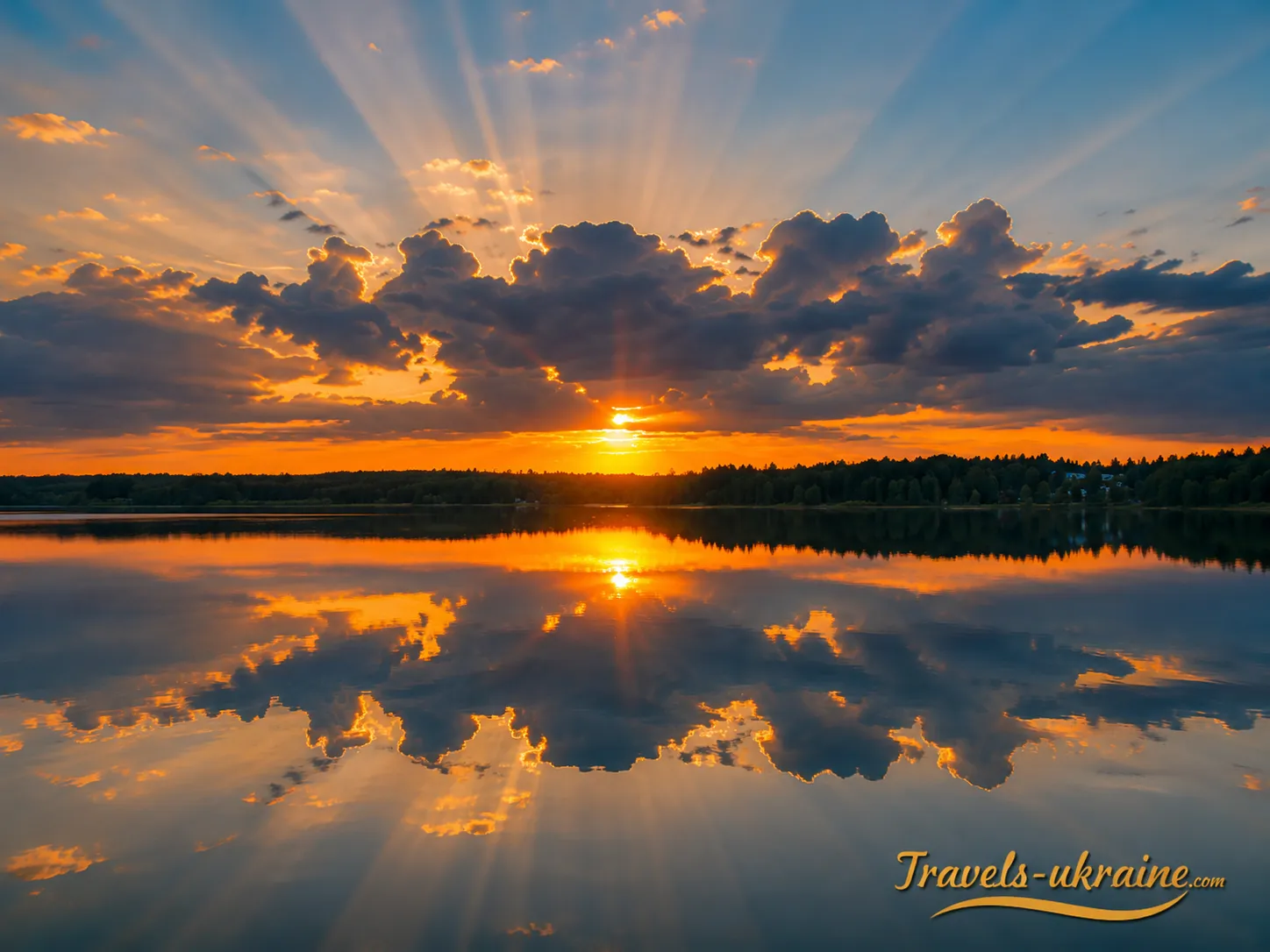
White Lake appears calm and safe: clear water, forest, a sandy shore and silence create a feeling of complete relaxation. Yet this beauty does not remove the most important rule: every natural body of water requires care. White Lake is of karst origin, with an uneven bed, considerable depths and a wide open water surface, so swimming, boating, SUP boarding, kayaking and holidays with children must all be planned responsibly.
Official rescue statistics are a reminder that water does not forgive carelessness. According to the Rivne Regional Military Administration, citing the Main Department of the State Emergency Service in the Rivne region, by 10 July 2023 alone, 18 people, including 4 children, had drowned in bodies of water across the region. The Varash District Department of the State Emergency Service has also reported tragic incidents in the district, including at White Lake. This section is therefore not a formality, but an important part of preparing for your trip.
At White Lake, it is best to swim only in properly prepared or familiar places with a convenient entrance to the water and a clearly visible shoreline. Do not jump into the water from boats, piers or the shore if you do not know the underwater relief. Even transparent water does not guarantee that there is no sudden drop, deep hole, submerged branch or stone beneath the surface.
Do not swim far from shore, swim alone, enter the water after drinking alcohol or overestimate your strength. Wind, waves, fatigue or cramp can quickly change the situation even for a strong swimmer. White Lake is large and deep, so safety must matter more than taking a dramatic photograph or swimming “just a little farther”.
Check the weather forecast before travelling to White Lake. In hot weather, bring plenty of drinking water, a hat and sun protection, and avoid spending too long in direct sunlight. During thunderstorms, strong winds or sudden changes in the weather, leave the water and do not go out in boats, on SUP boards or in kayaks.
For a comfortable trip, bring a first-aid kit, insect repellent, a power bank, cash, a torch, a change of clothes and rubbish bags. If you are planning to camp, find out in advance where tents may be pitched, whether drinking water and sanitary facilities are available, and where you can park safely.
Frequently asked questions about White Lake in the Rivne region
Where is White Lake in the Rivne region?
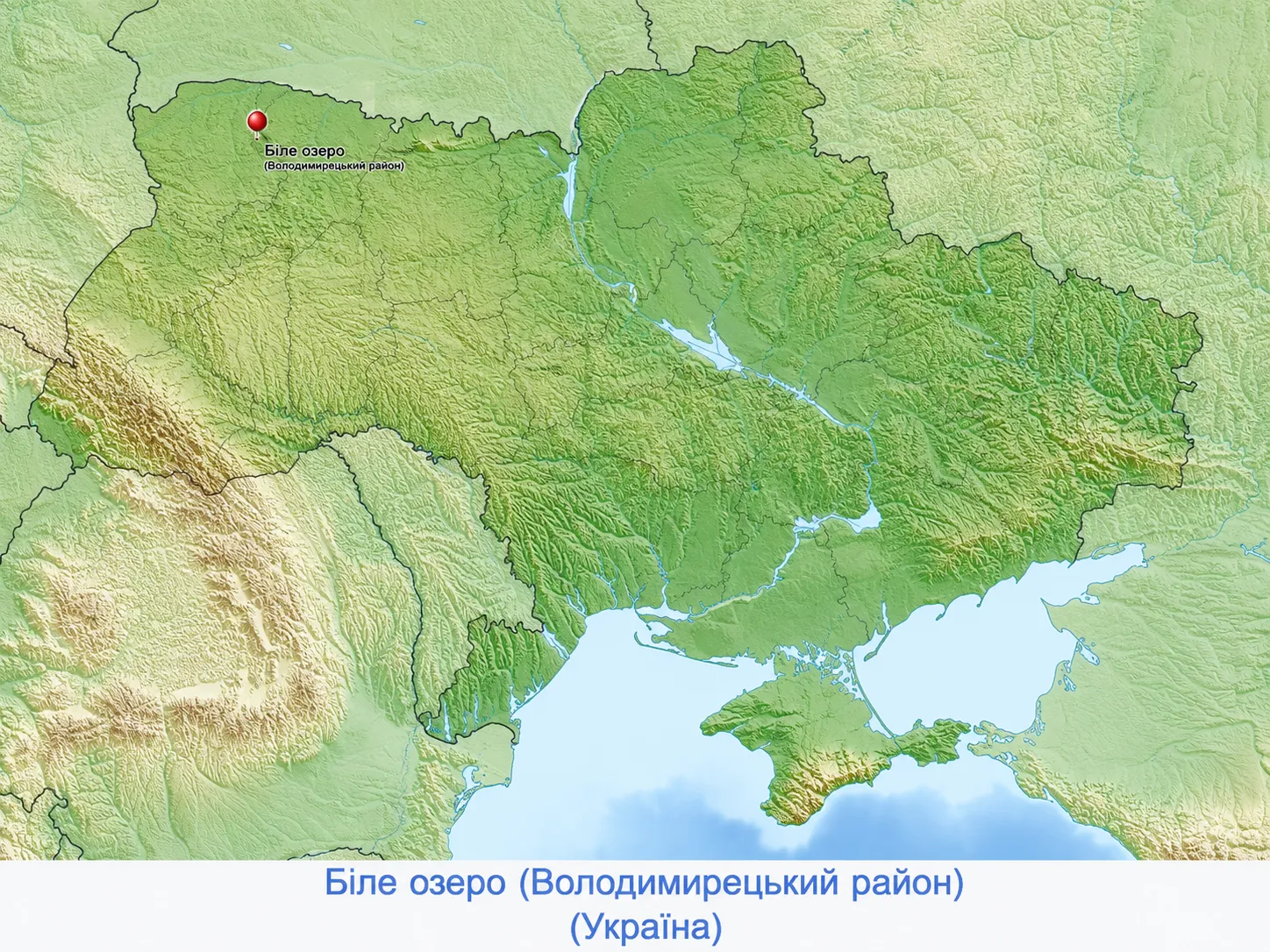
White Lake is located in the Rivne region, in the Varash district, near the village of Rudka. In travel searches, it is often referred to as White Lake Rudka, White Lake near the village of Rudka or White Lake in the Rivne region. It is one of Polissia’s best-known natural destinations for lakeside relaxation, camping, swimming and weekend trips.
How do you get to White Lake?
The most convenient way to reach White Lake is by car, travelling towards the Varash district and the village of Rudka. Before setting out, check the route in your navigation app, the road conditions, the weather and the correct entrance for your chosen recreation centre or beach area. During the season, it is best to leave early, especially at weekends, when the lake can attract many visitors.
Why is White Lake called the glycerine lake of the Rivne region?
White Lake is often called a glycerine lake because of its soft, pleasant-to-the-touch water and reportedly elevated glycerine content. This feature creates a silky sensation while swimming and has given the lake a reputation for having a natural wellness effect. At the same time, it should not be regarded as a medical resort or a substitute for treatment.
Can you swim in White Lake?
Yes, during the warmer season White Lake is popular for swimming and beach holidays. It is best to choose developed or familiar areas with a safe entrance to the water. Because of the lake’s karst origin, considerable depth and uneven bottom, you should not jump into the water in unfamiliar places, swim far from shore, swim alone or enter the water after drinking alcohol.
Is White Lake suitable for families with children?
White Lake is suitable for family holidays, but children near the water must remain under constant adult supervision. Choose shallow, open and calm sections of the shore, use life jackets for children and do not allow them to run into the water, push one another or dive in unfamiliar places. Inflatable rings and mattresses are not a substitute for safety measures and adult attention.
Can you camp at White Lake?
Camping beside the lake is possible, but before travelling you should confirm exactly where tents may be pitched. It is best to use specially designated or approved areas, helping to protect waterside vegetation and comply with conservation rules. Take all rubbish away with you, leave no traces of a fire and treat the nature of Polissia with care.
What facilities are available at White Lake?
During the summer season, recreation centres, beach areas, accommodation, food services, watercraft hire and basic visitor facilities operate around White Lake. Depending on the season, boats, pedal boats, SUP boards, kayaks, sports grounds, children’s areas and parking may be available. Specific conditions, prices and service availability should be confirmed before travelling.
When is the best time to visit White Lake?
Summer is the most popular time for a holiday at White Lake, particularly June, July and August. During this period, the water warms up, seasonal facilities operate and water-based activities are available. For a quieter experience, visit on a weekday, in late May, early June or September, when there are fewer tourists and the natural scenery remains exceptionally beautiful.
What can you do at White Lake besides swimming?
Besides swimming, you can walk along the shore, enjoy a picnic, camp in a tent, go boating, use pedal boats, SUP boards and kayaks, and photograph sunrises or evening light over the water. Experienced travellers may also be interested in underwater diving, but this should only be planned with suitable training, equipment and professional supervision.
What can you visit near White Lake?
Near White Lake, you can explore the village of Rudka, the surrounding forests of Polissia, Bilska Volia, Kruhle, Sopachiv Quarry, Lake Okhnych and the city of Varash as a practical stop before your trip. These places are best experienced as part of a wider route through Polissia: without rushing, with short stops, walks and respect for nature.
No Comment
You can post first response comment.