
 English
 Українська
 Български
 Hrvatski
 Čeština
 Dansk
Dansk Nederlands
 Eesti
Eesti Suomi
Suomi Français
 Deutsch
 Ελληνικα
 Magyar
 Íslenska
 Italiano
 Latviešu
 Lietuvos
 Polski
 Português
 Română
 Русский
 Српски
 Slovenčina
 Slovenščina
 Español
 Svenska
 Türkçe
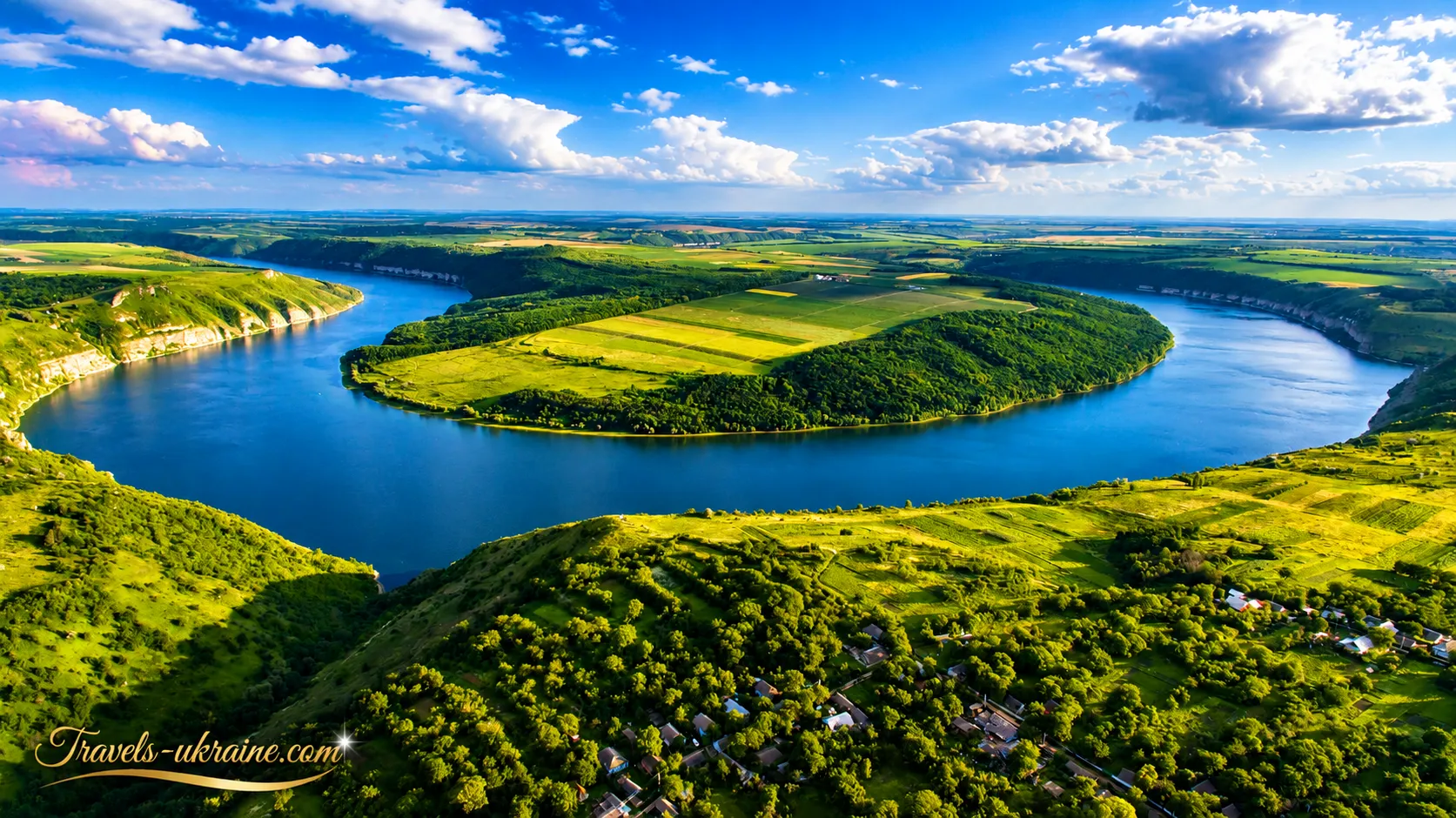
There is a mysterious corner of Ukraine where ancient coral reefs still remember the time when they were the seabed of a warm sea. Here, stone has a memory of its own, the slopes preserve the silence of millions of years, and the wind that once might have carried echoes of тревожні події and distant cannons over the Dniester now drifts peacefully above the water, grasses, and forested peaks. The Podillia Tovtry seem to crown the stony horizons of Podillia like a natural crown. Their low, green-capped hills stretch in an ancient undulating ridge, winding like a primeval serpent through valleys, villages, forests, and canyons.
Approximately 14–25 million years ago, when the waters of an ancient sea still washed over what is now Podillia, a unique natural reef was forming here. Over time, the sea receded and disappeared from the surface of the earth, but it left behind a remarkable trace—limestone ridges, rocky outcrops, stone boulders, fossilized shells, and imprints of life that once existed in warm salt waters. Today, these remains are scattered across the slopes of the Podillia Tovtry like fragments of a great book of nature that can be read right beneath your feet.
The sea disappeared, but the coral reef remained—not underwater, but in the stone, slopes, and white limestone outcrops. In some places, it is well hidden beneath forests, shrubs, and grasses, as if protecting its deepest secrets from casual glances. Elsewhere, by contrast, it reveals its true nature, emerging as white limestone cliffs, steep precipices, and stone walls that make you stop and wonder: how many eras have passed over this land, how many times has the world changed, while these Tovtry stood like silent witnesses to time.
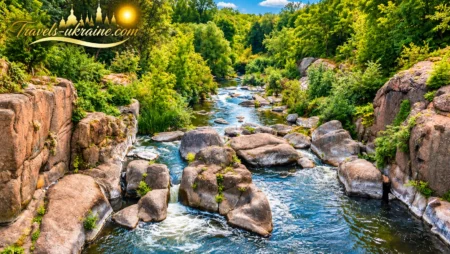
Today, Podillia Tovtry National Park is a rocky, arc-shaped ridge where you can gaze at panoramas for hours and notice new details each time. There is no harsh mountain severity here, but there is another kind of power—gentle, profound, and distinctly Podillian. Hills give way to canyons, forests descend into river valleys, and the Dniester unfolds broad vistas before travelers, where water, sky, and stone merge into a single picture. It is this almost unreal natural beauty that attracts tourists from across Ukraine and beyond every year.
Why the Podillia Tovtry Belong on Your Travel Itinerary
The Podillia Tovtry are an ideal destination for anyone seeking interesting travel routes through Ukraine for active leisure. Here, you can combine peaceful nature retreats, a journey to the Dniester, canyon walks, greenways, ecotourism, and photo trips. For some travelers, this region offers silence and a chance to reset; for others, a sense of adventure; and for still others, an in-depth encounter with our country's natural heritage.
A journey to the Podillia Tovtry is especially valuable because there is no need to “rush” from one location to the next. Instead, the park reveals itself slowly: through morning mist above the valley, the rustle of grasses on the slopes, the scent of sun-warmed stones, the silence beside ancient springs, and the broad expanse of the Dniester. That is why a Tovtry getaway often becomes more than a tourist trip—it becomes a way to reset, discover another side of Ukraine, and appreciate how rich natural heritage can be.
This kind of travel—mindful, slow, and close to nature—is best suited to the region. The Podillia Tovtry, Kamianets-Podilskyi, Bakota, the Dniester, canyons, cliffs, and old Podillian villages create an itinerary in which every stop has its own mood. And if you have long wanted to discover the most fascinating natural parks, this is the place to begin—a land where stone remembers an ancient sea, the river draws deep valleys, and nature reminds us every day that the strongest impressions often await not abroad, but right nearby.
The History of the Tovtry: From an Ancient Sea to a National Nature Park
The history of the Podillia Tovtry began not with human settlements, roads, or even the first legends of Podillia. It began much earlier—in the time when an ancient sea roared across what is now Khmelnytskyi Oblast. Where travelers today see forested hills, the limestone cliffs of Podillia, the canyons of the Podillia Tovtry, and the picturesque landscapes of the Dniester, a living marine world once existed.
Later, when the sea finally gave way to dry land, this territory became part of historic Podillia—a region where trade routes, military interests, cultures, and human destinies intersected. The Dniester, Smotryč, cliffs, and high banks shaped not only the landscape but also the way people lived.
Rivers provided water, protection, communication routes, places for settlements, and spiritual centers. Villages, fortifications, monasteries, crossings, and trails emerged here, traveled by merchants, pilgrims, soldiers, and ordinary travelers. Today, a travel route through the Podillia Tovtry allows visitors to experience this layered space: here, nature is inseparable from history, and history cannot exist without the landscape.
The Creation of Podillia Tovtry National Nature Park and a New Era of Conservation
The modern history of this territory took an important turn in 1996, when the Podillia Tovtry National Nature Park was established. Its creation responded to the need to protect unique landscapes, flora and fauna, rare plants, geological landmarks, canyons, cliffs, and complexes of national importance. Thus, the natural gem of Khmelnytskyi Oblast received official protected-area status.
Today, more than 260,000 hectares of this unique landscape are under the care of the National Park. It is Ukraine’s largest park area and one of the largest in Europe. Its territory encompasses the valuable natural complexes of Khmelnytskyi Oblast: Tovtry ridges, forests, steppe areas, river valleys, nature reserves, and recreational zones. Some of these places are open to travelers, while others have a stricter protection regime, because the park’s greatest value is the preservation of nature that took shape long before human civilization existed.
Why the History of the Podillia Tovtry Matters to Travelers
Once you know the history of this region, traveling through Podillia becomes much more profound. A cliff is no longer simply a cliff—it becomes a fragment of an ancient sea. The Dniester Canyon in the Podillia Tovtry reveals itself not merely as a beautiful photo spot, but as the result of water, stone, and time working together over ages. The Smotryč Canyon is perceived not only as a stunning landscape near Kamianets-Podilskyi, but as a natural stage on which the region’s history has unfolded for centuries.
That is why a route through the Podillia Tovtry should be planned not in haste, but with a desire to feel the place. This is a region for pausing at viewpoints, listening to the wind, following the line of the Dniester, visiting small villages, noticing the stone beneath your feet, and remembering: this is not merely a tourist destination in Khmelnytskyi Oblast. Before you lies a land that has survived the sea, time, and human eras, and still remains one of the most powerful symbols of natural heritage.
The Natural Features of the Podillia Tovtry: Canyons, Cliffs, Caves, and Landscapes
The total area of Podillia Tovtry National Nature Park is 261,316 hectares. In short, that is a lot. More precisely, it is so vast that the park confidently holds the title of the largest in Ukraine. And this is one of those cases when the word “park” can be slightly misleading: do not picture a few paths, benches, and an ice-cream kiosk. What lies before us is a vast natural world of canyons, river valleys, forests, cliffs, villages, historic landmarks, and expanses so immense that a navigation app sometimes starts to look less like a helper and more like a philosopher.
The park itself has 4,515.90 hectares in permanent use, although the area of conservation importance is considerably larger. Within the lands of Podillia Tovtry National Nature Park, 129 protected natural-heritage sites are safeguarded. These include nature reserves, natural monuments, historic estates, and other valuable areas distinguished by their state of preservation, natural beauty, and cultural and historical significance.
Yet the National Nature Park appeals not only to those who come for scenery, silence, and the honest fatigue that follows a walk. It is also a vast historical space. The park is known to contain 19 archaeological sites and more than 300 historical and architectural landmarks. Kamianets-Podilskyi is especially rich in monuments, with more than 200 sites concentrated here, leaving tourists with only one option: put on comfortable shoes, charge your phone, and accept that «we’ll just stop by for an hour» never works in this city.
This is precisely the special charm of the Podillia Tovtry: they combine natural grandeur and human history so organically, as if stone, water, forests, fortresses, and ancient settlements had agreed to create one great route for travelers. Here, you can admire cliffs that remember an ancient sea in the morning, walk among architectural landmarks during the day, and watch the sunset over the Dniester in the evening, quietly admitting: yes, nature knows how to amaze.
The True Physical and Geographical Character of Podillia Tovtry National Park
The territory of Podillia Tovtry National Park lies at the boundary of several natural worlds. Geographers assign it to two physical-geographical regions: the Western Podillian region, which includes the Tovtry Ridge and the Western Podillian Dniester area, and the Dniester-Podillian forest-steppe region, represented by the Mohyliv Upland. Put simply, this is where forest-steppe meets canyons, flat expanses give way to rocky slopes, and tranquil Podillian landscapes suddenly reveal the high banks of the Dniester. Thanks to this combination, the physical and geographical character of Podillia Tovtry National Park is mosaic-like and highly distinctive, with hills, valleys, ridges, rivers, and landscapes that are easy to remember even without photographs.
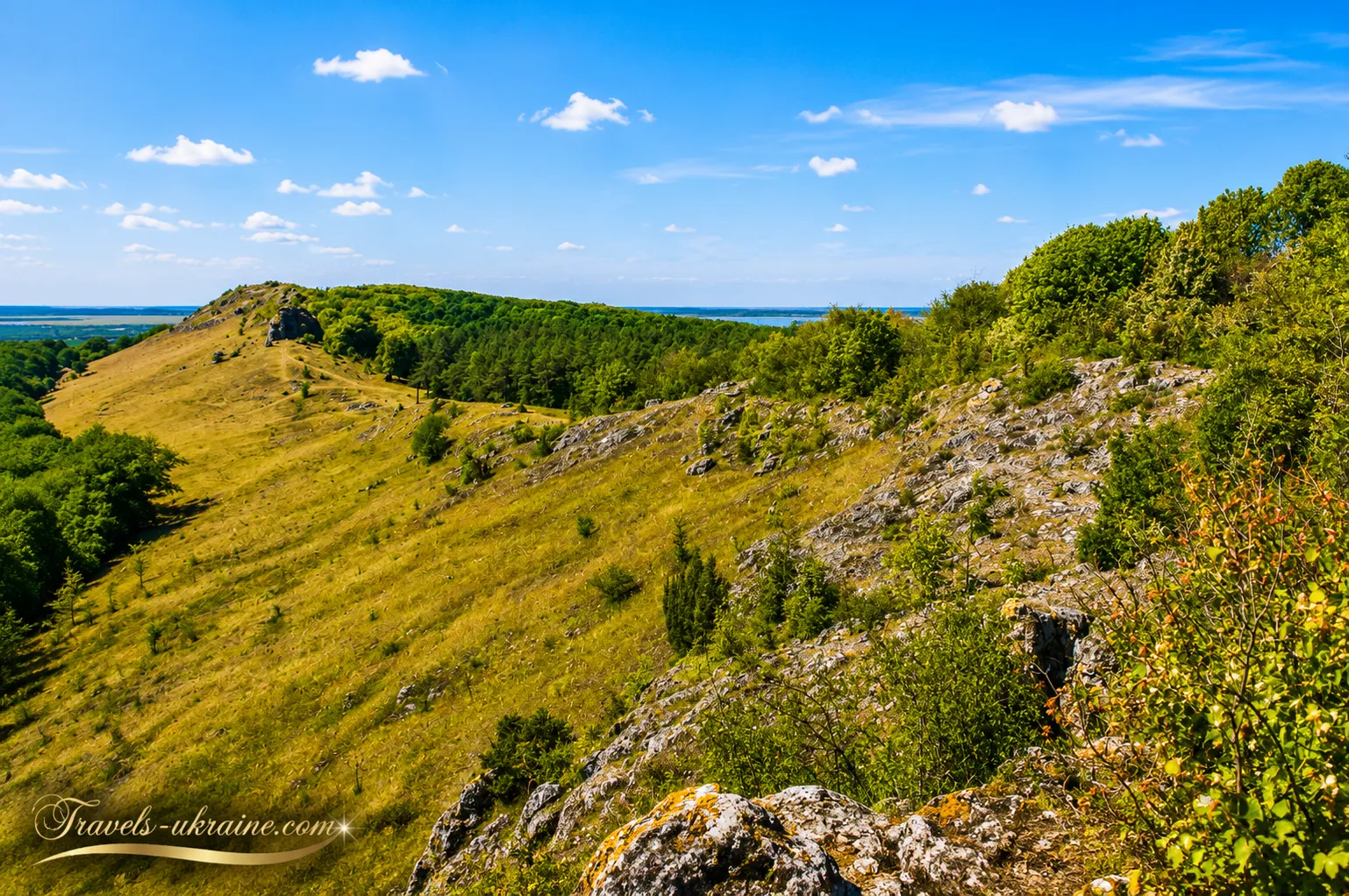
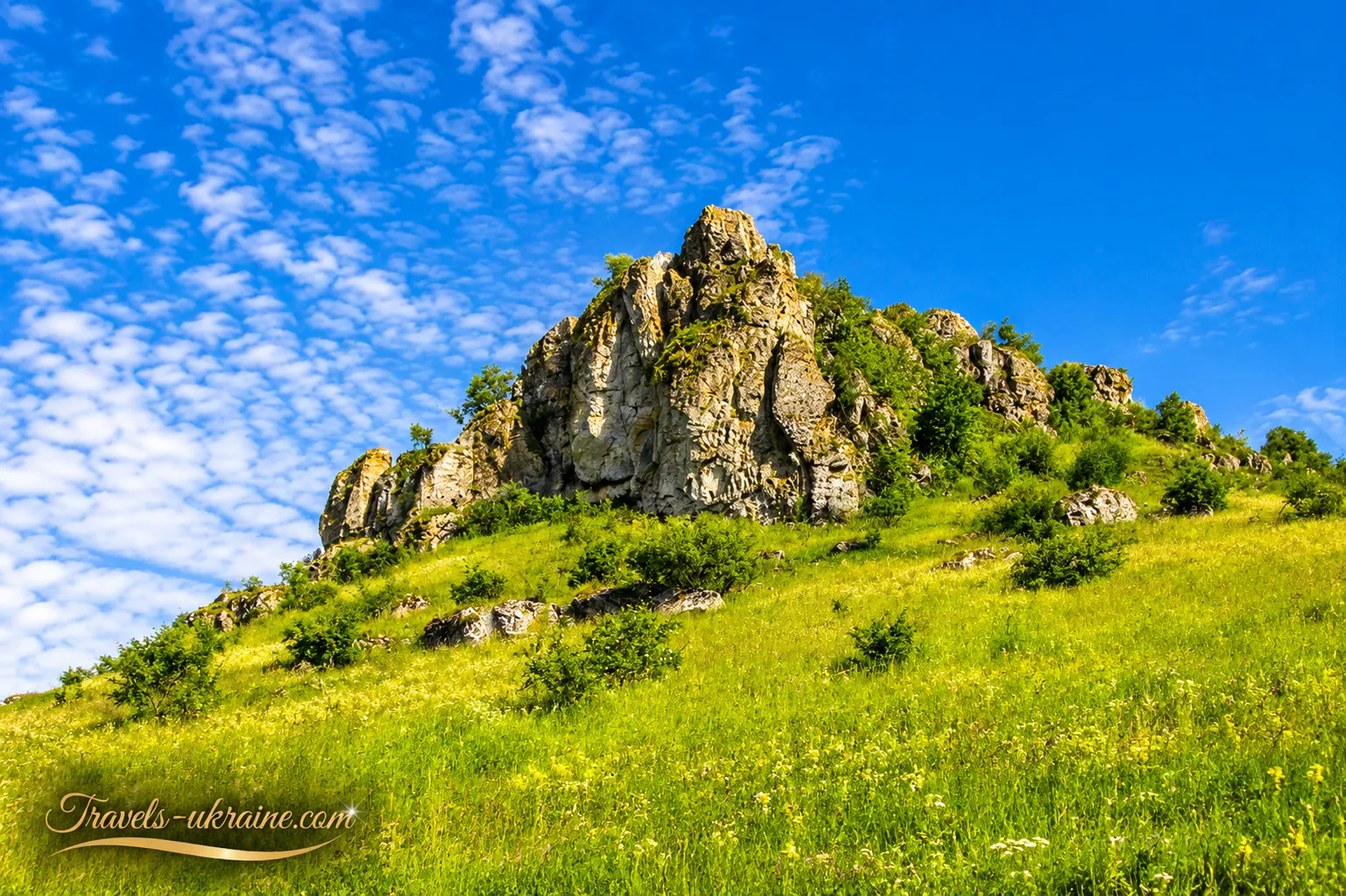
It is worth adding that the Tovtry Ridge, also known as the Medobory, is not simply a chain of hills but a true stone chronicle of an ancient sea. Once, it was a barrier reef formed by colonial organisms: algae, oysters, and other inhabitants of the warm seas of the Tortonian and Sarmatian epochs. Millions of years ago, underwater life thrived here; today, its traces are frozen in limestone cliffs and the contours of the land. This ancient reef extends along the eastern edge of the Podillian Upland for approximately 200 kilometers. On the ground, it appears as a distinct natural rampart with numerous lateral branches that seem to fan out in waves across the Podillian landscape. The Tovtry Ridge begins near the settlement of Pidkamin in Lviv Oblast, then stretches through the areas of Skalat and Kamianets-Podilskyi, crosses the land beyond the Dniester, and continues into Moldova.
This long stone ridge gives the Podillia Tovtry their unique character. It does not impress with height like the Carpathians; instead, it possesses another kind of power—the depth of time. Every slope here reminds us that these are not ordinary hills, but the remains of a great marine reef that survived the disappearance of the sea, the birth of river valleys, and the arrival of forests, settlements, and roads. That is why a journey along the Medobory is not merely ecotourism amid beautiful landscapes, but also an opportunity to walk through a land where geology becomes almost poetry.
The Podolian Tovtry ridge stands out clearly in the landscape, stretching as a chain of hills ranging from 400–486 metres in elevation. They rise 40–60 metres above the surrounding terrain, and in the Zbruch–Kamianets-Podilskyi area, in places by as much as 100 metres. For climbers, this may not be a great challenge, but for a tourist with a backpack and camera, it is an entirely convincing reason to stop more often and catch their breath. After all, the summits of these hills are covered with chaotic piles of limestone blocks of various sizes. And there is beauty in this stony disorder: it seems as though an ancient sea hurriedly left part of its treasures here, while nature gradually turned them into ready-made viewing platforms and photo spots.
Western Podolian Dniester Region occupies the southern slope of the Podolian Upland—from the Buchach–Chortkiv–Smotrych line to the Dniester Valley, and from the mouth of the Strypa in the west to the Tovtry ridge in the east. Thanks to this location, the area has exceptional natural and tourist value: here, forest-steppe landscapes give way to slopes, valleys and Dniester panoramas, while travellers quickly realise that «just one more photo» in these places is not a weakness but part of the leisure experience.
The terrain of the Dniester Region has the distinctive character of a stepped plain, deeply dissected by the valleys of the Dniester’s left-bank tributaries. This natural «staircase» was formed by Dniester terraces: over thousands of years, the river seems to have patiently carved the landscape, leaving behind level areas, escarpments, slopes and valleys. That is why the local scenery is far from monotonous: rolling interfluves give way to canyon-like valleys, while a tranquil view can turn within minutes into a panorama that instinctively sends a tourist reaching for their phone.
The Dniester Region is one of the most pleasant areas for tourism and recreation in Podolia. It captivates visitors with picturesque landscapes, a mild climate, green slopes, broad valleys and a distinctive southern atmosphere. Here, it is enjoyable not only to admire the Dniester and its canyons, but also simply to travel slowly, stop in beautiful places and honestly admit that the route has once again taken longer than planned, because «one more stop» in the Dniester Region almost always turns into a little excursion.
So, in simple terms that any tourist can understand, the Podolian Tovtry have everything we love about nature travel: canyons, caves, cliffs, plains, depressions, wooded hills, river valleys and viewpoints where you want to stop for at least a few minutes. Then, as so often happens on a trip, those few minutes quietly turn into an hour.
That is precisely what makes the park special: it is not monotonous. You can begin by walking along a peaceful plain, then find yourself beside limestone cliffs, later see a canyon-like valley, and eventually emerge onto a Dniester panorama that leaves even the most talkative tourist silent for a moment. The Podolian Tovtry are fascinating because, within a relatively short distance, they combine different landforms, creating the feeling of a complete journey through several landscapes at once.
For tourists, therefore, this is not a dry geographical term but a living recreation area in the Tovtry for walks, photo trips and a calm introduction to the nature of Podolia. Everyone will find something of their own here: beautiful scenery, peace and space, interesting routes—or simply the realisation that they brought too little storage on their phone.
The Earth’s Stone Memory and the Mineral Waters of the Podolian Tovtry
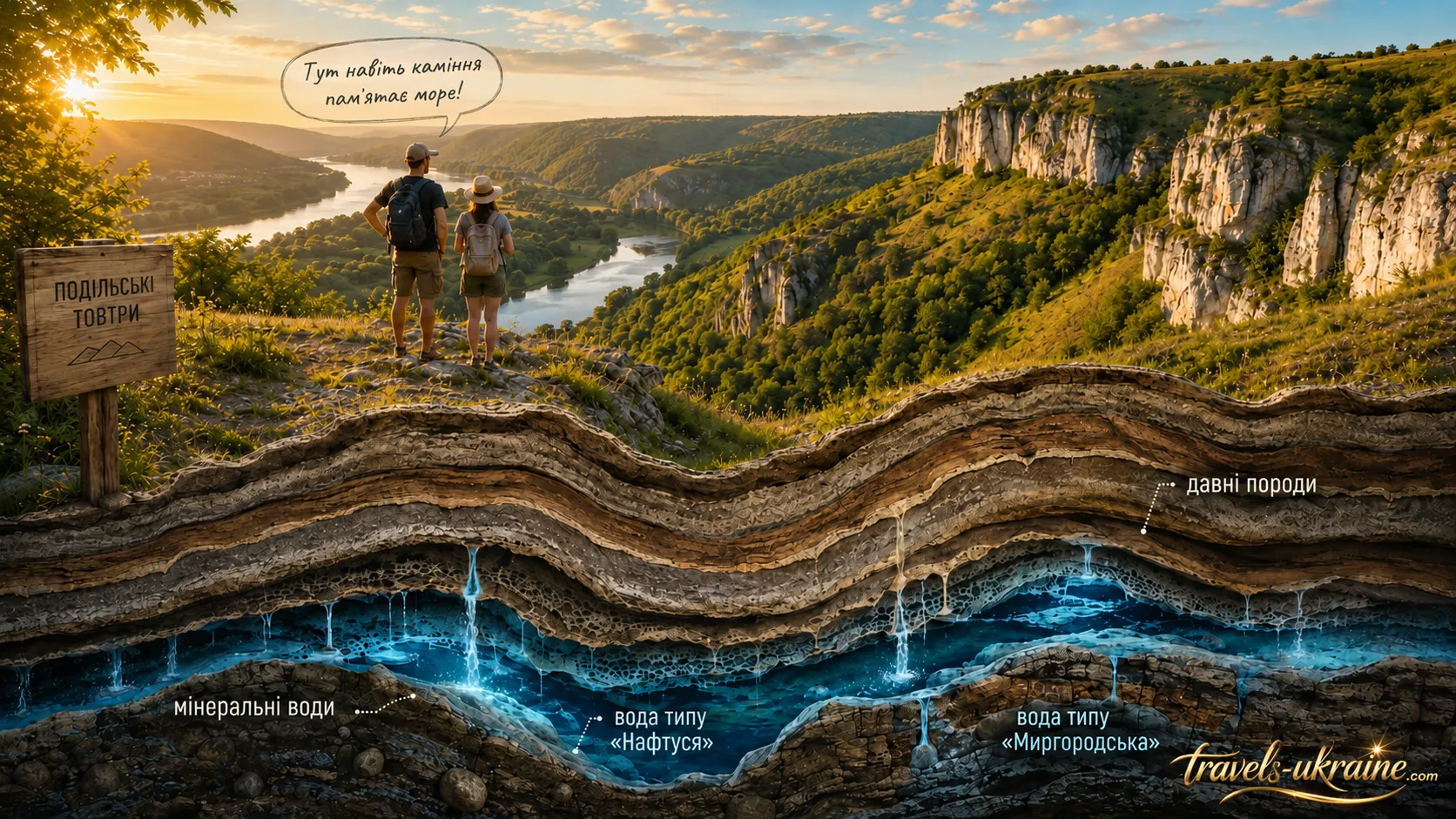
Without delving into complicated geological terminology, the subsoil of the Podolian Tovtry can be compared to a vast natural archive. The earth here preserves traces of different eras—from very ancient crystalline rocks to deposits left by seas that existed millions of years ago. Geologists, of course, describe it in much more serious terms: Precambrian, Paleozoic, Mesozoic, Cenozoic… To an ordinary tourist, this sounds roughly like a list of levels in a difficult computer game, but the essence is simple: the Podolian Tovtry stand on land with an extraordinarily ancient and multilayered geological history.
Deep within this land lie crystalline rocks—gneisses, migmatites, crystalline schists and other “serious characters” from the geological world. In some places they come closer to the surface, but across the park they are mostly hidden beneath layers of younger sedimentary rocks at a depth of approximately 400–600 metres. So, as a tourist walks along a trail, photographs cliffs and admires the Dniester, beneath their feet lies not merely soil but an entire multi-storey history of the planet. Unfortunately, there is no lift.
What is particularly interesting is that the geological structure of the Podolian Tovtry has not only scientific but also practical value. It is directly connected with the mineral waters that are a true natural treasure of the region. Waters of the «Naftusia» type are found here—the same kind known even to Ukrainians who have never been to Truskavets but have certainly heard that you “should drink it for your health”. There are also alkaline mineral waters similar in type to the famous “Myrhorodska”—another name familiar to almost every Ukrainian from childhood, spa stories or shop shelves.
In addition, the region’s subsoil contains mineral waters with varying compositions and brines with elevated levels of bromine, iodine and other elements. This gives the Podolian Tovtry potential not only for nature tourism but also for health-oriented recreation. In other words, here you can do more than look at canyons, cliffs and the Dniester—you can also remember that travel is not always just about “walking 15,000 steps and heroically exhausting yourself”. Sometimes it is also an opportunity to care for yourself at preventive and therapeutic facilities.
That is why the geology of the Podolian Tovtry is not a dry science for specialists but part of the region’s tourist appeal. It explains why the cliffs are shaped as they are, why the terrain is so diverse, where the mineral waters come from and why this area is valuable not only to travellers with cameras but also to those seeking peaceful, natural and health-oriented recreation in Ukraine.
A Useful Stop in Sataniv: Mineral Waters and Health-Oriented Recreation
If you are wondering where to find preventive and therapeutic facilities within the national park, here is a useful note for your itinerary. The best-known health resort within the Podolian Tovtry is the Sataniv resort. This is where sanatorium and wellness complexes use local mineral waters, especially Zbruchanska “Naftusia”. Well-known establishments include Arden Palace Medical Resort & SPA, VitaPark Сонячний Прованс, Аква Віта — Жива Вода, Перлина Поділля and the Zbruch sanatorium. For tourists, this means that a trip to the Podolian Tovtry can be combined not only with canyons, cliffs and the Dniester, but also with health-oriented recreation. That said, it is better not to drink mineral water according to the principle of “everyone praises it, so I’ll try a litre”, but after consulting a doctor. Even on a trip, common sense should travel in your backpack alongside the power bank.
Photo and Video Gallery
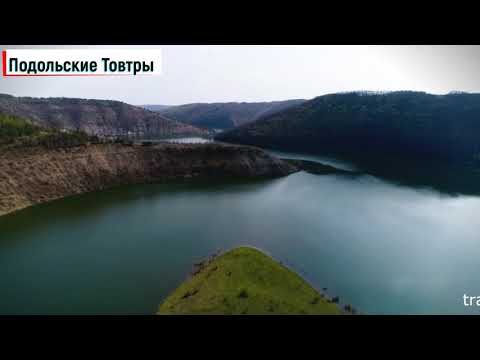
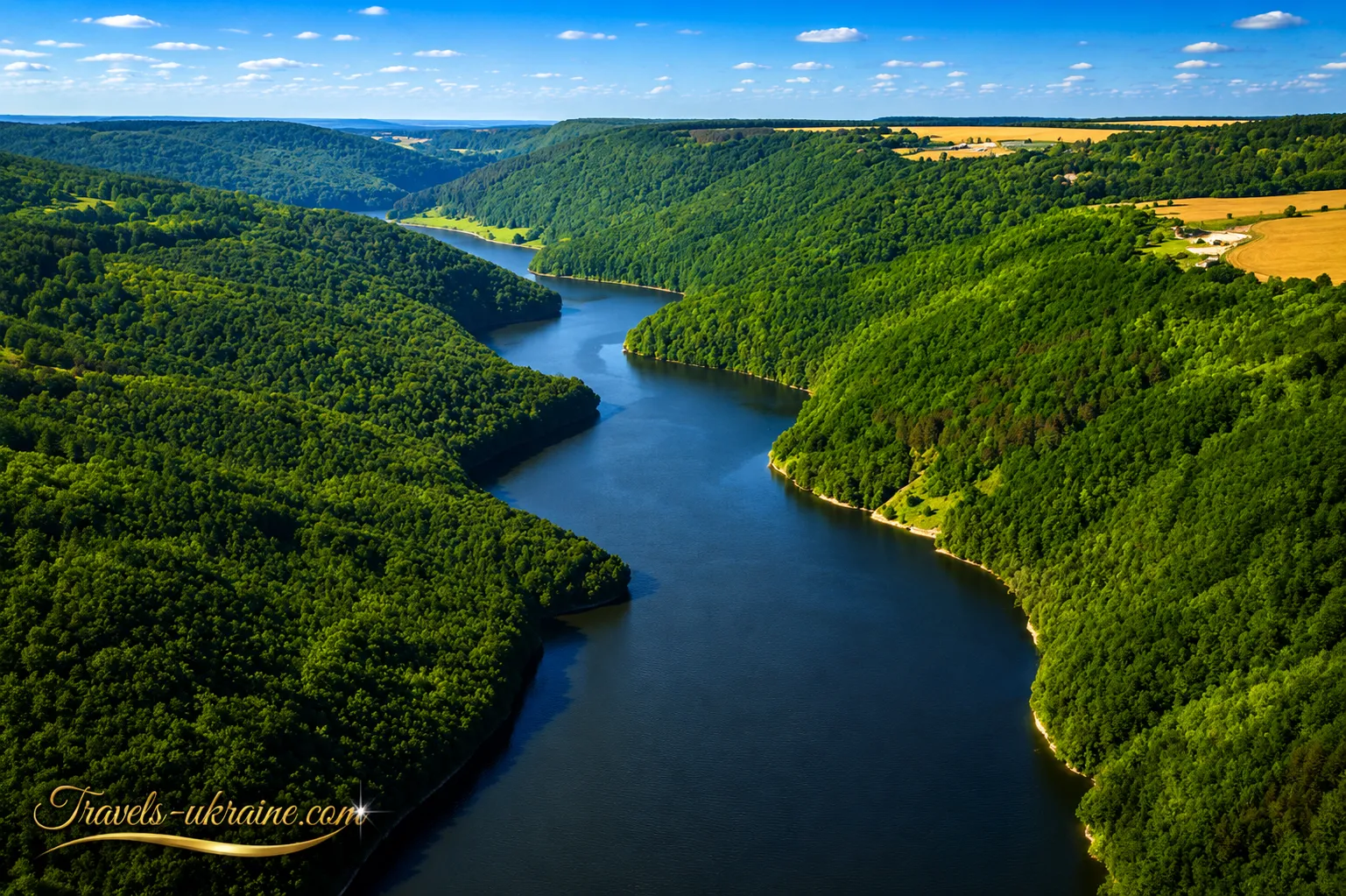
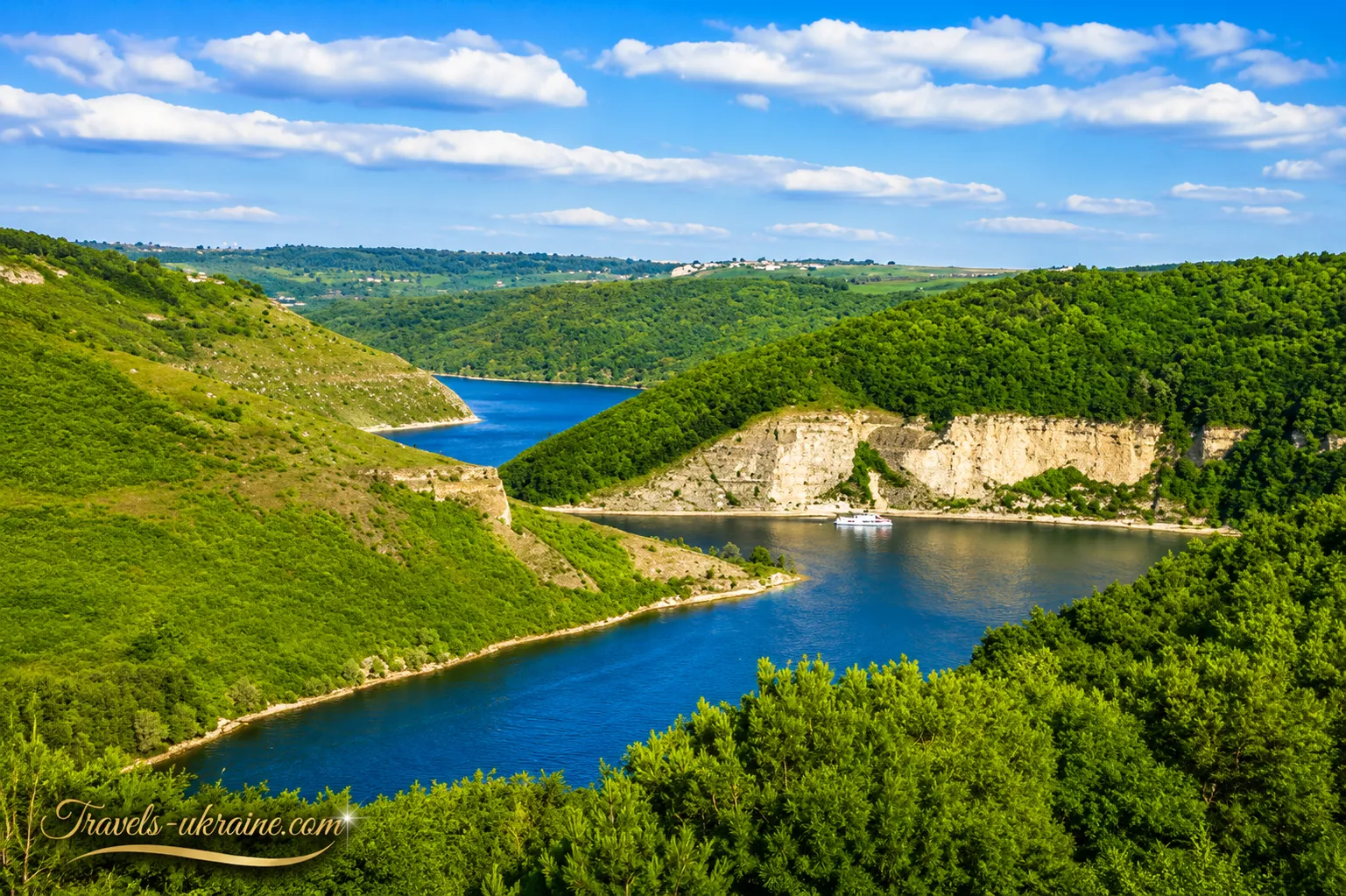
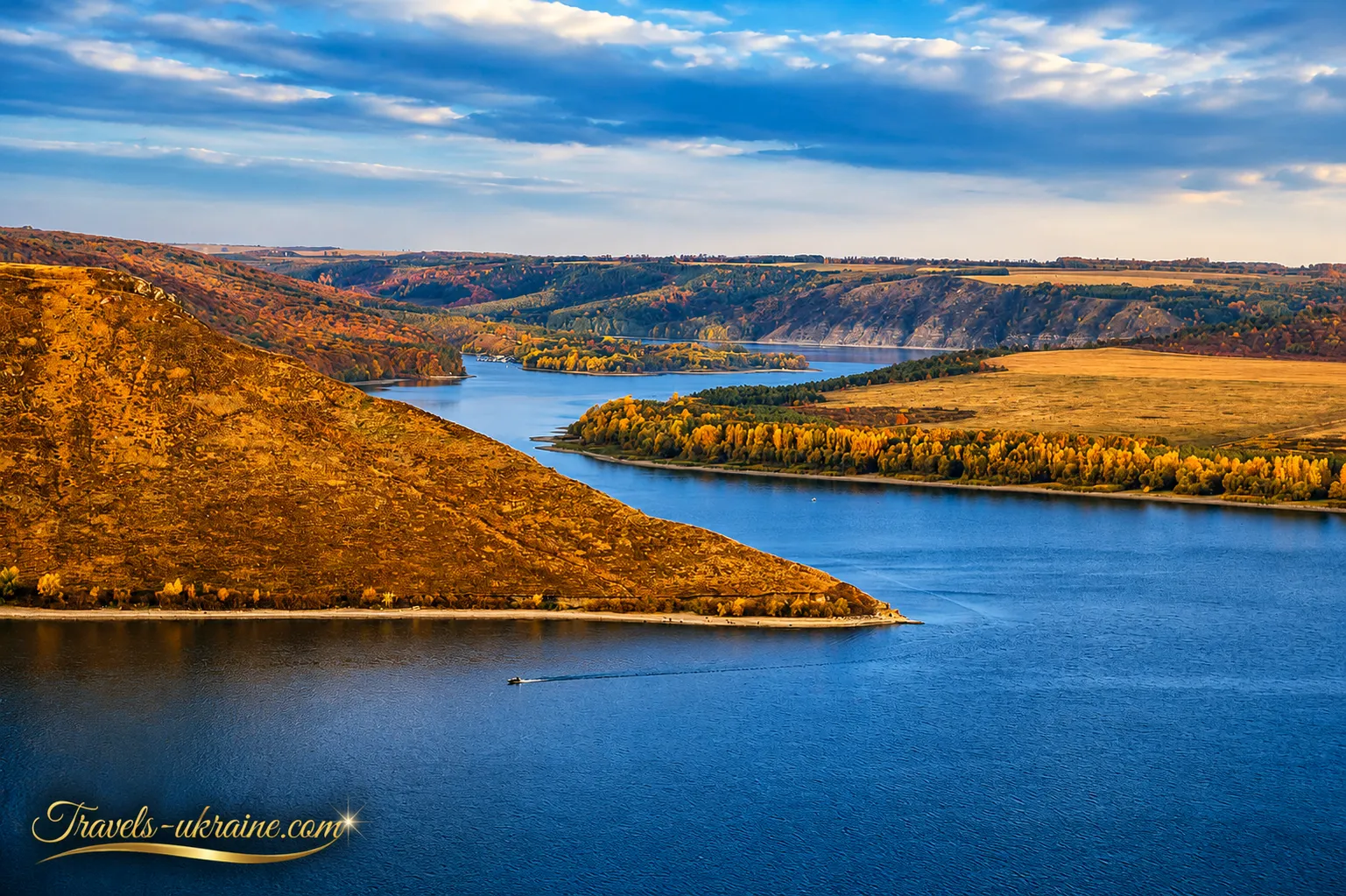
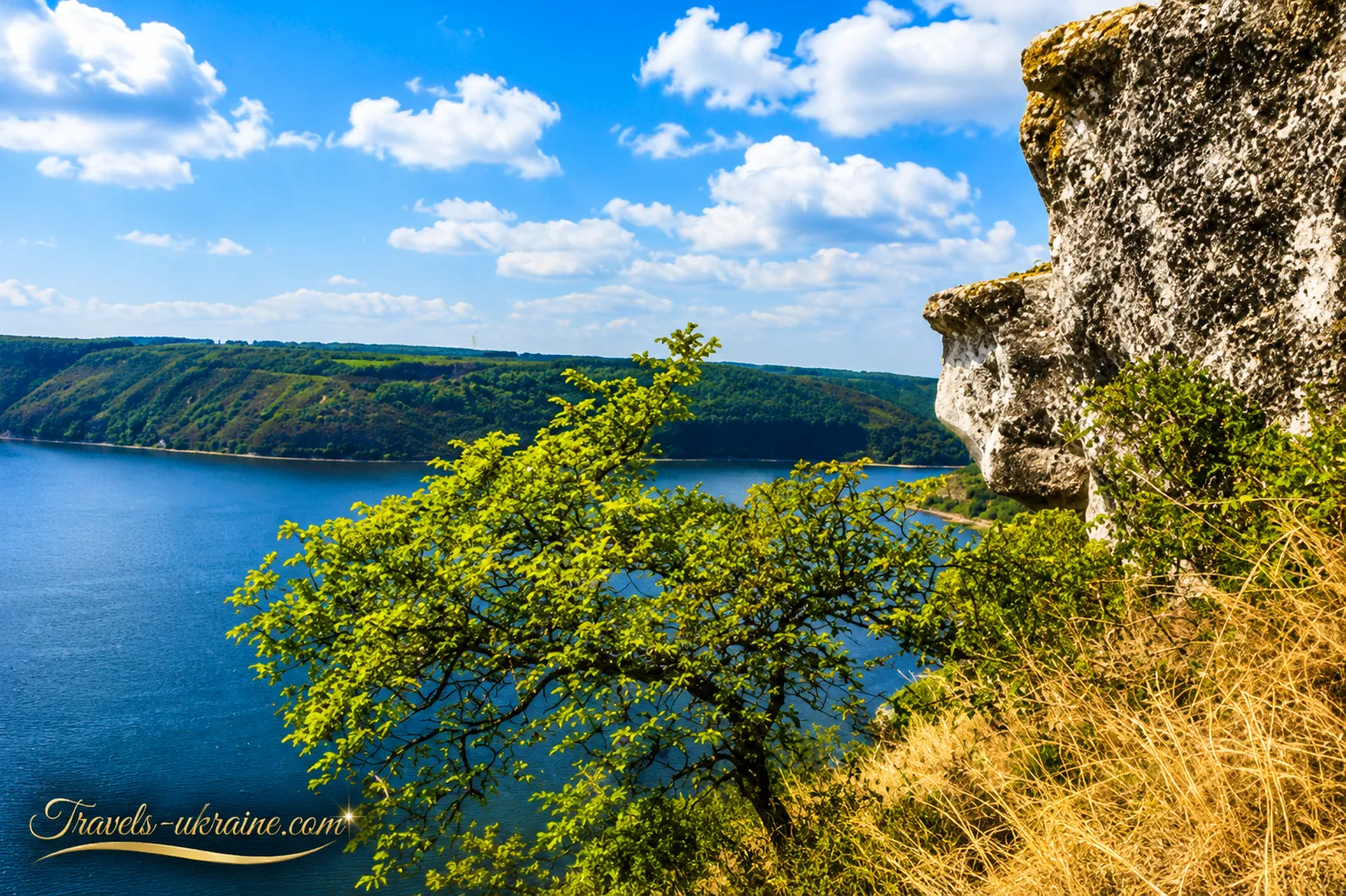
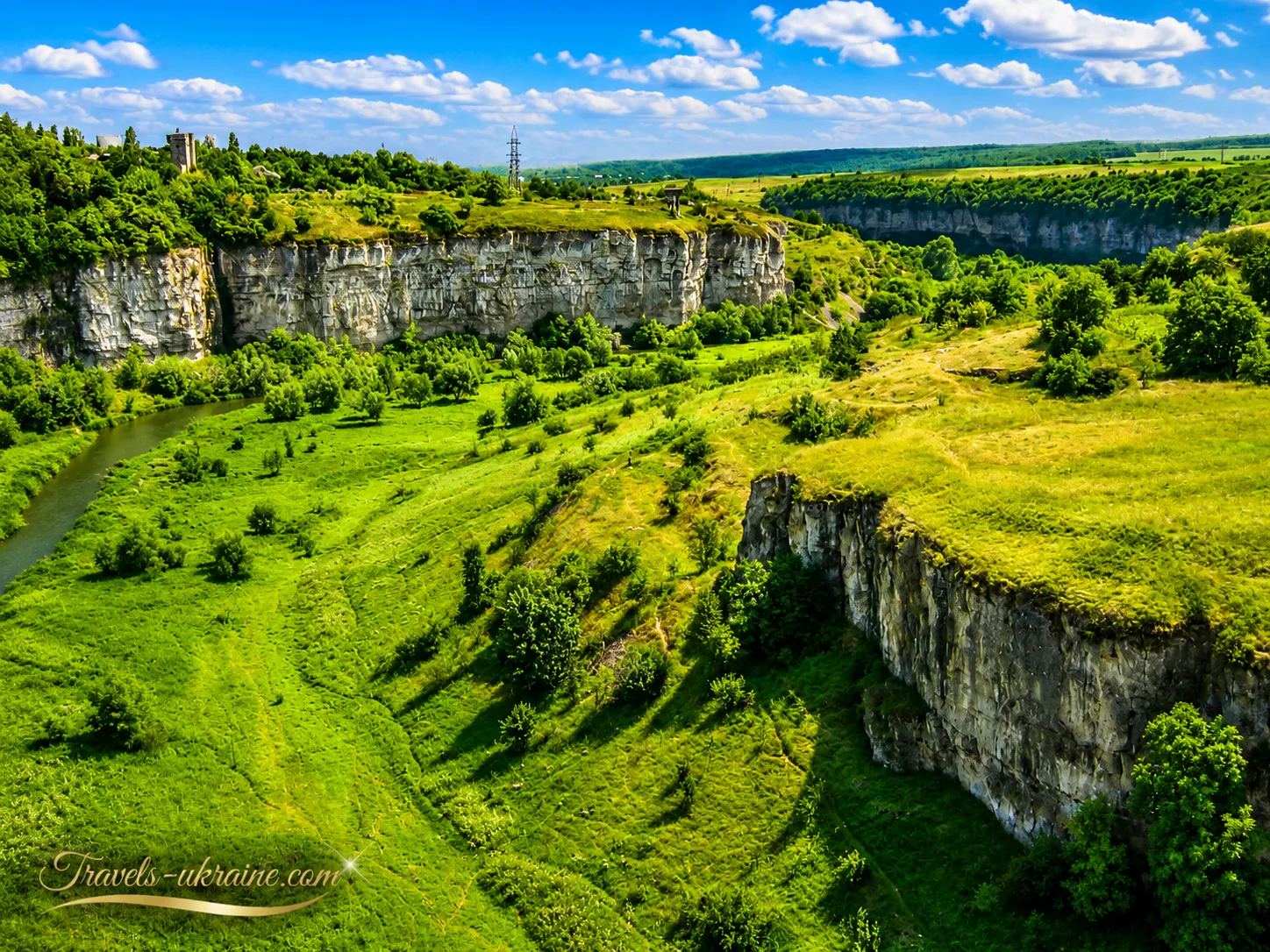
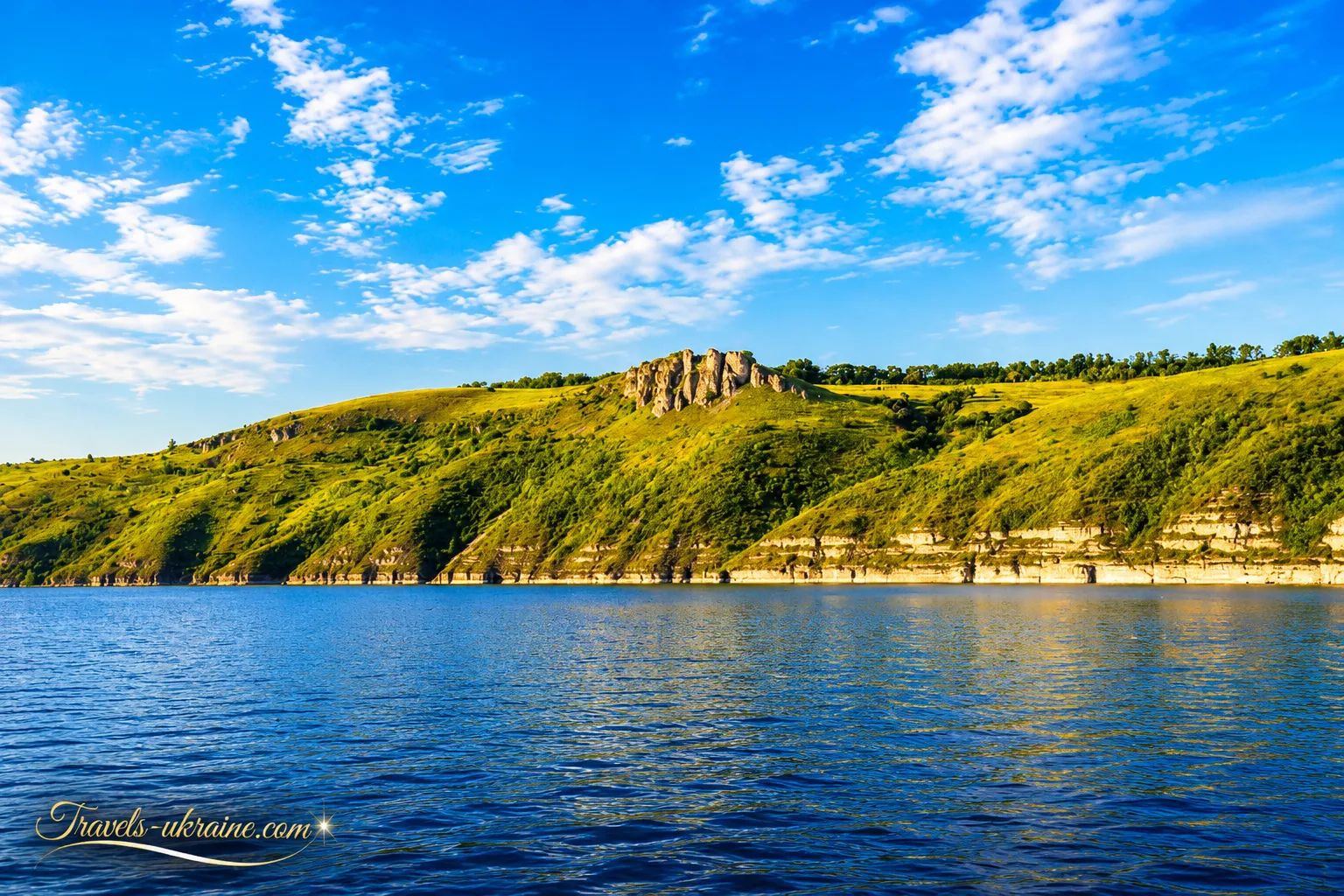
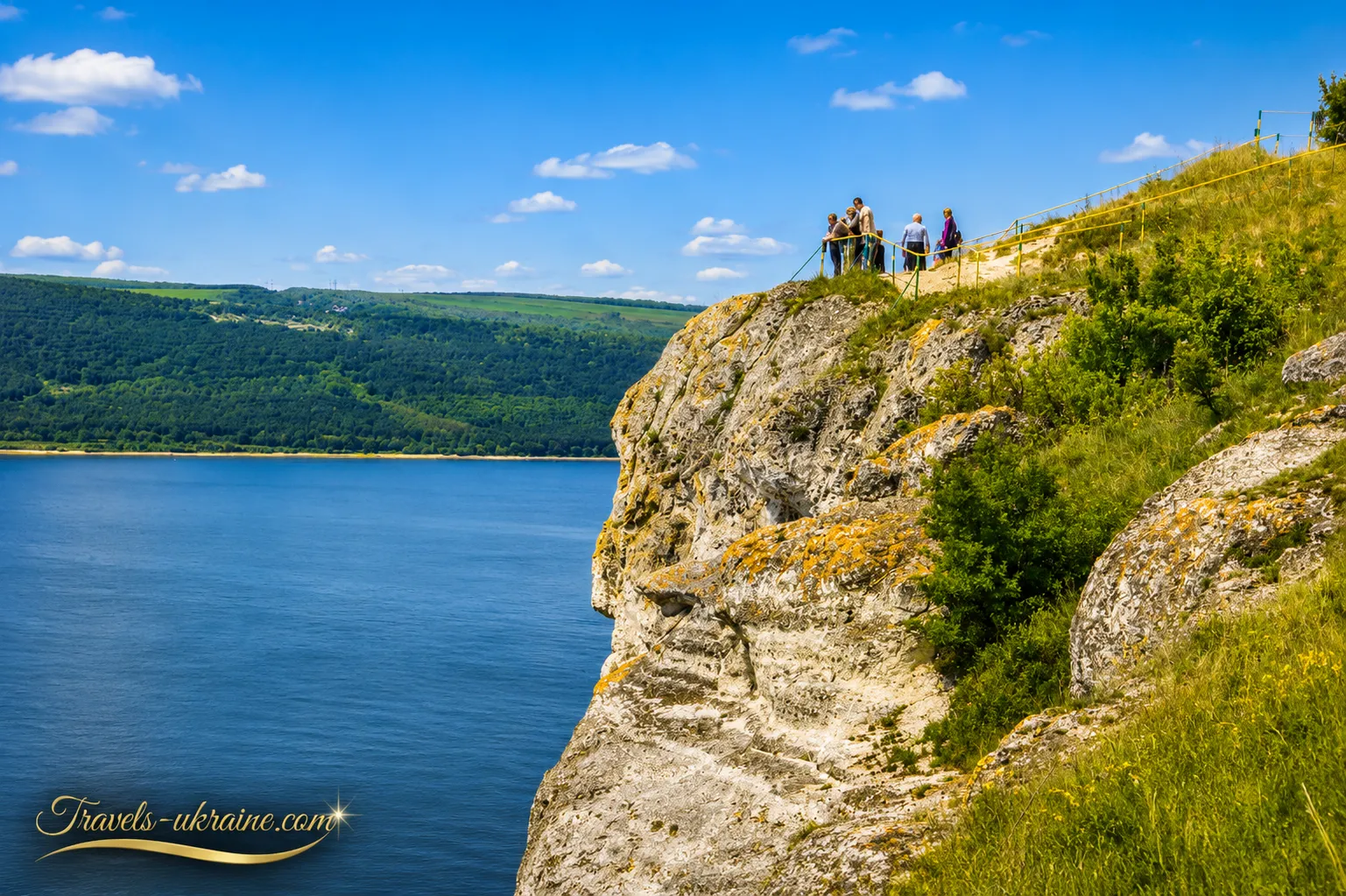
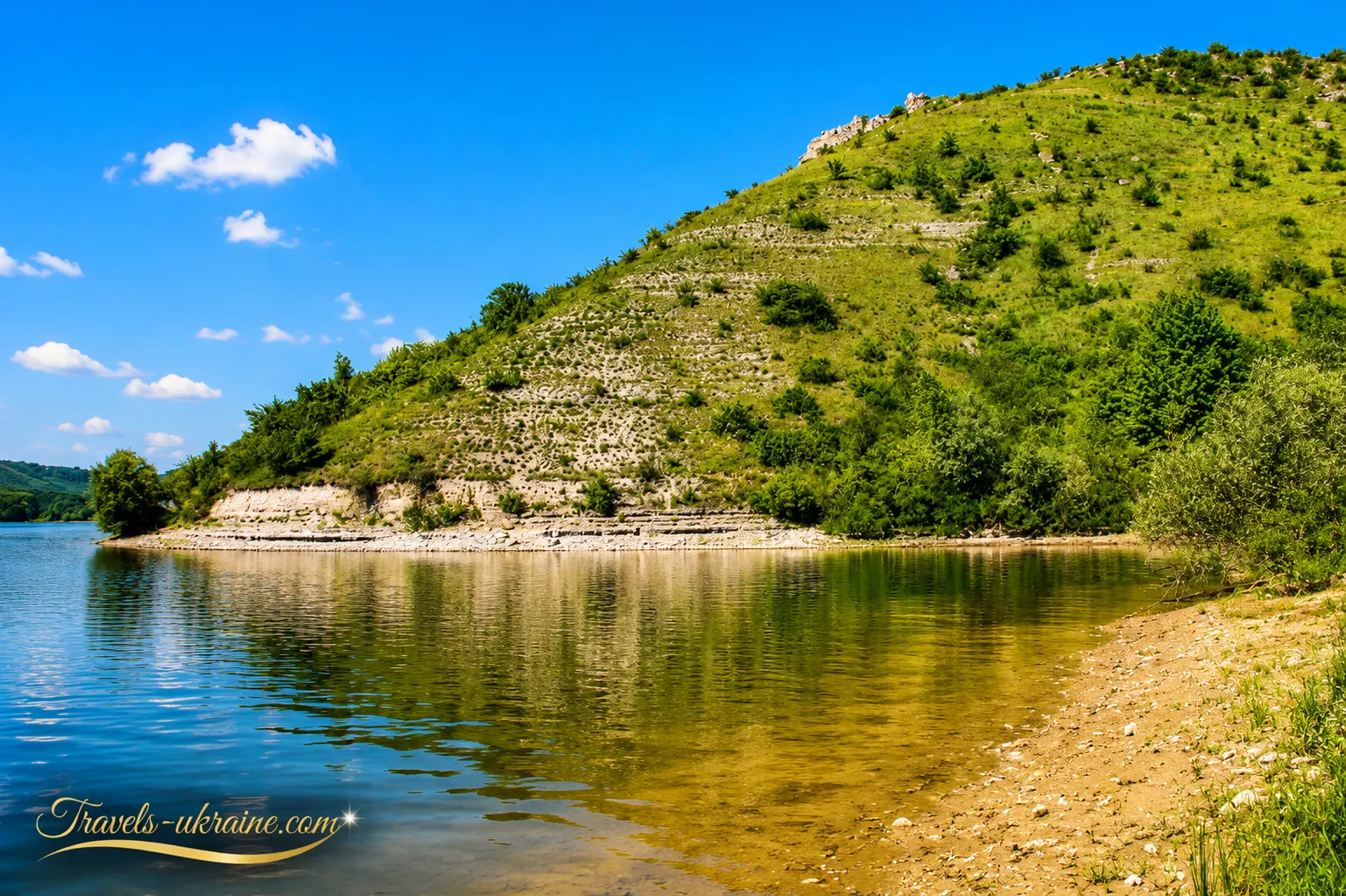
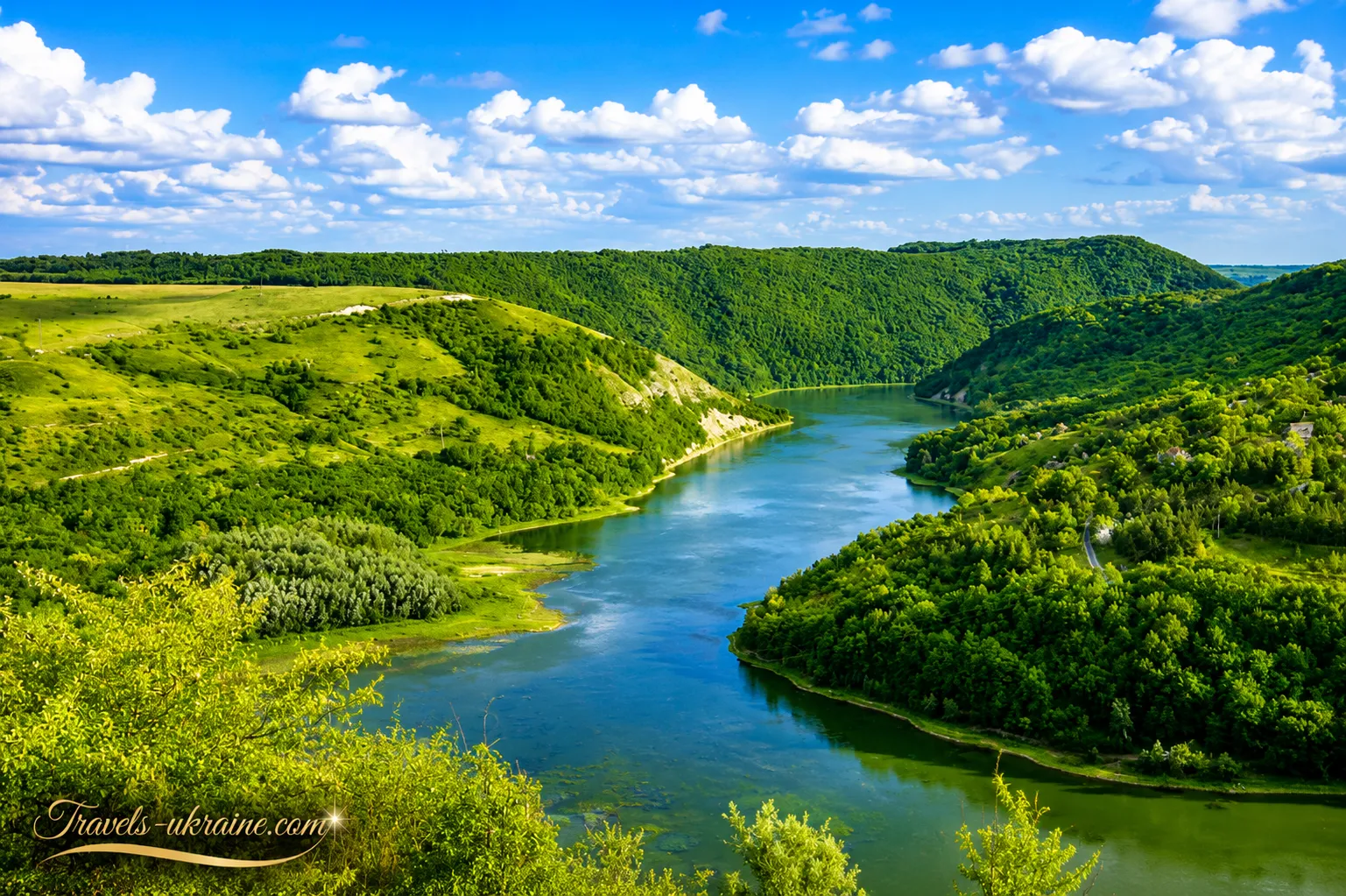
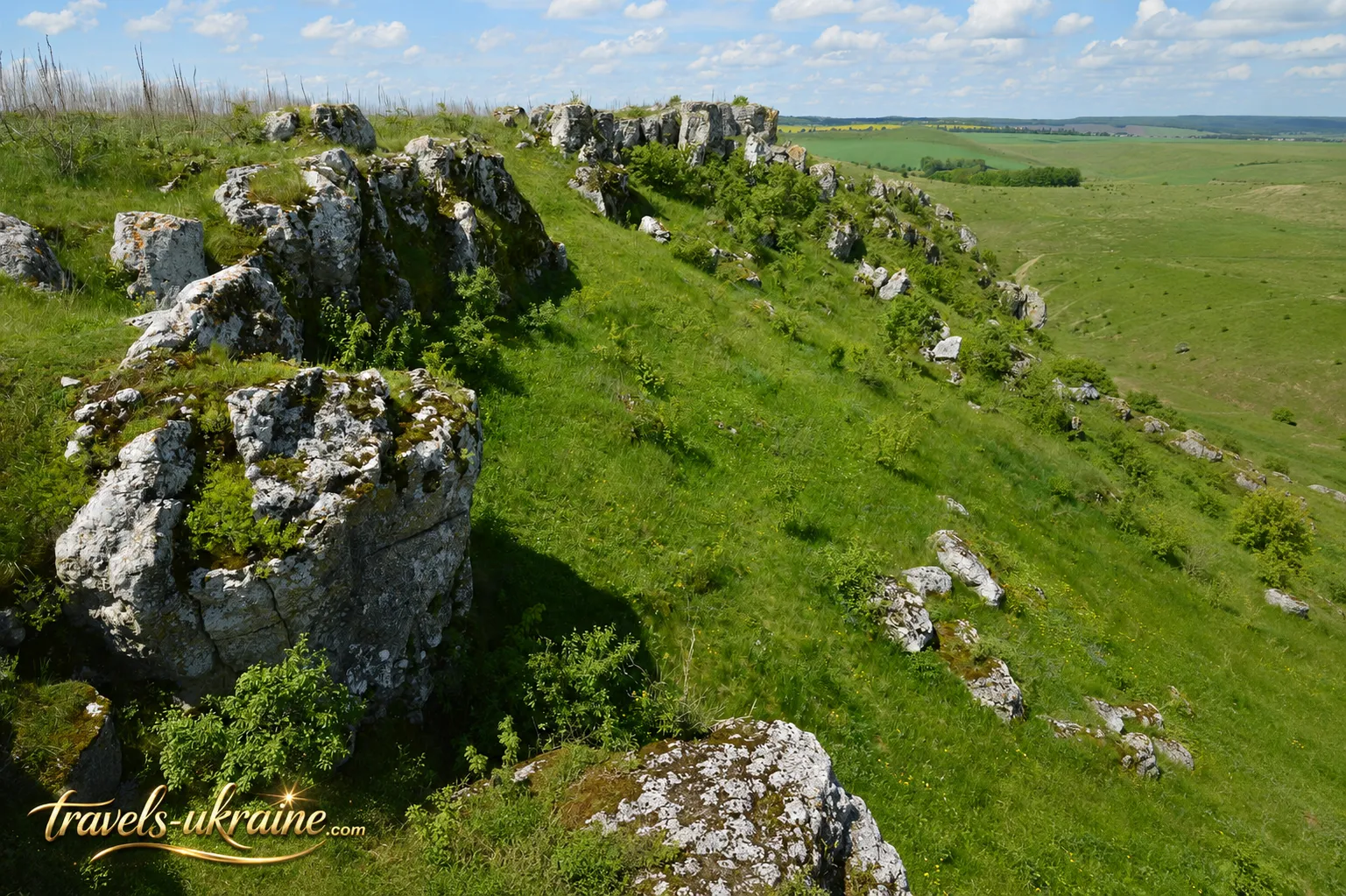
Flora and Fauna of the Podolian Tovtry: When Nature Clearly Went Overboard with Diversity
The Podolian Tovtry are not only canyons, cliffs, the Dniester and landscapes so stunning that tourists suddenly forget where they put their lens cap. They are also home to an extraordinarily rich living world. The park is home to 2977 species, forms and varieties of plants from different climate zones. In other words, nature here clearly did not settle for “a little grass, a few trees and one pretty shrub”, but assembled an almost complete botanical collection under the open sky.
This diversity includes 521 species of trees and shrubs, 395 species of fruit-bearing plants, 620 species of tropical plants and 111 species of useful herbaceous plants from the local wild flora. For an ordinary tourist, this means one simple thing: even if you are not a botanist, there is plenty to see here. And if a botanist is travelling with you, be prepared for the walk to take longer, because “this plant is very interesting” will be repeated roughly every ten metres.
The fauna of the Podolian Tovtry is no less impressive than its plant life. About 366 species of vertebrate animals live within the national nature park: 71 species of mammals, 223 species of birds, 10 species of reptiles, 11 species of amphibians and 51 species of fish. In other words, the park is alive not only during the day and not only where a tourist trail has been laid. Birds may appear in the sky, small inhabitants in the grass and fish in the water, while somewhere in the forest someone will be watching the tourists very carefully and perhaps thinking, “These people with their phones again.”
That is why a journey through the Podolian Tovtry should be seen not as a walk against a beautiful backdrop, but as an encounter with a living protected area. It is important not to make unnecessary noise, pick plants, disturb animals or leave rubbish behind. The best way for a tourist to behave in such a place is to look attentively, take photographs carefully and remember that nature here is not scenery but the rightful host.
Another Face of the Podolian Tovtry: The Red Data Book, 7 Natural Wonders of Ukraine and UNESCO
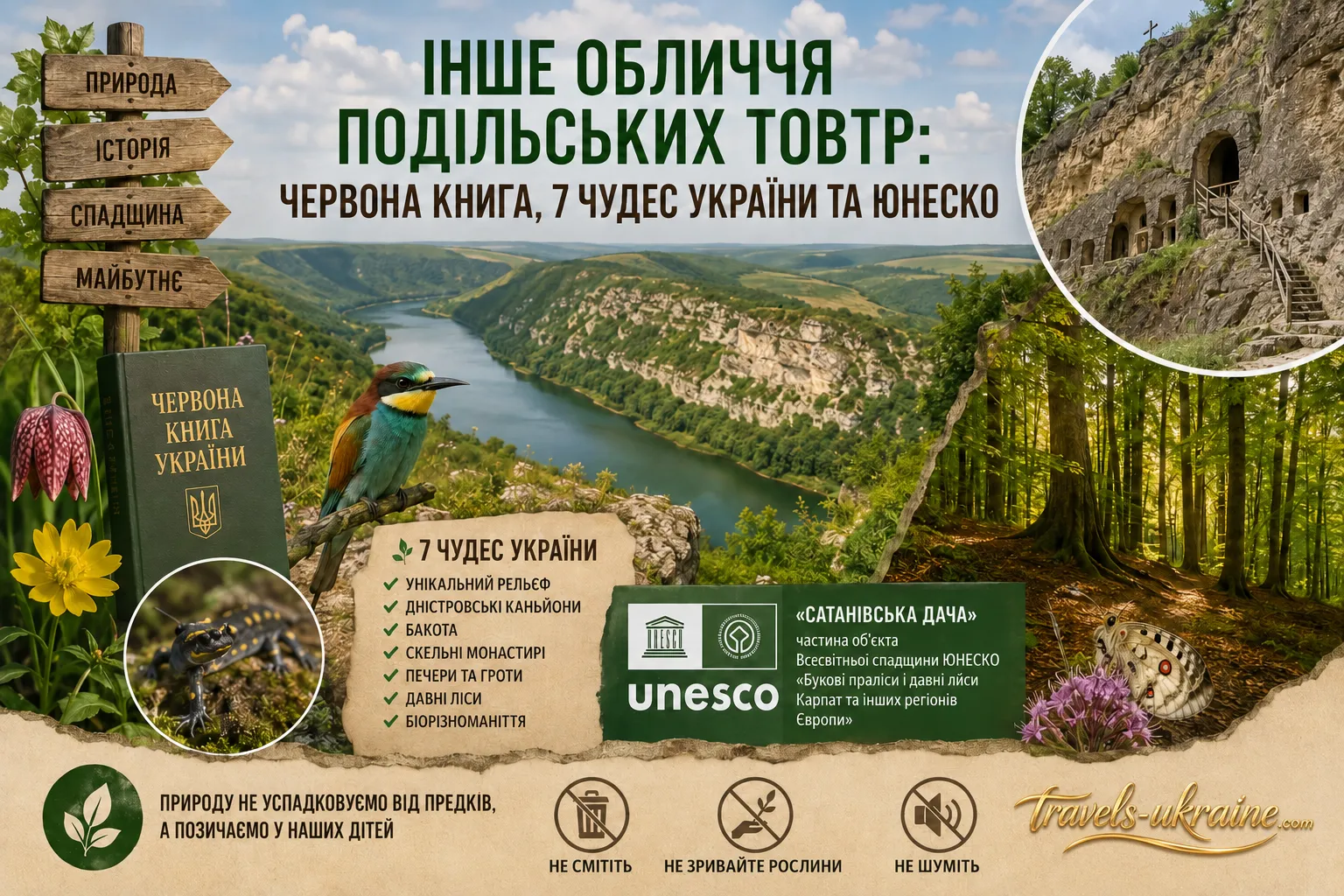
The Podolian Tovtry are easy to fall in love with at first sight: the Dniester glitters in the sun, cliffs pose beautifully for photographs, canyons add drama, and tourists are already mentally planning where to post it all on social media. But behind this picturesque image lies another, no less important face of the park—the conservation face. The «Podolian Tovtry» natural park is not merely a beautiful place for walks, but a vast protected area where rare plants and animals, unique forests, geological monuments and landscapes are preserved—landscapes that took far longer to form than humanity took to learn how to pack a backpack properly.
That is why it is worth looking not only at the panoramas but also at your feet, around you and even a little upward—perhaps a rare bird will fly past, or a plant will be growing on the slope that is better photographed than picked “as a souvenir”. Species listed in the Red Data Book of Ukraine occur within the park, which means that what we have before us is not simply beautiful nature but a living system that needs silence, respect and one very simple tourist rule: when you visit nature, behave so that you will be invited back.
The Red Data Book of Ukraine: Rare Nature in the Tovtry
The flora and fauna of the Podolian Tovtry are among the park’s greatest treasures. Forest, steppe, rocky, meadow and river natural complexes come together here, making the area home to many species of plants and animals. Some are rare and protected by law: 75 plant species are listed in the Red Data Book of Ukraine, all of them vascular plants, along with 126 animal species. For tourists, this is very simple: if you see an unusual flower, a beautiful butterfly, bird or bat, you do not need to immediately start an expedition with your hands. The best way to encounter wildlife is to observe, photograph and avoid disturbing it.
Particular care is needed on rocky slopes, in wooded areas, near caves, bodies of water and canyons. Such places are often sensitive natural habitats. A person may feel they have merely “stepped slightly off the trail”, while to plants or small park inhabitants it can sometimes look like an unexpected visit from an elephant to a tiny kitchen. That is why ecotourism in the Podolian Tovtry begins not with a beautiful phrase but with very ordinary behaviour: do not litter, make noise, pick plants or venture where nature is clearly asking for peace.
7 Natural Wonders of Ukraine: When Nature Officially Said, “I’m the One in Charge Here”
The Podolian Tovtry are included among Ukraine’s natural wonders, and this is not merely an honorary tourism title for a promotional brochure. The status clearly explains why the park deserves attention: an ancient reef, canyons, limestone cliffs, the Dniester, Bakota, Smotrych Canyon, forests, historical monuments and nature trails all come together here. In other words, the Tovtry are one of those places where nature did not settle for a single “highlight” but generously scattered a whole handful of them.
For travelers, that is a major advantage: you can come here for the views, the peace and quiet, the history, or an active getaway. Some will come to see the Dniester cliffs, some to stroll around Kamianets-Podilskyi, some to discover Bakota, while others will simply realize that the plan to “see everything in one day” was wildly optimistic. The Podillia Tovtry quickly teach tourists humility: the route is always longer than it looks on the map.
UNESCO and Satanivska Dacha: international recognition without unnecessary pomp
Particular attention should be paid to “Satanivska Dacha”—a forest area within Podillia Tovtry National Nature Park that forms part of the UNESCO World Heritage Site “Ancient and Primeval Beech Forests of the Carpathians and Other Regions of Europe.” This is an important detail to state accurately: it is not the entire park that belongs to the UNESCO heritage site, but this specific valuable area. And although the name “dacha” may sound rather homey, as if there should be a gazebo, a barbecue grill, and a neighbor with a lawnmower somewhere nearby, it actually refers to a natural area of international importance.
The value of «Satanivska Dacha» lies in its ancient beech forests, which preserve their natural structure, biodiversity, and vital ecological role. Such places matter not only to Ukraine but to Europe as a whole, showing what forests can be like when they are allowed to live by their own rules. For tourists, it is a reminder that Ukraine’s largest national nature park is not merely a pretty weekend destination, but part of a great natural history recognized far beyond the country’s borders.
It is this other side of the Podillia Tovtry that makes the park truly special. Here, beauty has depth, panoramas have conservation value, and every walk can become a small lesson in responsible tourism. And if you return home with photos, memories, and a desire to come back—not a bouquet of picked flowers—congratulations: you did everything right.
What to See and Do in the Podillia Tovtry
Podillia Tovtry National Nature Park is not the kind of park where showing a tourist one sign, one bench, and saying, «That’s basically the whole program,» is enough. Things are a little more complicated here—and much more interesting. This land of canyons and cliffs covers a vast area filled with caves, river valleys, historic sites, viewpoints, and recreational areas. So the main advice is simple: do not try to see everything in one day. The Podillia Tovtry do not appreciate haste, and they also have a sneaky habit of holding travelers up with beautiful views precisely when they were “definitely supposed to be moving on.”
For a first introduction, it is best to choose several key destinations: Bakota, the Dniester, Smotrych Canyon, Kamianets-Podilskyi, Atlantis Cave, or one of the park’s recreational areas. Such a route will let you experience the essential truth: nature is never repetitive here. In one place it speaks the language of cliffs, in another of water, elsewhere of the silence of old forests, and sometimes of tourist excitement, when someone says, for the fifth time in a row, “This is definitely the last photo.”
Bakota and the Dniester: the most emotional stop in the Tovtry
Bakota is one of the best-known and most powerful destinations in the Podillia Tovtry. People come here for Dniester panoramas, peace and quiet, the rock monastery, waterside relaxation, and that special feeling when a view suddenly becomes bigger than all your travel plans. Bakota Bay is a place where water, cliffs, and green hills create a landscape that is easy to remember even without a photo. Though, to be honest, hardly anyone leaves without taking one.
Here you can walk to viewpoints, visit the rock monastery, sit above the water, take a photo break, or simply allow yourself a few hours of unhurried relaxation. During the warm season, popular activities include boat trips on the Dniester, short excursions, relaxing in nature, and weekend routes. This tourist gem of Podillia is well suited to family trips, romantic getaways, photo journeys, and those moments when you want to go “somewhere beautiful, but without running a marathon.”
Smotrych Canyon and Kamianets-Podilskyi: nature and history
Smotrych Canyon is one of Podillia’s most striking natural destinations, where you can clearly see how good nature is at architecture. High rocky slopes, the Smotrych River, bridges, the old town, and Kamianets-Podilskyi Castle create a view that needs no extra explanation. Just step onto a viewpoint and it becomes clear why the search query Podillia Tovtry within Kamianets-Podilskyi Raion is so popular with travelers.
Kamianets-Podilskyi itself deserves a place on the itinerary for at least half a day on a family trip, or preferably a full day. The museum city pairs perfectly with nature tourism: in the morning, you can walk through the canyon and along the old streets, visit the fortress in the afternoon, and return to the Dniester or Bakota in the evening. One warning: Kamianets has a talent for quietly stealing your time. You plan to “take a quick walk,” and suddenly you are choosing a place for dinner because somehow the entire day has stayed in the city.
Atlantis Cave: a mysterious underground adventure
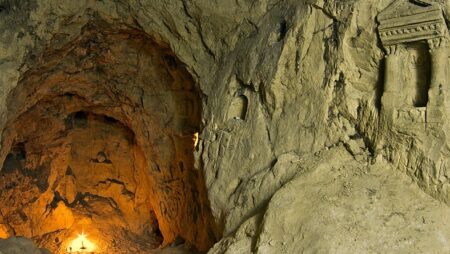
Atlantis Cave near the village of Zavallya is a geological natural monument of national significance and one of the most interesting underground sites in the natural heritage of the Podillia Tovtry. According to the national park, this gypsum cave is approximately 1800 meters long and known for its flowstone formations, stalactites, and stalagmites. For tourists, it is a chance to see another side of the park—not sunlit and panoramic, but cool, subterranean, and slightly mysterious.
At the same time, caves are not places for improvisation along the lines of “Why don’t we just go in ourselves? We’re only having a look.” These routes require a guide, suitable equipment, and an understanding of safety rules. Underground, romance ends quickly where slippery sections, darkness, and the question “Who brought a spare flashlight?” begin. So Atlantis is best planned as an organized excursion, not a spontaneous test of your own courage.
Kitaihorod Outcrop, Sovyi Yar, and sites for observant travelers
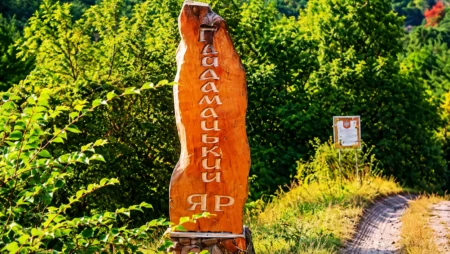
If you want to see the Podillia Tovtry from more than just the popular viewpoints, look out for natural sites that are less “famous” but no less fascinating. The Kitaihorod Outcrop is valuable for those interested in geology, ancient rock formations, and the stone history of Podillia. Sovyi Yar attracts visitors with its natural atmosphere, green slopes, and the feeling of a quieter route. Such places do not always draw crowds, but they often offer exactly the peace and quiet that inspires people to visit Ukraine’s nature parks.
These destinations are ideal for travelers who like to look closely. You may not find a grand “postcard” panorama in the first minute, but there is a different kind of value here: the texture of the rock, the shape of the slopes, the vegetation, the silence, the local views, and the feeling that you are discovering not a mass-marketed tourist spot but a genuine fragment of Podillia. Sometimes these are the places people remember longest—perhaps because there is less noise and more room for your own impressions.
Recreational areas in the Podillia Tovtry without the fuss
For those looking not only for an excursion but also for a peaceful break, the park has designated recreational areas. These include “Sokil,” “Teremtsi,” “Ancient Bakota,” and “Studenytsia.” They are good options for travelers who want to spend time in nature, stay near the Dniester, take a break, or simply relax without feeling that the trip has turned into a fitness test.
A recreational format is especially convenient for family trips. Children can “let off some steam,” adults can rest, and the itinerary finally stops looking like a spreadsheet of tasks and deadlines. The main thing to remember is that a recreational area in a national nature park is still part of a protected territory. In other words, relax beautifully—but without litter, excessive noise, or the urge to see how much enthusiasm nature can withstand.
Types of Recreation in the Podillia Tovtry
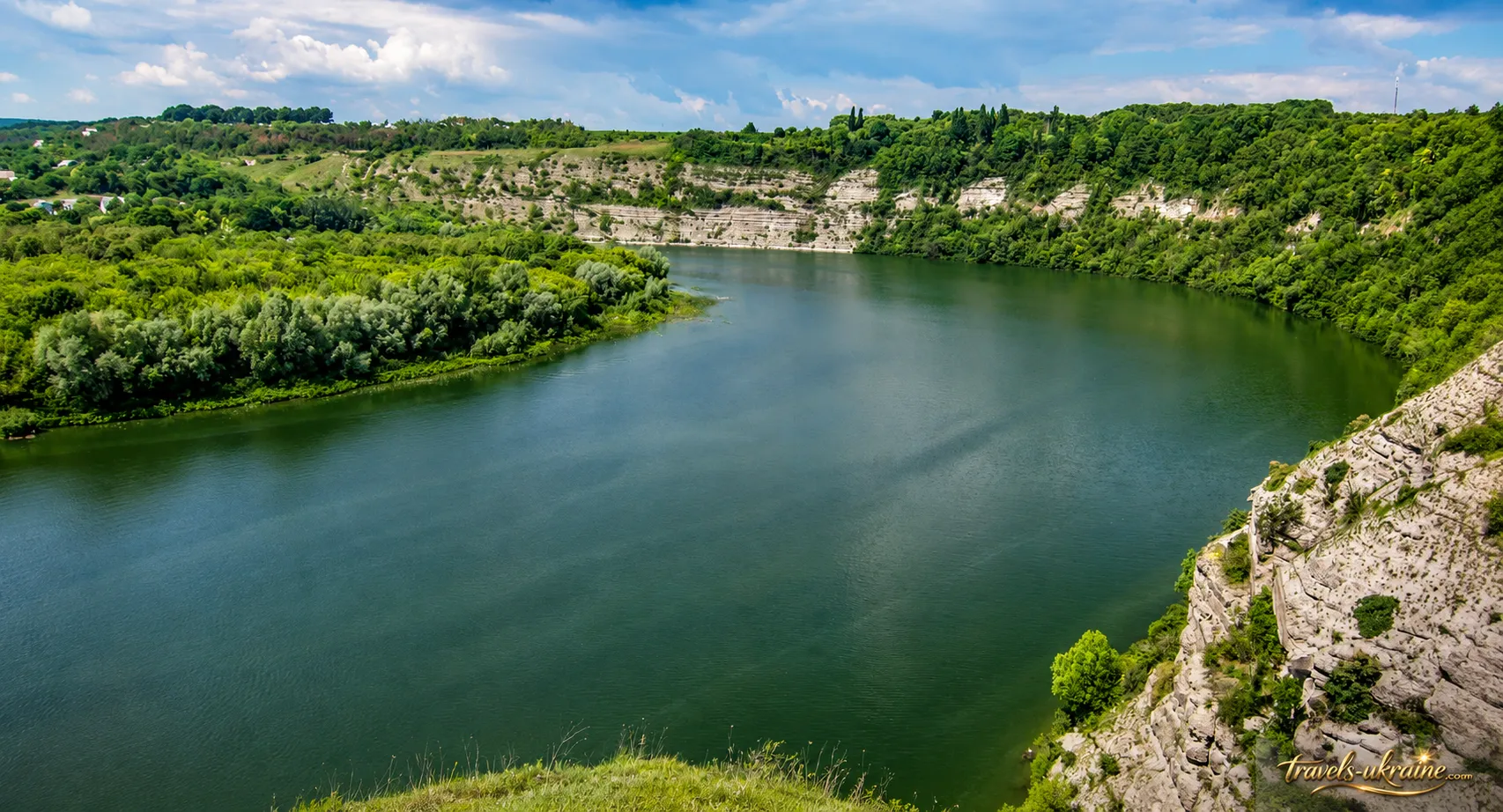
The Podillia Tovtry are the kind of place where you can tailor your time away to your mood. Want peace and quiet, a blanket, a thermos, and a view that makes even a sandwich taste better? Go right ahead. Want water, a boat, a kayak, and a little adventure? The Dniester is happy to oblige. You can plan a peaceful retreat in nature, nature excursions, a family picnic, a photo trip, an overnight stay in tents in permitted recreational areas, or an active day by the water. The main thing is to remember that this is a national nature park, so your recreation should be beautiful not only for the tourist but for nature itself.
So, for anyone wanting to escape the noise of the city, the Tovtry offer a classic recipe that never fails: fresh air, green slopes, the Dniester, peace and quiet, and a few unhurried hours. You can have a picnic in a natural area, follow an ecological trail, book a nature excursion and listen to a guide talk about an ancient reef, or simply sit overlooking the water and pretend you are doing some very deep philosophizing. Though perhaps that is exactly what you are doing.
Of course, a popular form of recreation is also available here: spending the night in a tent by the Dniester or in specially designated natural and recreational areas. It is a wonderful option for those who want to watch the sunrise over the water, listen to the evening quiet, and discover that a real hotel sometimes has a roof made of stars. But it is important to pitch tents only where permitted, avoid lighting fires in prohibited areas, and not turn your getaway into a trial for the protected landscape. Nature here is hospitable, but it is not a cleanup crew for tourists.
One of the Podillia Tovtry’s special points of pride is recreation by the Dniester. During the warm season, a variety of water activities are available: swimming in permitted and safe places, boating, sightseeing boat trips, catamaran rides, kayaking, water routes along scenic shores, and, at certain locations, even diving and other water-based activities. In these places, the Dniester does not merely decorate the landscape—it becomes a full part of the itinerary.
Which type of recreation should you choose?
If you are traveling with family, choose an easy route: viewpoints, a picnic, a short walk, and recreation in the Podillia Tovtry by the water. For a group of friends, tents, kayaks, boats, or an active day outdoors are good choices. For couples, there is Bakota, evening panoramas, a stroll, and the kind of silence that makes you forget to check your phone every five minutes. And for anyone simply tired of the city, the Podillia Tovtry can be a place where all you need to do is sit on the bank, look at the Dniester, and remember that recreation is not always about “fitting everything in.” Sometimes it means finally having nowhere to hurry.
- For a peaceful break: picnics, walks, viewpoints, and nature excursions.
- For an active getaway: kayaks, boats, water routes, diving, catamarans, and other water activities.
- For spending the night in nature: tents by the Dniester or in permitted recreational areas.
- For a family trip: safe destinations, short routes, waterside recreation, and a minimum of extreme experiments.
The Podillia Tovtry are wonderful because everyone can find their own way to relax here: some will seek peace and quiet by the water, some an adventure by kayak, some an evening by the tent, and others simply the perfect picnic spot with a view. There is just one essential rule: enjoy yourself in a way that leaves nature with nothing but footprints on the trail—not a bag, a bottle, or the legendary “we’ll come back for it later.”
Frequently Asked Questions About Podillia’s Tovtry: Routes, Bakota, the Dniester, Recreation, and Travel Tips
Where are Podillia’s Tovtry located?
Podillia’s Tovtry are located mainly in Khmelnytskyi Oblast, within Kamianets-Podilskyi Raion and the surrounding areas of Podillia. This large national nature park features canyons, limestone cliffs, river valleys, the Dniester, Bakota, Smotrych Canyon, and numerous nature trails. Put simply, it is one of those places where the map says “park,” but what you find in reality is an entire world to explore.
What is the best way to get to Podillia’s Tovtry?
The most convenient options are traveling by car or joining an organized excursion. Kamianets-Podilskyi is a good base for your route, with convenient access to Bakota, the Dniester, Smotrych Canyon, Atlantis Cave, Sataniv, and other destinations. Public transport can take you to larger towns, but reaching some natural attractions may require a bit of extra effort—as if the navigation app decided to do some traveling of its own.
How much time is needed for a trip through Podillia’s Tovtry?
For a first introduction, plan at least one full day, though two or three days are ideal. In one day, you can see Kamianets-Podilskyi with Smotrych Canyon or visit Bakota and enjoy panoramic views of the Dniester. If you also want to add Atlantis Cave, Sataniv, Khotyn, or a relaxing break by the water, it is better not to rush. Podillia’s Tovtry are not a place for a sightseeing marathon; here, beautiful pauses are often more important than the number of boxes checked on your itinerary.
What should you обязательно see in Podillia’s Tovtry?
On your first trip, be sure to consider Bakota, the Dniester, Smotrych Canyon, Kamianets-Podilskyi, the Dniester Cliffs, Atlantis Cave, Sataniv, and recreational areas by the water. If time is limited, choose two or three locations rather than trying to see everything at once. In Podillia’s Tovtry, landscapes have a curious way of working: you plan to stop for 10 minutes, and suddenly you are discussing where to watch the sunset.
Can you relax by the Dniester in Podillia’s Tovtry?
Yes, the Dniester is one of the main highlights of Podillia’s Tovtry. You can plan walks, picnics in permitted areas, water excursions, boating, kayaking, swimming in safe locations, and relaxing while enjoying the scenery. It is important to follow safety rules: do not jump into the water from unfamiliar places, do not overestimate your abilities, and wear a life jacket during water activities. The Dniester is beautiful, but it is still a river, not a decorative pool for tourist photos.
Is camping overnight permitted in Podillia’s Tovtry?
Overnight camping is permitted only in designated recreational areas or where it does not conflict with the rules of the national nature park. Before your trip, check the current conditions for the specific location. You may not pitch a tent just anywhere, light fires in prohibited areas, leave litter, or damage vegetation. A good camping trip is one where all you leave behind is flattened grass, good memories, and not a single bag in the bushes.
Are Podillia’s Tovtry suitable for a family trip with children?
Yes, Podillia’s Tovtry are well suited to family travel if you choose the route carefully. With children, plan short walks, safe viewpoints, Kamianets-Podilskyi, Bakota, time by the Dniester, and locations without challenging climbs. Avoid dangerous cliffs, slippery slopes, and long stretches without breaks. When a child says “I’m tired” during a trip, it is better to treat it not as a drama but as an official signal: time for water, a snack, and a short rest.
Why are Podillia’s Tovtry important for Ukraine’s natural heritage?
Podillia’s Tovtry are highly valuable for nature conservation because they preserve unique landscapes, remnants of an ancient barrier reef, canyons, cliffs, forests, and rare plants and animals. Some species are listed in Ukraine’s Red Data Book, while the Satanivska Dacha area within the national park is part of a UNESCO World Heritage Site. This is therefore more than just a beautiful tourist destination—it is an area that must be protected for future generations.
What footwear and equipment are needed for a route through Podillia’s Tovtry?
For most routes, comfortable closed-toe shoes, water, snacks, a hat, a power bank, an offline map, and a small first-aid kit are enough. If you plan to visit caves, take part in water activities, or camp overnight, you will need additional equipment and, preferably, the guidance of experienced people. Footwear is particularly important near canyons and cliffs and after rain. Podillia’s Tovtry do not require mountaineering skills, but they quickly explain why city white sneakers are not always the best idea for a hike.
When is the best time to visit Podillia’s Tovtry?
The best time to travel is spring, summer, and early autumn. In spring, the park comes alive with greenery and flowers; summer is ideal for relaxing by the Dniester, planning water excursions, picnics, and active routes; and in autumn, Podillia’s Tovtry are especially beautiful thanks to their warm colors and clear air. Winter is quieter and attracts fewer tourists, but you need to pay closer attention to the weather, road conditions, and the accessibility of individual locations.
Podillia’s Tovtry — A Journey That Stays With You
Podillia’s Tovtry are not just another beautiful corner on Ukraine’s tourist map. This is a land that amazes you at first sight and does not let go even after you return home. Everything here has depth: the cliffs remember an ancient sea, the Dniester quietly carries its own story between green banks, the canyons open up space and silence, and the forested hills seem to remind us that nature can be majestic without making a sound. In the Tovtry, you do not need to look for impressions—they find you at every turn of the route.
This place is special because it brings together almost everything we set out to find when we travel: beauty, peace, history, adventure, water, stone, greenery, legends, and the feeling of a genuine discovery. You can stand above Bakota and look at the Dniester for so long that it feels as if time has suddenly decided to pause. You can walk through Smotrych Canyon and catch yourself thinking that nature was no less talented an architect than people. You can travel between villages, cliffs, and hills and suddenly realize that Ukraine is much larger, deeper, and more beautiful than we sometimes tend to think.
There is no single impression in this region that can be briefly described and brought to a conclusion. Podillia’s Tovtry are made up of many moments: your first view of the Dniester Cliffs, evening light over the water, cool air near the caves, the scent of grasses on the slopes, the road to Kamianets-Podilskyi, Bakota’s silence, the stone beneath your feet, and the quiet wonder of realizing that you are walking across land that was once covered by the sea. This is not simply a tourist route—it is an encounter with time, nature, and your own ability to slow down.
That is why a journey to Podillia’s Tovtry should not be turned into a rushed list of destinations. This park needs to be experienced. Stop by a viewpoint without hurrying. Listen to the wind above the canyon. Watch the Dniester change color throughout the day. Give yourself a few minutes of silence by Bakota. And perhaps that is when the main realization will come: the most powerful places do not always shout about themselves. Sometimes they simply remain quiet—but in a way you remember for years.

No Comment
You can post first response comment.