There are places where silence speaks louder than any guide. Klevan Castle is exactly such a place. It seems to stand frozen between the past and the present: stern, mysterious, slightly wounded by time, yet still majestic. Its stone walls have witnessed princely ambitions, anxious times of defence, the changing of eras and the fates of people. Today, the castle in Klevan does not simply stand in Rivne region as an ancient landmark — it draws the eye, awakens the imagination and makes you wonder how many untold stories are still hidden in its ruins.
This place has a special intrigue. You only need to come closer to the old walls — and it feels as though they remember more than they are ready to reveal at once. Every fragment of masonry, every crack in the stone, every silhouette of the former fortress hints at events that once unfolded here in earnest: defence, struggles for influence, princely life, anxious waiting and quiet moments after turbulent days. Klevan Fortress does not tell its story directly — it makes you look closely, listen carefully and read the past between the lines of time.
The Czartoryski Castle in Klevan is not just an old defensive structure; it is a place with character, where the severity of a medieval fortress meets the romance of abandoned ruins. Once, its walls were meant to protect, hold back enemies and demonstrate the power of their owners. Now they play a different role — preserving memory, creating atmosphere and giving travellers a rare feeling of touching real, unembellished history.
For a tourist, the castle in Klevan becomes more than just a stop along the route. It is a space where, for a few minutes, you can step out of the everyday rhythm and find yourself beside a past that has not disappeared completely, but merely changed its form. There is no excessive museum grandeur here, but there is something often more valuable: a living atmosphere, the silence of old walls, a faint taste of mystery and the feeling that every stone has its own memory. That is why the ruins of Klevan Castle leave a stronger impression than you might expect at first glance.
Everyone who comes here finds something of their own in this location. For some, Klevan Castle in Rivne region is a valuable historical landmark. For others, it is an atmospheric place for a walk, photography and a peaceful trip near Rivne. And for those who love discovering Ukraine more deeply, the ancient castle becomes a reminder: the most interesting stories are not always on the surface. Sometimes they wait in the shadow of old walls, ready to open only to those who look carefully.
In the Stone Embrace of History: the Fortress of the Czartoryski Princes
Sometimes the past speaks to us not through loud dates, but through quiet traces — artefacts, ancient manuscripts, yellowed documents in which the voices of people, towns and entire eras have been preserved. Such evidence is valuable not only as historical sources. It safeguards the spiritual heritage of generations, helps us feel the continuity of time and reminds us that every landmark has its roots, its memory and its untold story.
It is thanks to preserved historical documents that we have reliable information about the earliest period of Klevan Castle, which researchers associate with the year 1475. At the same time, the settlement of Klevan itself is mentioned in written sources even earlier — in 1458, when it belonged to Prince Mykhailo Czartoryski. These dates are important not only for chronology: they allow us to see that Klevan Castle-Fortress did not appear by chance, but became part of the wider history of princely estates, defence and the development of Rivne region.
It was the Czartoryski princely family that was involved in the construction of the defensive fortress, fragments of which have partly survived to this day. And although today travellers mostly see the ruins of Klevan Castle, these remains still carry the strength of the original structure. Once, these walls were meant to protect, keep danger away and demonstrate the authority of their owners. Now they fulfil another, no less important mission — preserving the memory of the people who built, defended and shaped the history of Klevan.
So the history of Klevan Castle begins not with a beautiful legend, but with a very practical need — to protect an important settlement, roads and estates. In the 15th century, Klevan was not simply a quiet town in Rivne region, but a noticeable centre through which trade and strategic routes passed. That is why the defensive fortress in Klevan appeared: a stronghold capable of withstanding danger, controlling the surrounding area and emphasising the power of its owners.
Klevan Castle of the Czartoryski Princes as a defensive structure and residence
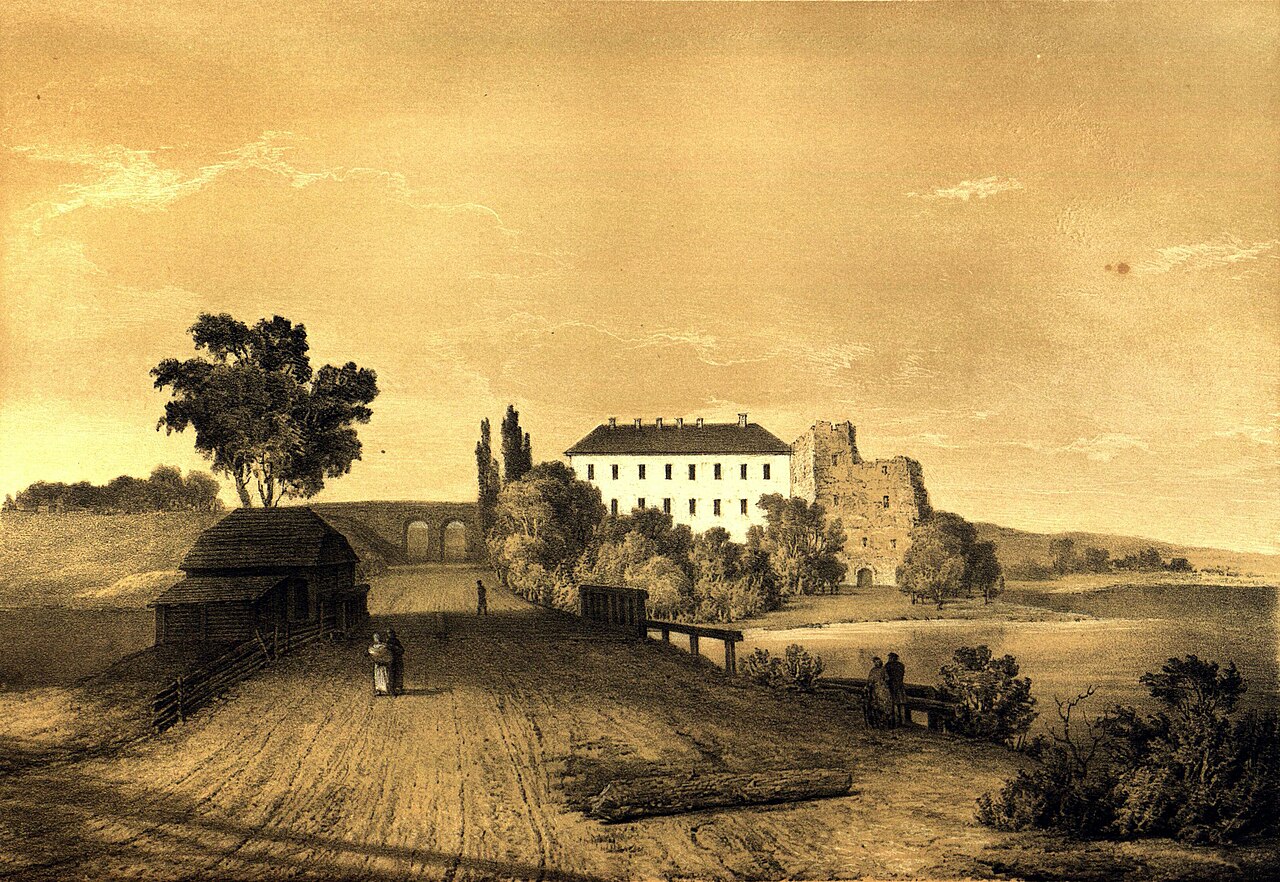
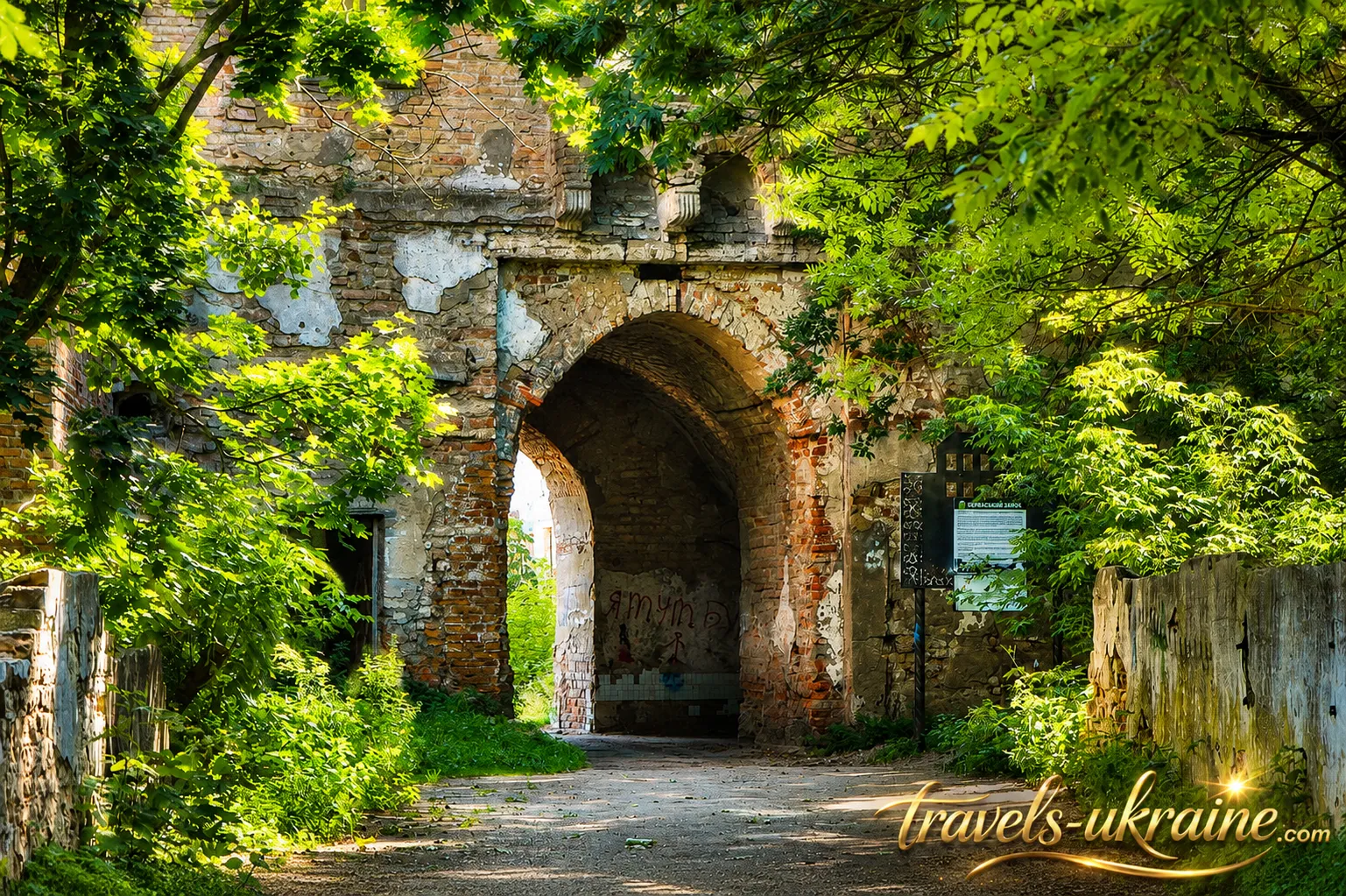
At the time of its foundation, the fortress looked completely different from what we see today. A traveller would have found a fortified castle complex with walls, towers, an entrance gate, utility buildings and an inner space full of life. Distinguished guests could stay here, political matters could be discussed, supplies stored, armed men stationed and the fate of the surrounding lands decided. Klevan Castle-Fortress was part of a larger security system in which every wall had its purpose.
The special feature of this landmark is that the defensive complex cannot be viewed only as a military object. It had a dual character: on the one hand, a fortress; on the other, a castle residence. Such buildings were typical of Ukrainian lands, where the lives of nobles and princes often unfolded under conditions of constant danger. Beauty here did not contradict defence, and defence did not exclude signs of prestige.
It is this duality that makes Klevan Castle of the Czartoryski Princes especially interesting for tourists. Imagine a place where, behind thick walls, the steps of guards, the voices of servants, the conversations of the owners, the clatter of horses’ hooves and distant alarming news from the roads could all be heard at once. The castle was not a decoration, but a living organism. It protected, received guests, frightened enemies and created a sense of strength for those inside.
Over time, the role of the fortress changed. The military importance of old fortifications gradually weakened, political circumstances shifted, new methods of warfare appeared and the ancient walls lost their original impregnability. Yet despite this, the remarkable castle landmark of the town of Klevan did not disappear from local memory, remaining a recognisable part of the region and an architectural witness to eras long gone, but not dissolved without trace.
From a Mighty Fortress to the Ruins of Klevan Castle
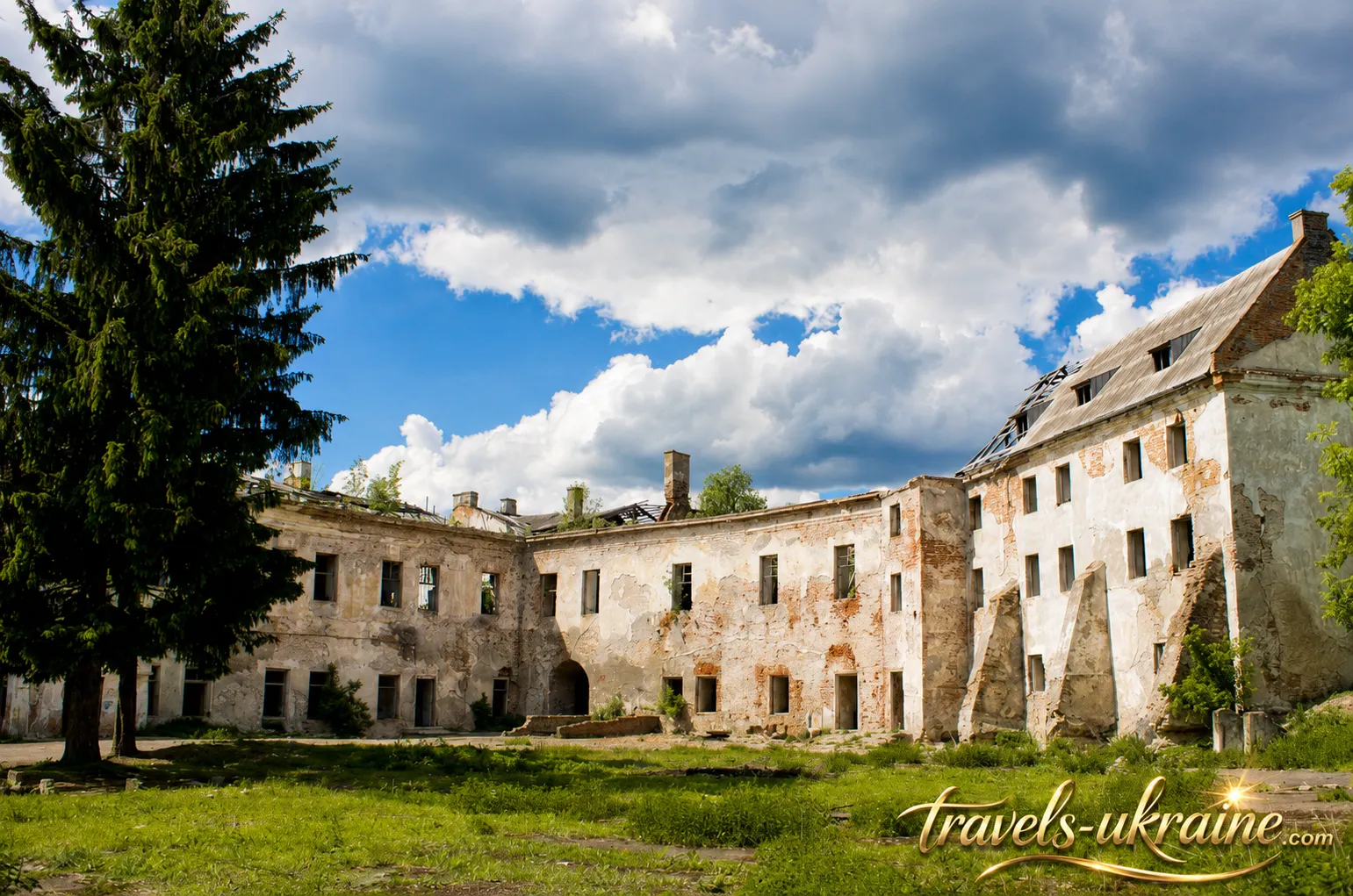
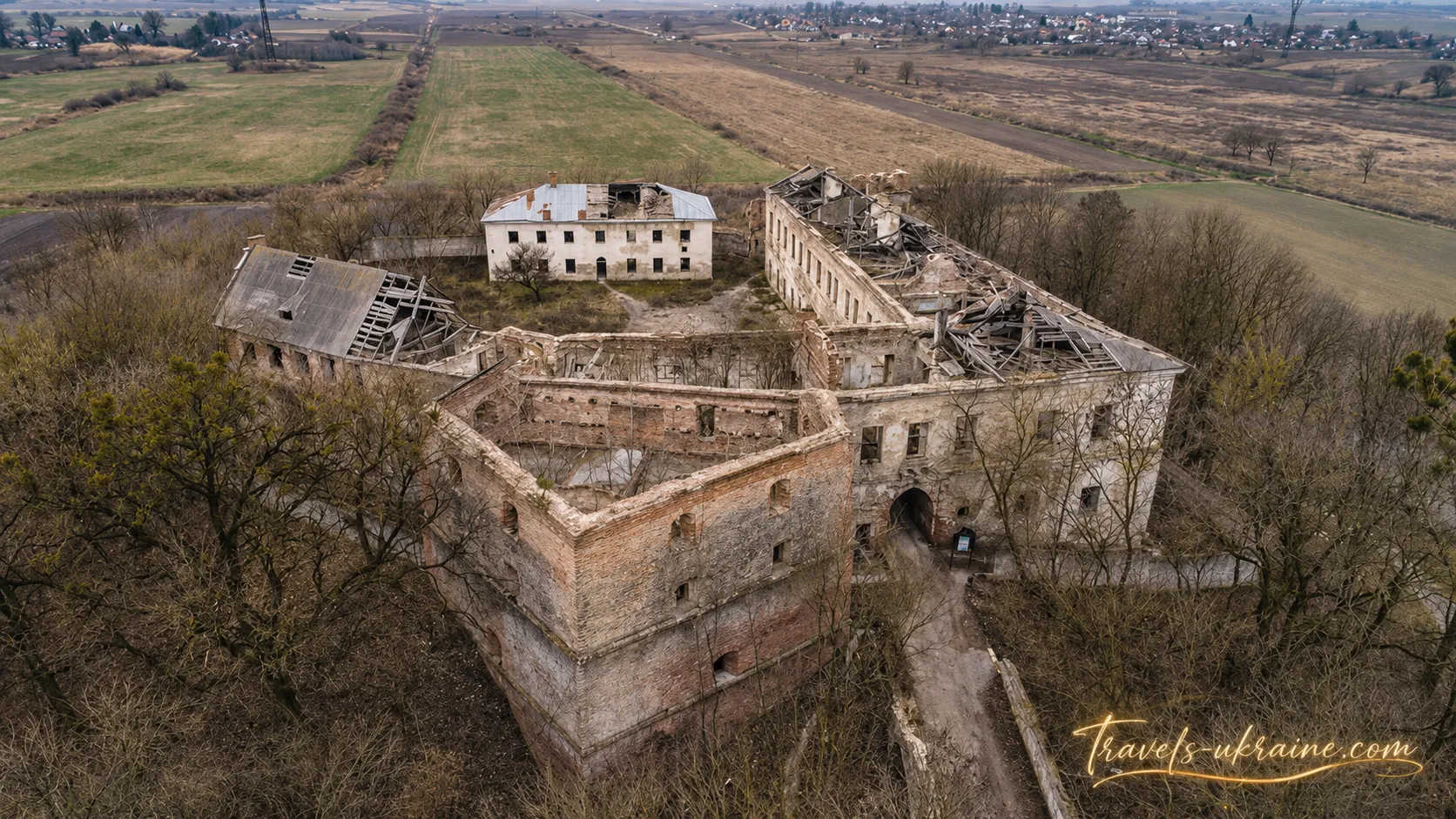
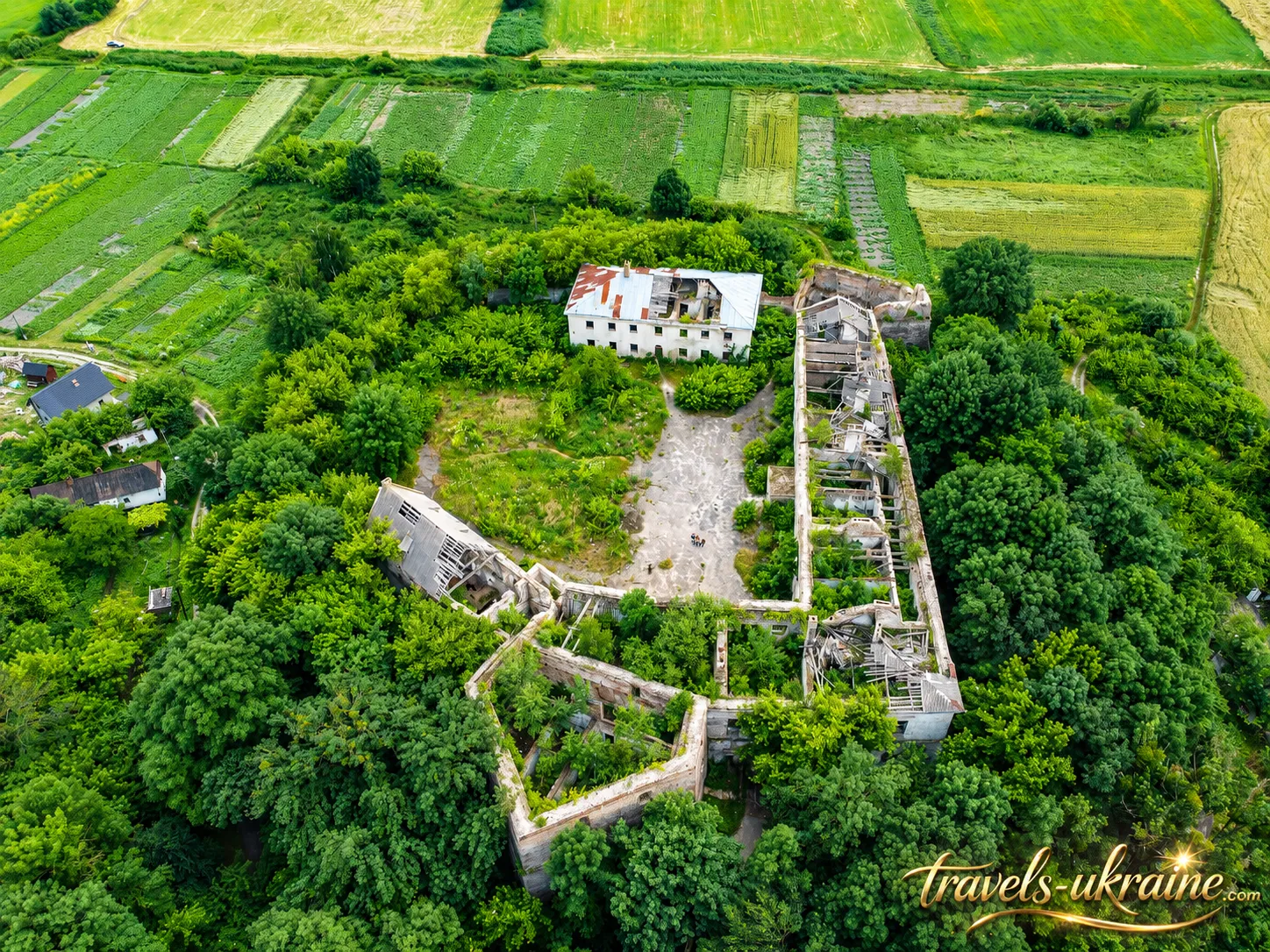
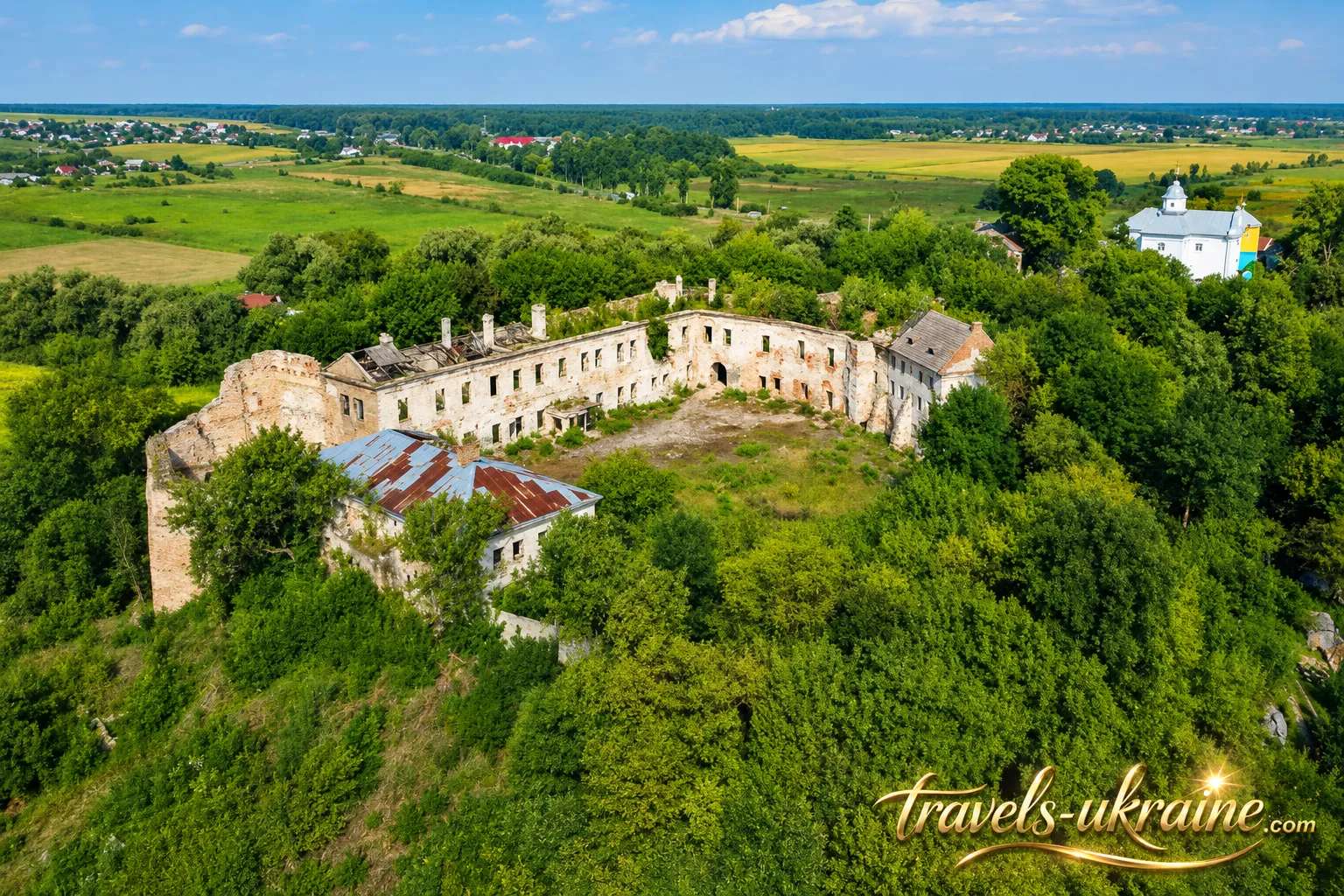
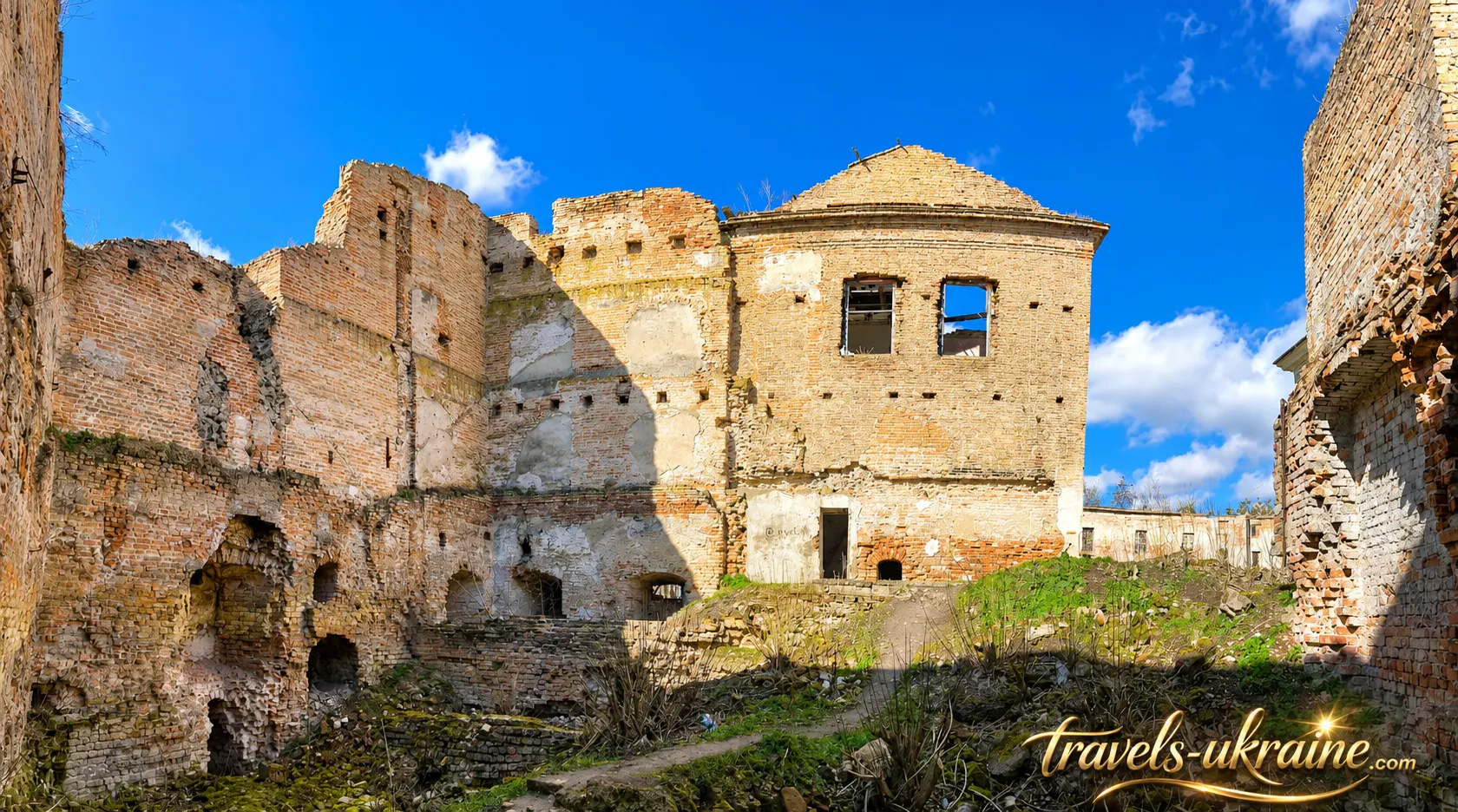
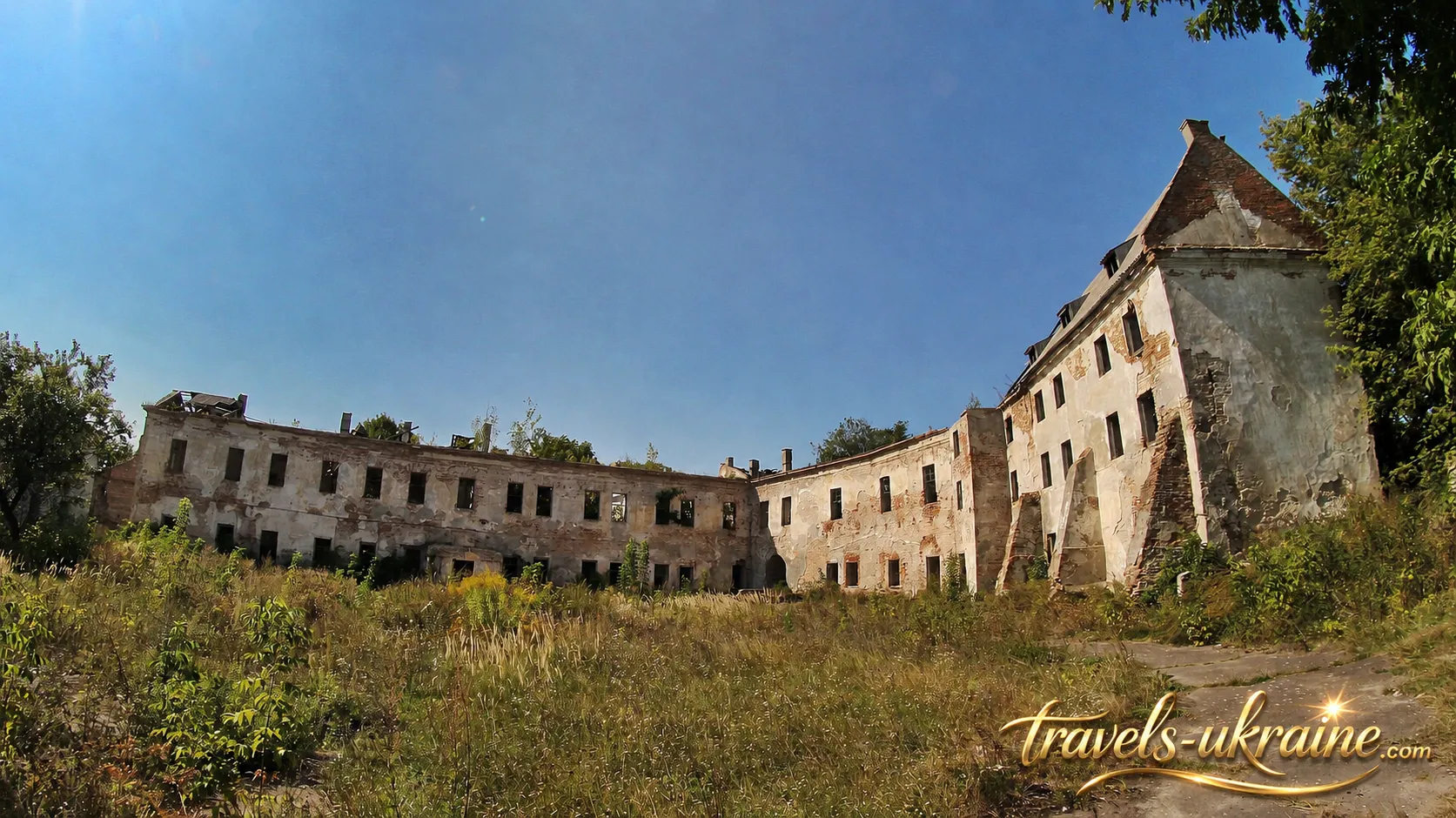
Today, we mostly see the castle ruins of Klevan Castle, but it is precisely they that allow us to feel the dramatic depth of this place. A ruin is not always the end of a story. Sometimes it says more than a perfectly restored building. In the preserved fragments of the walls, you can see how powerful the former defensive fortress once was, while the space itself easily conveys the scale of the castle ensemble that once shaped the face of the town.
The history of the castle was neither smooth nor calm. Like many other castle landmarks in Ukraine, it went through periods of rise, reconstruction, decline and loss of its original functions. What we see today is the result of several centuries of change, human intervention, historical upheavals and natural ageing. Yet even in this condition, the ruins of Klevan Castle preserve a distinct silhouette and the ability to create a strong emotional impression.
For a traveller, it is important to see Klevan Castle not merely as an object for a quick look, but as a place where it is worth stopping and thinking. Here, you can especially feel how history passes into space: into stone, grass, the shadow of walls, uneven ground, remnants of passages and the old outlines of the fortress. That is why a trip to Klevan Castle can become not simply a tourist visit, but a quiet conversation with the past in a modern space.
Why the history of Klevan Fortress matters for understanding Rivne region
Klevan Castle in Rivne region helps us better understand what the historical past was like: a land of princely families, fortified towns, trade routes, cultural influences and a constant struggle for security. Such castles did not appear by chance. They were a response to the needs of their time, when authority had to be visible, defence had to be strong and the residence had to be representative enough to speak of the owner’s status without unnecessary words.
That is why the historical castle in Klevan is worth including in tourist routes not only as a picturesque ruin, but as an important landmark. It reminds us that great events often began not in capitals, but in small towns. Local centres of influence were formed here, defensive lines were built, family residences developed and the cultural fabric was created without which it is impossible to understand Ukraine’s past.
Foundation period: Klevan Castle is associated with the 15th century and the development of princely estates in Rivne region.
Owners: the most famous historical patrons of the castle were the Czartoryski princes.
Original function: a defensive fortress, castle complex and residence of an influential family.
Modern significance: a historical and architectural landmark of Klevan and an important location for travelling through Rivne region.
The history of Klevan Castle is a story of strength, time and memory. Its walls no longer serve a defensive role, but they still hold another important line of protection — the protection of our connection with the past. And as long as tourists come here, look closely at the ruins, ask questions and tell others about this place, Klevan Castle continues to live.
Klevan Castle Ruins: Historical Upheavals and Indifference
Klevan Castle did not become a ruin overnight. Its decline was a long and painful process in which historical upheavals, changing eras, the loss of defensive importance and human indifference were intertwined. Once, this historical and architectural landmark of Klevan was meant to protect the settlement, demonstrate the power of the Czartoryski princes and form an important part of the castle space. But over time, the world around it changed: the old walls could no longer meet new military needs, and the fortress itself gradually lost the role for which it had been created.
The most frightening thing for a castle is not always cannons, fires or enemy attacks. Sometimes a landmark is destroyed more slowly, but no less ruthlessly, by ordinary oblivion. When the castle complex was no longer needed as a defensive structure, the landmark began to be adapted for other purposes, rebuilt, used in parts or left without proper care. In such cases, historical architecture loses not only its appearance, but also its integrity: ceilings disappear, roofs collapse, walls crumble, passages become overgrown, and the former castle ensemble gradually turns into a silent fragment of the past.
But the deepest pain inflicted on the ruins of Klevan Castle came from indifference. Without constant care, even the strongest stone grows tired. Rain washes away mortar, frost widens cracks, plant roots penetrate the masonry, and time does what people did not manage to do. That is why today the ruins of Klevan Castle look not like a random backdrop for photographs, but like honest evidence that historical landmarks need attention, protection and a responsible attitude.
The Castle in Klevan — a Symbol of Lost Heritage
The old castle in Klevan painfully reminds us that heritage does not disappear suddenly. It crumbles gradually — when it is postponed “until later”, when repairs seem untimely, when walls are seen as ordinary old stones rather than part of a people’s memory. In this sense, Klevan Castle in Rivne region is not only a tourist location, but also an important sign for the present: we often do not know how to value what we have until we begin to lose it.
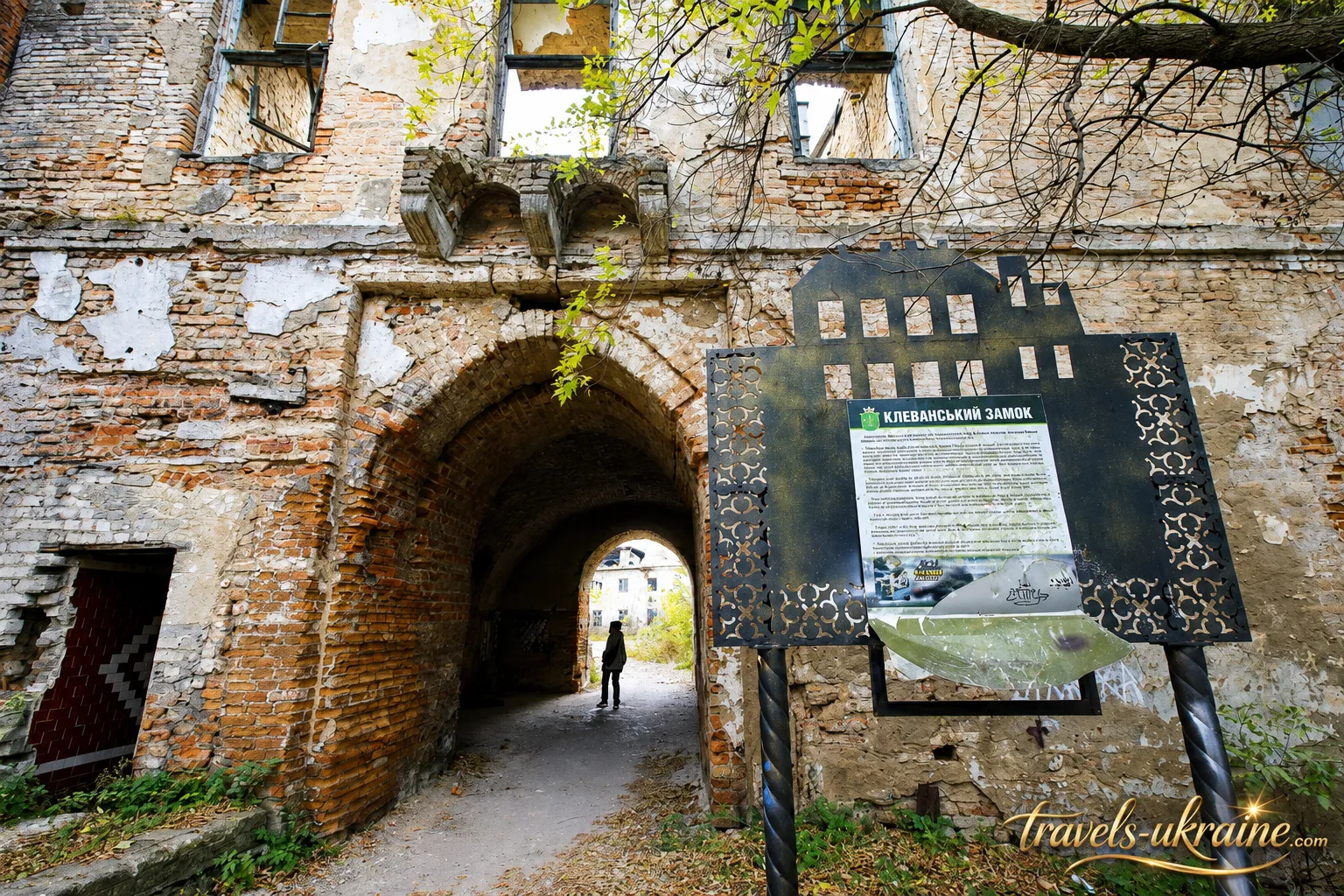
It is difficult to remain indifferent before such ruins. They do not simply show the past — they ask questions. What do we consider valuable? Do we know how to protect what previous generations left us? Do we understand that the castle landmarks of Ukraine are not only beautiful places for travel, but also proof of our historical depth, European belonging and cultural maturity? Unfortunately, the attitude of the Klevan community towards this historical heritage can now be seen without much explanation — in the thickets gradually swallowing the ancient structure, in traces of vandalism, in neglected areas and in the destruction that becomes more visible every year. Where there should be a well-kept territory, information signs, basic care and respect for the landmark, a traveller often sees indifference that hurts no less than the cracks in the walls themselves.
In the Czartoryski Castle in Klevan, this line between grandeur and loss is especially clear. Once there was power here — political, military, architectural. Today, silence remains, but it is not empty. It carries echoes of past centuries, the voices of those who built, defended, lived and left this space to future generations.
Indifference as the Most Dangerous Enemy of Klevan Fortress
The enemy of a castle does not always come with weapons. Often it comes in the form of silent non-intervention. When a crack in a wall is ignored for years, when the territory becomes overgrown, when a landmark has no systematic care, when it is remembered only before the tourist season, destruction becomes almost invisible — but relentless. This is how many ancient fortresses in Ukraine lost their roofs, interiors, towers and part of their historical form.
Klevan Castle near Rivne has survived changing owners, changing states, changing eras and changing attitudes towards heritage itself. Its walls saw times when the fortress was a necessity, and then years when it became an inconvenient monument requiring funds, specialists and long-term attention. And this is where the main drama begins: it is easy to call history valuable, but much harder to protect it every day. Especially when absolute indifference is present.
The ruins of Klevan Castle carry strong emotional meaning. They remind us that every landmark has its limit of endurance. Stone can stand for centuries, but even it cannot resist endless oblivion. If the ancient castle in Klevan is not perceived as a living part of cultural memory, but only as a picturesque background, we risk losing far more than a few fragments of wall.
That is why a journey to Klevan Castle is not just a tourist walk. It is an encounter with a place that has survived historical upheavals, human indifference and long silence. At the same time, it is a chance to see that even a ruin can speak very loudly — about responsibility, memory and the need to protect what can still be saved.
Klevan Castle for Tourists: a Short Guide Before Your Trip
The ancient castle in Klevan is not a restored museum complex, but atmospheric ruins of an old defensive fortress of the Czartoryski princes. It is worth coming here not for the shine of ceremonial halls, but for the feeling of real history: old walls, silence, traces of time and the special energy of the place.
The castle in Klevan is well suited for a short tourist trip through Rivne region. It is easy to combine with a walk around Klevan, the Tunnel of Love and other interesting places to visit near Rivne. The best format for a visit is a calm historical stop of 30–60 minutes, without rushing.
What you should know before visiting Klevan Castle
Before travelling, it is important to remember that the castle of the Czartoryski princes does not always have a perfectly maintained territory. There may be uneven paths, grass, overgrown sections and unsafe fragments of the building, so it is better to choose comfortable footwear and be attentive during your visit.
Type of location: historical castle, defensive fortress, ruins of a castle complex.
Visit duration: approximately 30–60 minutes.
Difficulty: easy, though the territory is uneven and overgrown in places.
Who will find it interesting: history lovers, photographers, families and weekend travellers.
The main impression of the castle in Klevan
The old castle in Klevan should be seen as a place of memory, not simply as a background for photos. It leaves a quiet but powerful impression: before you is not a decoration, but a living part of history that still holds on despite time, indifference and destruction.
Photo and Video Gallery
Interesting Facts about Klevan Castle
Klevan Castle belongs to those places where real history easily intertwines with stories and curious facts. Old walls, dark window openings, overgrown passages and the silence around them create an atmosphere in which even an ordinary detail seems part of an ancient mystery. That is why the castle architectural pearl in Klevan is interesting not only as a defensive fortress, but also as a place that awakens the imagination. If you know its historical context, the ruins stop being just old walls. They turn into an open book, where every stone, every crack and every overgrown fragment tells of strength, loss, memory and the fragility of cultural heritage.
One of the most important facts is that Klevan medieval castle was not merely a fortification, but part of princely power. It was built as a symbol of strength, security and control over an important territory. That is why every fragment of the old masonry here carries not only architectural, but also historical weight.
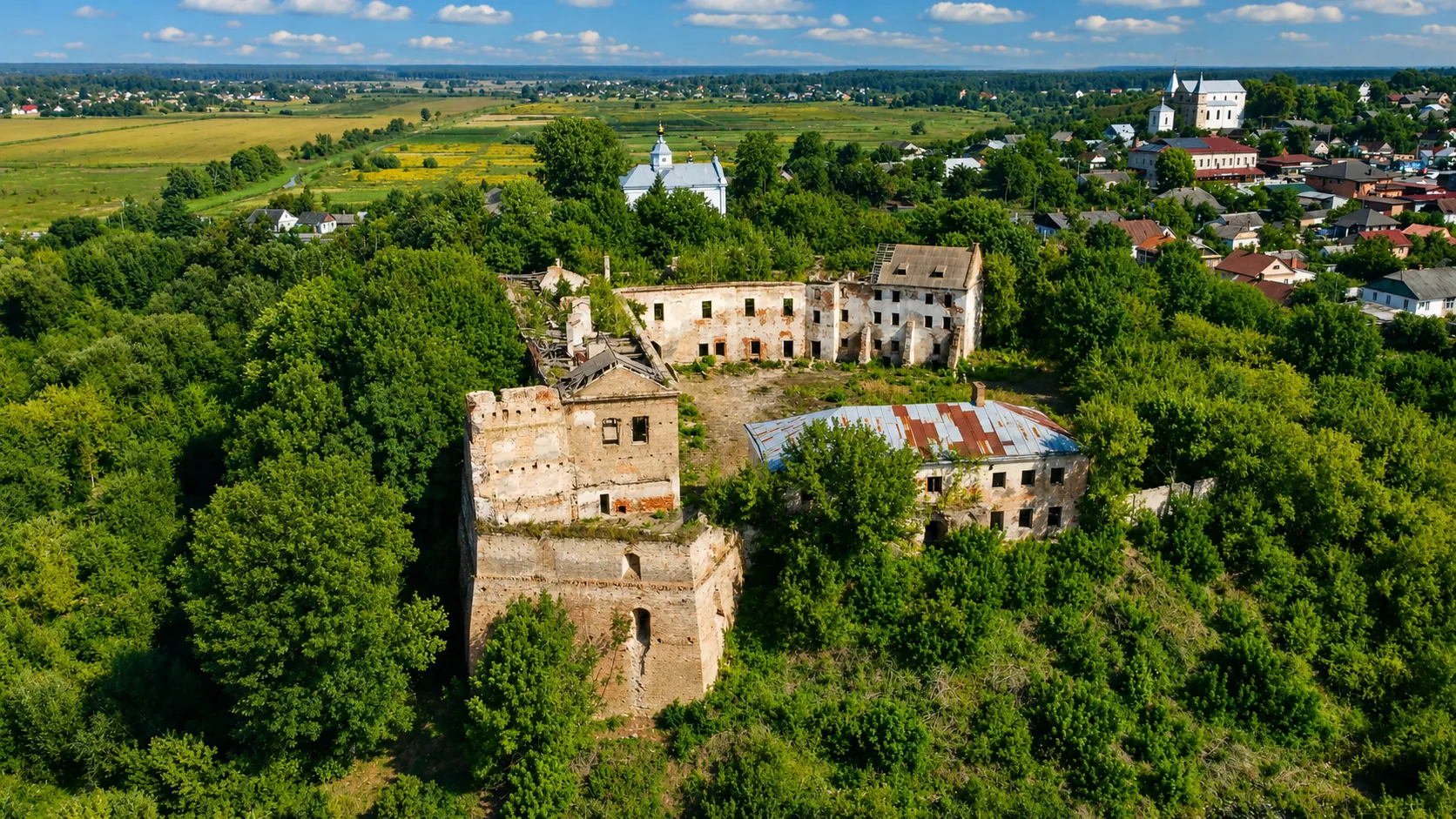
The fortress was built on a hill near the Stubla River, and in some places its walls were almost four metres thick. The castle had pentagonal towers, a deep moat, a controlled entrance and its own arsenal. Sources also mention around thirty cannons, which once again emphasises that this was not a decorative residence, but a serious defensive structure.
It is equally interesting that the castle in Klevan changed its purpose many times over the centuries. After the princely period, it was associated with a Jesuit college, a Polish gymnasium, educational institutions, a medical point during the First World War and various 20th-century institutions. This constant change of function gradually erased the original image of the fortress and brought it closer to its present state of ruin.
Legends of Klevan Castle: Secrets of the Old Walls
Klevan Castle has not only a documented history, but also a special world of legends passed down from generation to generation. Some of them are difficult to confirm through archives, yet it is precisely these stories that create the mysterious atmosphere for which travellers love ancient fortresses. In such legends, underground passages, walled-up love, shadows of the past and silent walls seem to come alive, as if they still remember human voices.
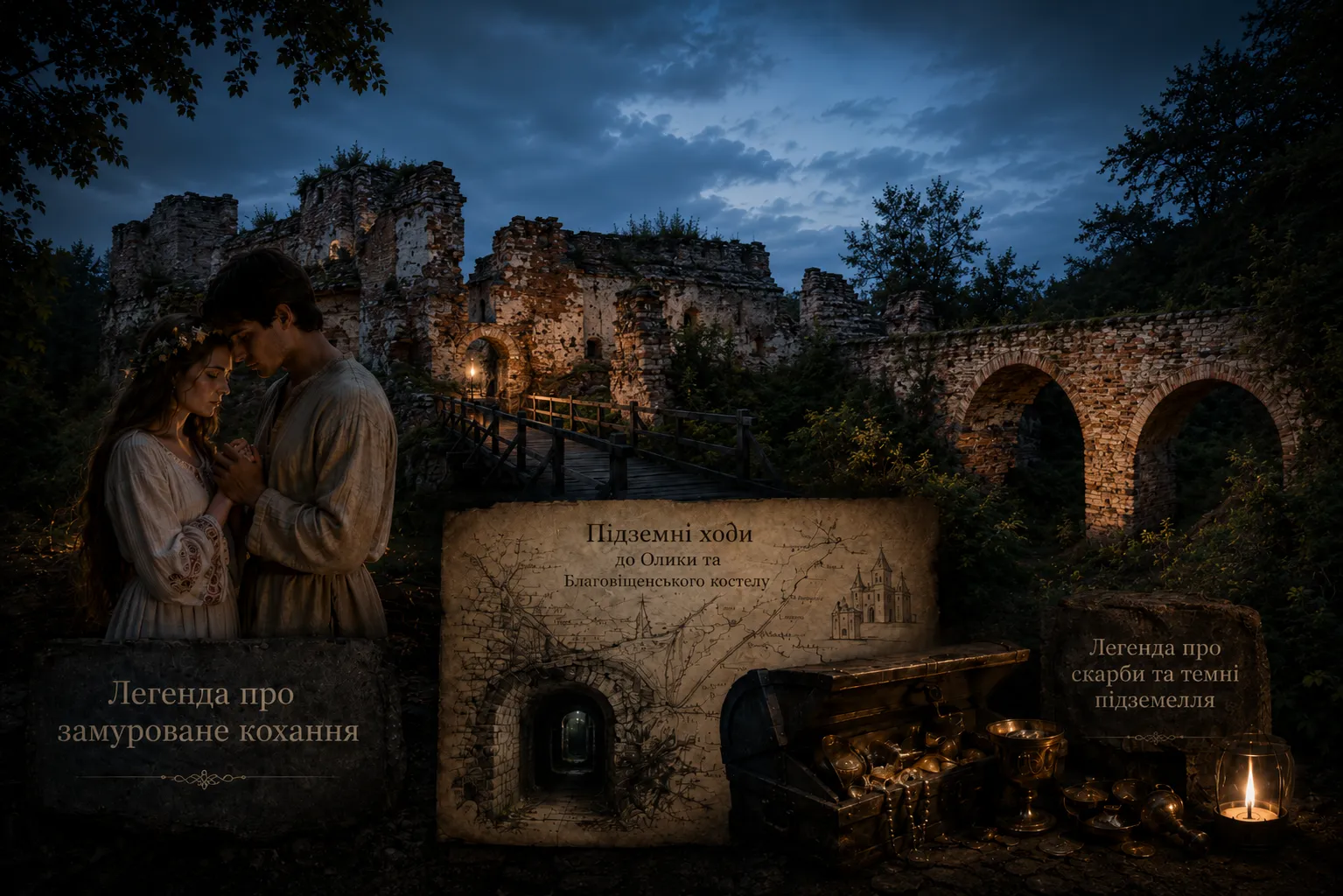
The best-known legend of Klevan Castle tells of the tragic fate of two lovers — Oksana and Vasyl. According to the tale, during a wedding, Prince Czartoryski saw the young bride and was struck by her beauty. He wanted to use his position, but the girl refused him. Enraged, the prince allegedly ordered the newlyweds to be punished terribly — to be walled up alive within the castle walls. In Klevan, this story is often called the legend of “walled-up love”, and it has become one of the strongest local tales about the fortress. Even regional publications have written about this legend.
It is difficult to prove this story with documents, but its emotional power is obvious. It turns the castle landmark into a place not only of defence and princely authority, but also of human tragedy. When you walk beside the old walls, it is easy to understand why such a legend took root here: in the silence of the ruins, something unsaid can be felt, as though the stone really preserves someone’s unspoken love and pain.
The Underground Passages of Klevan Castle
No less popular is the legend of underground passages that supposedly connected Klevan Castle with Olyka Castle and the Church of the Annunciation in Klevan. According to the tales, these passages could be used to transfer supplies, bring reinforcements or lead people out during dangerous moments. Some sources even mention a distance of around 15 kilometres, although such figures should be treated as part of the legend rather than as confirmed fact.
This tale is especially interesting because it emphasises the defensive character of Klevan Fortress. People imagined the castle not simply as a building with thick walls, but as a complex hidden world with passages, dungeons, escape routes and secrets. Even if the real scale of such tunnels requires archaeological confirmation, the legend itself clearly shows how strong an impression this fortress left in local memory.
The Legend of Klevan Castle’s Treasures
Old castles almost always have stories about treasures, and the castle in Klevan is no exception. Local stories mention dungeons where valuables, weapons, family treasures or supplies for a siege may have been hidden. Sometimes these tales are linked to cruel owners, secret rooms and punishments for the disobedient. Similar motifs appear in regional tourist materials about Rivne region, but they should be presented precisely as legends, not as proven historical facts.
For tourists, this legend adds a special intrigue to the old castle in Klevan. After all, ruins always leave room for questions: what lay beneath the ground, which rooms disappeared, which documents did not survive, and did hidden places really exist here that only a chosen few knew about? It is this uncertainty that makes a trip to Klevan Castle not merely an inspection of a landmark, but a small investigation.
Of course, legends do not replace history, but they help us feel it emotionally. They give the castle a human dimension: love, fear, loss, hope, mystery. That is why, when visiting the ruins, it is worth remembering: before you stands not only a 15th-century defensive structure, but a place around which a living memory has formed for centuries. And even if some of the tales remain unproven, they still reveal the most important thing — how deeply the historical castle in Klevan has taken root in people’s imagination.
Interesting Tourist Locations in and around Klevan
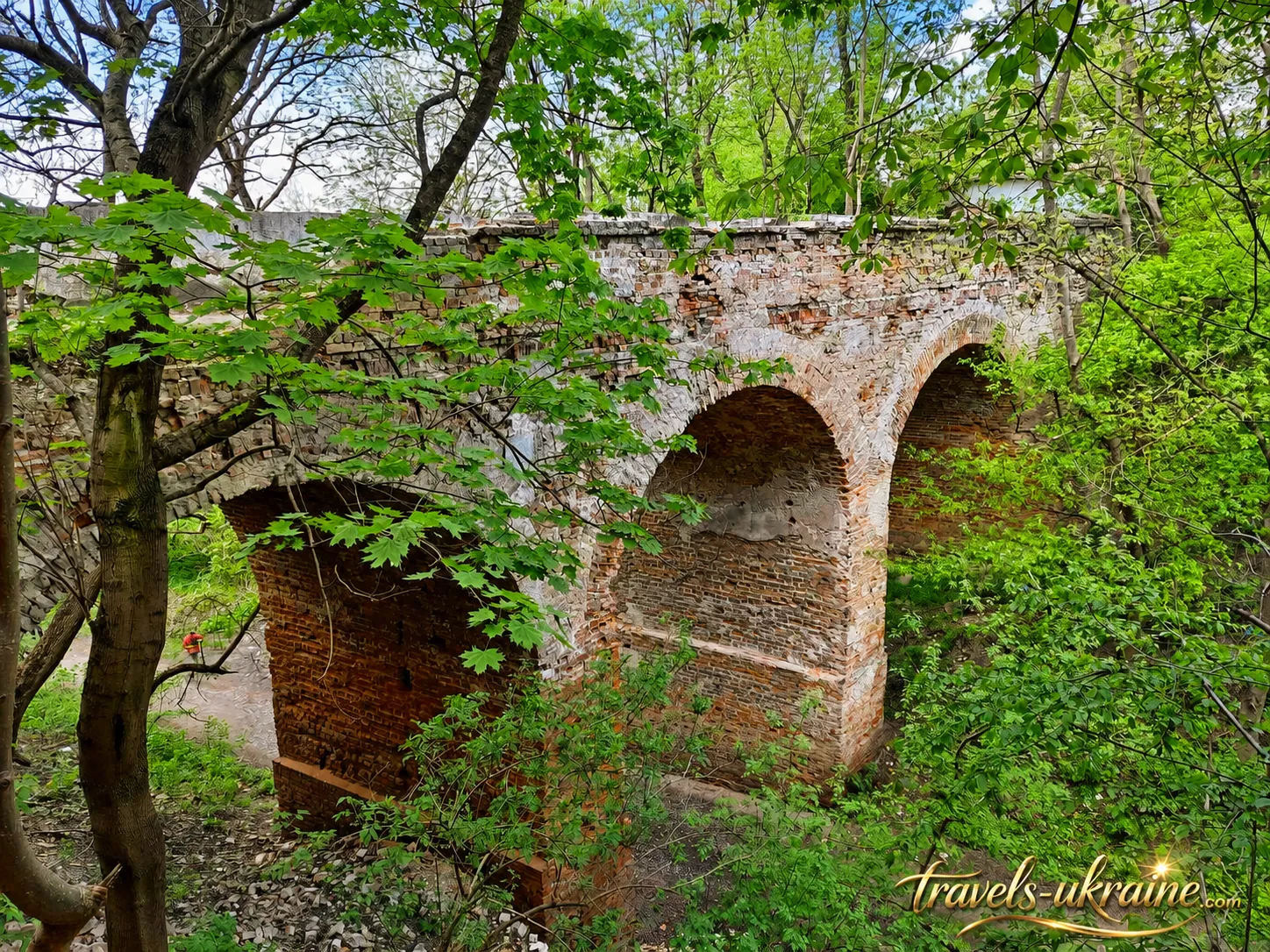
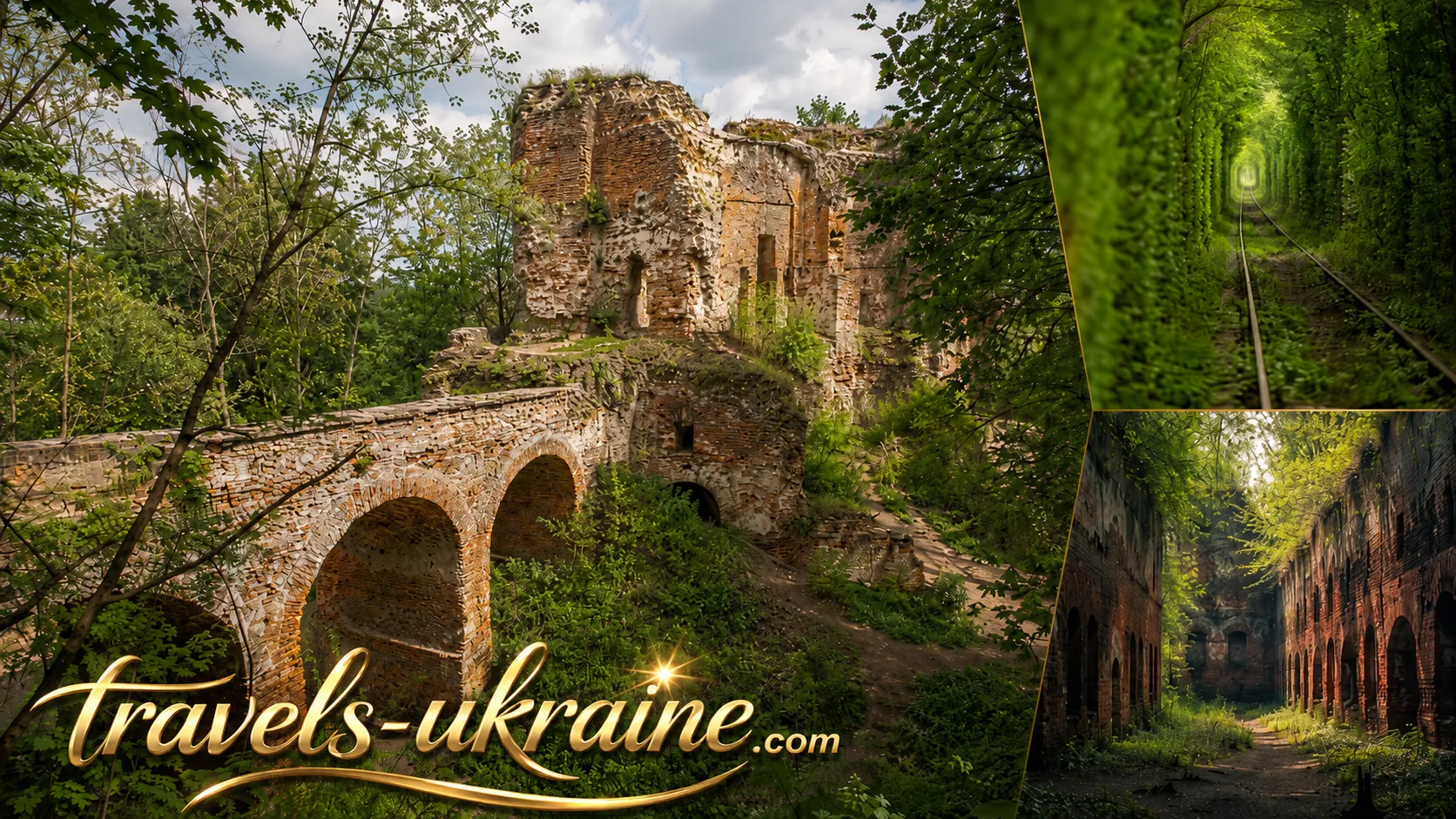
Of course, Klevan Castle is the main point of this journey. It is the best place to begin your acquaintance with Klevan, because what appears before the traveller is not simply an old building, but the remains of the ancient defensive fortress of the Czartoryski princes. Here it is important not to hurry: look closely at the masonry, walk near the walls, see the arched bridge, feel the scale of the former castle complex and imagine what the castle was like in the days of its strength.
The ruins of Klevan Castle are interesting precisely because of their authenticity. They do not hide the traces of decline; on the contrary, they openly show the dramatic fate of the landmark. Old walls, overgrown sections, empty openings, fragments of architectural forms and the silence around them create the feeling that the fortress still holds history within itself. This is not a place for a superficial look lasting a few minutes, but a space where it is worth stopping and looking carefully at every fragment.
The Tunnel of Love in Klevan after visiting the castle
After getting to know the castle, it is worth visiting another famous location in Klevan — the Tunnel of Love. This green natural corridor along a railway track has become one of the most recognisable romantic places in Rivne region. It is convenient to combine with a trip to the castle, as both locations are situated in the same settlement and complement each other well.
This route has a special mood: first, an ancient fortress, ruins, the history of the Czartoryski princes and the feeling of past centuries; then, a walk through the green tunnel, the lightness of nature and a completely different emotion of travel. That is why Klevan is interesting not only as a place for one photo, but as a small yet rich tourist route near Rivne.
Tarakaniv Fort 70 kilometres from Klevan
If you would like to continue the theme of fortresses and abandoned defensive structures, you can add Tarakaniv Fort to the route, located approximately 70 kilometres from Klevan. This is a different type of landmark — a massive fortification of a later era, with underground passages, casemates, powerful walls and a special atmosphere of military architecture.
The combination of Klevan Castle and Tarakaniv Fort gives a very interesting sense of a historical route through Rivne region. In Klevan, the traveller sees a medieval princely fortress connected with the Czartoryski family, while in Tarakaniv they encounter a large-scale defensive structure from another period. Together, these locations show how diverse Ukraine’s fortification heritage can be.
At Klevan Castle: see the walls, the arched bridge, the remains of the castle complex and the atmospheric ruins.
At the Tunnel of Love: walk through the green corridor and take photos in one of the most famous natural locations in Rivne region.
At Tarakaniv Fort: discover another type of defensive architecture — casemates, underground passages and monumental fortifications.
For a one-day route: Klevan Castle and the Tunnel of Love can be visited without rushing, while Tarakaniv Fort is best added if you have more time and your own transport.
Despite the popularity of the Tunnel of Love and the impressive appearance of Tarakaniv Fort, it is the castle in Klevan that should remain the main meaningful centre of this journey. It tells of antiquity, princes, defensive architecture, historical upheavals and the modern problem of preserving landmarks. This place does not simply complement a tourist route — it gives it depth.
Frequently Asked Questions about Klevan Castle
Where is Klevan Castle located?
Klevan Castle is located in the settlement of Klevan in Rivne region, not far from Rivne. It is one of the most interesting historical locations in Rivne region and can easily be combined with a visit to the Tunnel of Love and other landmarks in Klevan.
What is Klevan Castle known for?
Klevan Castle is known as an ancient defensive fortress of the Czartoryski princes. It is associated with the 15th century, the history of Volhynia, a princely residence, defensive architecture and tragic events of the 20th century. Today, the strongest impression is made by the ruins of Klevan Castle, which preserve the atmosphere of an old stronghold.
When was the castle in Klevan built?
The earliest information about Klevan Castle is associated with the year 1475. The settlement of Klevan itself is mentioned earlier in written sources — in 1458, as the possession of Prince Mykhailo Czartoryski. It was the Czartoryski family that played a key role in shaping the castle history of this place.
Why is Klevan Castle now in ruins?
Klevan Castle turned into ruins gradually. Its condition was affected by the loss of defensive significance, reconstructions, changes of function, wartime events, the natural ageing of the walls and a long absence of proper care. Today, the ruins of Klevan Castle are both a valuable landmark and a painful reminder of the need to protect historical heritage.
Is the castle in Klevan worth visiting for tourists?
Yes, the castle in Klevan is worth visiting for those interested in history, ancient architecture, castles of Ukraine and atmospheric locations without excessive tourist artificiality. It is well suited for a peaceful walk, photography, a short trip near Rivne and a deeper acquaintance with Rivne region.
What can you see near Klevan Castle?
Near Klevan Castle, it is worth visiting the Tunnel of Love, walking around Klevan and paying attention to local historical landmarks and old architecture. If you have more time and are travelling by car, the route can be extended to Tarakaniv Fort, located approximately 70 kilometres from Klevan.
Is it safe to visit the ruins of Klevan Castle?
It is possible to visit the ruins of Klevan Castle, but you should be careful. The territory is uneven and overgrown in places, and some fragments of the structure may be unsafe. You should not climb the walls, enter dangerous sections, walk there after dark or leave children unattended.
How much time is needed to see Klevan Castle?
To see the castle in Klevan, 30–60 minutes is usually enough. If you want to take photos, look carefully at the walls, the arched bridge, the remains of the castle complex and feel the atmosphere of the place without rushing, it is better to allow a little more time.
What legends are connected with Klevan Castle?
Klevan Castle is associated with tales of walled-up love, underground passages, hidden treasures and the secrets of old walls. Such stories should be seen as legends rather than fully confirmed facts, but they add a special atmosphere to the castle and help you better feel its mysterious character.
How is it best to plan a trip to Klevan Castle?
It is best to plan a trip to Klevan Castle during daylight hours and in dry weather. It is worth taking comfortable footwear, water, a charged phone and avoiding rushing. The optimal route is to first see Klevan Castle, then visit the Tunnel of Love and, if time allows, continue the journey to other interesting places in Rivne region.
Reference Information about Klevan Castle
Historical location of Rivne region
Type of location
Historical castle, defensive fortress, ruins of the castle complex of the Czartoryski princes
Opening hours
An open historical area without a fixed museum schedule. It is best visited during daylight hours.
The territory is uneven, overgrown and not fully arranged in places. Comfortable footwear and caution are needed.
What to see nearby
The Tunnel of Love in Klevan, the Church of the Annunciation, the Church of the Nativity of Christ, the old streets of Klevan, and Tarakaniv Fort on an extended route
Why Visit the Castle in Klevan?
The ruins of Klevan Castle are a place that does not try to impress with external perfection. Its strength lies not in restored halls or tourist gloss, but in something else — truthfulness. Before the traveller stands an ancient fortress, wounded by time, historical upheavals and human indifference, yet still able to speak loudly. Its walls do not beautify the past, but show it as it is: majestic, complex, painful and very important.
The castle structure in Klevan is worth visiting for anyone who wants to see Rivne region more deeply than through popular tourist photos. Here you can feel antiquity, the princely Czartoryski family, the defensive logic of a medieval fortress, the shadows of the 20th century and a modern question that concerns each of us: do we know how to protect our own heritage? That is why the ruins of Klevan Castle leave behind not only beautiful shots, but also thoughts that do not disappear immediately after the trip.
Main impression: Klevan Castle is an atmospheric ruin with deep history, not an ordinary tourist decoration.
Who should go: history lovers, fans of Ukrainian castles, photographers, families and travellers looking for meaningful locations.
What remains in memory: old walls, the arched bridge, the silence of the ruins, legends, tragic pages of the 20th century and the feeling of lost grandeur.
The historical castle in Klevan reminds us that real landmarks do not always look perfect. Sometimes they stand in ruins, become overgrown with grass, remain silent in the rain and still preserve more dignity than many polished tourist sites. Klevan Castle is a place worth seeing in order to better understand not only history, but also our responsibility to the past. Because as long as we remember places like this, they still have a chance to live.
Copyright belongs to Nataliia Hrebovych.
Copying of the material is permitted only with an active link to the original:
Pearl of Rivne Region: Klevan Castle

 English
 Українська
 Български
 Hrvatski
 Čeština
 Dansk
Dansk Nederlands
 Eesti
Eesti Suomi
Suomi Français
 Deutsch
 Ελληνικα
 Magyar
 Íslenska
 Italiano
 Latviešu
 Lietuvos
 Polski
 Português
 Română
 Русский
 Српски
 Slovenčina
 Slovenščina
 Español
 Svenska
 Türkçe



No Comment
You can post first response comment.