
 English
 Українська
 Русский

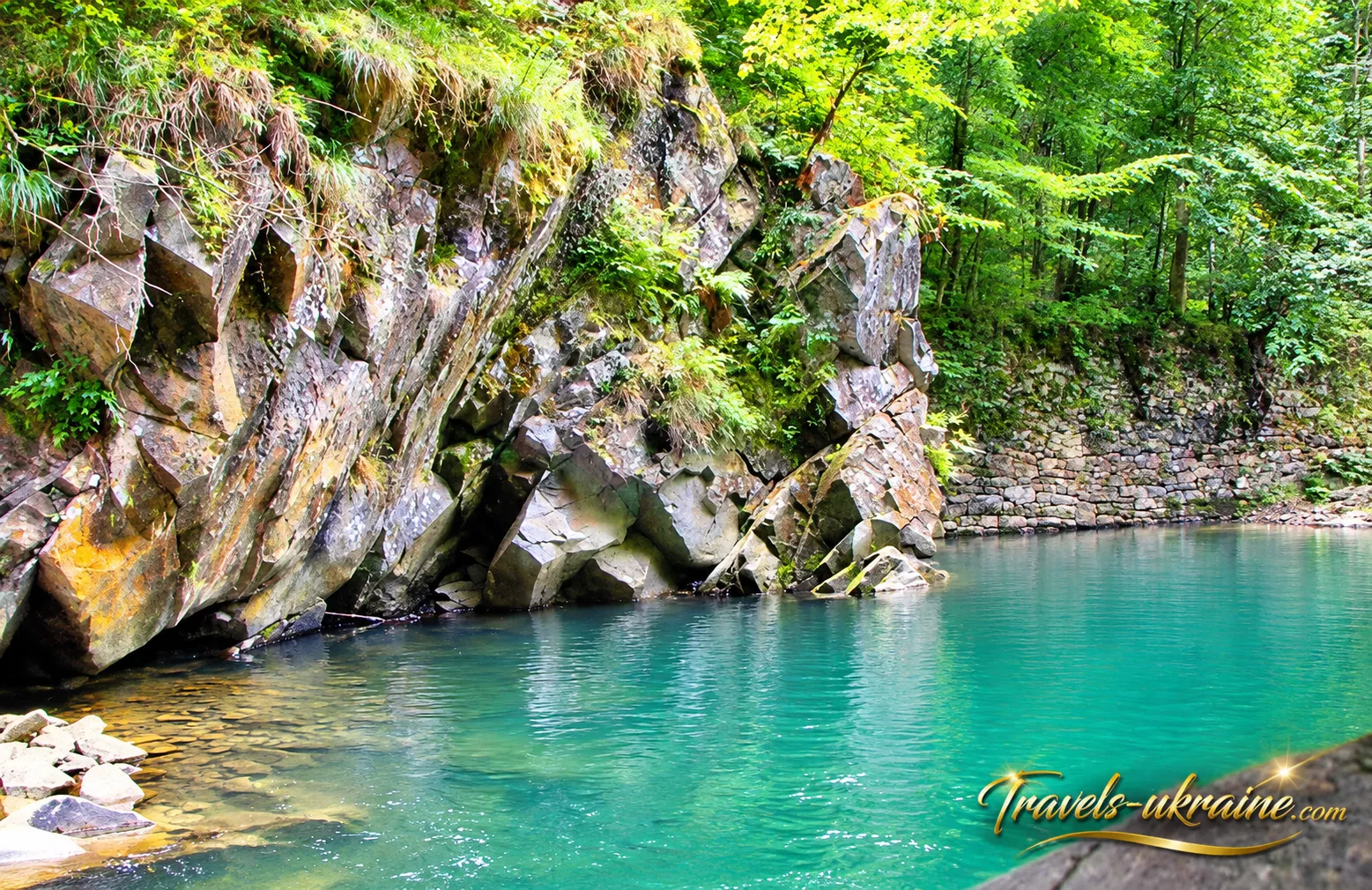
There are places in the Carpathian Mountains that do not welcome travelers with flashy signs, large parking lots, or crowds gathered at scenic viewpoints. Reaching them requires a journey on foot, gradually leaving behind the village, familiar roads, and the noise of civilization. One such place is the Blue Lagoon in Zakarpattia — a small natural pool surrounded by forested slopes and rocky banks, hidden along the mountain river Liutianka near the village of Chornoholova.
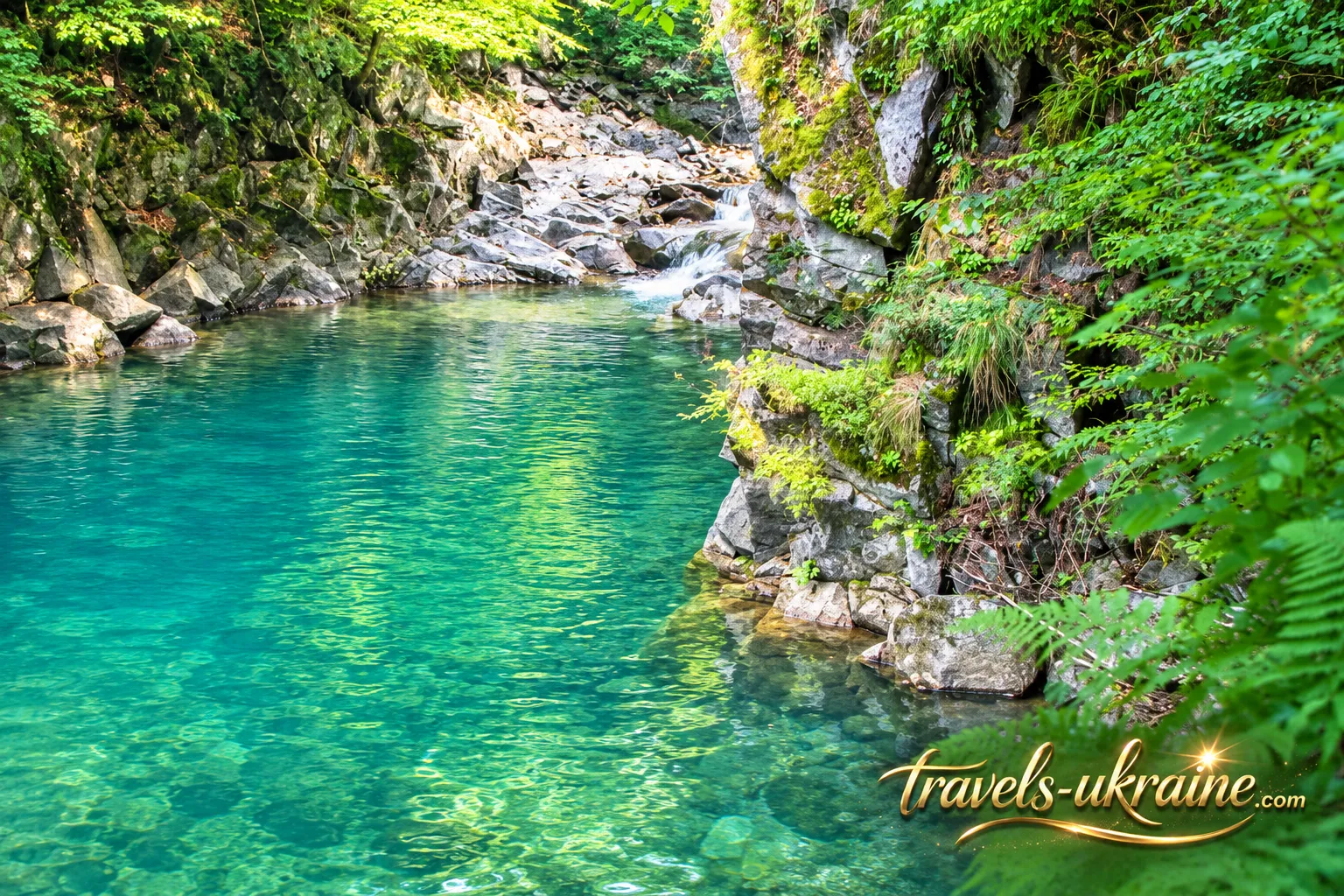
In photographs, this place could easily be mistaken for a destination in a much warmer, southern country. The crystal-clear water takes on shades of blue, turquoise, and sometimes deep green, while towering rocks rise around it and the Carpathian forest forms a natural canopy above the river. Yet this is neither an artificial swimming pool nor a resort lagoon. It was shaped by the mountain river itself, which gradually carved its way through the rocks, creating a natural basin filled with remarkably clear, cold water.
The most fascinating part of the experience begins long before travelers catch their first glimpse of the lagoon. The journey itself becomes part of the adventure: woodland trails, the sound of the Liutianka River, traces of the Carpathians' historic forestry activities, and the growing sense of isolation from populated areas create an atmosphere entirely different from an ordinary visit to a popular tourist attraction. Finally, at the end of the trail, a beautiful natural pool unexpectedly appears among the trees, revealing the distinctive color that inspired its famous name.
However, behind the stunning photographs of the Blue Lagoon in the Carpathian Mountains lie several important practical questions. Where exactly is it located? How difficult is it to reach? Can you drive there, how far will you need to walk, and what other attractions are worth exploring along the way? These details often determine whether the trip becomes an enjoyable Carpathian adventure or turns into an unexpectedly challenging hike.
In this guide, we will take a closer look at the Blue Lagoon, discover where this natural attraction is located in Zakarpattia, explore what makes it stand out among other Carpathian mountain pools, find the best hiking route from Chornoholova, and highlight other interesting places you can visit during the same trip.
Blue Lagoon in Zakarpattia: Location, How to Get There, and What Makes It Special
The Blue Lagoon in the Carpathian Mountains is hidden among the forests near the village of Chornoholova in Uzhhorod District. This natural pool formed along the mountain river Liutianka, approximately 7–8 kilometers upstream from the village, making it almost impossible to stumble upon by chance. It is not a roadside attraction that you can visit in just a few minutes while traveling to another destination.
The lagoon is located in the northwestern part of Zakarpattia, in a forested area near Chornoholova. This village is the closest settlement and the usual starting point for a trip to the lagoon. Chornoholova lies approximately 50 kilometers from Uzhhorod, although reaching the village by car is only the first part of the journey. There are no typical urban buildings or resort facilities near the lagoon. Instead, the surrounding landscape is dominated by forests, a mountain riverbed, and the slopes of the Carpathian Mountains.
Some travel guides also refer to this location as the Liutianka Lagoon or Paradise Lagoon. However, the name "Blue Lagoon" has become the most widely recognized among travelers, perfectly reflecting the area's most striking visual feature — the unusual color of its water.
What Makes the Blue Lagoon Different from an Ordinary Mountain Pool?
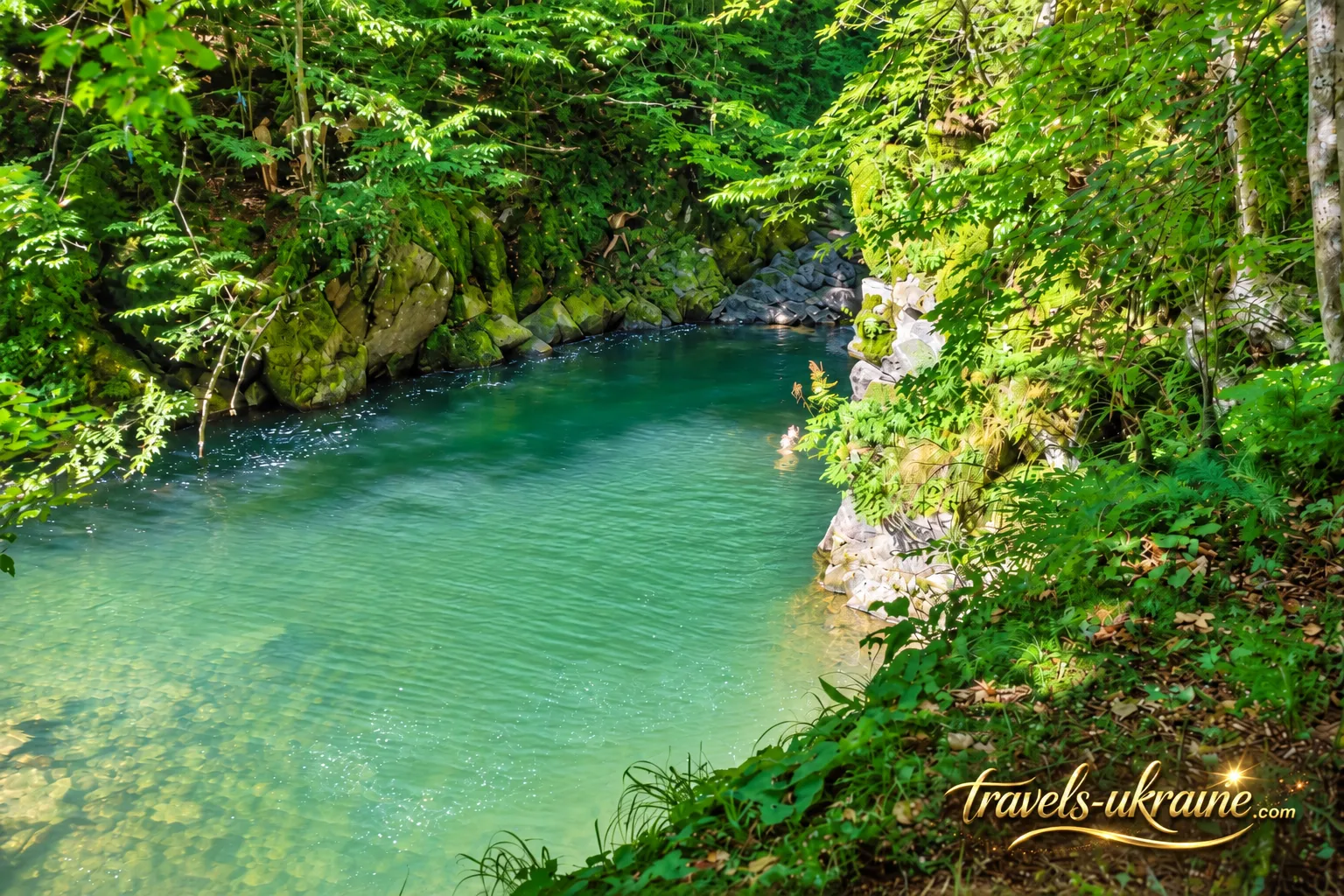
Despite its name, the Blue Lagoon is not a traditional lake. It is a natural pool formed directly within the bed of a mountain river. Water flows between rocky banks and cliffs, creating a deeper natural basin where the riverbed widens. On sunny days, the combination of crystal-clear water, a rocky bottom, and surrounding greenery produces beautiful turquoise and blue-green shades, giving this remarkable place its romantic name.
However, the lagoon's appearance is constantly changing. After heavy rainfall, the river may rise and become cloudier, while the color of the water varies depending on lighting conditions and the season. Therefore, the turquoise shade familiar from travel photographs should not be considered a permanent feature. It is the result of natural conditions that can make the lagoon look slightly different with every visit.
Another feature that makes the Blue Lagoon near Chornoholova particularly fascinating is its distance from major tourist centers. There is no resort atmosphere or entertainment complex here. Instead, visitors discover a mountain river, rocky banks, dense woodland, and the feeling of having found an extraordinary landscape far from the usual tourist routes.
This combination of a location suitable for a day trip and a relatively secluded natural setting has made the Blue Lagoon a popular destination for hiking in Zakarpattia. Yet its greatest attraction is not simply the unusual color of the water. The lagoon is part of the remarkable natural landscape of the Liutianka River, where flowing water, rugged rocks, and Carpathian forests come together to create a small but exceptionally picturesque destination.
How to Get to the Blue Lagoon: Hiking Route from Chornoholova
The route to the Blue Lagoon in Zakarpattia should be considered a proper hiking adventure rather than a quick roadside stop. The most convenient starting point is the village of Chornoholova. From here, the trail leads into the forested valley of the Liutianka River, and it is not possible to drive directly to the natural pool. The distance from the edge of the village to the lagoon is approximately 7–8 kilometers each way, so it is best to allow at least half a day for the entire hike, including time to relax by the water.
Where Does the Hiking Trail to the Blue Lagoon Begin?
The main hiking route begins at the far end of Chornoholova village. One of the key landmarks is a barrier gate, beyond which the road continues into the forested part of the valley. From there, the trail follows the Liutianka River. The mountain stream accompanies hikers for much of the journey, gradually leading them farther away from residential areas and deeper into the natural surroundings.
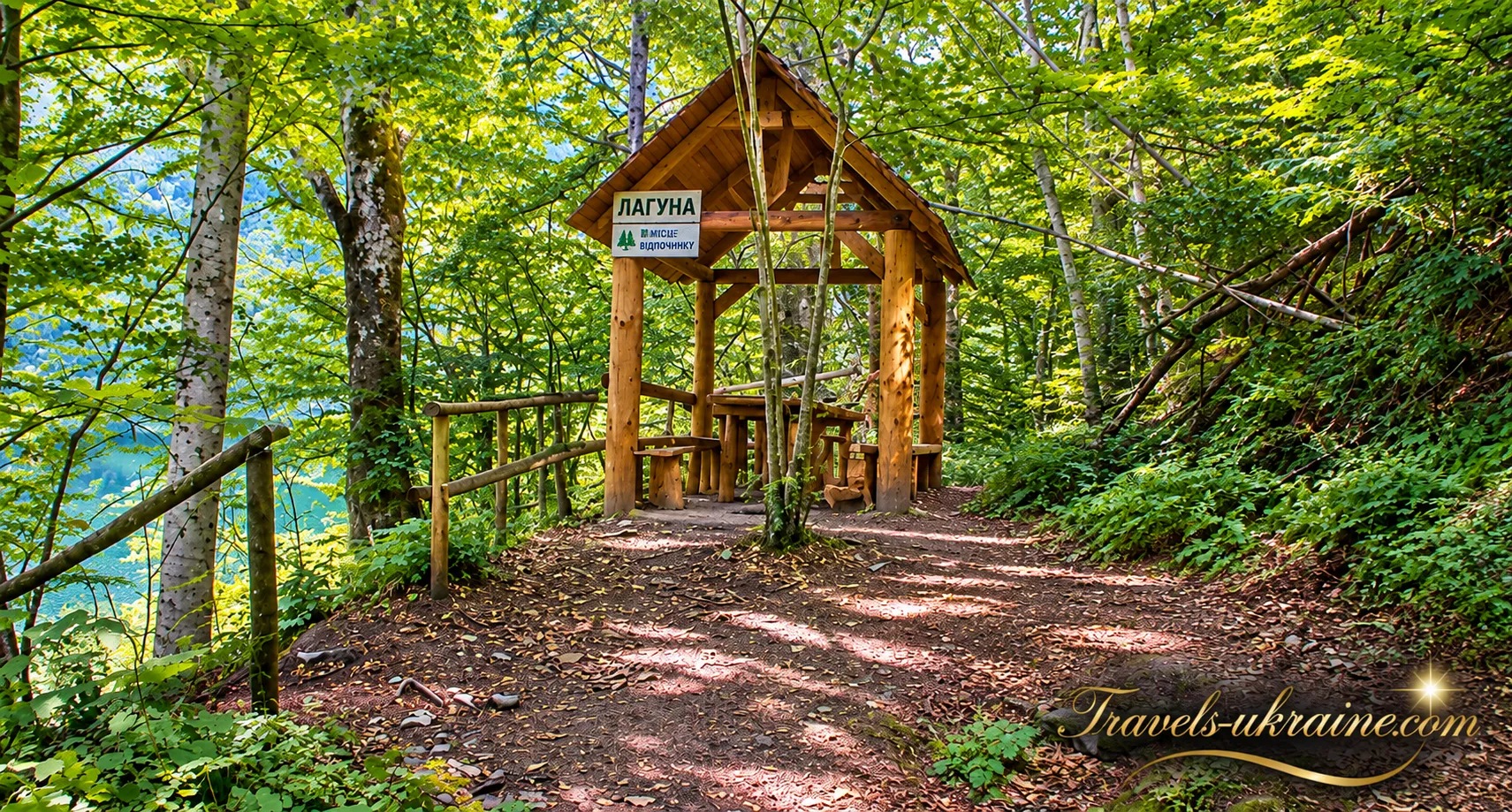
Shortly after starting the hike, you will need to cross the water using a wooden bridge. There are resting areas near this section, after which the route turns right onto the road. The trail then continues through the forest along the river valley, with information signs helping hikers find their way. Different route descriptions use slightly different starting points when calculating the distance, so it is more practical to focus on the overall hiking time rather than exact measurements. The hike to the Blue Lagoon from Chornoholova takes several hours for the round trip.
What Is the Trail to the Blue Lagoon Like?
The route is not considered a difficult high-altitude mountain hike. There are no long, steep climbs or mountain summits to cross. Much of the trail follows a forest path through the river valley. This makes the hike accessible even to travelers without extensive mountain hiking experience, provided they are comfortable walking longer distances. Nevertheless, the route should not be underestimated. After rainfall, sections of the dirt road can become wet and uneven, with puddles and mud, while rocks near the river may become slippery. Ordinary city shoes are not the best choice for this adventure. Hiking boots or other footwear with reliable, non-slip soles will make the walk considerably safer and more comfortable.
One of the greatest advantages of this route is the gradual immersion in nature. At first, you may still notice signs of human activity, but with every passing kilometer, the surrounding landscape becomes increasingly dominated by forests, rocks, and the sound of flowing water. As a result, the trail is much more than simply a way to reach the destination. The journey itself is an essential part of the Carpathian experience and the adventure of discovering the Blue Lagoon near Chornoholova.
Natural Features of the Blue Lagoon and What to See
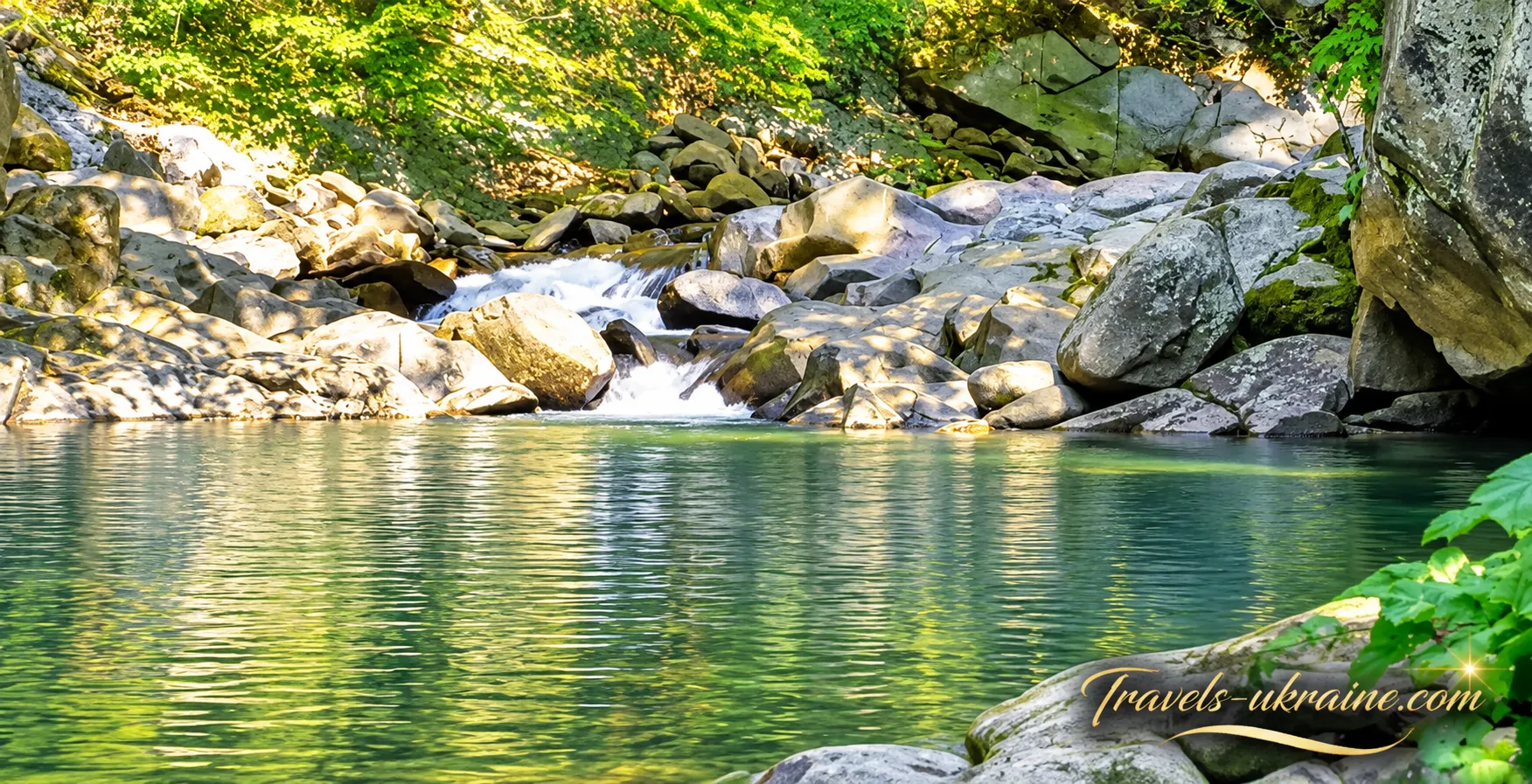
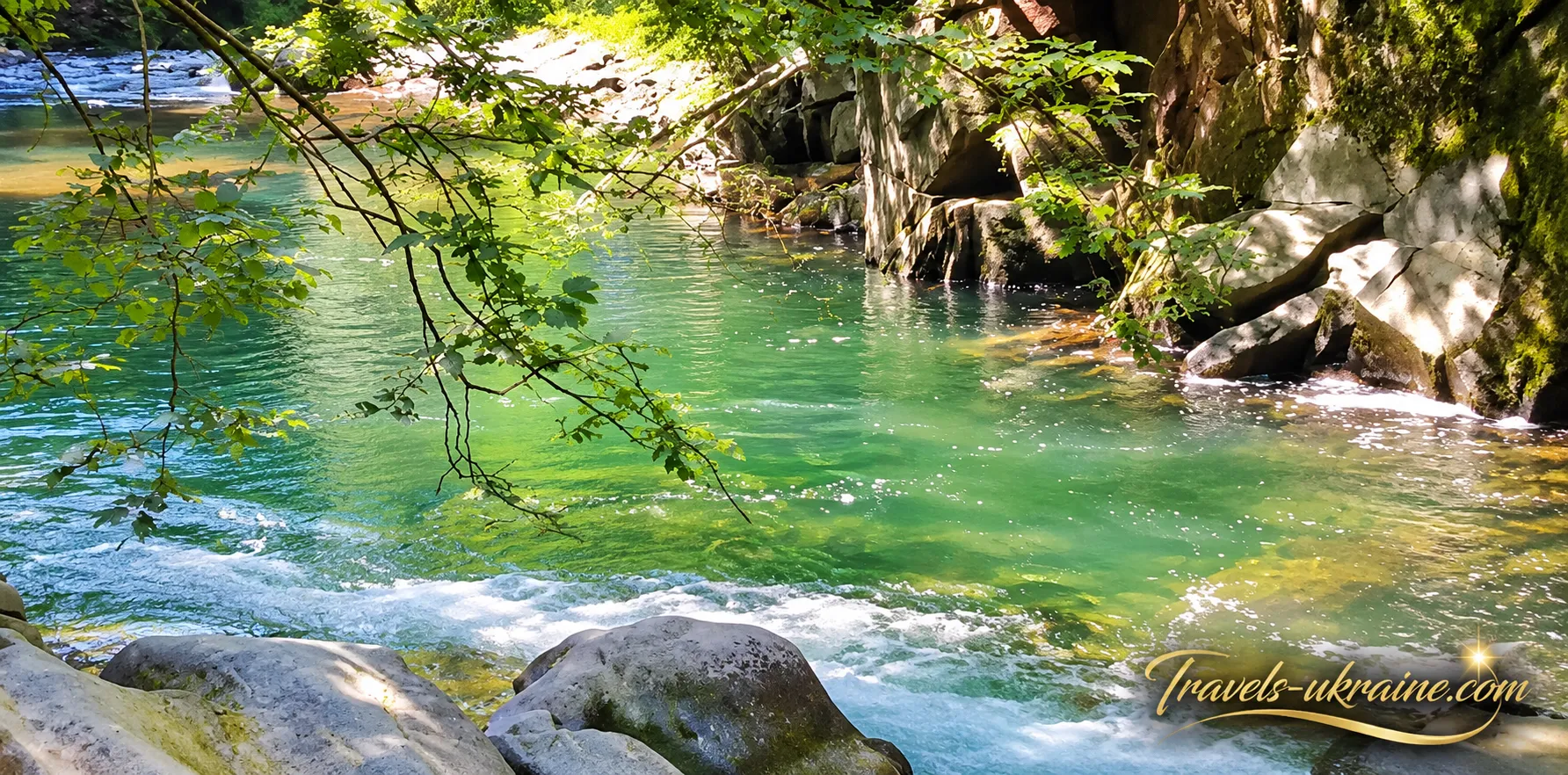
The most memorable thing about the Blue Lagoon in Zakarpattia is not simply the pool itself, but the entire natural landscape surrounding it. The Liutianka River winds its way between rocks and rugged banks, narrowing in places to form rapids, small waterfalls, and deeper pools. Dense Carpathian forest rises above the water, providing plenty of shade even in summer, while the river brings a refreshing coolness to the surrounding air.
Interestingly, the name "Blue Lagoon" often refers not to a single, clearly defined pool, but to a picturesque stretch of the Liutianka River featuring natural depressions and pools nestled among the rocks. The shape of the riverbed creates small rocky basins where the fast-flowing mountain water briefly slows down. As a result, the landscape changes constantly: within just a few dozen meters, a peaceful stretch of water can give way to a rushing mountain stream.
Why Is the Water in the Blue Lagoon Turquoise?
The lagoon's most famous feature is undoubtedly its color. On clear days, the water can appear deep blue, turquoise, or greenish. These shades are particularly striking where the river becomes deeper and sunlight penetrates the crystal-clear water between the rocks. The color changes depending on lighting conditions, water depth, and surrounding vegetation, meaning the lagoon can look different from one day to the next.
After prolonged rainfall, the Liutianka River carries more water, the current becomes stronger, and the water may lose some of its characteristic clarity. By contrast, during calm, sunny weather, the rocky riverbed is clearly visible beneath the surface. This is when the lagoon most closely resembles the brilliant turquoise pools that have made it a popular destination among travelers.
Rocky Cliffs, Waterfalls, and the Liutianka Mountain River
Another distinctive feature of this natural attraction is the rocky walls between which the river flows. In certain places, the water cascades over stone ledges, creating small waterfalls that feed the natural pools below. The contrast between pale rocks, dark woodland, white foam rushing over the rapids, and blue-green water makes this stretch of the Liutianka River particularly photogenic.
The deepest sections reach approximately 2.5–3 meters, although the mountain riverbed is constantly changing. Floodwaters can move rocks and sediment, so this depth should not be considered a permanent measurement for every part of the lagoon. The water remains cool even during summer, which is typical of a mountain river flowing predominantly through forested terrain.
What to See Around the Blue Lagoon
Visiting this remarkable location just to capture a single photograph of its turquoise water would mean missing much of what makes it special. Take your time exploring the Liutianka River valley, where rocky banks, rapids, cliffs, riverside forests, and small natural pools form a beautiful landscape. Depending on the light, the same stretch of river can look completely different in the morning, at midday, or beneath cloudy skies.
The Blue Lagoon is especially appealing to nature photography enthusiasts. There is no need to search for elaborate compositions, as the river itself creates them through the curves of its channel, scattered rocks, flowing water, and surrounding trees. At the same time, this peaceful location is ideal for relaxing after a long hike. Visitors can sit beside the river, listen to the sound of flowing water, and simply enjoy the tranquility of the Carpathian forest, far from the noise and bustle of city life.
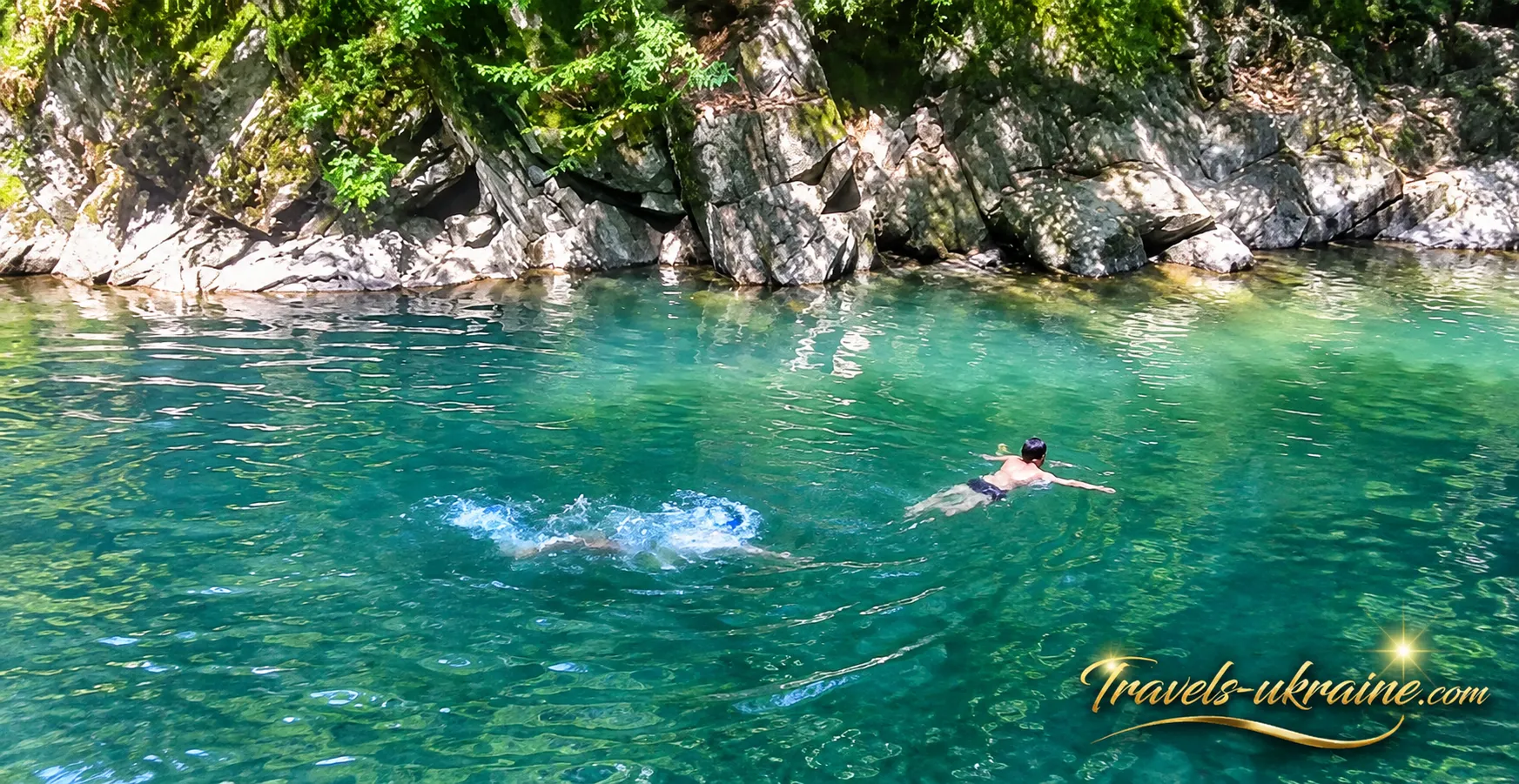
During warmer months, some visitors choose to swim in the natural pools. However, the cold water, uneven rocky bottom, and varying depths require particular caution. Jumping from the surrounding cliffs can be especially dangerous, as even crystal-clear water does not allow swimmers to reliably assess the underwater terrain or identify submerged rocks. For this reason, the Blue Lagoon is best appreciated as a natural destination for hiking, sightseeing, and peaceful relaxation rather than a designated swimming area.
Places to Visit Near the Blue Lagoon
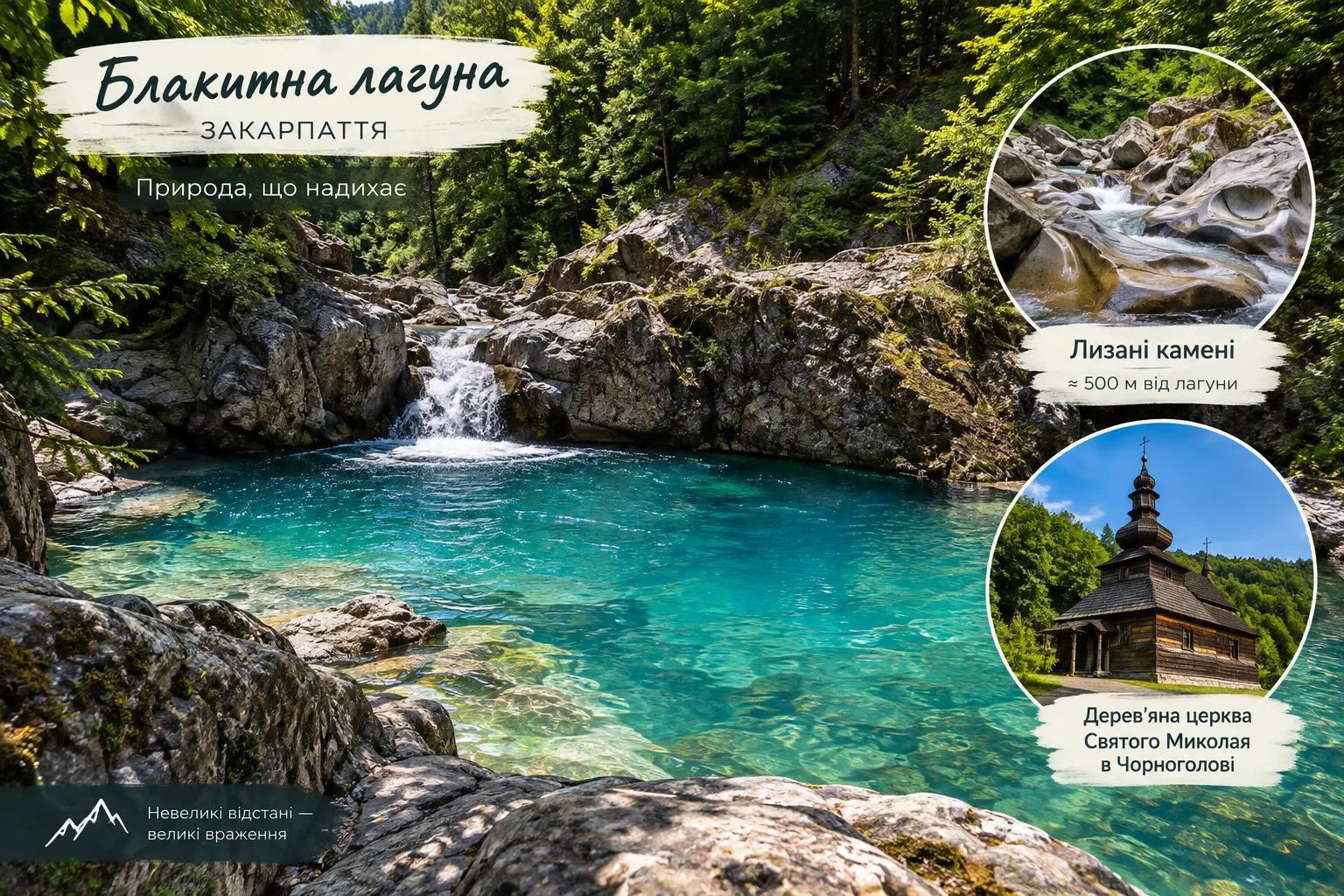
A trip to the Blue Lagoon near Chornoholova can easily become a wonderful opportunity to explore this part of Zakarpattia. There is no need to create an exhausting itinerary packed with dozens of attractions. Along the trail to the lagoon and within Chornoholova itself, several fascinating places complement the natural beauty of the area and offer a deeper understanding of its unique character.
Lyzani Kameni — Another Natural Attraction Along the Liutianka River
One of the easiest ways to enrich your visit to the Blue Lagoon is to explore Lyzani Kameni (the Licked Stones). This unusual natural attraction is located approximately half a kilometer from the lagoon, near the confluence of the Bystrytsia and Liutianka rivers. There is no need to organize a separate trip to see it — simply extend your walk a little farther along the river.
The name perfectly describes the appearance of this remarkable place. Over countless years, flowing water has gradually worn down large boulders, smoothing their sharp edges and shaping them into unusual rounded formations. In some places, the rock surfaces look as though they have been carefully polished by hand. It is particularly fascinating to watch the water flowing between the pale stones, creating small streams, hollows, and natural rock pools.
The Blue Lagoon and Lyzani Kameni complement each other beautifully. While the Blue Lagoon impresses visitors with its striking water color and rocky natural pool, Lyzani Kameni demonstrates the extraordinary power of a mountain river to reshape solid stone. Together, these two attractions reveal different aspects of the same natural process — the continuous erosion and transformation of the Carpathian landscape by flowing water.
St. Nicholas Wooden Church in Chornoholova
Whether you are returning from your hike or preparing to set off toward the lagoon, it is worth visiting one of Chornoholova's most fascinating historical landmarks — the Wooden Church of St. Nicholas the Wonderworker. Standing on a hill above the village, this remarkable building offers a completely different experience from the natural attractions along the trail, adding historical and architectural depth to your journey.
The church was originally built in the 17th century in the traditional Boyko wooden architectural style. In 1794, master craftsman Matii Khymych reconstructed the building, giving it distinctive Baroque features. The most noticeable addition was its tall tower with an ornate decorative top, while elements of the older wooden structure and an 18th-century iconostasis have been preserved inside.
The church is remarkable not only because of its age. It also illustrates how traditional wooden architecture in Zakarpattia's villages evolved over the centuries, blending local craftsmanship with new architectural influences. After spending several hours surrounded by forests, rivers, and rocky cliffs, visiting this historical landmark reveals another side of Chornoholova — not merely as the starting point for the hike to the Blue Lagoon, but as an old Carpathian village with a rich architectural and cultural heritage.
Frequently Asked Questions About the Blue Lagoon in Zakarpattia
Where is the Blue Lagoon located in Zakarpattia?
The Blue Lagoon is located on the mountain river Liutianka near the village of Chornoholova in Uzhhorod District, Zakarpattia Oblast, Ukraine. The lagoon is approximately 7–8 km from the village. It lies deep within a forested area, far from residential buildings and main roads.
How do you get to the Blue Lagoon from Chornoholova?
The hiking trail begins at the far end of Chornoholova village. From there, follow the forest road along the Liutianka River valley. Much of the route has no difficult climbs, although the trail can become muddy and uneven after rainfall. Comfortable hiking shoes with sturdy, non-slip soles are recommended.
How far is the hike to the Blue Lagoon?
The distance from Chornoholova to the Blue Lagoon is approximately 7–8 km each way. The complete round-trip hike covers around 14–16 km. Although the trail is not particularly difficult, it is a fairly long walk that requires a reasonable level of fitness.
Can you drive directly to the Blue Lagoon?
No. You can reach Chornoholova by car, but the final part of the journey must be completed on foot. Visitors leave their vehicles before the forest section of the route and continue hiking along the Liutianka River.
How long does it take to hike to the Blue Lagoon?
Allow approximately 4–6 hours for the round-trip hike, including time to relax by the water. The actual duration depends on your walking pace, trail conditions, weather, and the number of stops along the way. For a more relaxed experience, it is best to set aside most of the day.
Is the Blue Lagoon hiking trail suitable for children?
The route does not involve difficult high-altitude climbs and may be suitable for children who are accustomed to longer walks. However, families should consider the total round-trip distance of up to 14–16 km. Adults must supervise children carefully near the river because of slippery rocks, flowing water, and uneven riverbanks.
Can you swim in the Blue Lagoon?
Some visitors swim in the natural pool during warmer months, but the mountain river remains cold even in summer. The bottom is rocky, water depths vary, and the current can become stronger after rainfall. This is a natural swimming spot without a designated beach or lifeguard service, so entering the water requires particular caution.
Is there an entrance fee to visit the Blue Lagoon?
There is no separate entrance fee to visit the Blue Lagoon. It is a natural attraction rather than a commercial tourist complex. Visitors may only need to pay for optional services such as transportation, local guides, or organized excursions.
When is the best time to visit the Blue Lagoon?
The best time to visit the Blue Lagoon is during the warmer months, preferably in dry weather. After heavy rainfall, forest trails may become muddy, while the Liutianka River can rise and turn cloudy. If you want to see the lagoon's characteristic blue and turquoise water, your best chance is on a clear, sunny day when the river is calm and sunlight penetrates the water.
What other attractions can you visit near the Blue Lagoon?
Approximately half a kilometer from the lagoon, you can explore Lyzani Kameni (the Licked Stones), unusual rock formations gradually smoothed by flowing water over many years. In Chornoholova village, another attraction worth visiting is the historic wooden Church of St. Nicholas the Wonderworker. Both locations can conveniently be combined with a hike to the Blue Lagoon in a single day.
Blue Lagoon in Zakarpattia — A Journey Worth Hiking Several Kilometers For
The Blue Lagoon in Zakarpattia is unlikely to impress visitors with its sheer size. There is no enormous waterfall, high-altitude mountain lake, or panoramic viewpoint stretching for dozens of kilometers. Its charm lies in something entirely different. This is a small, secluded natural paradise that you can only reach on foot, following a forest trail, listening to the sound of rushing mountain water, and finally discovering a beautiful blue-green pool hidden between the rocks. The journey itself plays a major role in shaping the experience. If visitors could simply drive up to the lagoon and step out of their cars beside the water, the place would probably feel completely different. Spending several hours in the Carpathian forest gradually changes the rhythm of the adventure. The sense of urgency fades, signs of civilization become increasingly rare, and the river, trees, rocks, and winding trail ahead become your main points of reference.
This destination is particularly appealing to travelers searching for beautiful natural attractions in Zakarpattia without the challenges of climbing high mountain peaks. Although the hike is relatively long, it does not require specialized mountaineering skills. Along the way, visitors can discover much more than the lagoon itself, including the scenic Liutianka River valley, rugged rocky banks, traces of an old narrow-gauge railway, and the nearby Lyzani Kameni rock formations.
At the same time, the Blue Lagoon should not be mistaken for a developed tourist resort. There are no typical resort facilities beside the water, while trail conditions, river levels, and even the lagoon's color depend on the weather. Yet this untouched natural character is one of the main reasons to visit. The lagoon does not try to be a commercial attraction. Instead, it remains an authentic part of the living Carpathian landscape, shaped by flowing water, ancient rocks, and surrounding forests.
If you are planning a trip through Zakarpattia and are willing to devote several hours to hiking, the Blue Lagoon hiking route from Chornoholova could become one of those unexpected discoveries that stay in your memory not because of a famous name, but because of the atmosphere. And perhaps the most memorable moment of your journey will come not when you photograph the turquoise water, but a little earlier — when, surrounded by the sound of the Liutianka River, you suddenly realize that several kilometers of forest trails have allowed you to leave the noise, distractions, and everyday concerns of the outside world far behind.

No Comment
You can post first response comment.