
 English
 Українська
 Български
 Hrvatski
 Čeština
 Dansk
Dansk Nederlands
 Eesti
Eesti Suomi
Suomi Français
 Deutsch
 Ελληνικα
 Magyar
 Íslenska
 Italiano
 Latviešu
 Lietuvos
 Polski
 Português
 Română
 Русский
 Српски
 Slovenčina
 Slovenščina
 Español
 Svenska
 Türkçe
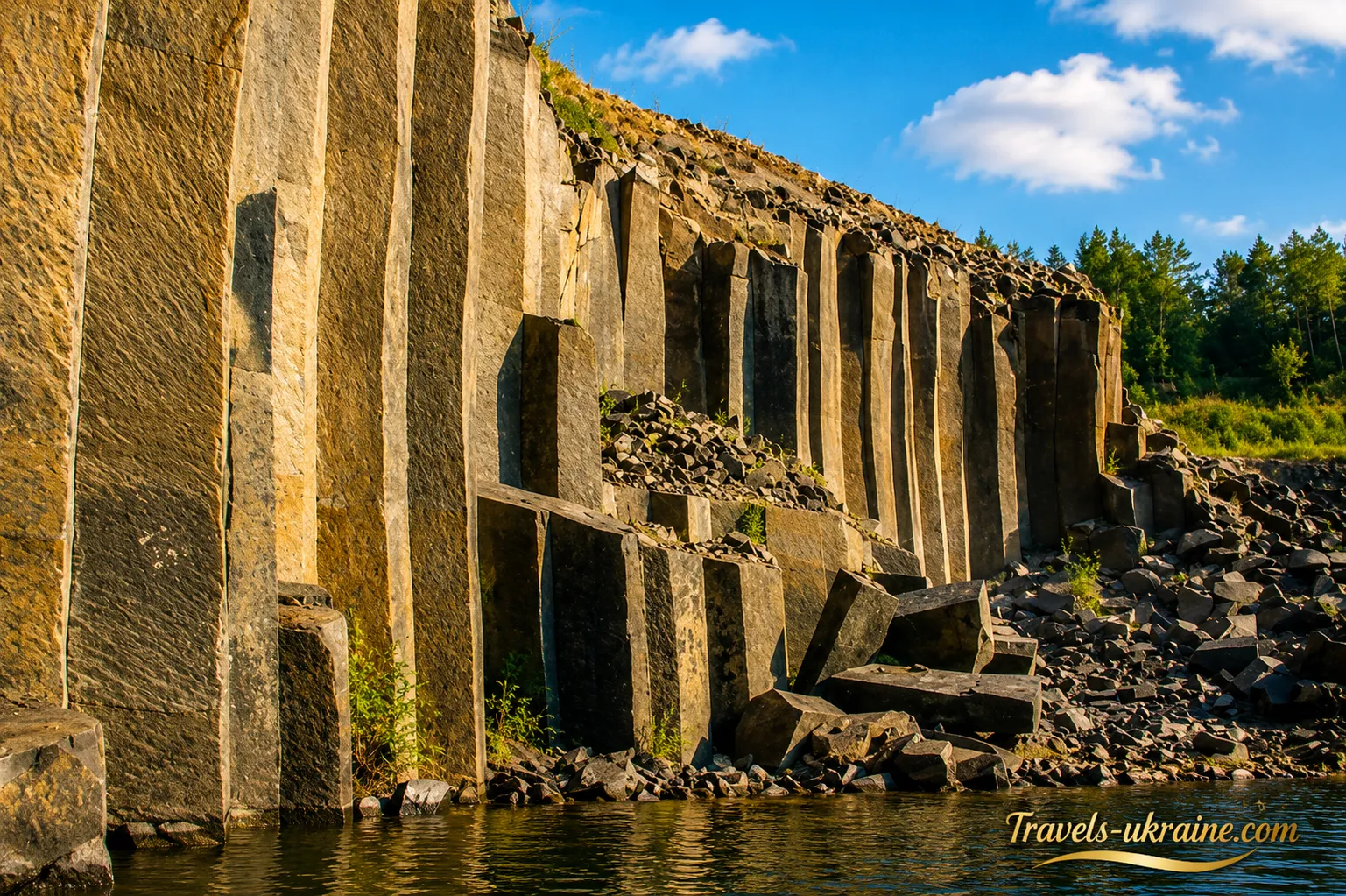
Basalt Columns are a place where nature speaks in the language of stone, fire, and time. In the midst of tranquil Rivne region, near the village of Bazaltove, a landscape unfolds that is difficult to confuse with any other tourist destination in Ukraine: tall, dark basalt columns stand almost vertically, like ancient walls created not by human hands but by the power of the Earth’s depths. There is no ostentatious decoration or artificial attraction here—only genuine geology, water, stone, silence, and the feeling that the history of the planet has frozen before you.
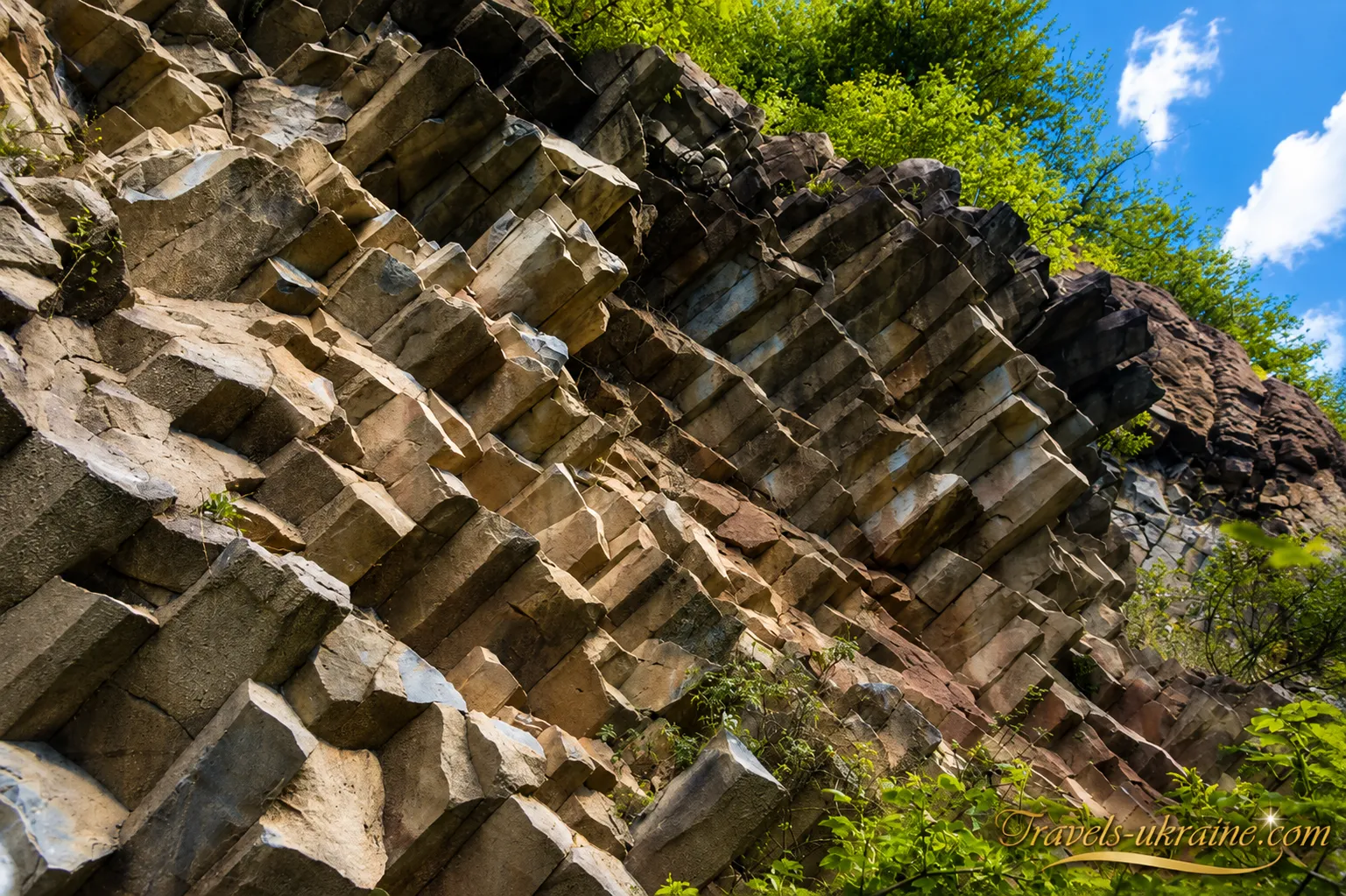
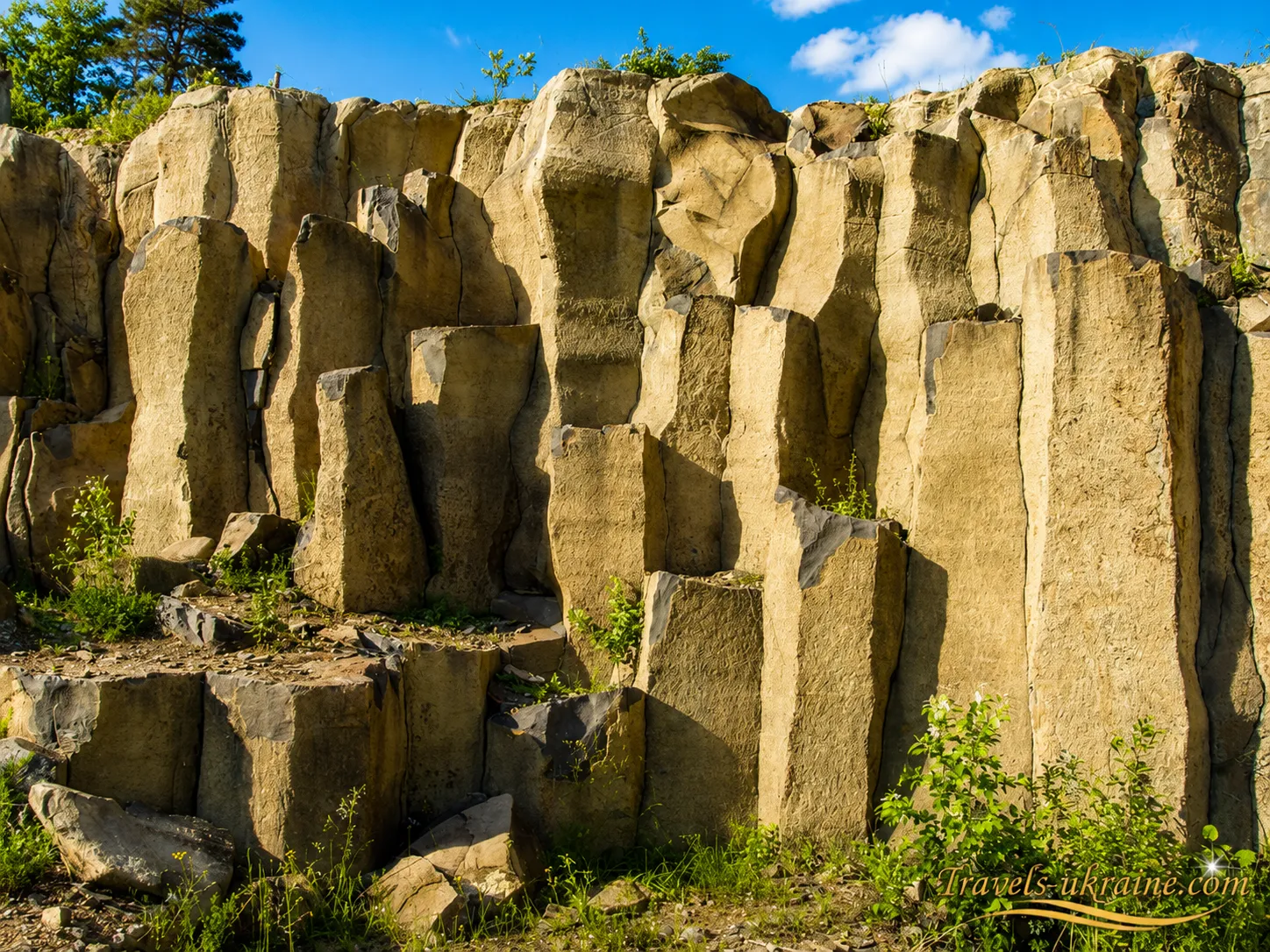
The main feature of this location is its columnar basalt. It formed as a result of ancient volcanic activity, when hot igneous rock gradually cooled, contracted, and cracked into regular polygonal shapes. This is how the natural basalt columns came into being, now resembling giant stone organs or a frozen waterfall. Their geometry seems almost architectural, although what lies before us is nature’s pure creation. It is precisely this combination of austere form and wild origins that makes these majestic basalt formations so captivating for travelers, photographers, geologists, and anyone seeking unusual tourist attractions in the Rivne region.
Why the Basalt Columns Impress at First Sight
The first impression of this location is often unexpected: you travel along an ordinary road through the Rivne region, pass villages, fields, and forests—and suddenly an almost different world opens up before you. Dark stone columns rise above the water, the shore slopes fall sharply toward the lake, and the area has a special atmosphere—somewhat austere, somewhat romantic, and extremely photogenic. It is easy to understand here why the natural landmarks of the Rivne region are gradually becoming an important part of domestic tourism in Ukraine.
The Basalt Columns are unlike a classic park or a landscaped urban landmark. Their value lies in their natural character. This place needs no unnecessary decoration: simply come closer, observe the texture of the stone, look at the columns reflected in the water—and it becomes clear why this geological landmark arouses such interest. For some, it is a beautiful photo spot; for others, a stop during a journey through the Rivne region; and for the attentive traveler, an opportunity to glimpse the deep history of the Earth.
History of the Basalt Columns in the Rivne Region: From Volcanic Fire to Tourist Legend
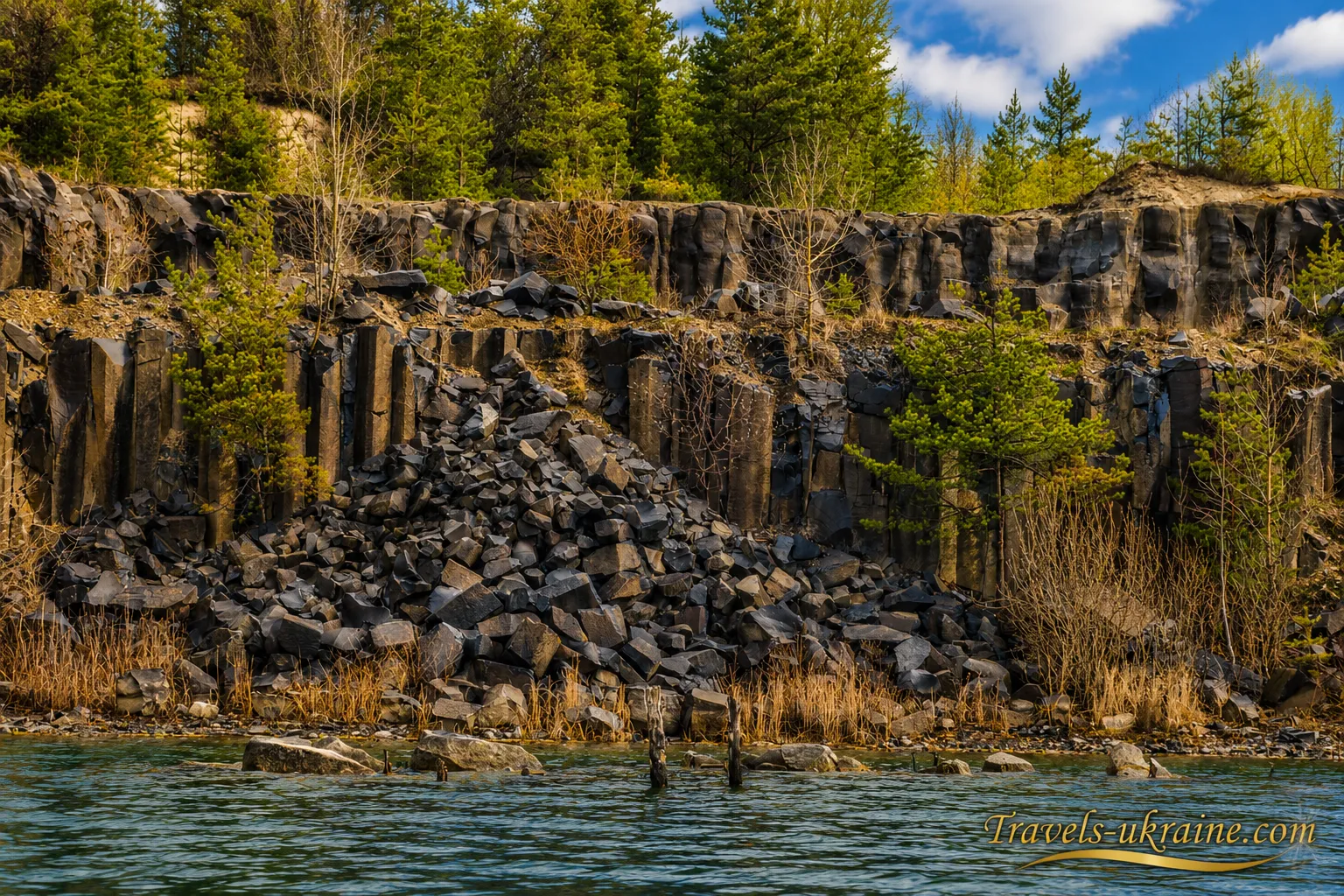
The history concealed within the Basalt Formations began long before the appearance of villages, roads, quarries, and tourist routes. Its first page was written not by people but in the depths of the Earth. Tens of millions of years ago, powerful geological processes were active in this area: molten igneous rock rose from below, solidified, cooled, and gradually cracked into almost regular polygonal forms. This is how the columnar basalt formations took shape—natural stone structures that now look as though they were carved by a master architect.
When a traveler stands before these dark vertical walls, it is difficult to grasp the scale of time at once. Before their eyes are not simply basalt columns as a natural landmark, but the frozen memory of an ancient volcanic past. Every crack and every ridge in the rock preserves a trace of the lava’s slow cooling. That is why the basalt columns in the Rivne region are valuable not only as a photogenic tourist destination but also as a vivid open-air geology textbook.
The area where the geological landmark of the Rivne region is located today is associated with the Ivan-Dolynske basalt deposit. Large basalt reserves near the villages of Bazaltove and Novyi Berestovets became known centuries ago. Over time, this stone began to be actively used because basalt is strong, dense, and capable of splitting into even sections. For this reason, it was a valuable material for construction, road paving, surface reinforcement, and various practical needs.
How a Basalt Quarry Became a Natural Landmark of Rivne Region
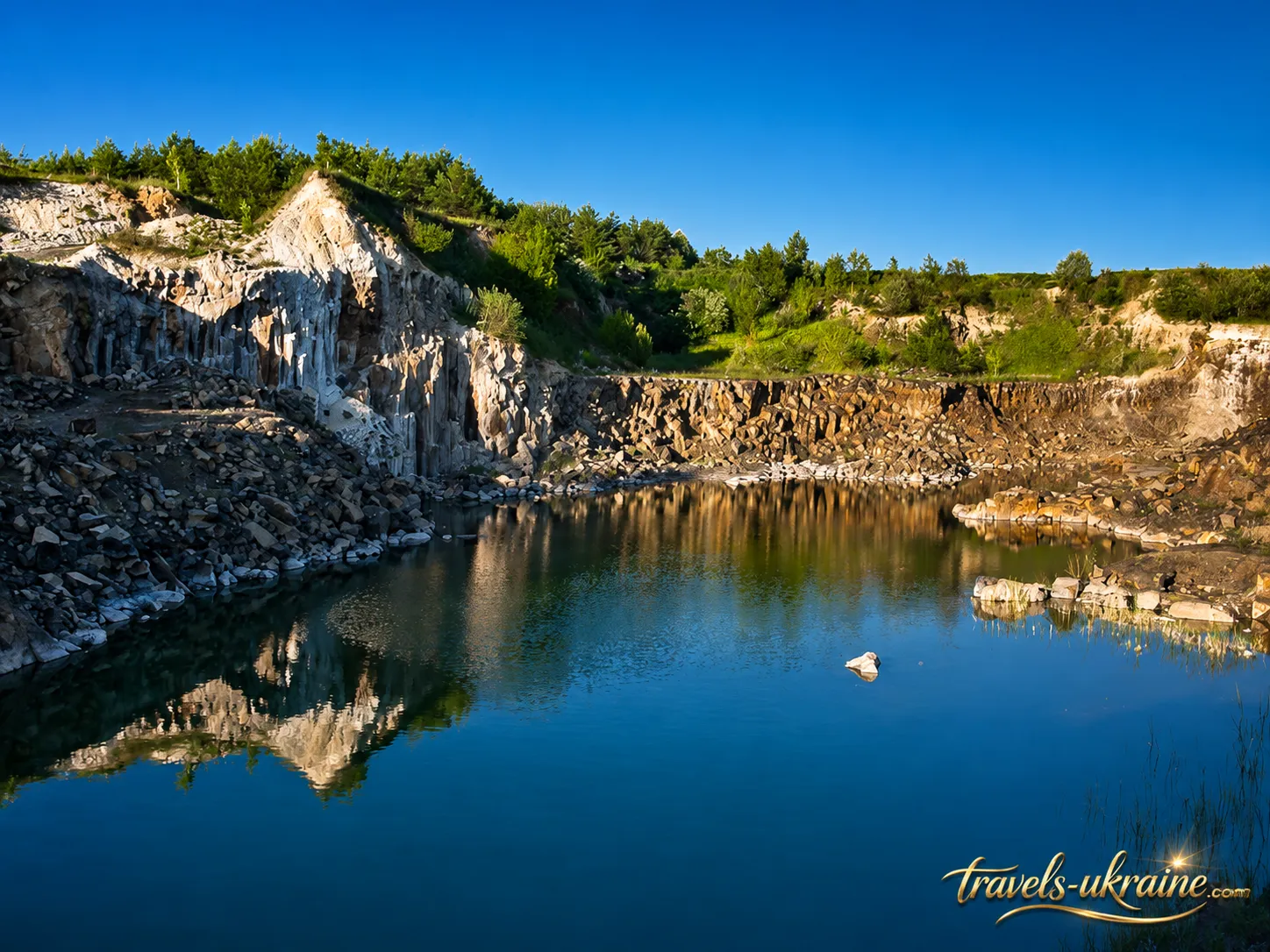
The modern appearance of this location was shaped largely by the combination of nature and human activity. Quarries once operated here, extracting basalt by open-pit methods. During the extraction process, the same basalt formations that attract tourists today were exposed. Later, some exhausted quarries filled with water, creating lakes with a deep emerald hue, beside which the stone columns look even more striking.
In 1972, the area was placed under protection as a basalt columns natural landmark of local significance. This status is important for more than merely formal reasons. It emphasizes that this is a rare geological site with scientific, educational, aesthetic, and tourism value. The area is regarded as a comprehensive landmark: it is of interest to geologists, mineralogists, local historians, photographers, and ordinary travelers who want to see something truly unusual in Ukraine.
It is worth knowing the history of this location because it changes the very way you experience a journey. When you see the basalt columns only as a beautiful photo spot, the impression remains superficial. But once you understand that what lies before you is the result of ancient volcanic processes, the region’s industrial history, and the natural recovery of the landscape, the place takes on much greater depth. Every layer of stone is part of the Earth’s history, while every view of the lake is a reminder of how nature can reinterpret even spaces altered by humans.
That is why a trip to the Basalt Columns is not merely a journey in search of beautiful scenery. It is an encounter with a place where geology, local memory, the history of extraction, conservation value, and the quiet beauty of Polissia come together in one space. Such locations do more than adorn Ukraine’s tourist map—they help us better understand how diverse, ancient, and unexpected our land can be.
Natural Features of the Basalt Columns: Stone Pillars Created by the Power of the Earth
The Basalt Columns of the Rivne region are often called natural architecture, and it is a very accurate comparison. Before the traveler lies not a chaotic pile of rocks but an orderly system of vertical forms resembling giant steps or a petrified waterfall. These geological columns were not carved by people, assembled by hand, or artificially created. Nature itself formed them—slowly, precisely, and with extraordinary visual impact.
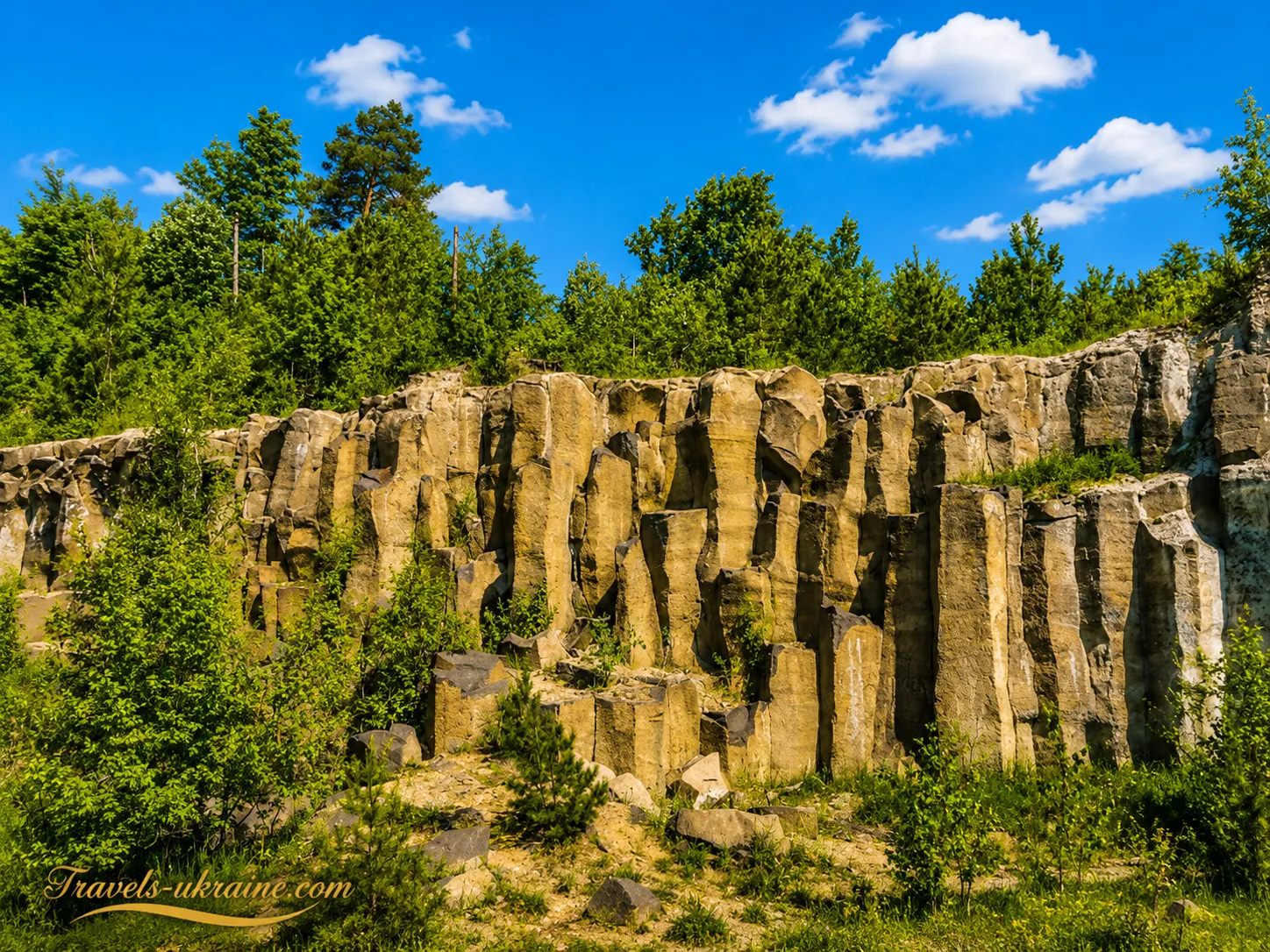
The main value of this location is a rare type of formation situated on the western slope of the Ukrainian Crystalline Shield. This natural geological landmark has basalt extending for 180–230 m. Its thickness also varies—from 0.6 to 1.2 m: some columns appear slender and elongated, while others are massive and heavy, resembling stone supports. The columns range from 3 m to 30 m in height. It is also worth noting that these stone formations split cleanly and evenly.
Why the Basalt Columns Have Such a Regular Shape
To understand the beauty of this geological landmark in the Rivne region, it is worth imagining how it formed. Molten basalt once cooled gradually. As it cooled, the rock contracted and cracks appeared within it. These cracks spread in such a way that the basalt mass divided into long vertical prisms. They are the forms that now create the same natural basalt columns that attract tourists, photographers, and nature researchers.
What is especially fascinating is that this form is not a decorative coincidence. It is explained by the physics of cooling rock. Nature seems to have chosen the most convenient way to “divide” the stone into separate sections. That is why the geological columns in the village of Bazaltove make such a powerful impression: they are wild yet orderly, austere yet harmonious, massive yet remarkably precise in form.
Basalt as a Material: Strength, Dark Color, and Distinctive Texture
Basalt is a dense volcanic rock with a dark color. In Bazaltove, it has a characteristic deep gray, graphite, or nearly black tone that contrasts especially beautifully with the water, greenery, and sky. In sunny weather, the basalt columns near Rivne look dry, sharp, and monumental. After rain, their surface darkens and takes on greater color depth, while the texture of the stone becomes even more pronounced.
It is this texture that makes the location so photogenic. The surfaces of the columns reveal natural ridges, breaks, cracks, split marks, and irregularities. Rather than spoiling the view, they add a sense of living character. Before you is not a smooth museum exhibit but real stone that has endured millions of years of geological history, the industrial discovery of the deposit, quarrying, and a new life as an igneous rock.
- Shape — vertical polygonal columns that create the effect of a natural stone wall.
- Color — dark gray, graphite, and in places almost black, with a beautiful contrast beside the water.
- Texture — pronounced cracks, ridges, chips, and natural fracture lines.
- Landscape — a combination of basalt slopes, a flooded quarry, greenery, and open sky.
- Visual effect — a sense of monumentality, as if nature had created its own stone temple.
The Lake, Steep Slopes, and Love Island near the Basalt Columns
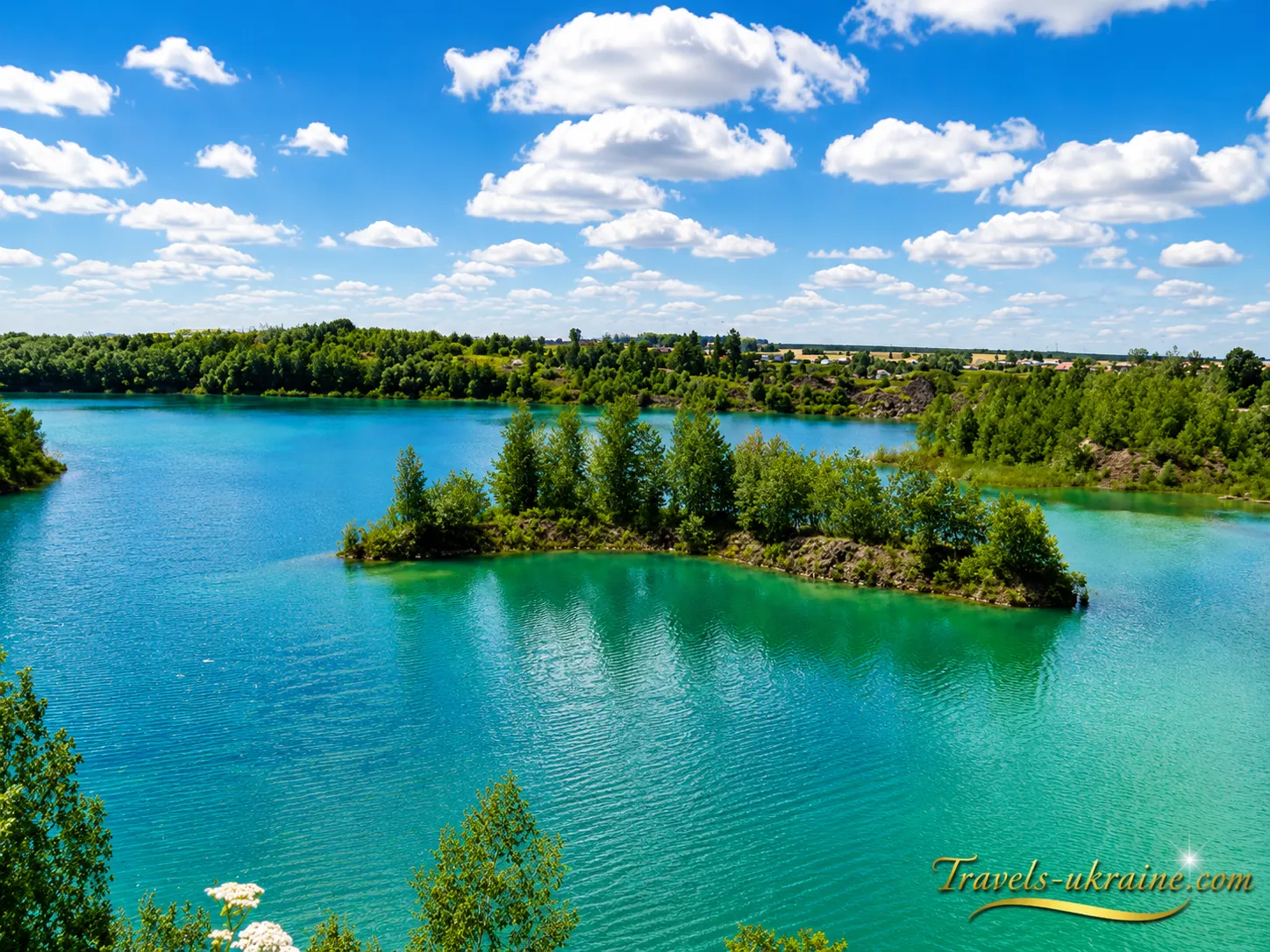
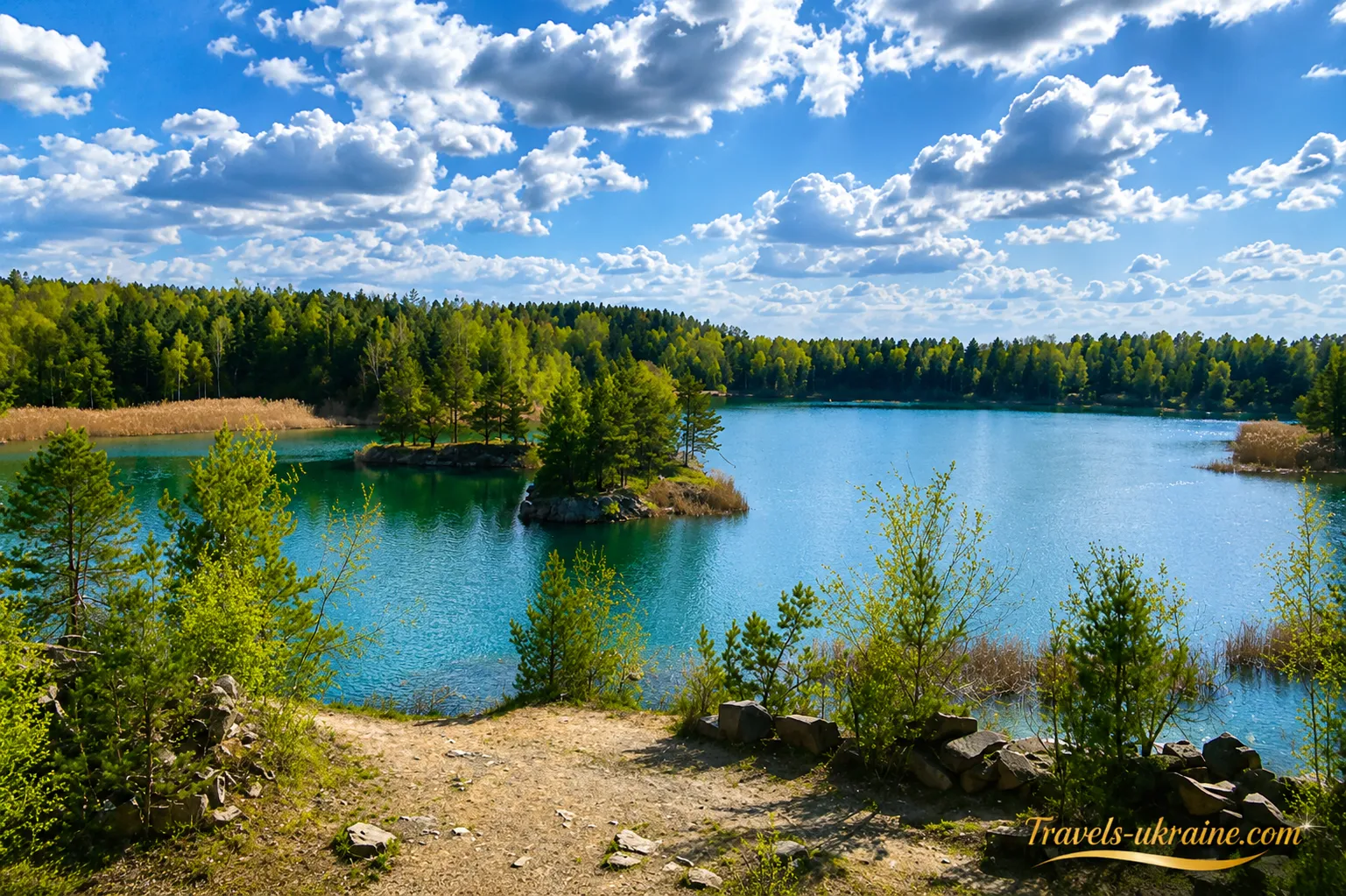
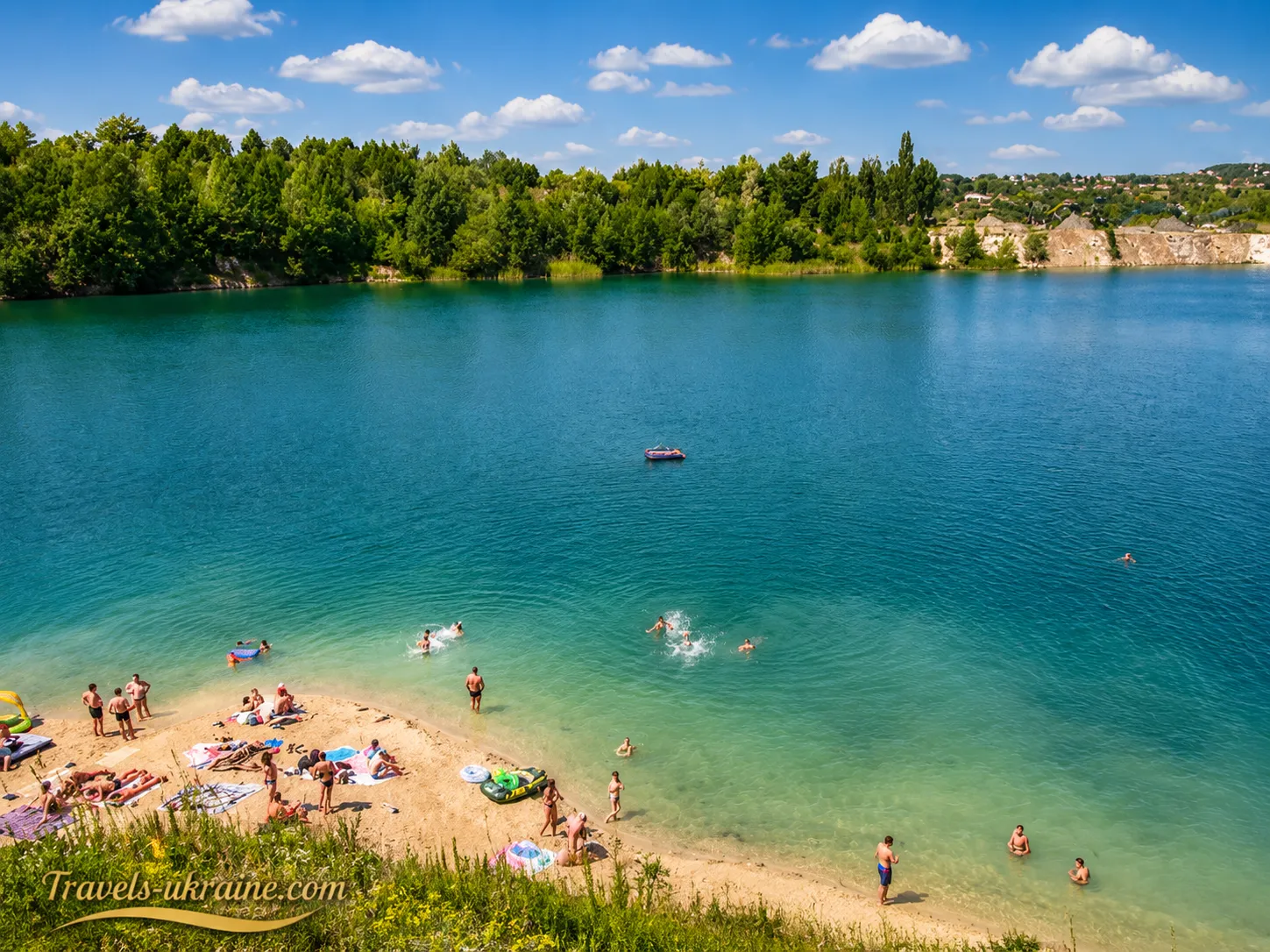
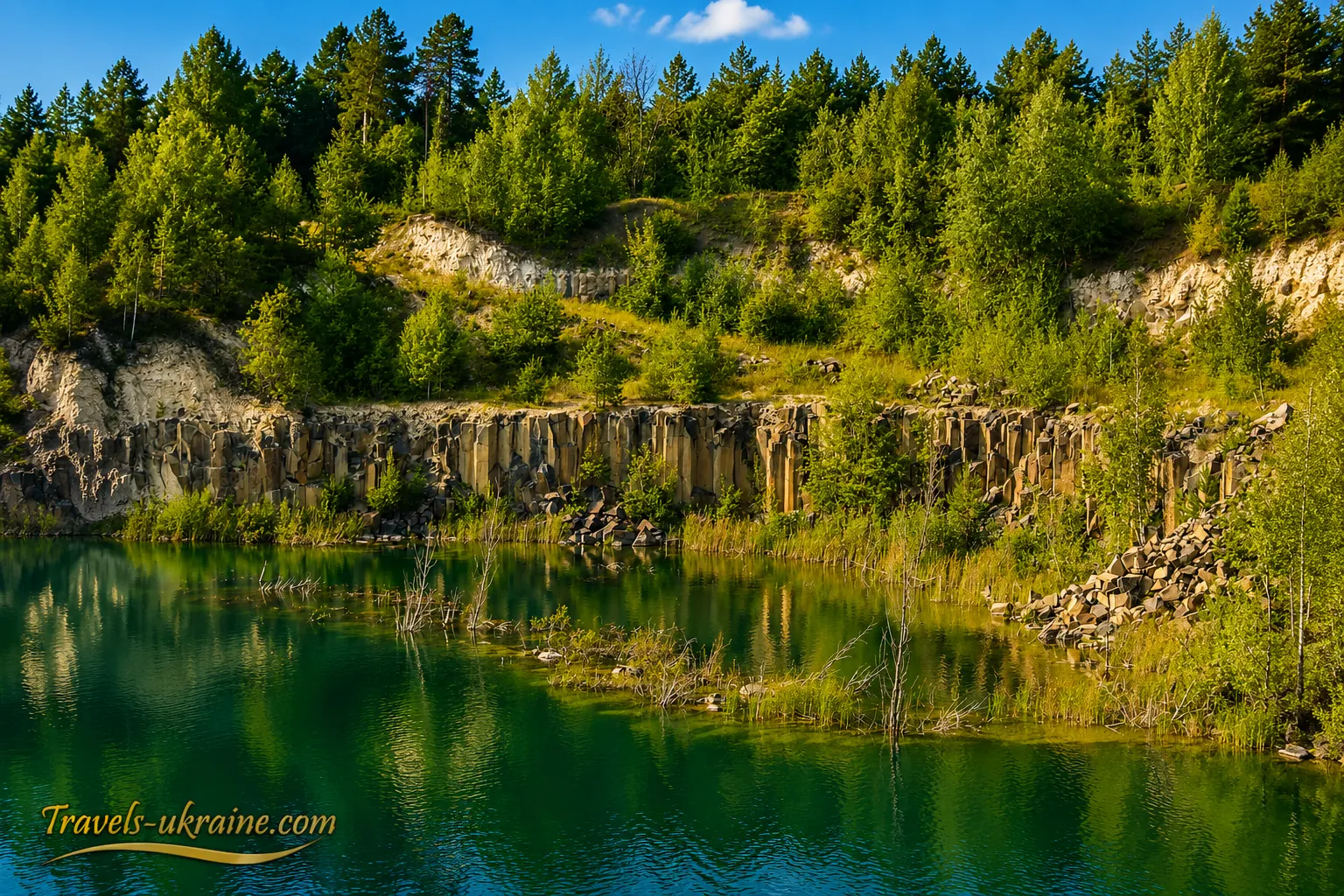
One reason the Basalt Columns in Rivne region are so memorable is not only the stone itself but also the surrounding space. Some of the former quarries filled with water, and the basalt walls are now reflected in the lake’s surface. This creates a special atmosphere: the austere dark stone seems softened by the water, while the industrial quarry becomes a picturesque natural setting.
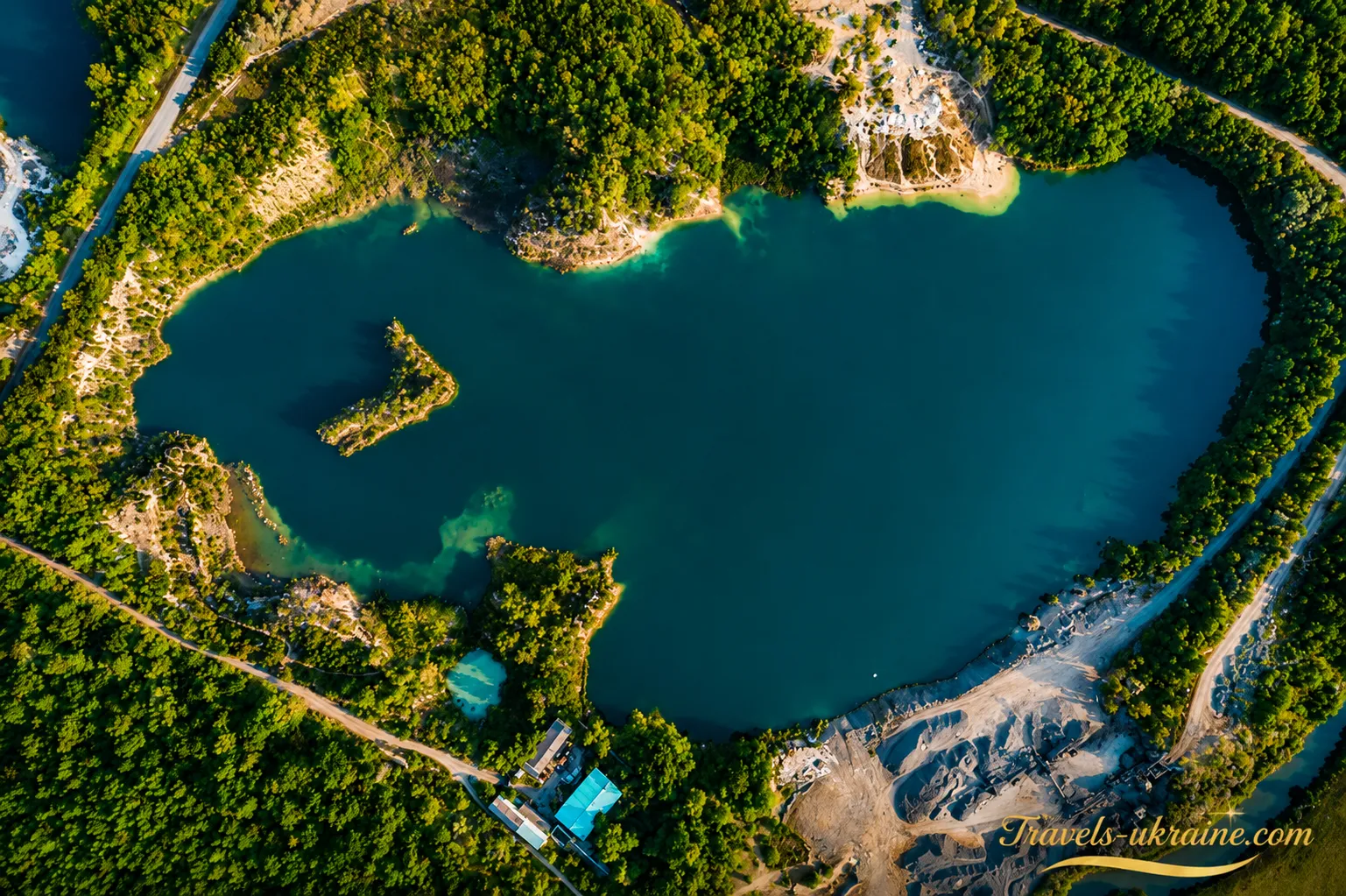
The descents to the water are quite steep in some places, making the landscape look dramatic. From above, a broader panorama opens up over the quarry, water, and stone masses, while closer to the shore, the scale of the columns is easier to appreciate. The flooded quarry also contains a small island commonly known as Love Island. Its shape and location add a romantic mood to the area, although the main attraction remains geological: the stone basalt columns create the location’s unmistakable image.
This is the main distinctive feature of the Basalt Columns: they impress not through spectacle but through the power of their presence. The place needs no excessive explanation, yet the more you learn about it, the more deeply it reveals itself. For tourists seeking interesting destinations with character, this location becomes one of the most memorable stops on a journey—a natural landmark whose beauty was born of fire, stone, and time.
Photo and Video Gallery
Basalt Columns, Rivne Region: A Brief Tourist Guide
Before traveling to the Basalt Columns, it is worth understanding one important thing: this is not a traditional museum with a ticket office, exhibition halls, and a clearly defined route from one display to the next. It is a natural outdoor tourist destination whose main attractions are the columnar basalt, the flooded quarry, rocky slopes, water, open space, and panoramic views. That is why it is best to come here without rushing, ready for a leisurely walk, a picnic, photography, observing nature, and a brief introduction to one of Ukraine’s most fascinating geological landmarks.
For most travelers, the basalt columns of Polissia are suitable as a half-day trip or as part of a broader journey through Rivne region. If you are leaving Rivne by car, the drive to the village of Bazaltove usually takes about an hour. This format is convenient for a family trip, an outing with friends, a photo walk, or a short weekend route. The site does not require special physical training, but it does call for caution: this is a quarry area with natural slopes, rocky sections, and places where you should watch your step.
A Brief Tourist Profile of the Basalt Columns
- Type of site: a geological natural monument, a natural photography location, and a place for a short walk and peaceful recreation.
- Location: Rivne region, in the area of the villages of Bazaltove, Berestovets, and Novyi Berestovets.
- Approximate travel time from Rivne: about 1 hour by car or public transport in the direction of Bazaltove.
- Difficulty: easy to moderate, depending on the viewpoints selected and the weather conditions.
- Budget: minimal; the main expenses are usually related to travel, food, fuel, or public transport.
- Who it suits: families, couples, photographers, road travelers, geology enthusiasts, and anyone who enjoys recreation in nature.
From a practical perspective, a geological natural monument offers a very favorable balance of “travel — time — impressions.” It requires no complicated preparation but gives you the feeling of a genuine journey. Here, you can see more than just a beautiful landscape: you can discover a rare combination of geology, water, stone, and the nature of Polissia. That is why a short briefing before the trip helps with the most important thing: setting the right expectations and getting the most enjoyment from your visit without rushing or unnecessary inconvenience.
Interesting Facts About the Basalt Columns of Rivne Region
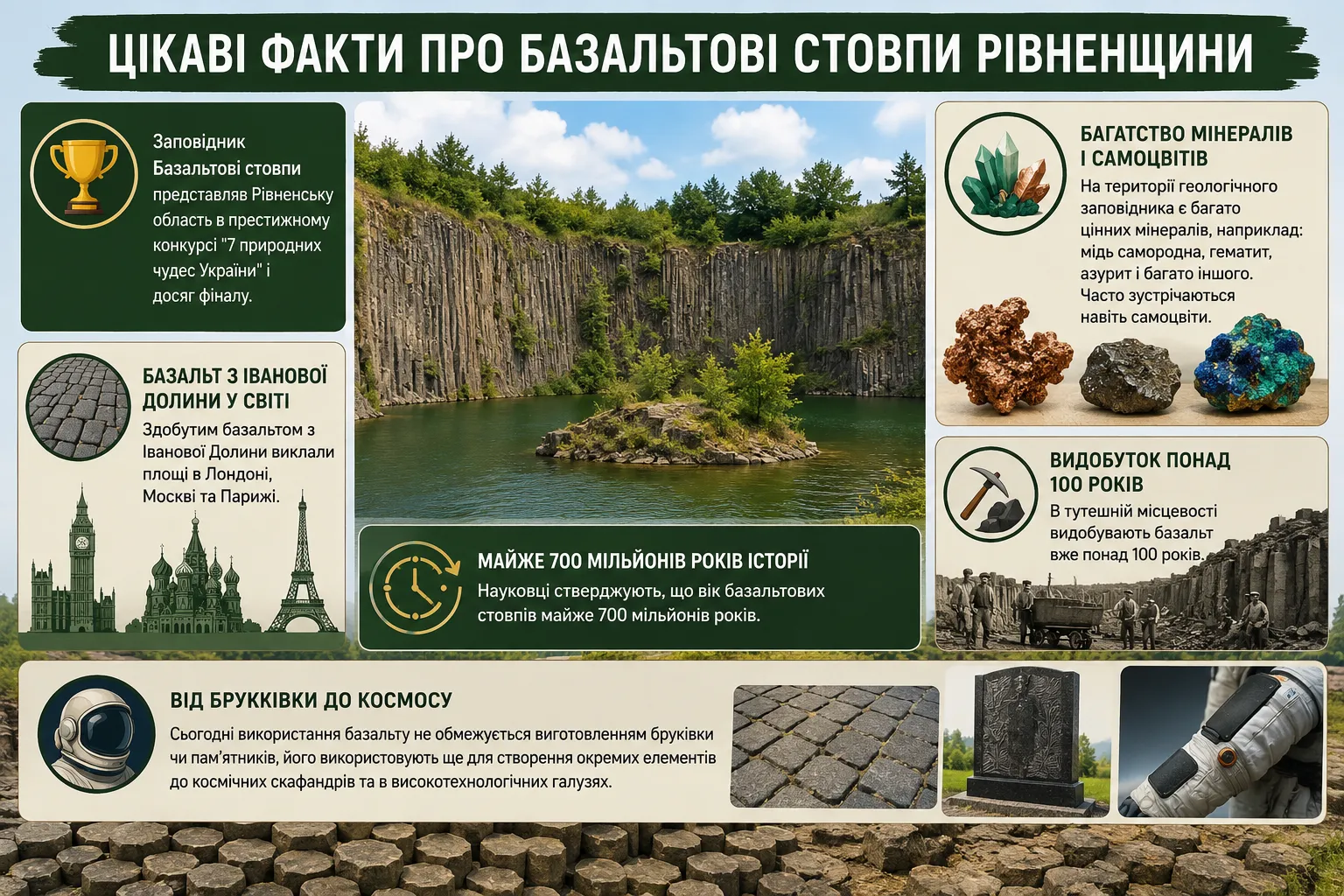
The basalt columns are not merely a beautiful natural site for photos and recreation. This place has such a rich history that every stone edge seems to conceal a separate story: one about ancient volcanic processes, unique minerals, extraction, and even modern technologies. At first glance, it may seem that we are looking at nothing more than dark stone geological columns rising beautifully above the water. But a closer look reveals that this natural monument has a much deeper meaning. Here, you can see a rare form of volcanic rock, sense the scale of geological time, and understand why the basalt columns in Rivne region have long transcended the status of a local landmark and become a recognizable symbol of the region’s natural heritage.
The Basalt Columns in the “7 Natural Wonders of Ukraine” Competition
One of the most important facts for the site’s tourist reputation is its participation in the prestigious nationwide campaign “7 Natural Wonders of Ukraine”. The “Basalt Columns” Nature Reserve represented Rivne region among the country’s most interesting natural sites and reached the competition’s final. This means that the unique basalt geological deposit was recognized not only at the local level but also within Ukraine’s broader tourism landscape.
For a traveler, this fact is highly significant. It shows that the natural monument in the village of Bazaltove is not merely an incidental stop near a quarry, but a genuinely valuable site considered among Ukraine’s most distinctive natural wonders. Rare geology, a monumental appearance, a history of extraction, and a picturesque landscape come together here.
The Age of the Basalt Columns: Almost 700 Million Years of Stone History
One of the most impressive facts about columnar basalt is its extraordinary age. Scientists and local history sources often state that these formations may be almost 700 million years old. For a tourist, this sounds almost unreal: you are standing beside rocks formed long before the emergence of modern cities, states, roads, and even most familiar forms of life.
It is precisely this awareness of the scale of time that makes the geological columns so special. This is not simply a beautiful view for taking a few photos. It is an opportunity to see a fragment of Earth’s very ancient geological history. Every crack, ridge, and facet of the basalt reminds us that nature works not in haste but over millions of years. The result of this slow work is now open to travelers.
The Basalt Columns Reserve Contains Valuable Minerals and Gemstones
Another reason this fascinating geological landmark of Rivne region attracts researchers is its mineral diversity. Valuable minerals occur in the protected area and in the basalt rocks associated with it, including native copper, hematite, azurite, quartz, calcite, barite, pyrite, and others. Gemstones and semiprecious mineral inclusions may also be found in the local rocks, making the area even more interesting for geologists and local-history enthusiasts.
For an ordinary tourist, this does not mean that you should search for stones or chip anything off the rock during your walk. On the contrary, the value of this area lies precisely in preserving it untouched. However, knowing about the minerals adds depth to the journey. You begin to see the majestic basalt formations not simply as dark rock, but as a complex natural archive containing traces of chemical, volcanic, and mineralogical processes.
Basalt from Ivanova Dolyna Was Used in London, Paris, and Moscow
The Ivano-Dolyna basalt deposit has both a natural and an industrial history. The stone extracted here was valued for its strength, even splitting, and durability. That is why basalt from Ivanova Dolyna was used to pave streets and squares in famous cities. Local-history sources mention that it was used to pave squares and urban spaces in London, Paris, and Moscow.
This fact clearly demonstrates the practical value of the local stone. The basalt columns are not only a beautiful natural site but also part of the broader history of Ukrainian stone being used in urban spaces. Stone formed deep within Rivne region over millions of years later became part of streets, squares, sidewalks, and architectural environments far beyond Ukraine.
Basalt Has Been Mined Here for More Than 100 Years
Basalt extraction in this area has a long history. Basalt has been mined in the local quarries for more than 100 years, and this extensive development of the deposit exposed the columnar basalt formations that have become a tourist symbol of Rivne region. Once regarded mainly as an industrial site, the area is now one of the region’s best-known natural attractions.
This is an interesting example of how an industrial landscape can acquire new meaning. Initially, the area was used as a source of durable stone. Later, some of the quarries filled with water, the basalt walls became a striking natural backdrop, and the site began attracting travelers. In this way, the basalt columns of Rivne region gradually changed from a deposit into one of the region’s most fascinating natural tourist attractions.
What to See Near the Basalt Columns in Rivne Region
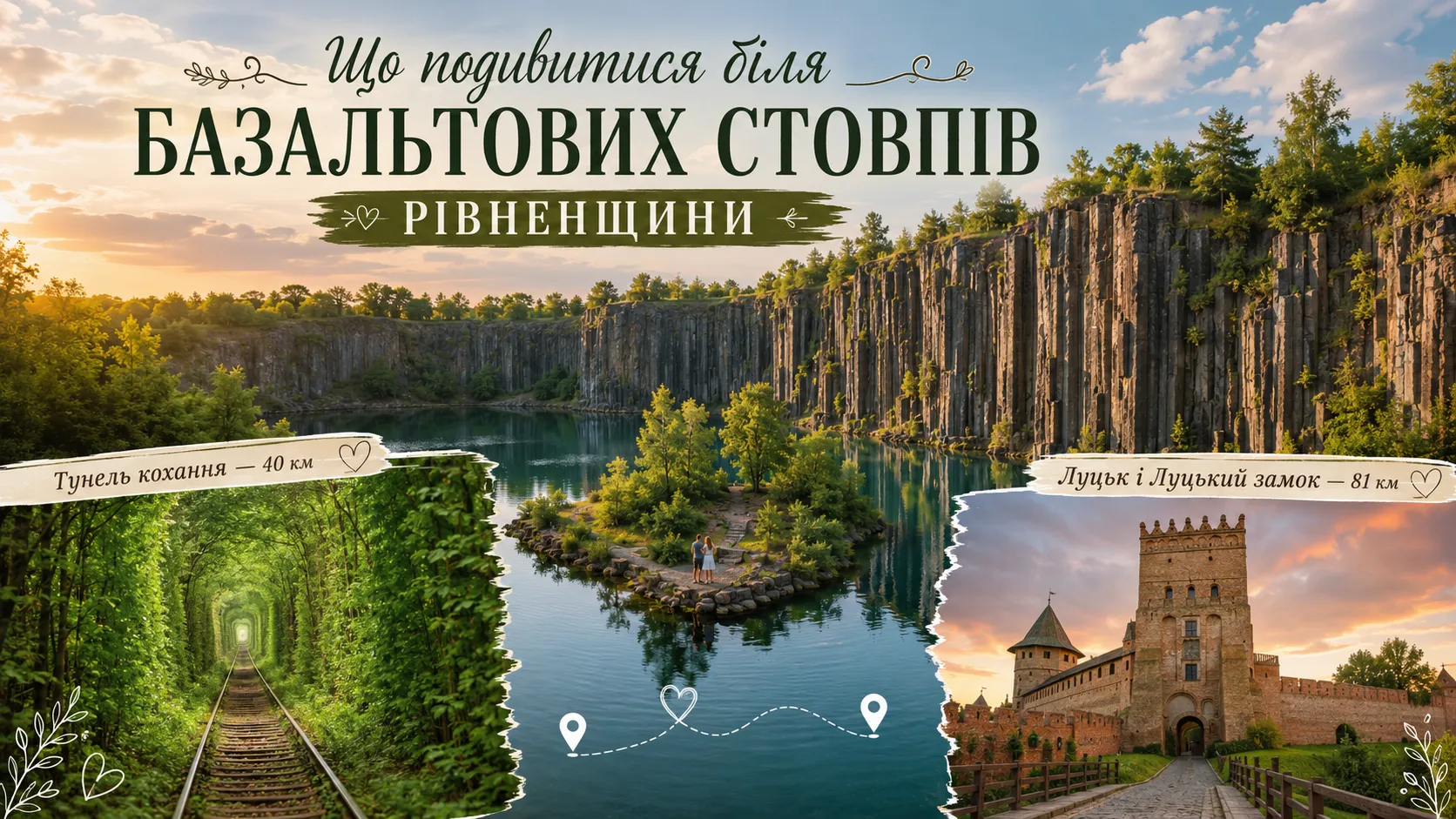
The basalt columns are a tourist destination worth visiting for more than just the stone pillars themselves. You can see majestic columnar basalt, a flooded quarry with a picturesque lake, Love Island, and natural panoramas that are ideal for a leisurely walk and beautiful photos. This is not a place to rush through: it reveals itself best when you have time to stop, examine the texture of the stone, and take in the atmosphere of this unusual natural monument.
The main attraction of the site is the basalt columns, which resemble a natural stone wall. Their regular shape, dark color, and vertical facets create the impression that you are looking not at a former quarry but at a majestic structure built by nature itself. The natural basalt columns are especially interesting from different viewpoints: from one angle they seem austere and monumental, while from another they resemble a petrified waterfall.
The flooded quarry lake also deserves special attention. The water gives the site a distinctive mood: the dark stone columns are reflected in the lake, while the surrounding greenery softens the austere appearance of the cliffs. This is where the contrast between the strength of stone and the calm of nature can be felt most clearly.
The quarry is also home to a small islet often called Love Island. It is one of the best-known spots in the Basalt Quarry, and tourists enjoy photographing it from safe viewing areas. Together with the basalt walls and water, it creates a highly recognizable landscape, thanks to which the basalt formations near Rivne remain memorable for a long time.
How to Enrich a Tourist Trip to the Basalt Columns
The basalt columns are easy to combine with other interesting tourist sites to make your journey more rewarding. If you do not want to travel solely for one destination, you can plan a full-day route and add places that will complement your recreation, provide a range of emotions, and create more vivid memories.
One of the best options is to visit the Tunnel of Love in Klevan, located approximately 40 kilometers from the basalt columns. It is one of Ukraine’s most romantic tourist destinations, where a green railway corridor creates a special atmosphere for walking, photography, and peaceful recreation. This route is especially well suited to couples, family trips, or a short weekend getaway.
If you would also like to add a historical site to your route, head to Lutsk and visit the famous Lutsk Castle, approximately 81 kilometers away. In this format, one journey combines three different experiences: the natural grandeur of the basalt columns, the romance of the Tunnel of Love, and the medieval atmosphere of Lutsk Castle. This is no longer just a short stop near a quarry but a complete tourist route through western Ukraine.
The Basalt Columns of Rivne Region in Film and Music
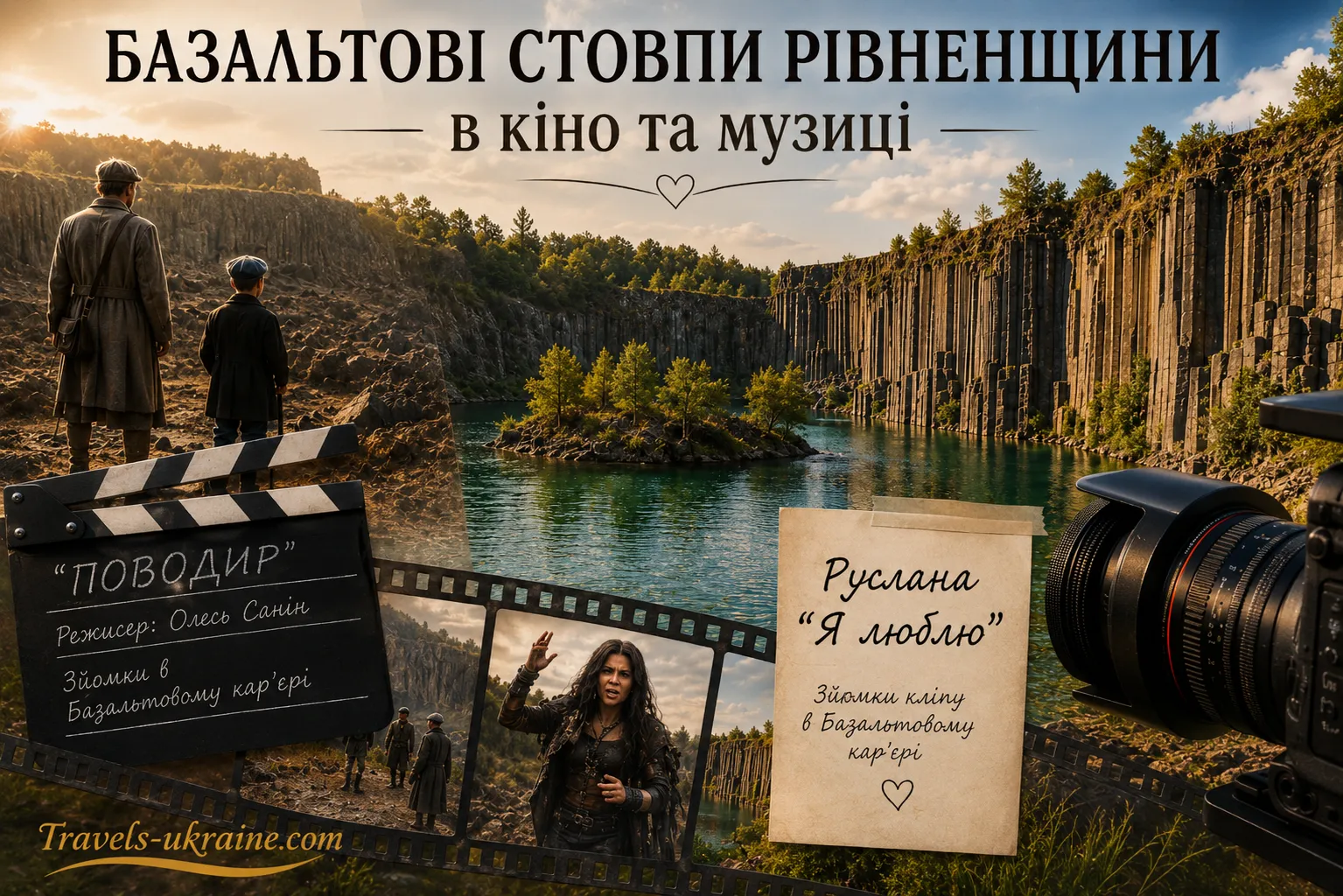
The basalt columns of Rivne region attract not only tourists, photographers, and geologists. Thanks to their austere beauty, dark stone walls, water, and almost mystical atmosphere, the site has also attracted creative projects. Nature provides ready-made scenery here: the basalt columns resemble an ancient stone temple, while the flooded quarry gives each shot depth, silence, and drama. That is why the geological basalt columns can be seen not only as a natural monument but also as a place with a distinctive visual energy. They work exceptionally well on camera.
The Film “The Guide” and the Basalt Columns
Proof of the site’s special cinematic quality is the fact that the basalt columns have already appeared in recognizable scenes of Ukrainian culture and have effectively become a natural star of the screen. Their austere stone walls and dramatic atmosphere have attracted artists: several scenes from the historical drama “The Guide” were filmed in this area. It is easy to see why—the basalt columns are so striking that they look as if nature itself created ready-made film sets.
This setting feels highly natural for such a film: restrained, profound, somewhat austere, and at the same time exceptionally expressive. The columnar formations create a sense of strength, antiquity, and tense silence—an atmosphere well suited to dramatic cinema.
Ruslana’s “I Love” Music Video at the Basalt Quarry
Another striking fact in the star-studded story of the Basalt Quarry is that Ruslana’s music video for the song “I Love” was filmed here. This location was a perfect choice for the video: the artist’s energy blended with the wild beauty of the stone, water, and open space. Against the backdrop of natural basalt columns, the musical image looks strong, vibrant, and truly Ukrainian.
This fact is especially interesting for travelers who enjoy visiting places associated with film, music, and culture. Here, you can not only see an interesting geological landmark, but also remember that these same landscapes have already become part of Ukrainian screen culture. In this way, a trip to the Basalt Columns gains another emotional dimension—not only a natural one, but also a cultural one.
Thus, the basalt columns located in Rivne Oblast are not only a unique geological natural landmark of Ukraine, but also a place that already has its own mark on culture. Nature, film, music, and tourism come together here. These are the kinds of facts that make a trip more interesting: you arrive to see the stone columns and discover a location that has inspired artists and become part of Ukraine’s modern visual history.
Frequently Asked Questions About the Basalt Columns of Rivne Oblast
Where are the Basalt Columns of Rivne Oblast located?
The Basalt Columns of Rivne Oblast are located in Rivne Oblast, near the village of Bazaltove, not far from Kostopil. This is one of the region’s best-known natural landmarks, often searched for as the basalt columns near Rivne or the basalt columns in the village of Bazaltove.
How do you get to the Basalt Columns near Rivne?
The most convenient way is to drive toward Kostopil and the village of Bazaltove. Before setting off, it is worth plotting the route in a navigation app and, if possible, saving the map offline. The road is well suited to a weekend trip, especially if you combine the basalt columns with other tourist attractions in Rivne Oblast.
How much time is needed to visit the Basalt Columns?
Approximately 40–60 minutes is enough for a quick visit, but it is better to allow 1–2 hours. This will give you time to calmly view the columnar basalt, walk around the flooded quarry, see Love Island, take photos, and experience the atmosphere of this geological landmark of Rivne Oblast.
What can you see near the Basalt Columns?
The main sights include the stone columns themselves, the flooded basalt quarry, the lake, Love Island, and the surrounding panoramas. You can also add the Tunnel of Love in Klevan or Lutsk with Lutsk Castle to your trip, making the route more eventful and creating even more vivid memories.
Are the Basalt Columns suitable for a trip with children?
Yes, but you need to be careful with children. The location is situated on the grounds of a former quarry, so there are slopes, rocks, water, and uneven sections. Children should not be left unsupervised near the quarry edges or the water. For a family trip, it is best to choose dry weather and safe viewpoints.
When is the best time to visit the Basalt Columns in Rivne Oblast?
The most comfortable time for a trip is late spring, summer, and early autumn. During this period, there is plenty of greenery around, the water looks more vivid, and the natural basalt columns contrast beautifully with the landscape. For photography, morning or evening is best, when the light is softer.
What footwear is best for walking near the basalt columns?
It is best to wear comfortable, closed-toe shoes with non-slip soles. There may be rocky, uneven, or slippery sections near the quarry, especially after rain. Light sandals, smooth-soled shoes, or city footwear are not particularly comfortable for this kind of walk.
Do you need a ticket to visit the Basalt Columns?
The Basalt Columns are an outdoor natural attraction, not a traditional museum with a permanent ticket office and exhibition halls. Before your trip, it is worth checking the current visiting conditions, as access rules, parking arrangements, or local restrictions may change.
What is not allowed on the grounds of the Basalt Columns?
Do not chip away at the basalt, write on the stone, litter, approach dangerously close to the quarry edges, or behave in ways that harm nature or disturb other tourists. The Basalt Columns are a natural landmark, so the best approach is to leave the site clean and untouched.
Which locations can you combine with a trip to the Basalt Columns?
The most popular option is to combine the Basalt Columns with the Tunnel of Love in Klevan, located approximately 40 kilometers away. For a longer route, you can add Lutsk and Lutsk Castle, which is about 81 kilometers away. This way, one trip combines nature, romance, and history.
Basalt Columns: a place you will want to revisit in your mind
The Basalt Columns in Polissia are not simply another point on Ukraine’s tourist map. This is a place where you find yourself lingering for a few minutes longer than planned because something truly special unfolds before your eyes: dark and majestic columns, the lake of a flooded quarry, the surrounding silence, and the feeling that the earth itself is revealing its ancient power. Here, you do not need to invent an experience—it arises on its own.
This location has a rare magic of simplicity. The basalt is not adorned with artificial decorations, does not require loud advertising, and does not try to be “fashionable.” It simply stands—majestic, dark, and silent—and reminds us that true beauty is often created not by human hands, but by time, fire, water, and stone. That is why the Basalt Columns leave behind not only photographs, but also a deep inner impression.
A trip to the Basalt Columns is an opportunity to see Ukraine from a different perspective. Not only through its cities, castles, or popular resorts, but through its natural depth. Here, you can glimpse geological history, see natural basalt columns, walk by the water, pause near Love Island, and feel that even a short journey can be deeply meaningful.
So, if you have long wanted to take a short but truly memorable trip, add the basalt columns near Rivne to your itinerary. Come here without rushing, walk around the quarry, look at the dark stone walls, take a few photos, but most importantly, allow yourself to simply experience this place. Some locations are enough to see once, while others stay in your memory for a long time. The Basalt Columns are one of them.
Plan your journey through Rivne Oblast, discover the Basalt Columns, combine them with the Tunnel of Love or Lutsk Castle, and give yourself a day filled with everything: natural grandeur, romance, history, and the feeling of a true journey. Ukraine has places that know how to surprise. And the Basalt Columns of Rivne Oblast are one of them.
No Comment
You can post first response comment.