
 English
 Українська
 Български
 Hrvatski
 Čeština
 Dansk
Dansk Nederlands
 Eesti
Eesti Suomi
Suomi Français
 Deutsch
 Ελληνικα
 Magyar
 Íslenska
 Italiano
 Latviešu
 Lietuvos
 Polski
 Português
 Română
 Русский
 Српски
 Slovenčina
 Slovenščina
 Español
 Svenska
 Türkçe
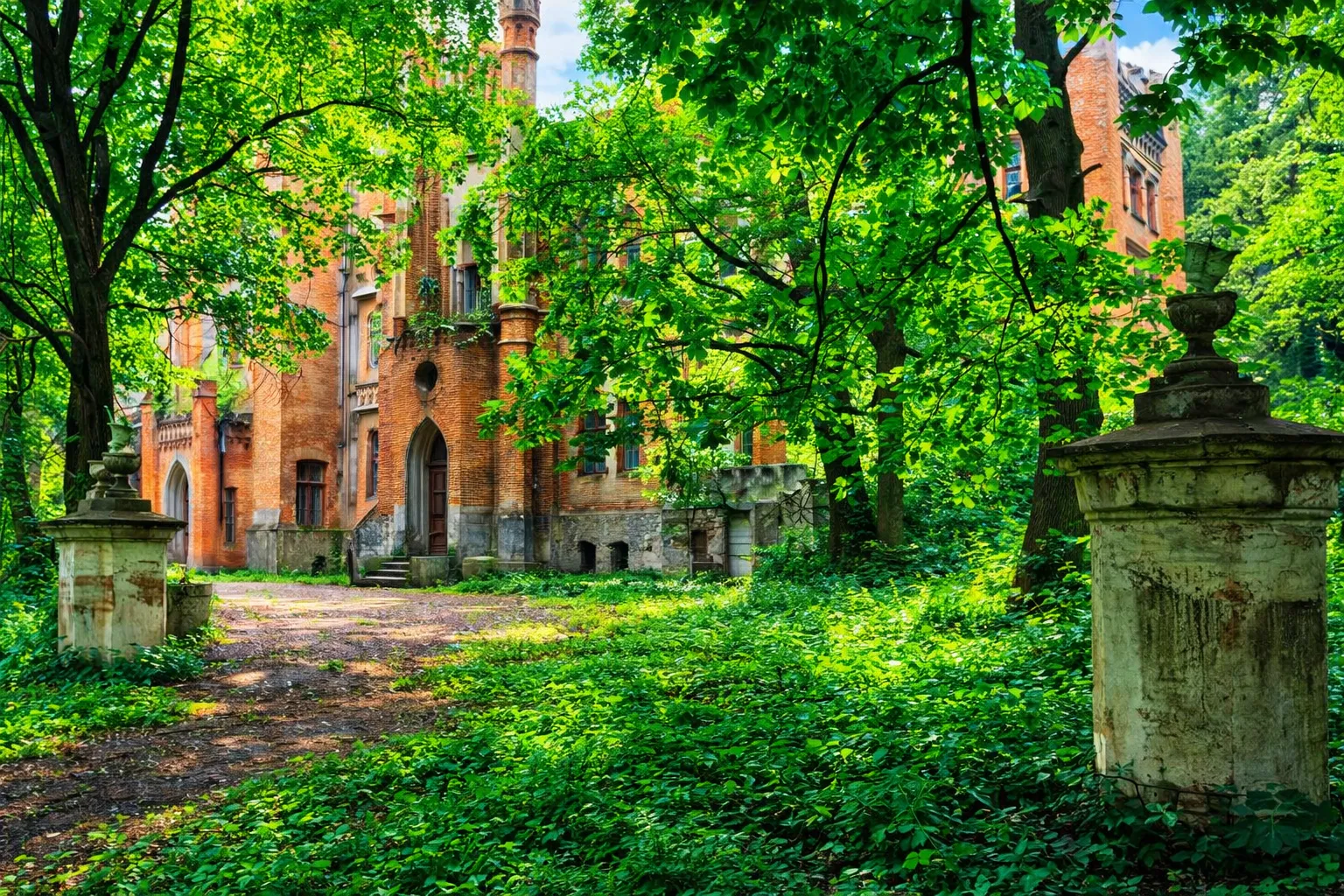
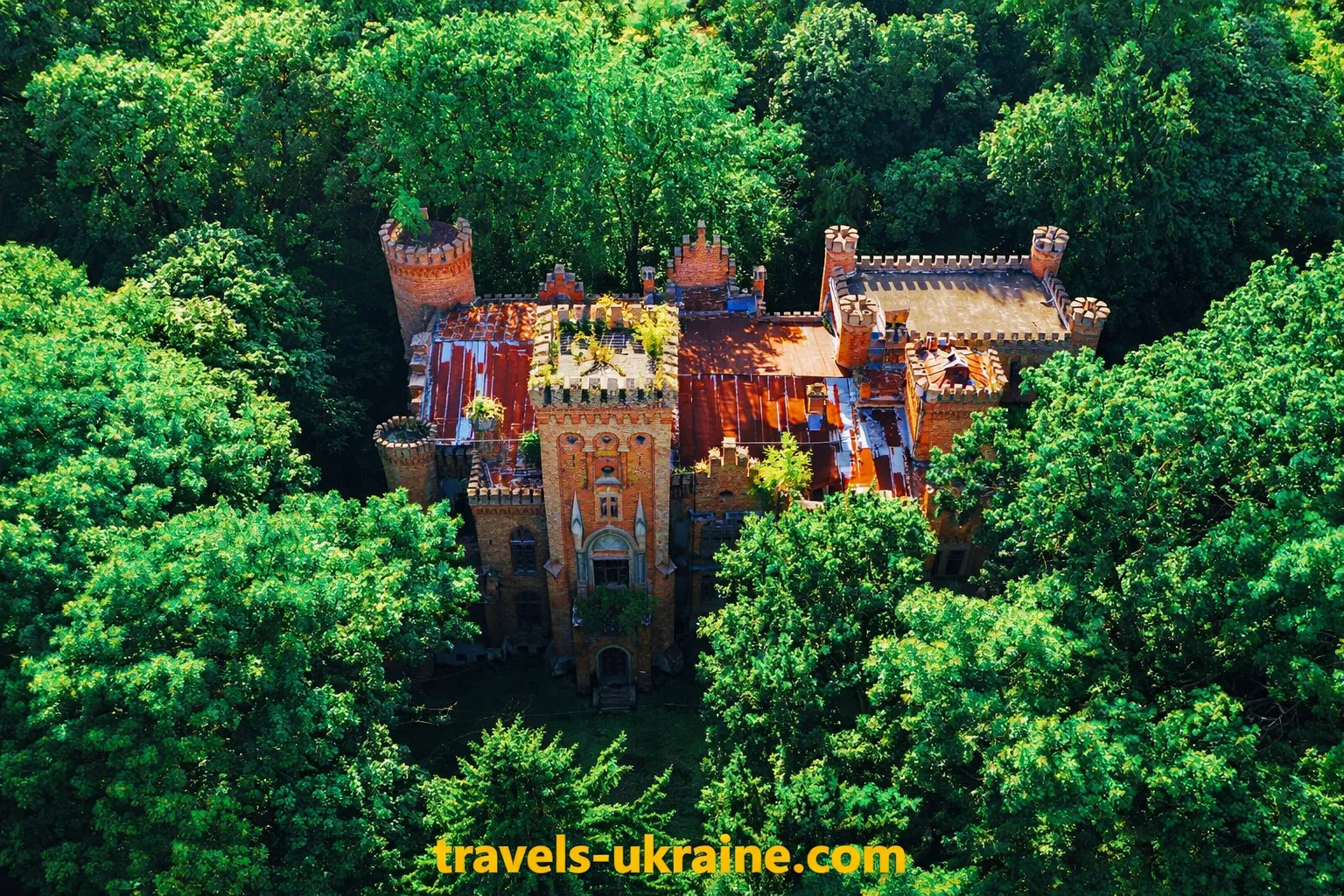
Just imagine this for a moment: you’re driving along an ordinary road through the fields of Cherkasy region, your satnav goes quiet, there’s silence all around — and suddenly, beyond the trees, neo-Gothic towers rise up, like a scene from your favourite historical film. No, it’s not a set for a period drama about the nobility. This is the Leskove Castle (the Dakhovsky Palace) — one of Ukraine’s most atmospheric and underrated architectural gems.
The palace looks as if someone accidentally “misplaced” a slice of European aristocracy right in the middle of Cherkasy Oblast. And while tourists queue up at the popular fortresses, the estate in the village of Leskove keeps its mystery and calm — with a hint of gentle mysticism and grand old-world charm.
This historic building is more than just an old structure. It’s a true aristocratic residence — the family estate of Polish nobility, a place with personality. Once, life buzzed here: music played, receptions were held, and the surroundings impressed guests with their scale and splendour. Today, the Dakhovsky Palace in Leskove is at once a romantic ruin, a destination for heritage tourism, and one of the most intriguing landmarks of Cherkasy region.
Among the tourist spots in Cherkasy Oblast, this location feels like a treasure not everyone has discovered yet. There are no crowds, no souvenir stalls, no loud entertainers. Instead, you’ll find space, history, and that feeling of having stumbled upon something special. And yes — if you’re looking for romantic places in Ukraine or atmospheric abandoned palaces of Ukraine, this is exactly the kind of place worth seeking out.
Why include the Dakhovsky estate in your travel itinerary?
If you’re planning a break and putting together a weekend route and your goal is a trip through Cherkasy region that lets you explore fascinating aristocratic locations, the Dakhovsky Palace is an ideal stop. Because it is:
- One of the most original examples of a 19th-century palace in Ukraine;
- A striking example of aristocratic estates of Ukraine;
- Part of Ukraine’s cultural heritage with a complicated past;
- Little-known, yet wonderfully photogenic architectural landmark of Cherkasy region;
- An ideal place for anyone who values atmospheric locations without the tourist hustle.
The Dakhovsky family estate is not just another point on the map. It’s a story of rise and decline, noble ambitions, the nationalisation of estates, and the fate shared by many landowners’ manors across Ukraine. It’s a place that stirs emotions — from admiration to a touch of melancholy.
Next, we’ll dive into the history of the Dakhovsky Palace, find out who the Dakhovskys were, how this noble estate took shape, and whether you can visit the palace today — plus the easiest way to get there.
A brief history of the Dakhovsky Palace
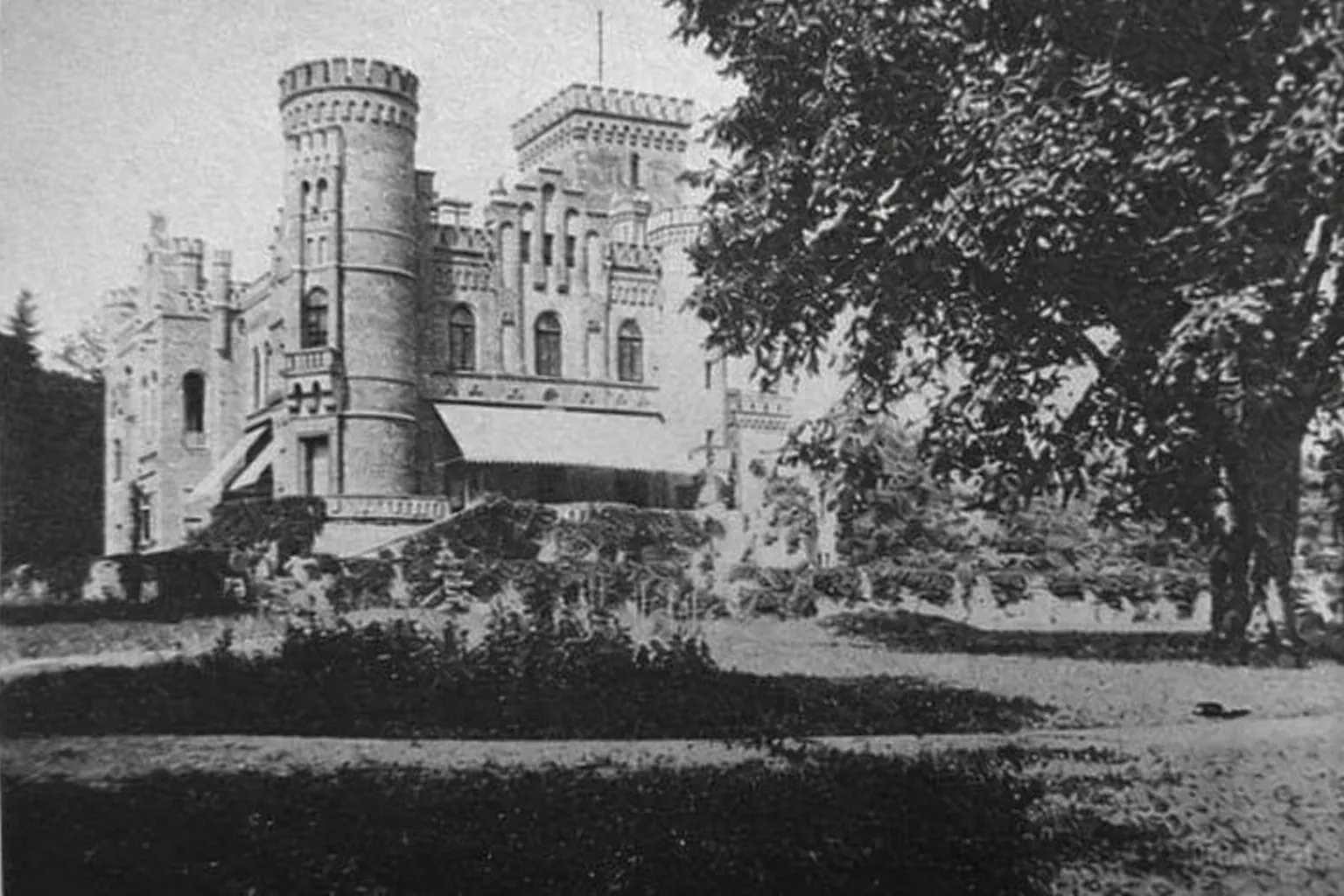
The historical story behind this architectural gem is a mix of ambition, status, and the desire to leave a mark in stone. In the second half of the 19th century, the village of Leskove became the centre of an influential noble family of Polish aristocratic origin — the Dakhovskys. That was when the ensemble began to take shape, the one we now know as the Dakhovsky Estate.
To understand the scale of this landowner’s manor, it helps to answer a simple question: who were the Dakhovskys? They were members of the wealthy Polish nobility who owned substantial lands in what is now Cherkasy Oblast. Their estate wasn’t merely a home — it was a hub of economic and social life for the region.
The family actively developed their holdings, focused on agriculture, and kept a stud farm with a strong reputation locally. The Dakhovsky estate became an example of how 19th-century aristocracy combined a status residence with an efficient, working economic model.
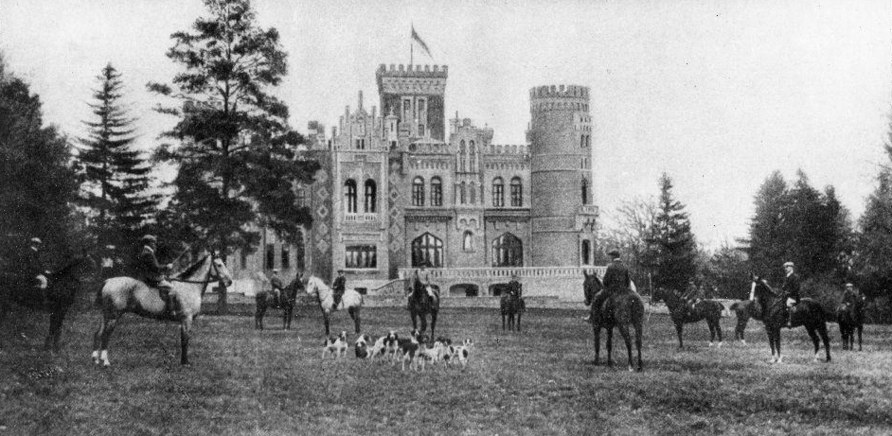
When we talk about this place, it’s worth mentioning one curious detail that might just have some truth behind it. There’s an opinion that the local gentry couldn’t stop thinking about the fame of Sofiyivka. So, to take a subtle swipe at the Potockis (and do it with maximum elegance), the Dakhovskys decided to build their own palace in the style of an English castle. Because if you’re going to compete with aristocrats, you do it properly — with towers, scale, and a light aftertaste of noble ambition.
It’s entirely possible such a motive really existed, because competition between influential families in the 19th century wasn’t only economic — it was also about prestige. Every landowner’s manor had to showcase status, taste, and the owners’ means. And if a park appeared in Uman that impressed the entire empire, why shouldn’t Leskove have a palace that made guests whisper-count the towers and compare them to the neighbours’?
One way or another, the Dakhovsky Palace in Leskove became more than a family residence — it was a bold statement: Cherkasy region can amaze too. And it seems the Dakhovskys pulled it off.
19th-century palace: the making of a family estate
Construction of the Palace in Leskove began in the second half of the 19th century. The architectural concept was quite daring for its time: instead of a classic manor house, the Dakhovskys chose a format we would now call a neo-Gothic palace in Ukraine. That’s why the building gained its unofficial nickname — the Dakhovsky Castle.
Grand façades, towers, decorative brickwork — all of it underlined the owners’ status. The Dakhovsky Palace in Cherkasy region was conceived as a true aristocratic residence, meant to impress guests and demonstrate a link to European cultural tradition and lifestyle.
Alongside the main building, the complex included utility structures, stables, service quarters, and an old park laid out according to the landscape fashions of the time. In this way, the Leskove Palace became a model architectural ensemble — a typical example of aristocratic estates of Ukraine.
The Dakhovsky Estate and the period of nationalisation
The history of Leskove is closely tied to the fate of the palace. After the revolutionary events of the early 20th century, large-scale nationalisation of estates began. What had been a hereditary residence of Polish aristocracy only yesterday suddenly became “public property”. Like many other landowners’ manors across Ukraine, the Dakhovsky Palace ensemble passed into state ownership — without ceremonial farewells and without the chance to take even family portraits along.
New times demanded new purposes. The luxurious gentry estate gradually lost its status and turned into a practical space for state needs. In different periods, the building housed educational and administrative institutions. Where family alliances were once discussed, offices, classrooms, and service rooms appeared. History has a sense of irony!
The original interiors were altered: decorative elements were simplified, finishing details were lost, and parts of the interior were rebuilt to suit new needs. Neo-Gothic halls created to impress had to adapt to a more “down-to-earth” reality. This was when the gradual decline of historic estates began — and Leskove was no exception. Many aristocratic estates in Ukraine lost their authenticity then, and the Dakhovsky architectural gem did not escape that fate.
And yet, despite all the transformations, the building itself endured. Its massive walls, neo-Gothic towers, and the silhouette of a family castle survived changes of power and function alike. If once the palace in the village of Leskove, Cherkasy region showcased noble ambitions, in the Soviet period it became a silent witness to how quickly history can rewrite its own scripts. Good thing the towers stayed — without them, this “Dakhovsky Castle” really wouldn’t feel like a castle at all.
The current state of the Dakhovsky manor house
For a long time, the palace wasn’t included in lists of tourist sites. It seemed to live by the rule: “Those who know, will find it.” Visitor access was limited, so you wouldn’t bump into random flag-waving tour groups here. The building slowly deteriorated, as if waiting for someone to remember it again and say, “Sorry it took us so long to come back.”
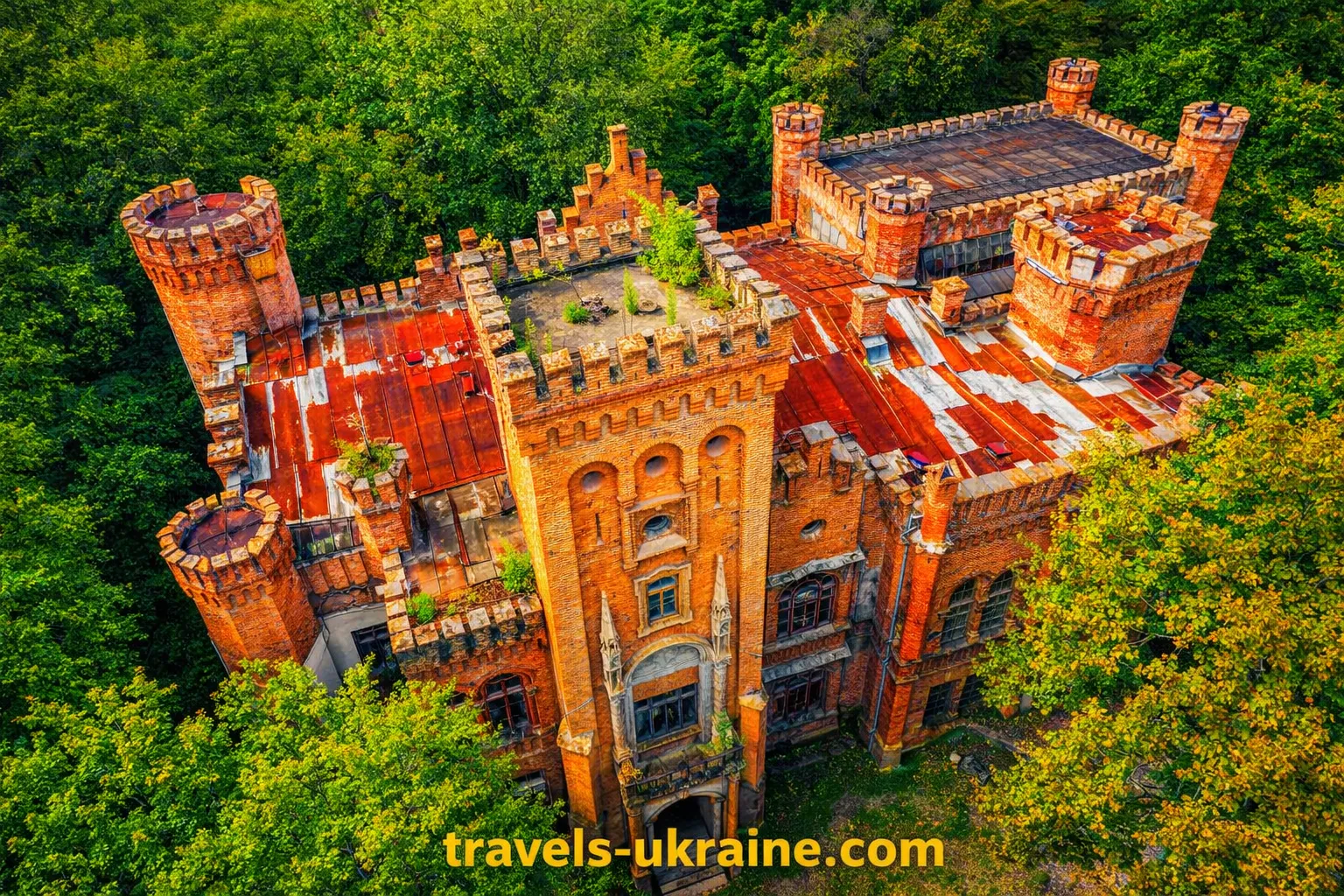
The irony is that the Dakhovsky palace residence, once built to impress guests with its scale and status, spent the 20th century hiding from tourist attention. Neo-Gothic towers watched silently as eras changed, while the old park gradually grew wild, adding even more atmosphere. Still, even in gradual decline, this palace in the village of Leskove never lost its charisma — it simply moved into the category of “for lovers of adventure and a bit of romance”.
On 8 April 2013, the local community submitted an appeal to the head of the regional state administration, asking to restore the landscape and architectural complex. It was one of those rare moments when people didn’t just sigh, “What a shame to lose such beauty,” but officially knocked on the authorities’ door. Because if you’re going to save the Dakhovsky Estate, you do it not with whispers, but with a document full of signatures.
On 18 June, a resolution was prepared for the Verkhovna Rada of Ukraine, calling for the preservation of the “Dakhovsky Estate” complex. And here the story took an unexpected turn: instead of yet another “the site is in a difficult condition” line, there was a real step towards protection. The palace, which had seemed to wait quietly for years, finally heard: “Hang on — we’re actually deciding something.”
Ultimately, the Verkhovna Rada issued recommendations to the Cabinet of Ministers to transfer the architectural monument to the balance of the Ministry of Culture of Ukraine and include it in the List of cultural heritage monuments not subject to privatisation. In other words, the Dakhovsky Palace in Cherkasy region got a chance not to become yet another place with a sign reading “sold for a cottage development”.
The Cherkasy administration took on the obligation to launch a programme for restoration and preservation of the landscape and architectural complex. And that meant it wasn’t only about walls and towers, but also the Dakhovsky Palace park, once the pride of the estate. Because, let’s be honest, a castle without a park is like a nobleman without an estate: the status is there on paper, but the grandeur is missing.
So the Dakhovsky family estate entered a new chapter in its biography — not aristocratic, not revolutionary, but a rescue mission. And while bureaucracy is rarely fast, the very fact of official recognition of the complex’s value became an important signal: this historic monument matters not only to historians, but to society. Which means the Dakhovsky estate has a chance to become a point of regional pride again — this time as a symbol of preserved cultural heritage in Ukraine.
Today, the Dakhovsky architectural heritage site is only beginning its path towards revival after a period of decline, but it already offers hope for the growth of heritage tourism. And although the road to full restoration is still long, the very fact that this noble estate has survived is already a small victory over time.
The architecture of the Dakhovsky Estate — a neo-Gothic palace in Ukraine with character
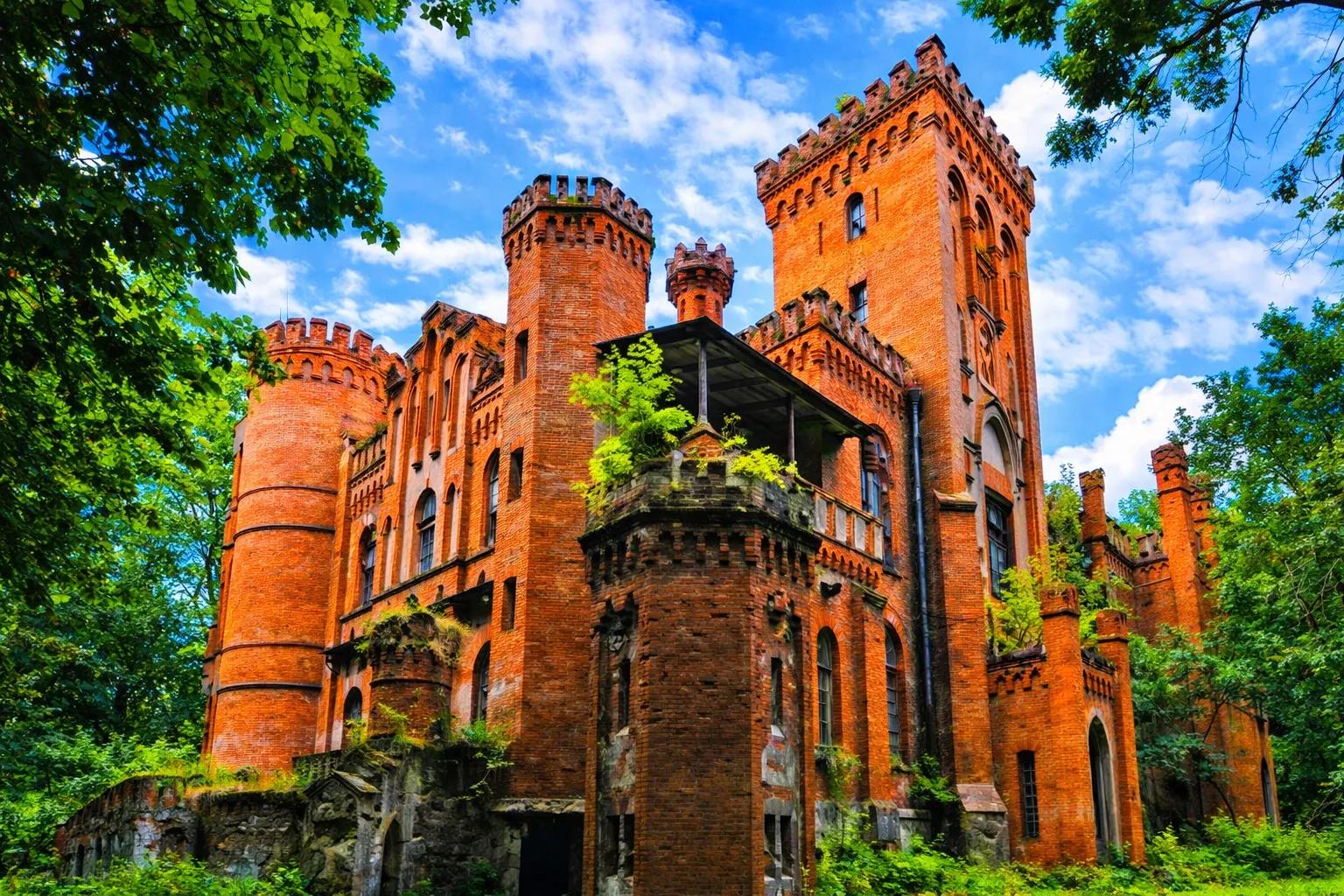
Dakhovsky Palace and its architecture are a perfect example of owners’ ambitions quite literally “growing into towers”. The complex is a vivid illustration of how, in the second half of the 19th century, a style took shape in Ukraine that we now call neo-Gothic. And to put it simply — it wasn’t built modestly.
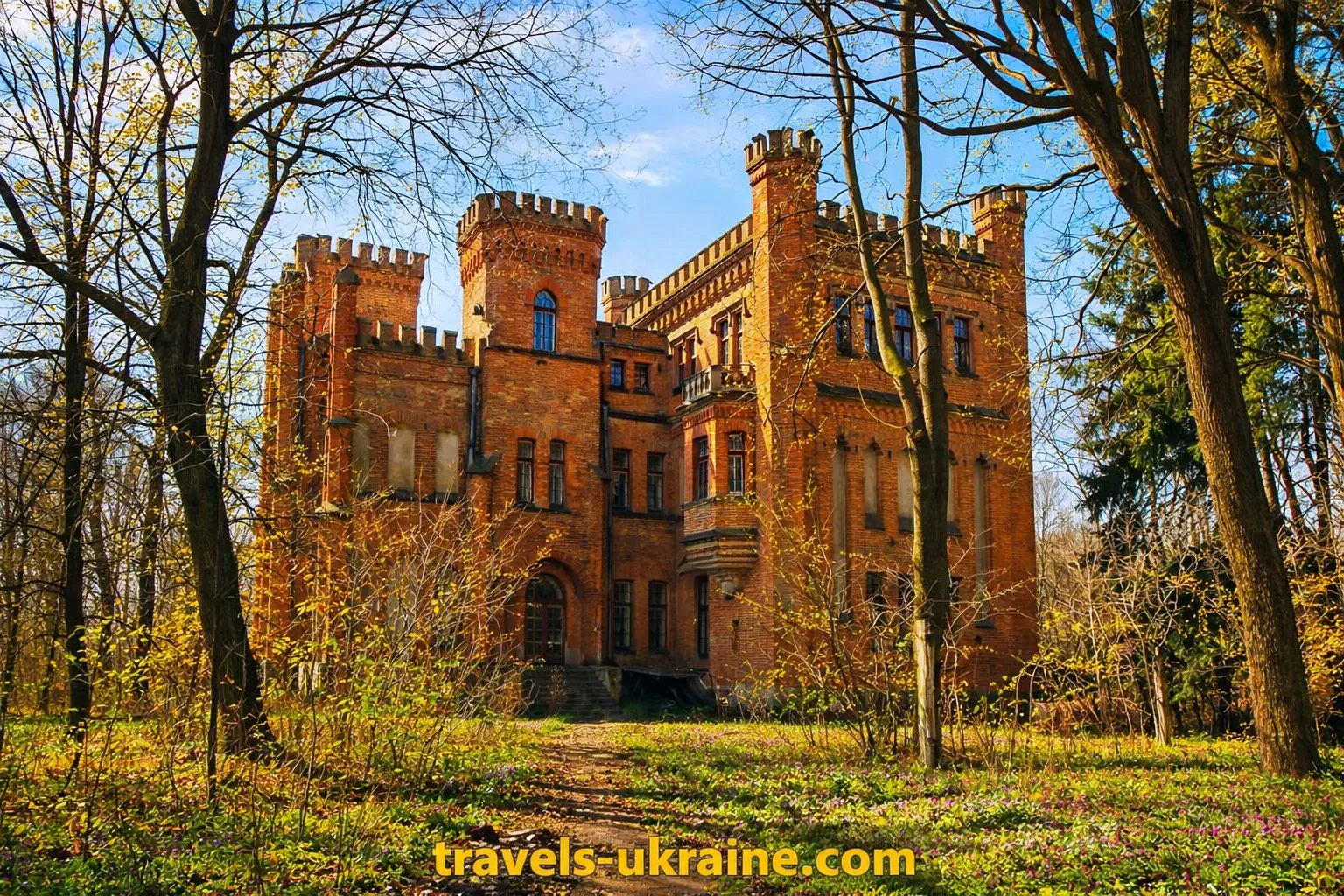
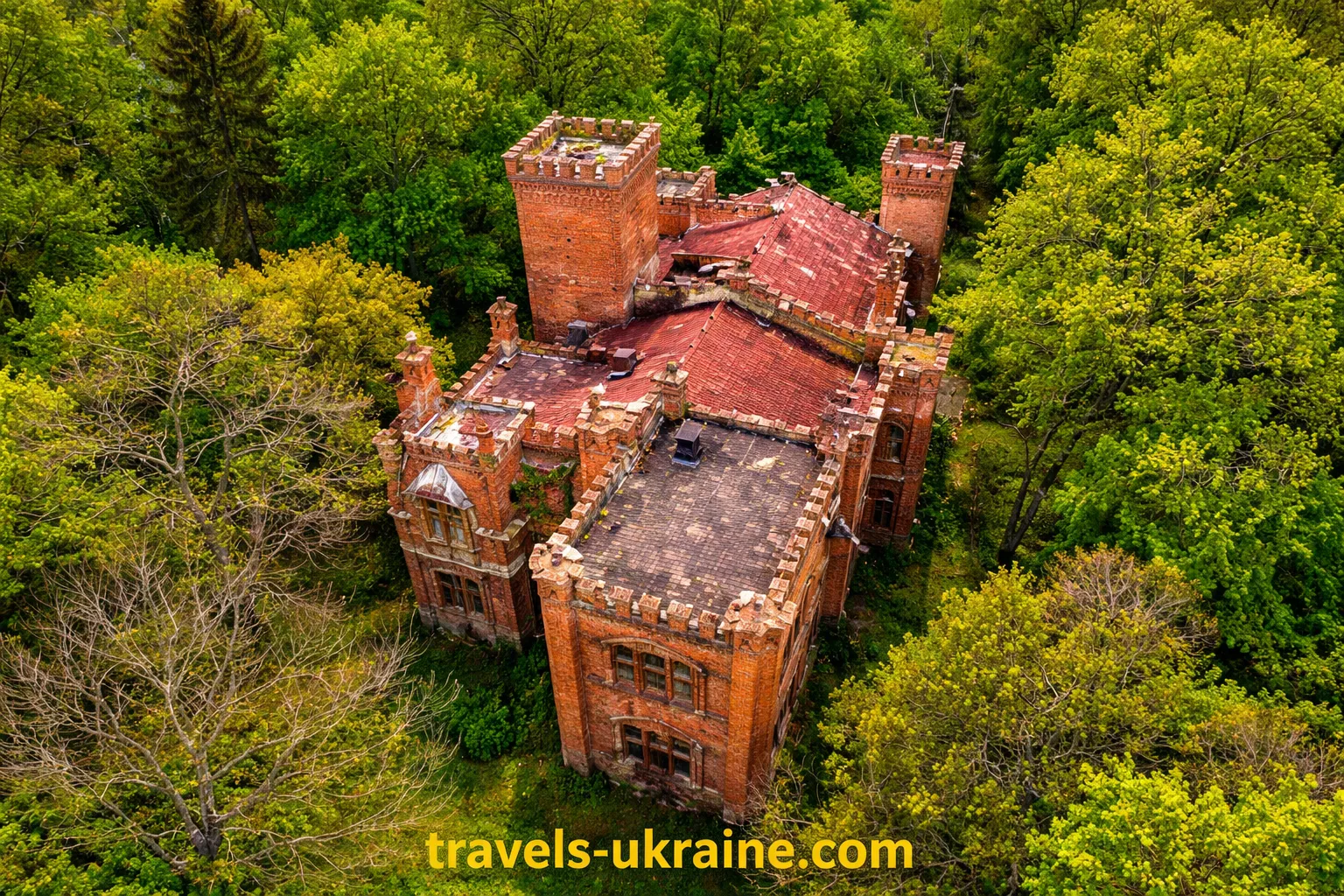
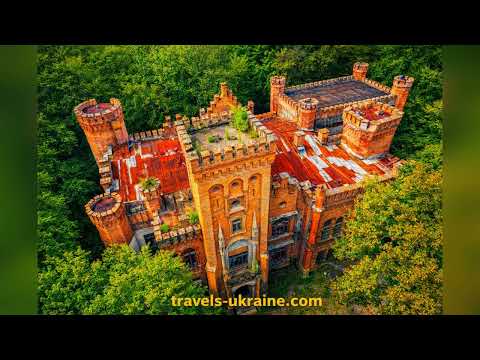
Unlike classic symmetrical estates, the Palace in Leskove has a distinctive silhouette with towers, crenellated details, and a complex façade composition. Because of these architectural features it’s often described as a castle, even though it had no defensive function. But let’s be honest — it looks like the kind of place where any tourist automatically starts searching for a dragon, or at least a ghost.
Neo-Gothic towers and the brickwork artistry of the façade
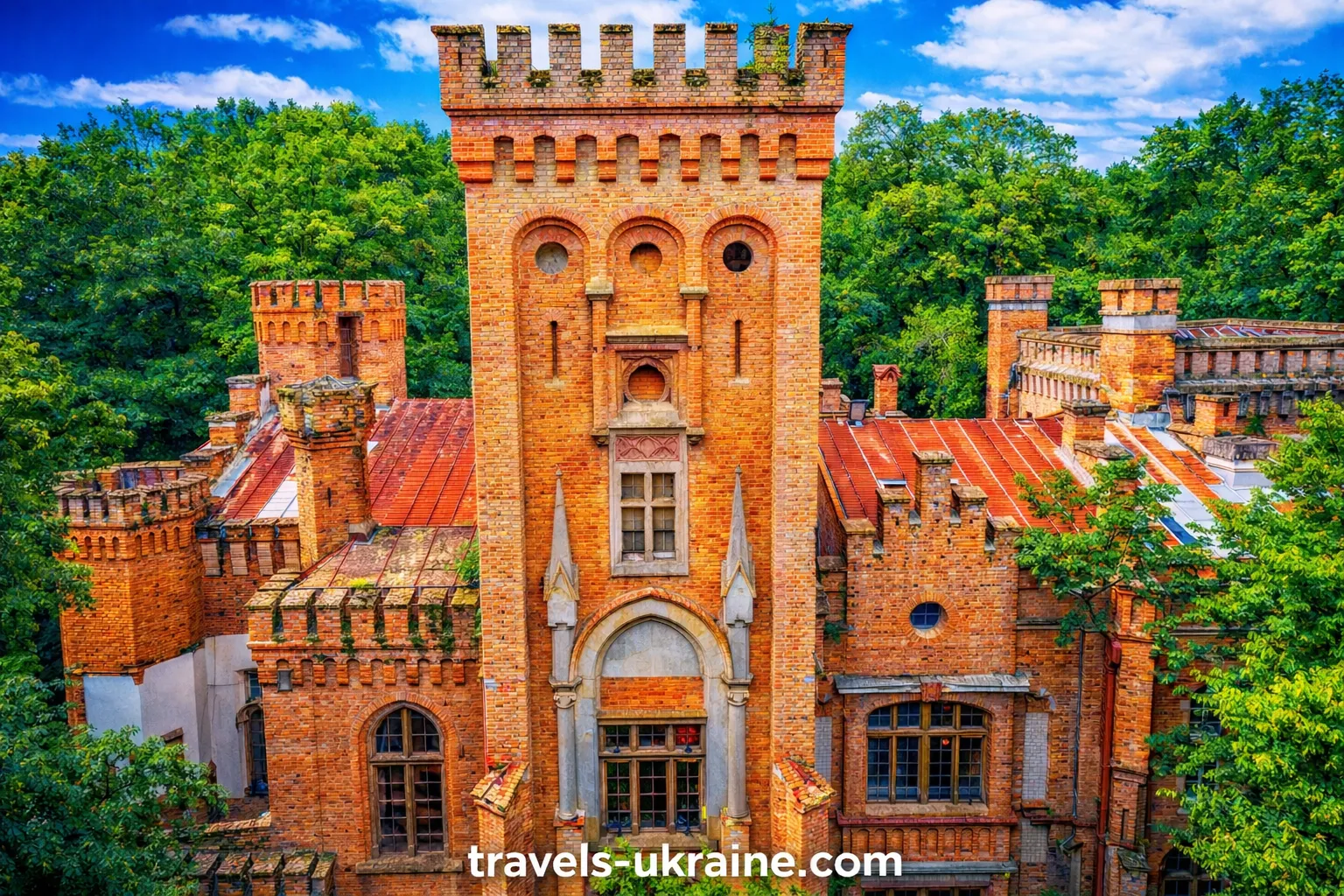
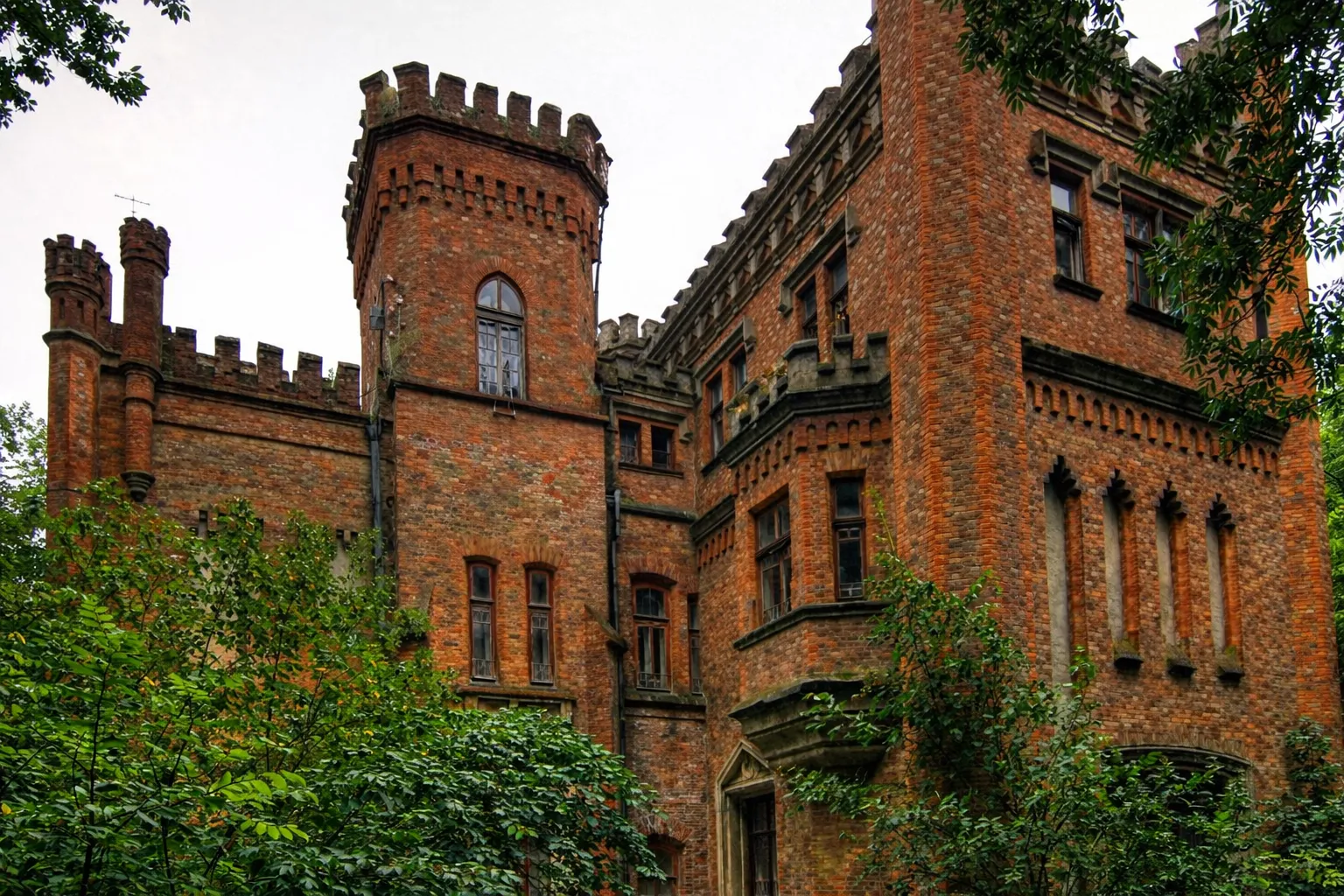
The main highlight of the complex is its massive neo-Gothic towers, which create the building’s recognisable silhouette. They add height and monumentality. Combined with the red brick, the façades look especially striking in sunlight — which is exactly why the Dakhovsky family estate is so beloved by professional photographers and bloggers.
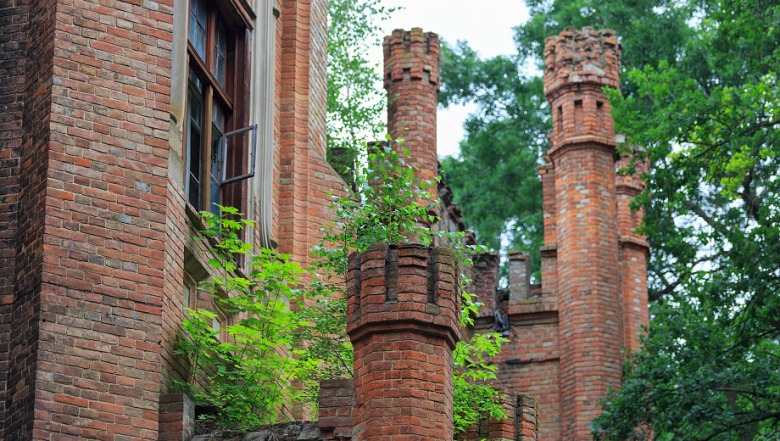
The brickwork features decorative elements that emphasise the residence’s status. This is not just a house, but a carefully designed architectural ensemble showcasing the owners’ taste and financial power. In the 19th century, such noble palaces were a kind of status language: the more detail — the more respect.
The interiors of the Dakhovsky Palace: what has survived
The architectural monument, unfortunately, has not survived in full. After nationalisation and changes in the building’s functions, many decorative elements were lost or rebuilt. Still, even today you can sense the scale of the spaces: high ceilings, grand halls, large windows — all pointing to what was once a true aristocratic estate.
What remains of the layout helps you imagine how the family castle worked: state rooms for receptions, living quarters, service spaces. And although the décor no longer shines with its original luxury, the building’s atmosphere still holds the spirit of the 19th century and its noble status.
The old park and the landscape complex
Just as important is the Dakhovsky Palace park area surrounding the family estate. The landscape design followed the European fashions of the time: avenues, greenery, open vistas. Once, it was a harmonious space for strolls, leisure, and status on display.
Today the park has partially preserved its historical structure, though it needs consistent care. Still, this natural “wild” feel adds charm and makes the complex one of the most fascinating among the landmarks of Cherkasy region. It’s easy to picture the manor coming to life again, with guests strolling along the avenues, discussing news from the capital at an unhurried pace.
So, the Dakhovsky Estate is not only a historic building, but an integrated landowner’s estate economy, where architecture, the park, and auxiliary buildings formed one ensemble. And even today, despite the marks of time, this architectural gem remains one of the most distinctive among Ukraine’s palaces.
Dakhovsky Palace in Leskove — a quick travel guide
If you’re planning a trip around Cherkasy region or considering interesting palaces of Ukraine, it’s handy to have the basics about the Dakhovsky noble complex at your fingertips. As an architectural monument of local significance, it blends nature with the atmosphere of an old family estate — though it has a few specifics visitors should know.
The Dakhovsky manor estate is part of Ukraine’s cultural heritage and a former landowners’ residence that has partially survived. It’s not a classic museum with ticket desks and a souvenir shop. Rather, it’s an atmospheric historic site that’s gradually developing as a destination for heritage tourism.
- Type of location: 19th-century palace, noble estate;
- Category: architectural heritage site;
- Format: exploring the grounds and exterior architecture.
Visit length and route difficulty
For a look around the complex, 1–1.5 hours is usually enough. If you enjoy slow walks, photography, and exploring details, allow up to 2 hours. The terrain is flat, so it doesn’t require special fitness — it’s more of a stroll than a hike.
As the estate has not been fully restored, some areas may be inaccessible. So it’s best to focus on the façades and a walk through the park.
Travel budget
The cost of visiting may vary depending on access rules and any guided tours available. In most cases, exploring the grounds is free or requires only a symbolic fee. The main costs are the journey itself and, possibly, a guide if you want a deeper dive into the history of the Dakhovsky Palace.
- 🚗 Getting there by car — the best option;
- 📸 Photography — an ideal spot for atmospheric shots;
- 🕰 The best time to visit — spring and autumn.
If you’re looking for little-known tourist places in Ukraine, where you can feel the spirit of old aristocracy without crowds, Dakhovsky Palace in Leskove is a wonderful choice. It’s for those who value atmosphere, history, and quiet more than loud festivals and busy market rows.
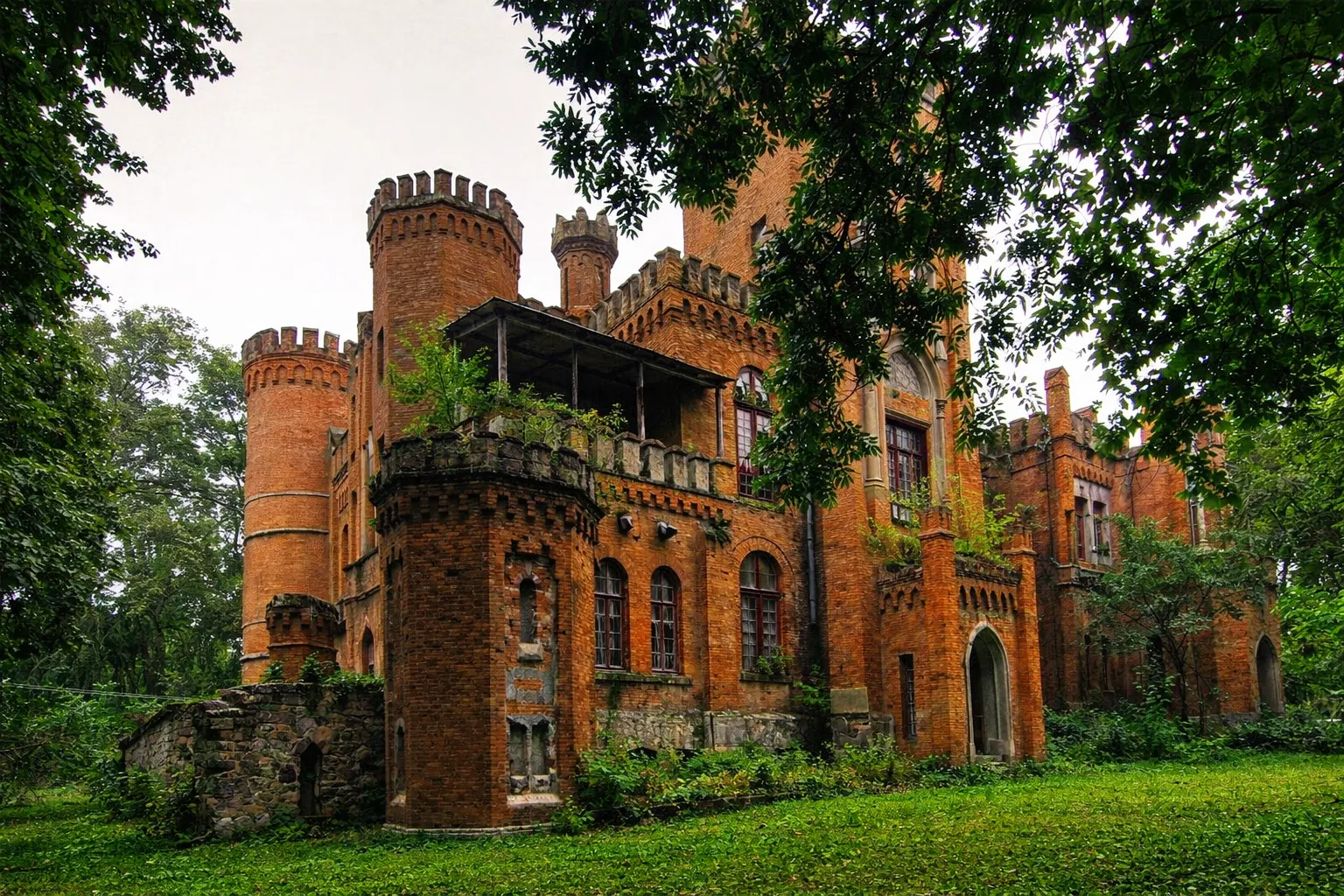
Photo and video gallery

Interesting facts and legends about the Dakhovsky Palace
The Leskove Dakhovsky estate is not only an interesting tourist place in Cherkasy region, but also a site wrapped in legends. Like most old residences, this family palace comes with its share of mystique, romance, and historical riddles. And if you enjoy mysterious places and have a soft spot for castle secrets — you’ll definitely find it fascinating here.
One of the most popular stories is about possible underground passages that supposedly connected the Dakhovskys’ estate with other buildings in the complex, or even with neighbouring areas. Did they really exist? No one knows for sure. But let’s be honest: a castle without a legend about dungeons is a bit like tea without sugar — possible, but not nearly as fun.
Some locals are convinced that valuables or family documents were once kept in the cellars. And while the archives remain silent, visitors’ imagination never takes a day off.
Aristocratic ambition and the spirit of rivalry
As we’ve already mentioned, the Leskove Dakhovsky residence may have been a response to prestigious projects by other influential families. In the 19th century, aristocrats competed not only for titles, but also for the splendour of their estates. So this building is a kind of architectural declaration: “We’re in the game too.”
They say that during receptions guests would discuss the scale of the building and its neo-Gothic details for ages. Perhaps someone even counted the towers in their head, just to compare them with the neighbours’. And why not? Noble competition is serious business.
Abandoned romance and a special atmosphere
Today, the Dakhovsky Castle often appears on lists of “forgotten palaces of Ukraine” and “the most beautiful palaces in Ukraine”. And it’s not just the architecture. There’s a particular mood here — a little melancholic, a little mysterious. The old walls seem to hold the whispers of past eras, a sense of the sacred, and a touch of mysticism.
Photographers love coming here in the fog or at sunset, when the Leskove estate looks especially cinematic. And if a thought flashes through your mind that someone might be watching you from a tower — don’t worry. It’s either your imagination, or simply very good light… or perhaps it really is true.
A fact that surprises
Despite all the twists of history, the Dakhovsky palace estate has kept its silhouette almost unchanged. For many aristocratic estates of Ukraine, that’s rare. And perhaps that’s exactly why this architectural gem attracts those who seek little-known, atmospheric places with history, character, and a subtle aftertaste of mystery.
What to see at the Dakhovsky Palace and what to do as a visitor
To start with, it’s worth noting that a visit to the Dakhovsky Palace is limited to an exterior look at the building. The site is in a state of reconstruction (sadly, so far more on paper than on site), so access to the interiors is partially or completely closed.
Still, that doesn’t mean your break will be boring. Quite the opposite — the palace is so striking from the outside that its façades, towers, and silhouette easily make up for the lack of an interior tour. Sometimes it’s even more interesting to imagine what the halls and chambers looked like than to see them after dozens of alterations.
A walk around the grounds, a closer look at architectural details, photography, and a stroll through the park let you fully sink into the aristocratic atmosphere. So a slight sense of inaccessibility only adds intrigue — let’s face it, a touch of mystery never hurts a castle.
The first thing that impresses you is the scale. Towers, brick façades, an asymmetrical composition — all of it creates the image of a real family castle. The best time for viewing is morning or evening light, when shadows highlight the details.
The old park and estate grounds
The Dakhovsky legacy is not only the palace, but also the territory of what used to be a landowner’s estate economy. The remnants of the park create a natural frame for the architecture as a whole. It’s lovely to wander slowly along the paths, imagining how the manor once welcomed guests and hosted society strolls.
Today the park feels wilder, but that’s exactly what adds authenticity. This isn’t a “polished” tourist zone — it’s a living piece of history.
Photography and atmospheric shots
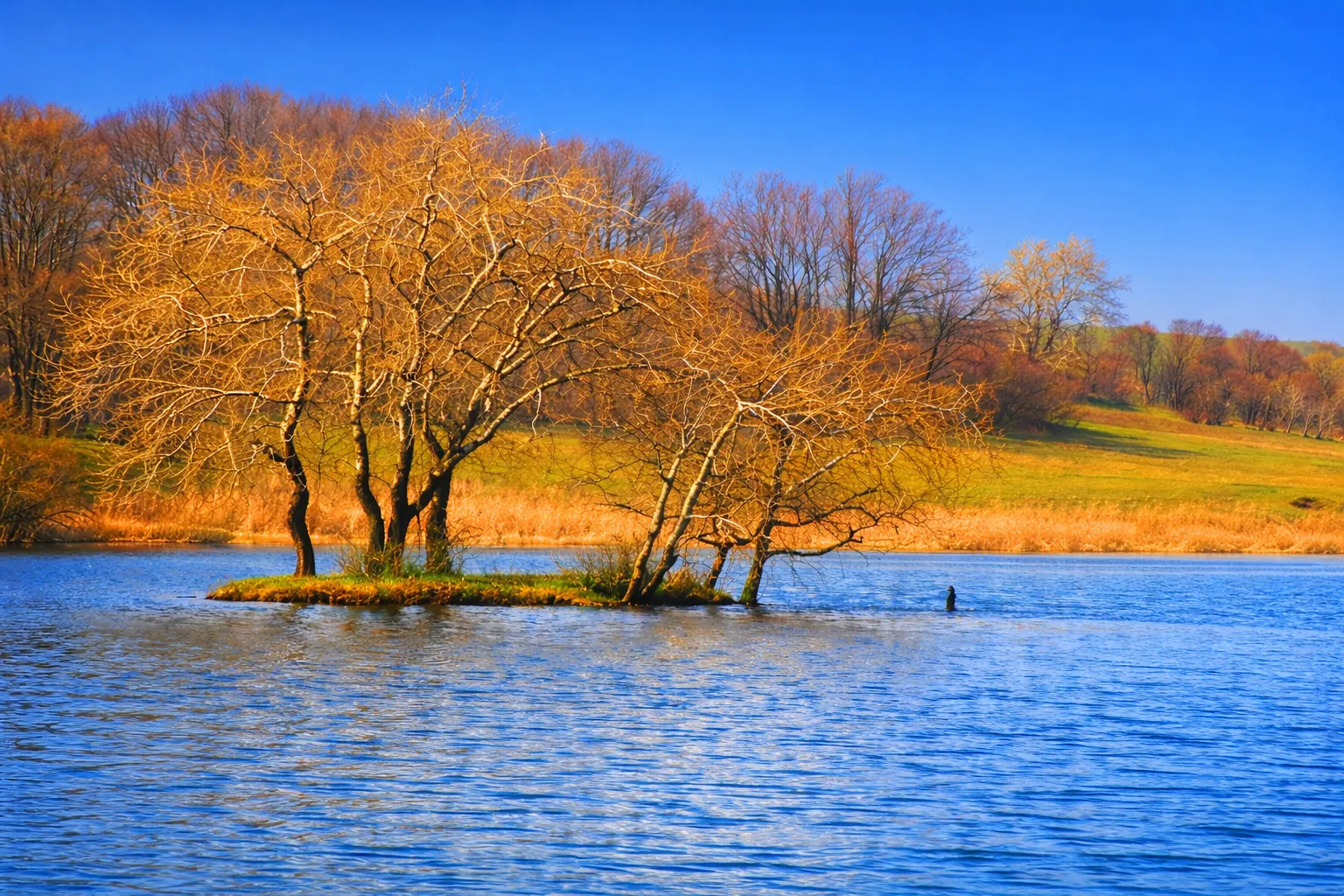
If you enjoy photography, the views of the Dakhovsky Palace are an ideal setting. This place often appears in round-ups of the “most photogenic palaces in Ukraine”. The palace looks especially atmospheric in foggy weather or in autumn, when the foliage adds drama to every frame.
And a small tip: don’t rush. This place isn’t about ticking off “been there” — it’s about mood. Give yourself time to be here, listen to the silence, and let your imagination sketch in scenes from aristocratic life.
Tourist places in Cherkasy region near the Dakhovsky Palace
Dakhovsky Palace is a great starting point for enriching your trip around Cherkasy Oblast and seeing more than just one architectural landmark. It fits easily into a weekend itinerary and lets you combine eco-tourism, history, and getting to know other interesting places in the region.
So after exploring the estate, other popular tourist locations are waiting for you — you only need to keep travelling: visit natural spots, old churches, or well-known sites around the oblast. This kind of journey makes your time off richer and more varied — because Cherkasy region can surprise you not only with palaces, but also with landscapes, history, and atmosphere.
Uman and the Sofiyivka Arboretum
The first recommended stop is the Sofiyivka Arboretum in Uman, which makes a wonderful addition to a visit to the Dakhovsky Palace. If in Leskove you’ll feel the spirit of noble ambitions and the atmosphere of a family castle, then in Uman you’ll find natural harmony, romantic avenues, and the refinement of landscape art.
Combining the Dakhovsky estate complex with “Sofiyivka” lets you create a насыщений tourist route in Ukraine: first — an introduction to an architectural gem of Cherkasy region, then — a walk among grottoes, waterfalls, and lakes in one of the country’s most famous parks. This travel format blends heritage tourism with time in nature, making your trip more varied and emotional.
Monastyryshche and local historic sites
The next stop is the old town of Monastyryshche, located relatively close to Uman and the Dakhovsky Palace. It’s a good option for continuing your journey, especially if you want to dive deeper into the history of Cherkasy region. It’s also a genuinely nice place for a short break or a snack along the way.
A tour of Monastyryshche opens pages of the past: the area has been known since the 16th century as a well-fortified town from the Polish–Lithuanian Commonwealth era. In 1648, rebel units led by Maksym Kryvonis drove the Polish nobility out of here. A lot of time has passed, but even today you can still see remains of defensive earthworks — these fortifications often witnessed battles.
Alongside its military history, the town has calmer, more lyrical chapters too. A park from the former estate of the Kalm-Podossky nobles has survived here, complete with picturesque lakes — a wonderful place for a walk.
It’s also worth visiting the Monastyryshche Local History Museum — small, but informative. It’s especially interesting for history enthusiasts, as it helps you understand the region’s development from the Cossack era to modern times. So by combining the Dakhovsky estate, the Sofiyivka Arboretum, and Monastyryshche, you’ll get a complete weekend route.
Natural landmarks of Cherkasy Oblast
If you have more free time and your goal is to relax in nature in Cherkasy region — somewhere quiet, beautiful, and, most importantly, calm — pay attention to locations that have long been favourite spots for family getaways.
In this context, it feels natural to mention the Buky Canyon — a scenic granite gorge with views that can easily compete with Ukraine’s best-known natural landmarks. It attracts lovers of walking, photography, and unhurried nature watching.
And for those who want maximum quiet and a sense of space, consider visiting Blue Lake Buchak. It’s perfect for a peaceful break, a picnic, or simply escaping the city noise. There’s no tourist hustle here — just water, sky, and a feeling of harmony.
Tourist infrastructure: the Dakhovsky Palace
When planning a visit to the Dakhovsky Palace, it’s worth setting expectations straight away: this isn’t a typical tourist complex with cafés, souvenir shops, and organised tour groups. The estate is more of an atmospheric historic location, where the main focus is on architecture and history.
The easiest way to reach the palace is by car. Roads in the region are in decent condition, but it’s a good idea to check your route on the satnav before you set off. Parking is usually possible near the complex, though there may not be a specially equipped large car park.
Food, services, and information support
There are no cafés or restaurants directly on the Dakhovsky estate grounds. So it’s best to bring a snack in advance or plan lunch in the nearest towns — especially Uman. Of course, local infrastructure is gradually developing, but for now it’s more “bring a flask and enjoy the view” than “order a cappuccino with a castle view”.
Despite the lack of full tourist infrastructure, the Dakhovsky estate in Cherkasy region remains a popular destination among history lovers and those seeking new emotions and wanting to see as many tourist spots in Ukraine as possible. And if there are no loud attractions here, there is the most important thing — authenticity. And sometimes that’s exactly what makes a journey truly valuable.
Photography and drones
The Dakhovsky Estate in the village of Leskove is one of the most photogenic palaces in Ukraine, so taking photos here is completely normal. Cameras, tripods, long dresses for moody shots — the palace has seen it all and, it seems, takes it with the dignity of a true aristocrat.
However, if you’re planning to use drones or do professional commercial filming, it’s best to check permissions with the administration in advance to avoid awkward situations. After all, it’s better to leave with beautiful footage than a story about how a drone got to know a neo-Gothic tower a little more closely than planned.
Let’s remember: the palace has survived revolutions and nationalisation, so it certainly deserves a careful photo session — without unnecessary special effects.
Frequently asked questions about the Dakhovsky Palace in Leskove
Where is the Dakhovsky Palace located?
The Dakhovsky Palace is located in the village of Leskove in Cherkasy Oblast, not far from the town of Monastyryshche. It is one of the region’s most interesting historic sites and is listed as an architectural monument of local significance.
How do I get to the Dakhovsky Palace?
The most convenient way is by car. It’s recommended to use a satnav and check the route in advance. Public transport runs to the nearest settlements, but it requires additional planning.
Can you visit the inside of the Dakhovsky Palace?
At the moment, access to the interior is limited because the building is undergoing reconstruction. The visit is mostly limited to exploring the grounds and viewing the architecture from the outside.
How much time do you need for a visit?
Exploring the grounds usually takes 1–2 hours. If you’re planning a photo shoot or a slow walk through the old park, allow more time.
Do you need to buy a ticket?
Visiting conditions may change depending on the current state of the site and how access is organised. It’s recommended to уточнювати information before your trip.
Is photography allowed?
Photography on the grounds is allowed. For professional commercial filming or the use of drones, it’s recommended to obtain permission in advance.
Is the location suitable for family visits?
Yes, the area is suitable for family walks, but it’s worth being cautious due to possible hazardous sections. This is a location for calm heritage tourism without active развлечги.
What status does the Dakhovsky Palace have?
The palace has the status of an architectural monument of local significance and is included in the list of cultural heritage sites of Ukraine that are not subject to privatisation.
An eco note — responsible tourism at the Dakhovsky Estate
Dakhovsky Palace is not only a historic building and an excursion site, but also part of Cherkasy region’s natural landscape. The estate combines architecture with a park area, creating the place’s special atmosphere. That’s why it’s important to follow the principles of responsible tourism and treat the site with respect.
Why does it matter?
Any architectural monument is a fragile balance between history and the present. Excessive pressure, litter, or careless behaviour can speed up the complex’s deterioration. And the Dakhovsky Palace in the settlement of Leskove has already been through a difficult period of decline.
- Don’t leave litter behind;
- Don’t break branches in the park;
- Don’t light fires on the complex grounds;
- Respect the natural environment and the local community.
The principle: “leave only memories”
When travelling to the Dakhovsky Castle, remember a simple rule: everything you bring with you should leave with you too. Leave behind only good impressions and photographs.
A responsible approach to visiting historic and natural places is a contribution to preserving our country’s cultural heritage and developing tourism. After all, we want the palace in Leskove to welcome new travellers just as majestically in decades to come — as it does today.
Conclusion — why the Dakhovsky Estate deserves your attention
The Dakhovsky Estate isn’t the kind of palace you visit for sparkling chandeliers and perfectly restored halls. It’s a place you come for the atmosphere, the history, and that special feeling of standing before a real family castle that has lived through more than some textbooks.
The Dakhovsky palace estate in Cherkasy region intrigues. It doesn’t show all its cards at once. Some areas are closed, the interiors have survived only in fragments — but that’s exactly what makes your imagination work harder. It’s easy to picture aristocrats discussing affairs behind heavy doors, while today’s visitors debate which angle makes the towers look most impressive.
There’s also a touch of historical irony here. Once, the Dakhovsky estate was built to impress the neighbours and demonstrate status. Today it impresses in a different way — with its resilience. And honestly, not many 19th-century palaces can boast a biography this dramatic, and at the same time so dignified.
Most importantly, it’s a location with character. There are no crowds, but there is space, scale, and a sense of discovery. Perhaps that’s why Leskove Castle of Cherkasy region leaves you with more than just photos — it leaves a quiet urge to return, to see whether a new story has appeared among these old walls.
So if you’re looking for a trip with a little intrigue, a little historical humour, and plenty of architectural beauty — go ahead and add this gem to your route. Who knows, perhaps you’ll discover it from a different angle. And perhaps, standing by these old walls, you’ll smile at the thought that it all began with the ambition to “show the neighbours up”. More than a century has passed, and the result is still impressive. And that, let’s agree, is the best compliment any piece of architectural heritage can receive.
No Comment
You can post first response comment.