
 English
 Українська
 Български
 Hrvatski
 Čeština
 Dansk
Dansk Nederlands
 Eesti
Eesti Suomi
Suomi Français
 Deutsch
 Ελληνικα
 Magyar
 Íslenska
 Italiano
 Latviešu
 Lietuvos
 Polski
 Português
 Română
 Русский
 Српски
 Slovenčina
 Slovenščina
 Español
 Svenska
 Türkçe
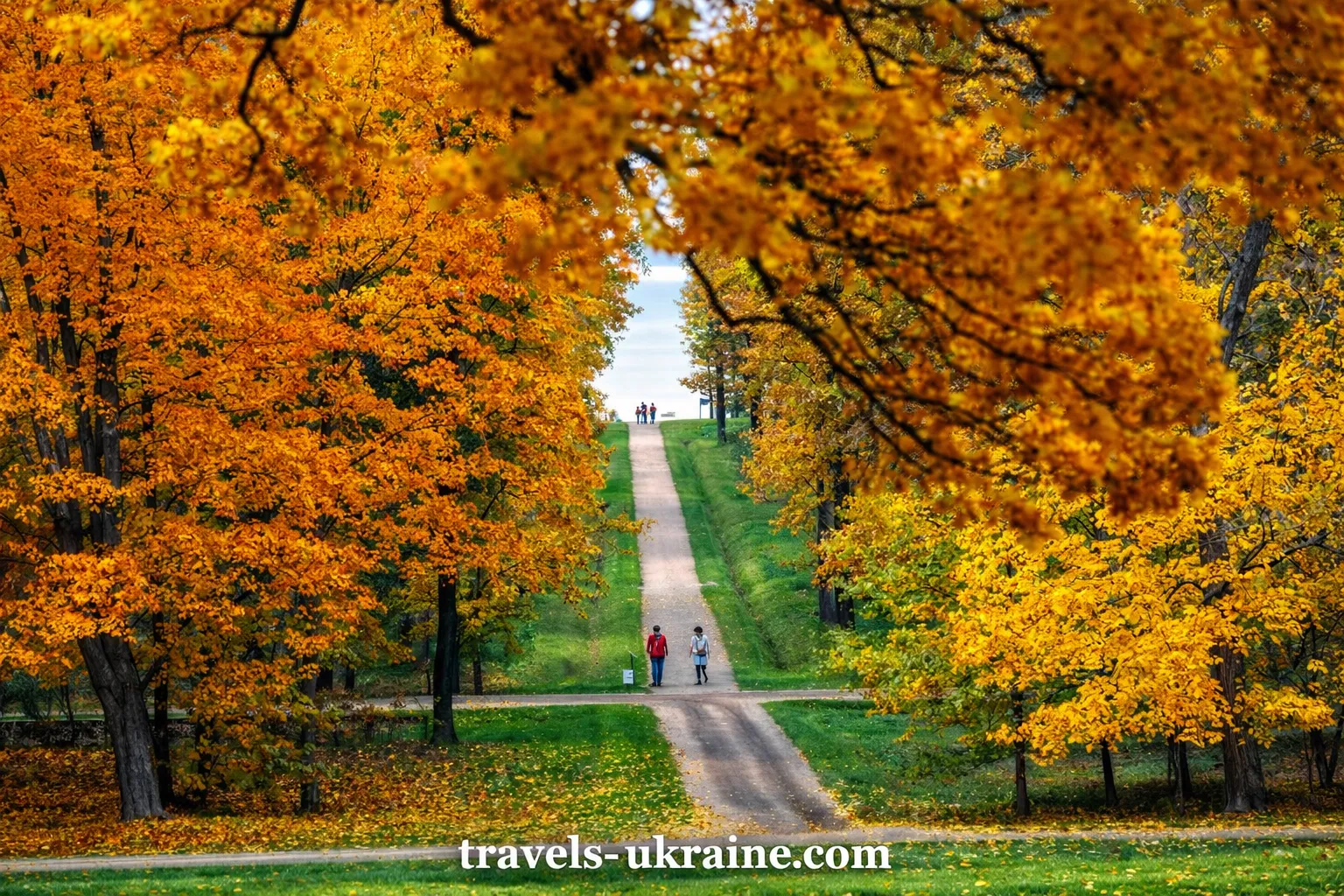
There is a place where nature does not whisper — it speaks in a full voice. And the first thing you will feel as you step onto its paths is a silence with a tone all its own. It is filled with the rustle of leaves, the distant splash of water, the light breath of the wind. Here, you instinctively want to stop, look around, and take in every little detail: whether it is a delicate flower trembling in the sunlight or a quiet stream slowly making its way through the greenery. And then, suddenly, a thought appears: what else is hidden in the depths of this park?
It would be hard to find a better place to gather your thoughts, let go of fatigue, and leave negativity behind — not only in Ukraine, but perhaps anywhere in the world. The air here seems denser with calm, and the space around you feels designed so that a person can finally hear themselves. But this harmony is only the first layer. Beyond it lie stories, symbols, architectural mysteries, and romantic narratives that have been taking shape for centuries.
And this little corner of harmony is the Oleksandriya Dendrological Park in Bila Tserkva. It is here that nature, history, and human talent have merged into one, creating a place where every walk turns into a journey — not only through picturesque landscapes, but into the depths of feeling as well.
Today, Oleksandriya Park is one of the largest and best-known tourist attractions in Ukraine, actively supporting domestic tourism. Its grounds cover 400.67 hectares of landscapes with centuries-old trees, cascades of ponds, romantic ruins, and historical landmarks. But numbers are only statistics. The park’s true value lies in its atmosphere: in the long avenues leading deep into centuries of history, in the water reflecting the sky, and in the unexpected panoramas that open up around every bend.
Here, every step is filled with the feeling of a healing silence. Sunlight softly filters through the crowns of ancient oaks, the shimmer of water plays across the surface of the ponds, and a gentle breeze carries the scent of grass and flowers. Time seems to slow down in the park — and it is precisely in this pause between steps that true rest begins.
Oleksandriya is more than a beautiful park or a tourist spot. It is a place where people feel connected to nature, where history speaks through the stone of old structures, and where green slopes and quiet avenues create an atmosphere of romance and depth. It is no wonder this park in Bila Tserkva is called a place of power — people do not return here by accident. They return because they want to feel once again that special moment when the world around them falls quiet… and begins to sound real at last.
A Brief History of Oleksandriya Dendrological Park
The State Dendrological Park “Oleksandriya” dates back to 1788, when the Polish magnate Ksawery Branicki and his wife Aleksandra Engelhardt established a magnificent landscape park here. It was in honour of Aleksandra that the park was named “Oleksandriya” — and, let’s be honest, that sounds far more romantic than “Ksawery Park”.
Even back then, this was not just a park, but a large-scale project of European calibre — with carefully planned vistas, water features, architectural accents, and botanical collections. In fact, it was a kind of “landscape design 2.0” long before the very concept of design existed.
In the 18th and 19th centuries, Bila Tserkva Park became a centre of social life and cultural development. Famous figures, diplomats, and artists came here — and, no doubt, discussed not only politics, but also which avenues were best suited to impressive promenades.
The landscape park was shaped according to the principles of romantic park aesthetics: natural lines, picturesque panoramas, garden sculptures, gazebos, and ruins as an element of harmony between people and nature.
The story of Oleksandriya began in truly spectacular fashion. This was not merely a private estate, but a symbol of status, influence, and refined taste. On the political level, gestures of goodwill were made here, the park became a venue for diplomatic meetings and high-society events, and its splendour was recognised by the European elite. In those years, it seemed as though the sun always shone over the park — both literally and metaphorically.
Yet, as in nature, cloudy periods came in the park’s fate as well. Changing eras, political upheavals, wars, and revolutions did not spare Bila Tserkva Dendrological Park. Some of its architectural structures were lost, the landscapes were damaged, and the former brilliance of the aristocratic residence gradually faded. It seemed as though history was drawing a full stop.
And yet Oleksandriya endured. That is where its strength lies. The park survived difficult times only to be reborn as a scientific and tourist centre, preserving its dignity and grandeur. Today, the dendrological park is not only a memory of past luxury, but also an example of how cultural heritage can be given new life without losing its soul.
How Bila Tserkva’s Oleksandriya Dendrological Park Survived the Course of History
After the revolutionary events of the 20th century, the dendrological park suffered major losses. Some of its architectural landmarks were destroyed, and its plant collections were reduced. However, in 1946, the territory was officially transferred to the Academy of Sciences of Ukraine, and the complex received the status of a scientific institution. From that moment, systematic restoration and renewal began.
- 1788 — the park was founded by the Branicki family.
- 19th century — its flourishing as an aristocratic residence.
- 1946 — it was granted the status of a state dendrological park.
- Today — a nationally significant monument of landscape gardening art.
The modern Oleksandriya Dendrological Park in Bila Tserkva combines historical heritage with scientific work. It is not only a tourist destination, but also a centre for vegetation research, a natural monument, and an important site for domestic tourism in Ukraine.
Natural and Architectural Features — The Uniqueness of Oleksandriya
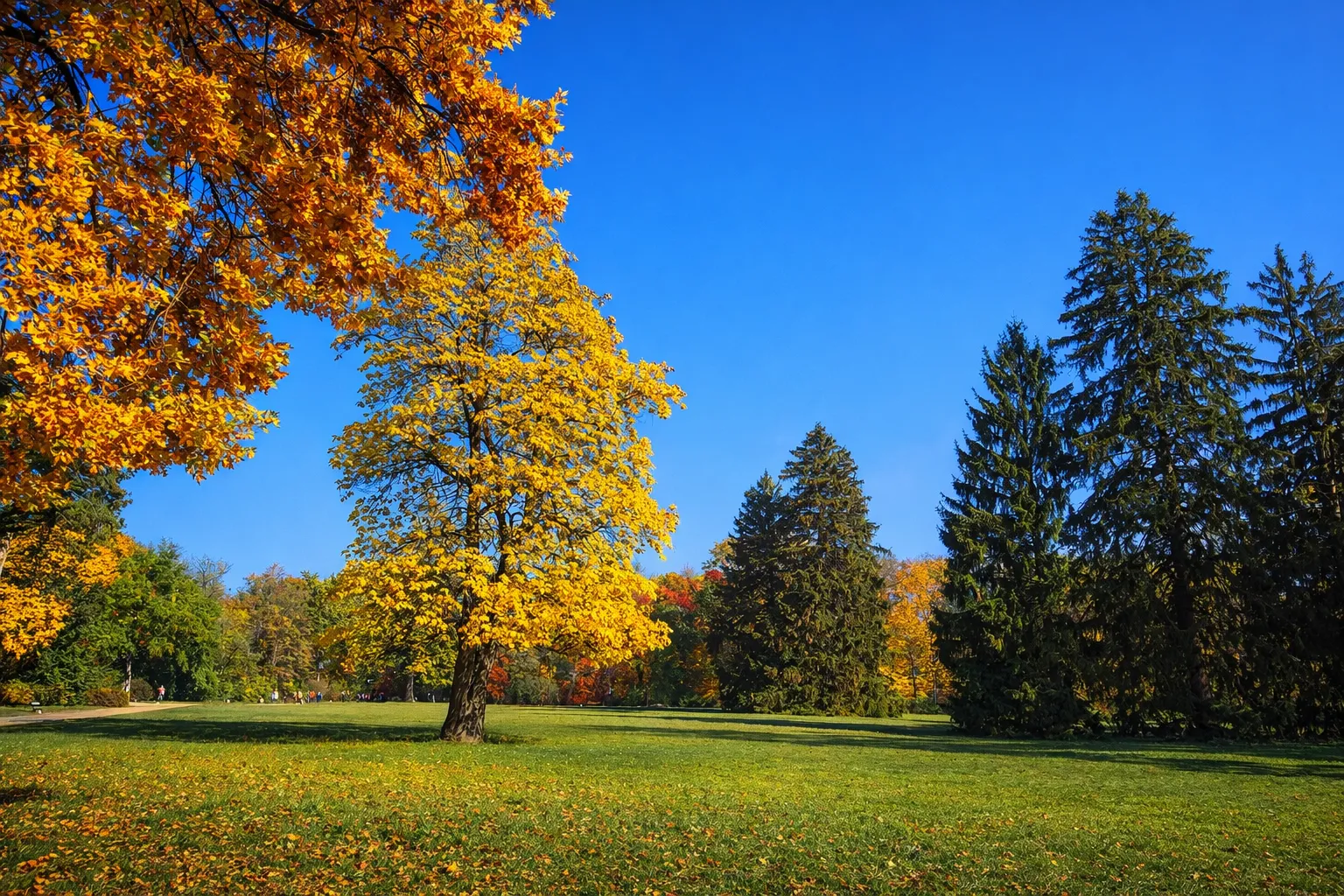
Oleksandriya Dendrological Park is a harmonious blend of nature, water, terrain, and architecture. Its grounds stretch along the Ros River, shaping a landscape that is both complex and extraordinarily picturesque. Thanks to the natural relief, the state park offers striking panoramas, deep ravines, green slopes, and spacious lawns.
This is not simply a place for relaxation — it is a true work of art with a carefully considered composition. Here, every avenue leads to a new discovery: an old colonnade, a romantic ruin, or a quiet pond reflecting the sky. This is exactly how the aesthetic was formed that made Oleksandriya Park in Bila Tserkva a nationally significant monument of landscape architecture.
Botanical Wealth: A Living Collection from Around the World
The Great and Small Lawns of the park can truly be called museums of living nature. These are not just open spaces among the greenery — they are open-air halls where the exhibits do not gather dust, but rustle with leaves and change their attire with the seasons. In the area of the Great Lawn, 83 species of trees grow, including local and introduced flora. You could say it is the calmest international summit in the world — and it has been going on for more than a century.
Among the trees there is also a special “celebrity” — the Branicki family tree, a four-trunk pine. It has one root and four trunks, resembling a family tree. Standing beside it, you cannot help but reflect on family ties: this is what unity looks like without unnecessary disputes over inheritance.
But the Great Lawn is not only a kingdom of trees. It is also home to 97 species of grasses listed in the Red Book of Ukraine. Underfoot, there is real botanical poetry here: delicate, easy to miss at first glance, yet incredibly valuable. And if you look closely, you can feel that even the grass grows here with dignity — as if it knows it is part of a great story.
Overall, the park’s treasury is filled with an impressive diversity of trees, shrubs, bushes, and herbaceous plants — more than 2,500 taxa in total. It is a living encyclopaedia of nature, where every plant has its own origin, character, and story. Here, you can set off on a botanical journey across different continents without ever leaving the boundaries of the dendrological park.
Among this green treasure, the centuries-old oaks deserve special attention — some are over 200 years old. Their mighty trunks and broad crowns have become silent witnesses to several eras. They have seen the flourishing of the aristocratic residence, historical upheavals, and the park’s modern revival. Standing beside them, it is easy to feel respect for time measured here not in years, but in centuries.
The collections of rare and introduced species are remarkable for their diversity and continue to grow. Every year, researchers work to preserve and expand the botanical фонд, maintaining the park’s status as an important scientific and tourist site. Thanks to this, Oleksandriya remains not only a place for walks, but also a living laboratory of nature.
Architectural Highlights of Oleksandriya Park
Alongside the rare plants, lawns, and oak groves, many architectural structures were added to the park ensemble. And it is worth saying — they were not added merely for appearance’s sake, but with refined taste and thoughtful composition. All of this harmoniously complemented the landscape, creating an atmosphere of noble romance. After all, if you are building a park for the aristocracy, the scenery should match.
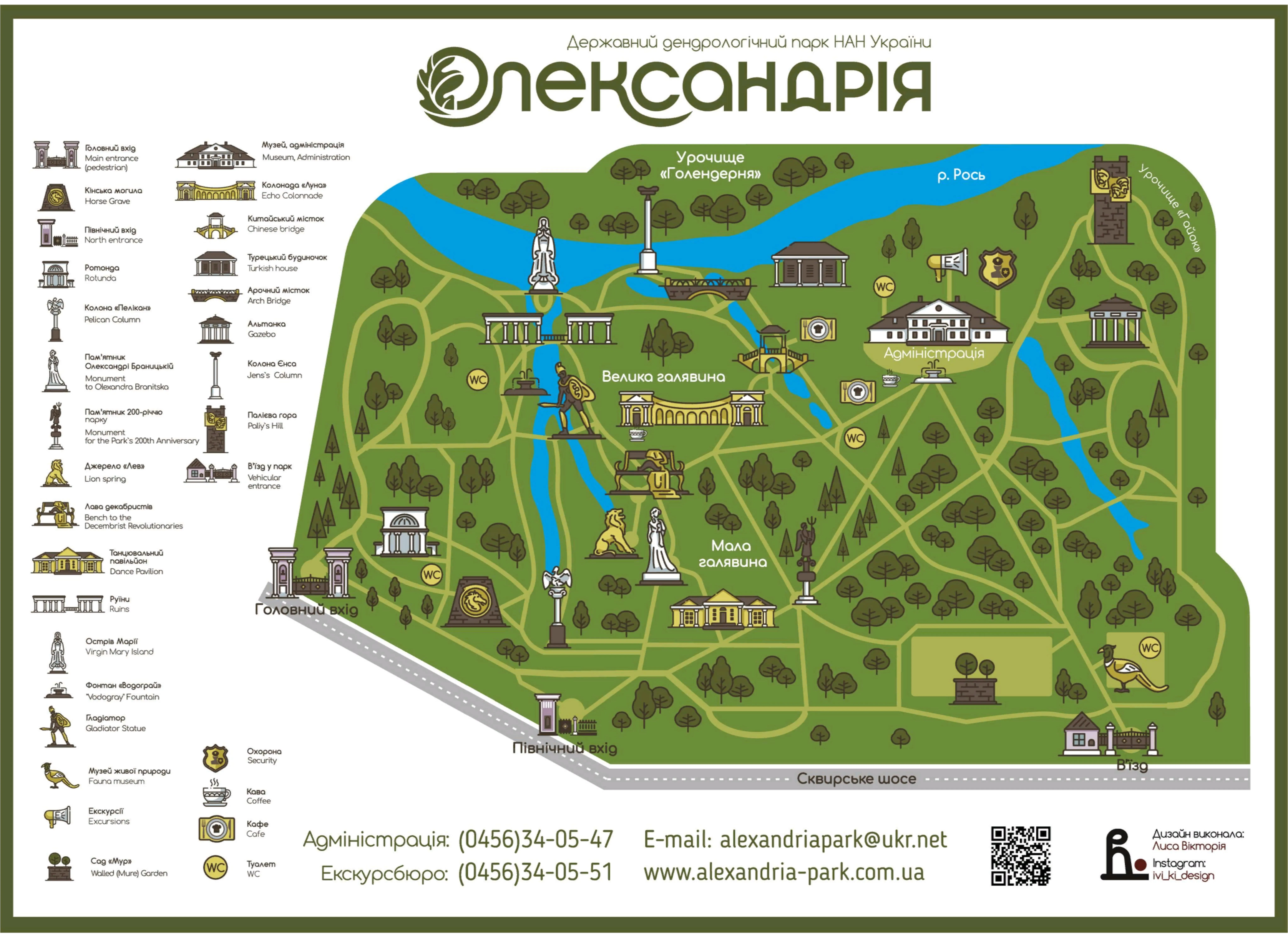
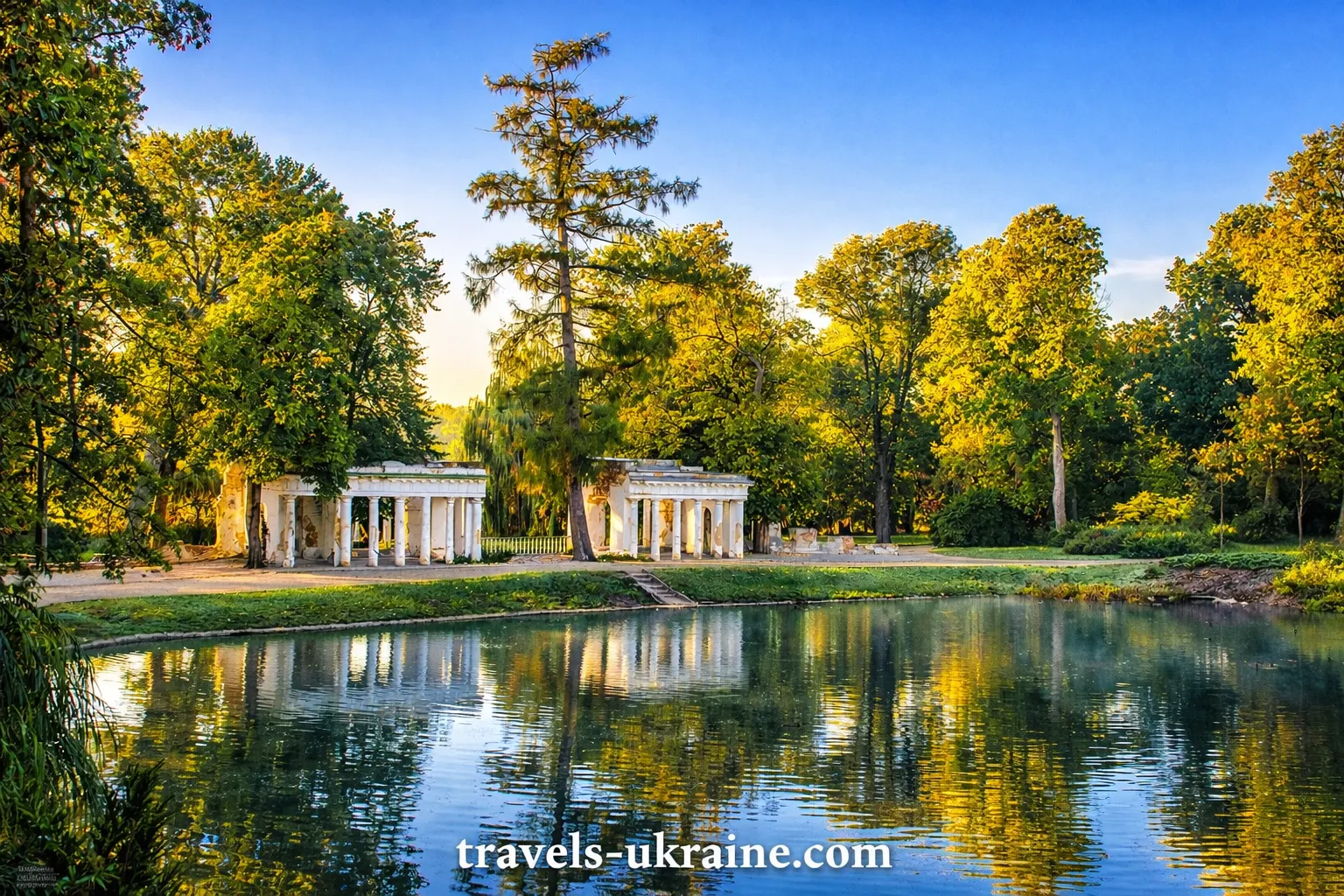
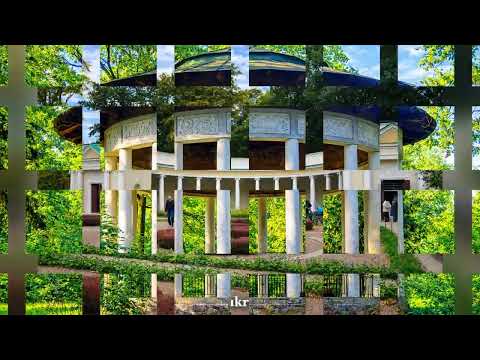
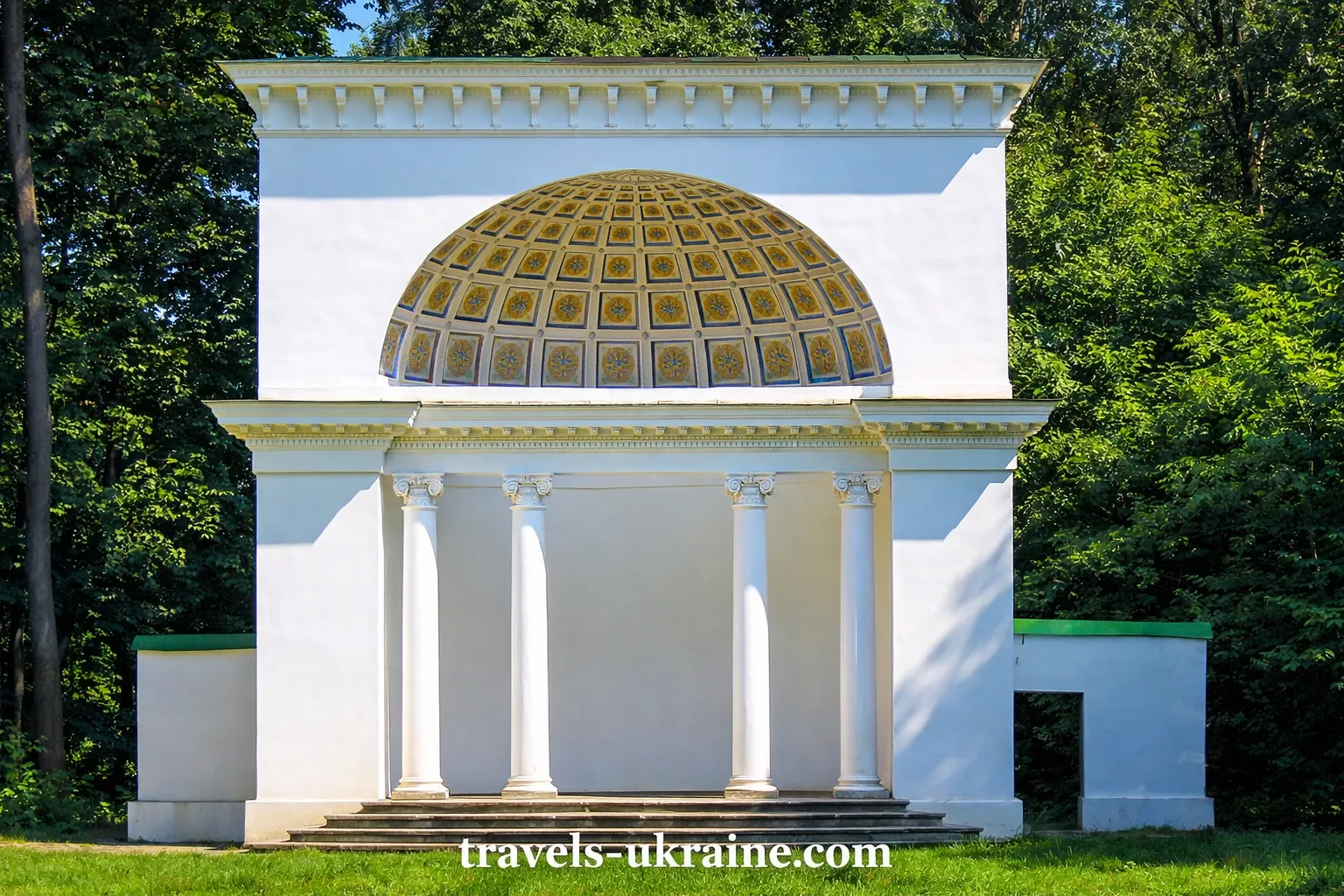
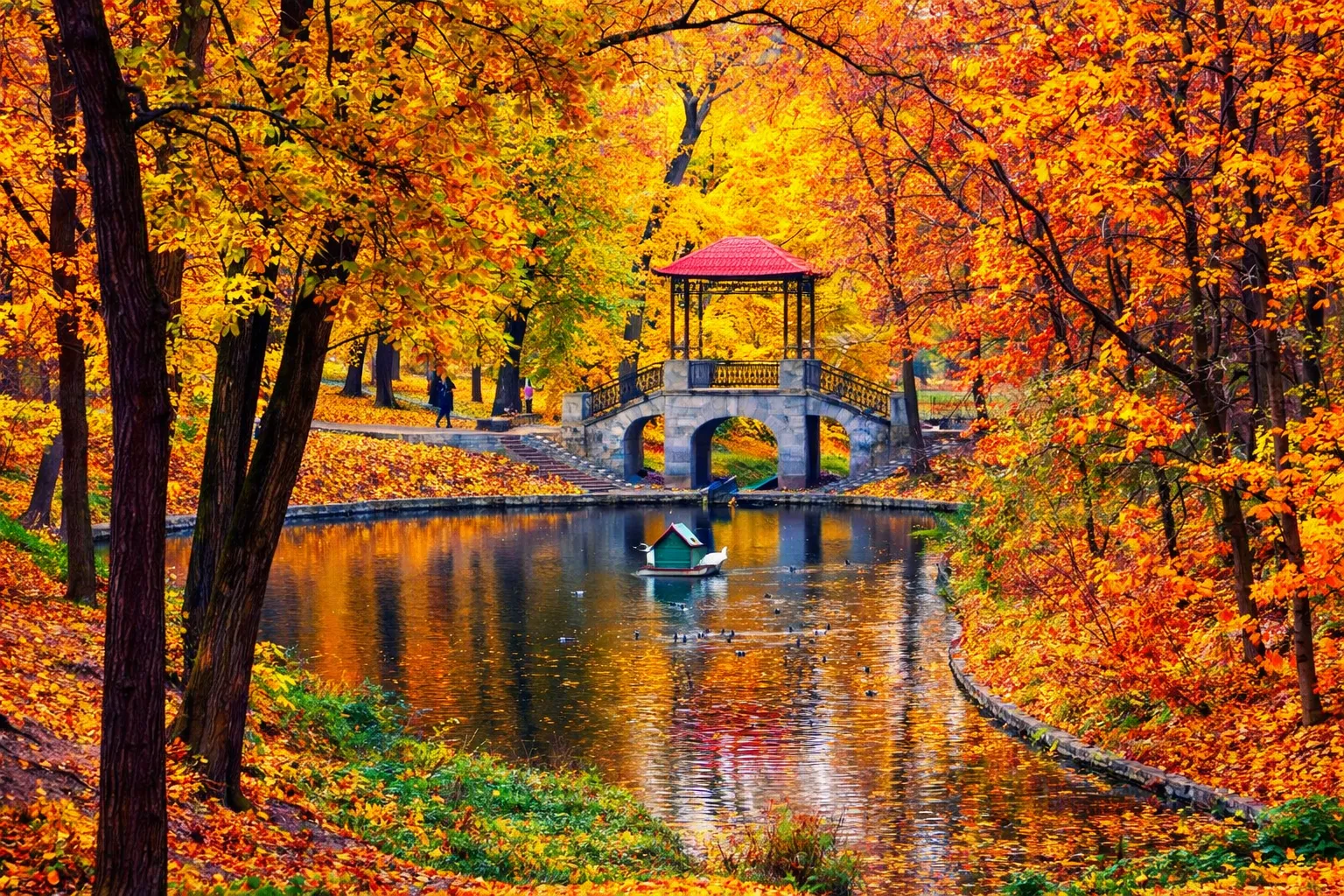
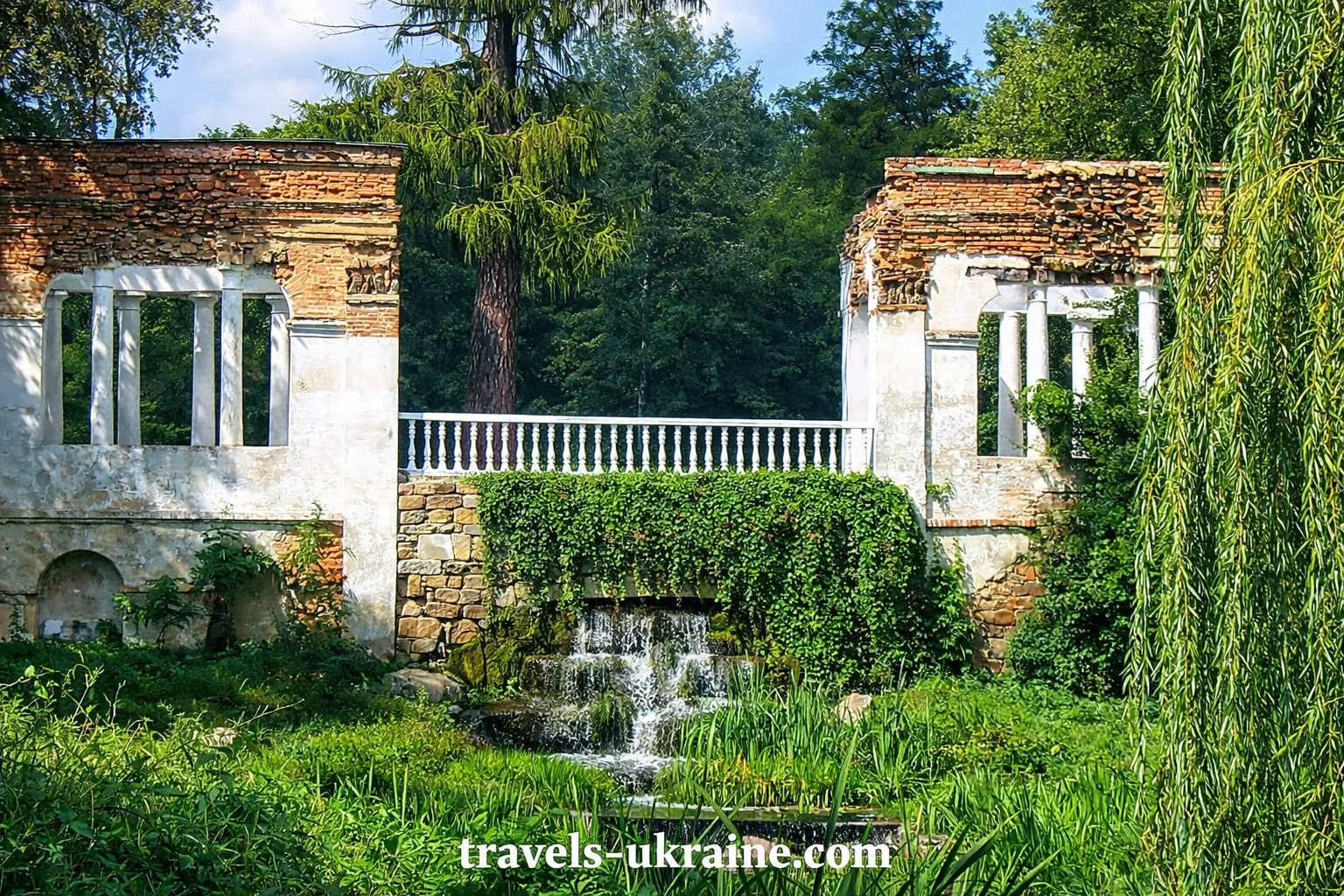
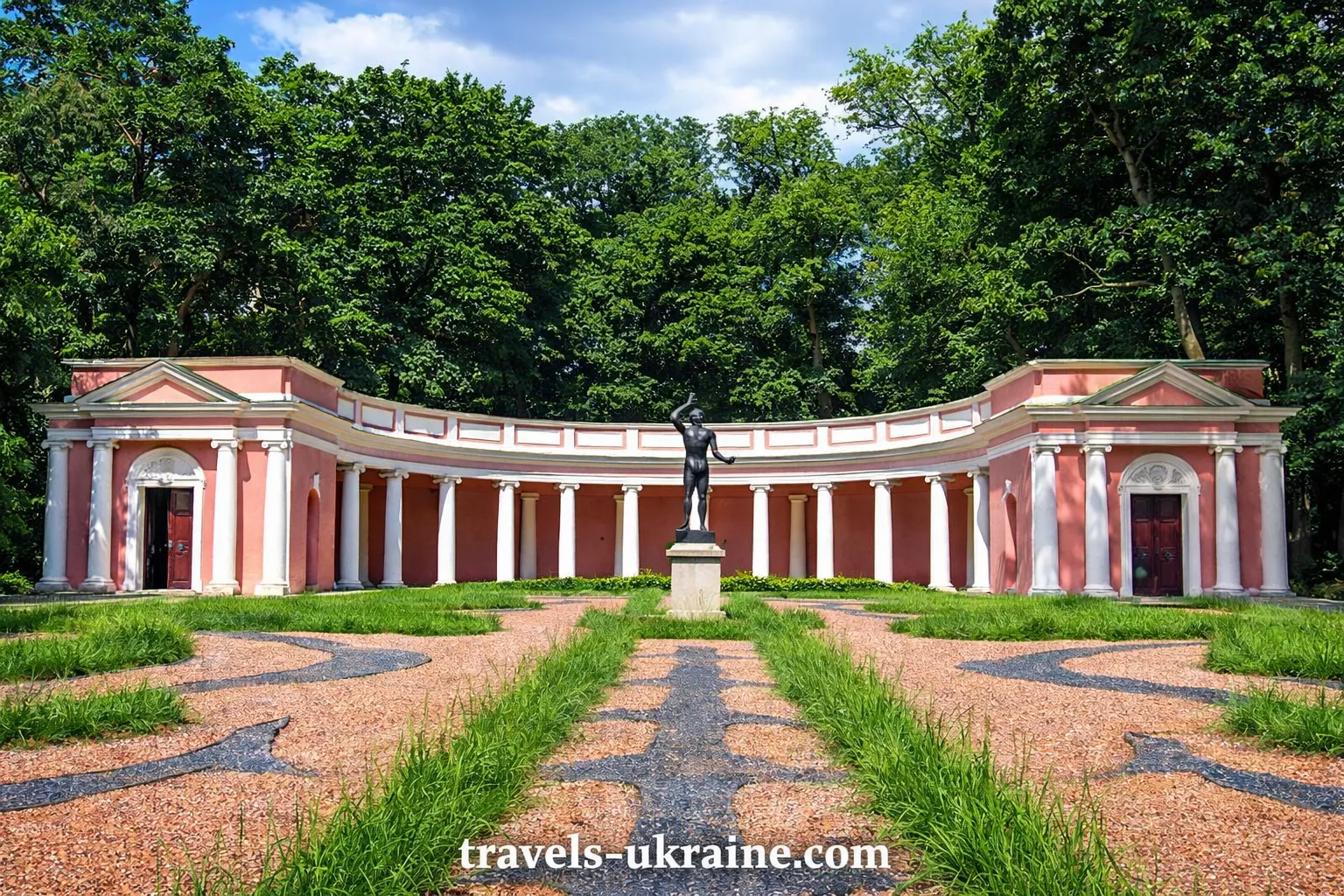
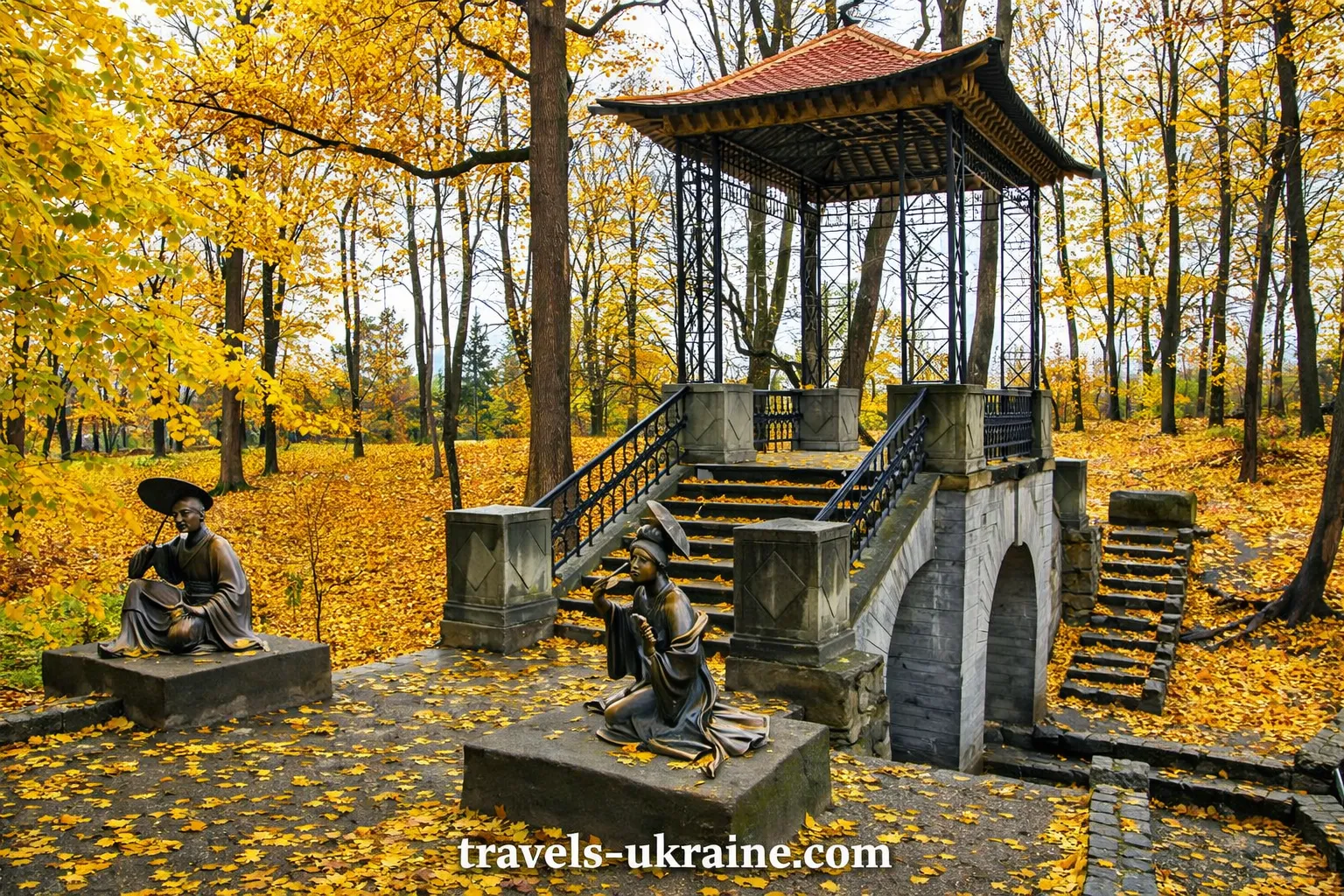
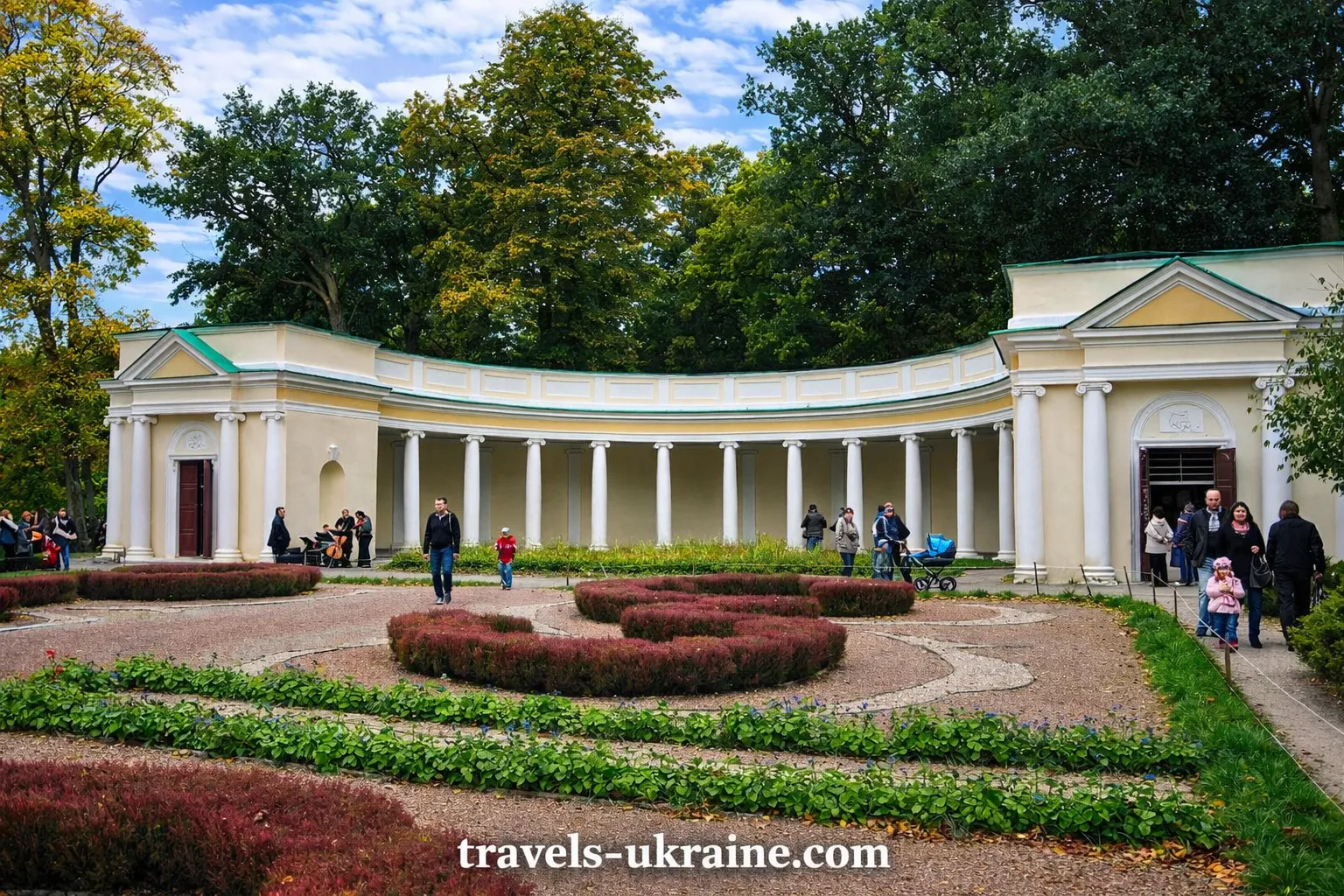
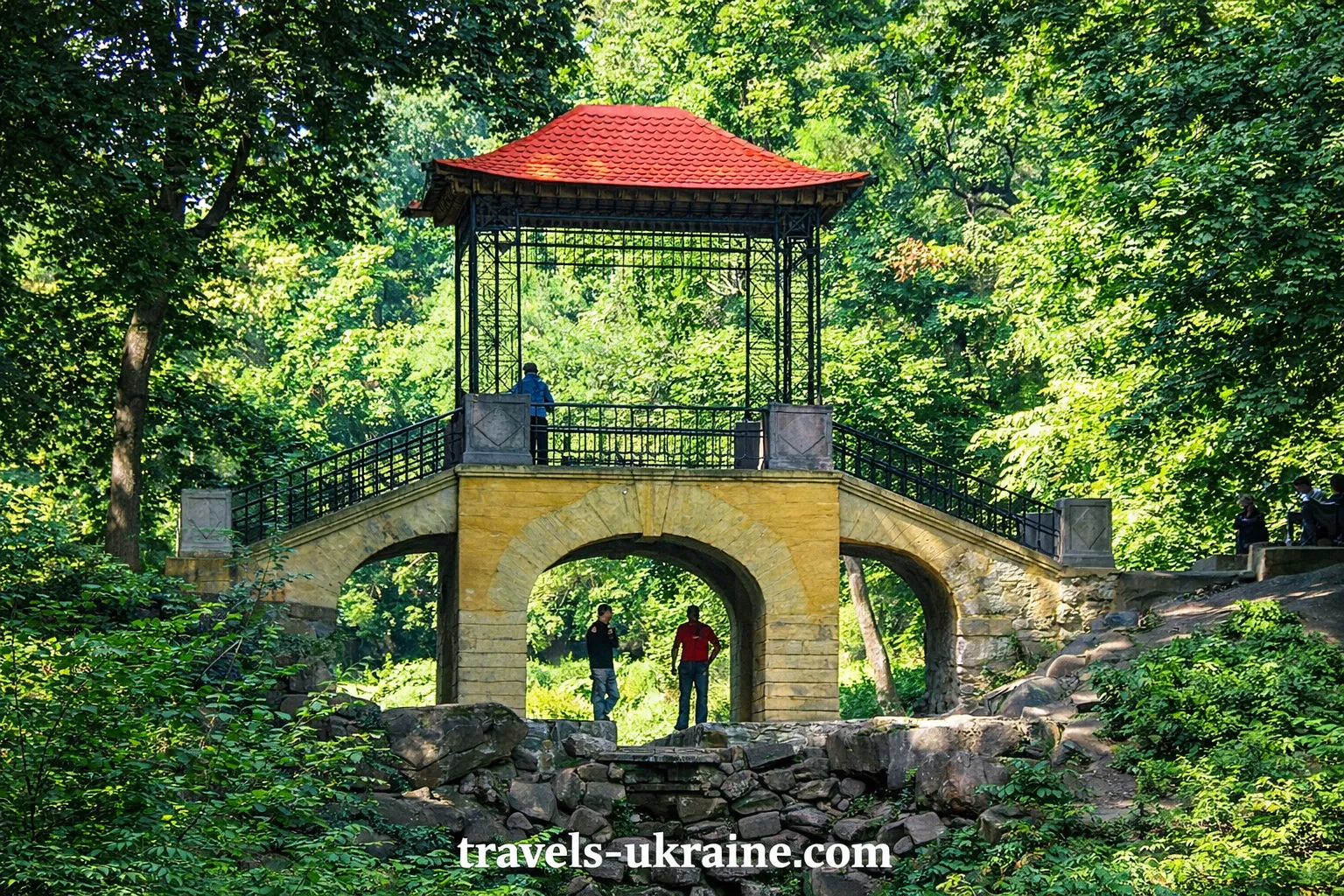
Among the structures preserved to this day, special attention should be paid to the elegant “Rotunda”, the symbolic “Pelican Column”, the romantic caprice of the “Ruins”, the mysterious “Echo” colonnade, and the picturesque “Chinese Bridge”. And this is only part of the architectural highlights scattered throughout the park. Each has its own character and mood: some were created for ceremonial walks, others for quiet reflection, and some, it seems, simply to remind visitors that the 18th century knew perfectly well how to impress.
The architecture here does not compete with nature, but seems to hold a dialogue with it. The ruins look as though they have survived the centuries, though in reality they were conceived as part of romantic fashion. The colonnades amplify the acoustics so much that even your own footsteps seem like part of a theatrical production. And the “Chinese Bridge” adds an eastern accent, as if someone decided that if one were creating the perfect park, why not invite a little of the wider world into it?
Oleksandriya Park is an example of how people can delicately weave architecture into a natural setting without destroying its harmony. It is precisely this fine line between nature and creativity that makes Oleksandriya Dendrological Park in Bila Tserkva one of the most beautiful tourist destinations in Ukraine.
A Quick Guide to Oleksandriya Park
Oleksandriya is a nationally significant landscape dendrological park located in the city of Bila Tserkva in Kyiv Oblast. It is one of the largest parks in Ukraine, combining a natural monument, a historic park, and a scientific institution. It is equally well suited to peaceful relaxation in nature and educational tourism.
The minimum time for a walk is 2–3 hours. However, if you plan to book a guided tour of Oleksandriya Park, organise a photo session, or enjoy an unhurried walk through all the lawns and architectural sights, it is worth setting aside 4–6 hours. The grounds are vast, so this is not the kind of place you “pop into for 30 minutes”.
The park area has convenient avenues and tourist routes, accessible for children and older travellers alike. The main directions do not require any special physical preparation. At the same time, the natural terrain includes slopes and longer walking distances — so comfortable footwear is definitely a good idea.
Visit Budget
Relaxing in the dendrological park is one of the most budget-friendly leisure options around. The entrance ticket remains affordable, and the main walks around the grounds do not require additional spending. Themed guided tours, photography, or special routes are paid separately. In any case, it is a budget-friendly alternative to trips abroad, with scenery that is no less impressive.
- Format: dendrological park / historic park / tourist destination
- Recommended time: 3–5 hours
- Best for: families, couples, photographers, nature lovers
- Seasonality: a beautiful park in every season
Oleksandriya Park in Bila Tserkva is a versatile tourist attraction, equally well suited to a short walk or a full day in nature. That is exactly why Bila Tserkva State Park remains one of the most popular tourist destinations in Ukraine.
Photo and Video Gallery
Interesting Facts and Legends about Oleksandriya Dendrological Park
Oleksandriya Park in Bila Tserkva is not only a monument of landscape architecture, but also a place wrapped in stories, legends, and unexpected facts. Here, every avenue has its own mood, every structure has a subtext, and some trees seem to know more than any tour guide. And, most interestingly, they do not interrupt and they do not sell souvenirs at the end of the story.
Walking through the grounds, it is easy to feel that the park holds a quiet dialogue with the visitor. Here is a peaceful lawn for reflection; here is a colonnade with impressive acoustics — suddenly, even your ordinary “hello” sounds almost ceremonial. And around the bend are the romantic “Ruins”, so convincing that you may feel tempted to check whether someone accidentally left a knight’s helmet behind.
Everything here is thought through down to the last detail: the landscapes reveal themselves gradually, like scenes in a theatrical performance, the water in the ponds adds depth, and the old oaks stand with such grandeur that they seem to be holding an invisible casting for the title of “wisest tree in Kyiv Oblast”. And if it suddenly feels as though the park is watching you — do not worry. That is simply the atmosphere reminding you that you are in a place with character.
It is precisely this layered quality that makes Oleksandriya Park in Bila Tserkva so special. Here you can find romance, philosophy, beauty, and even a touch of history’s own irony. After all, not every park can afford to look majestic, slightly mysterious, and at the same time so effortlessly at ease, as if saying: “Yes, I have been here for more than two centuries. So what?”
Record-Breaking Trees
Oleksandriya Dendrological Park in Bila Tserkva is famous for its ancient oaks and rare tree species. Some of the oaks are over 200 years old — older than most buildings, and old enough to remember the days when Europe was writing the first pages of its modern history. Their trunks measure several metres in circumference, and their crowns spread so widely that you can easily shelter beneath them.
These oaks are true champions of endurance. They have survived the rise and fall of empires, revolutions, wars, and several generations of couples strolling along the same avenues. Their roots grip the earth deeply, while their branches rise high into the sky, as if linking past and present. Standing beneath their crowns, you involuntarily realise: it is not we who walk through the park — it is the park that allows us to be here.
Beyond the oaks, the dendrological park is home to real botanical rarities: the tulip tree from North America, Ginkgo biloba — a living “memory” of the Mesozoic era, majestic plane trees, eastern white pines, and larches reaching dozens of metres in height. Some specimens are among the oldest or largest of their kind in Ukraine.
Oleksandriya’s record-breaking trees are not just photo subjects. They are living witnesses to history, still growing, blooming, and rustling above visitors’ heads. And if you listen closely, their whisper seems to say: “Well then, another generation has come to admire us.”
Masonic Symbolism in Oleksandriya Park — Conspiracy or Fashion?
From time to time, conversations arise around Oleksandriya Dendrological Park about hidden symbols, mysterious signs, and even Masonic hints. And indeed, the colonnades, ruins, and symbolic sculptures all look as though a serious philosophical discussion by candlelight and in robes might begin just around the next bend. And if you look closely at the Pelican Column, you might even suspect that it knows something… but keeps silent with dignity.
But if you calm the imagination a little and set aside the detective mood, things become simpler: what we are looking at is more likely a fashion of the Romantic era than the headquarters of a secret Masonic order. In the 18th century, it was popular to fill a park with deeper meaning — a little allegory, a little drama, a few “impressive ruins for the mood”. In other words, design with a subtext.
So the mystery of Oleksandriya is more a reflection of its creators’ refined taste than proof of any world conspiracy. Though, admit it, it is pleasant sometimes to imagine that the old oaks are quietly smiling and thinking: “You still do not know everything about us.” And perhaps it is exactly this light intrigue that makes a walk through the park even more fascinating.
Events and Festivals in Oleksandriya Park — When the Dendrological Park Comes Especially Alive
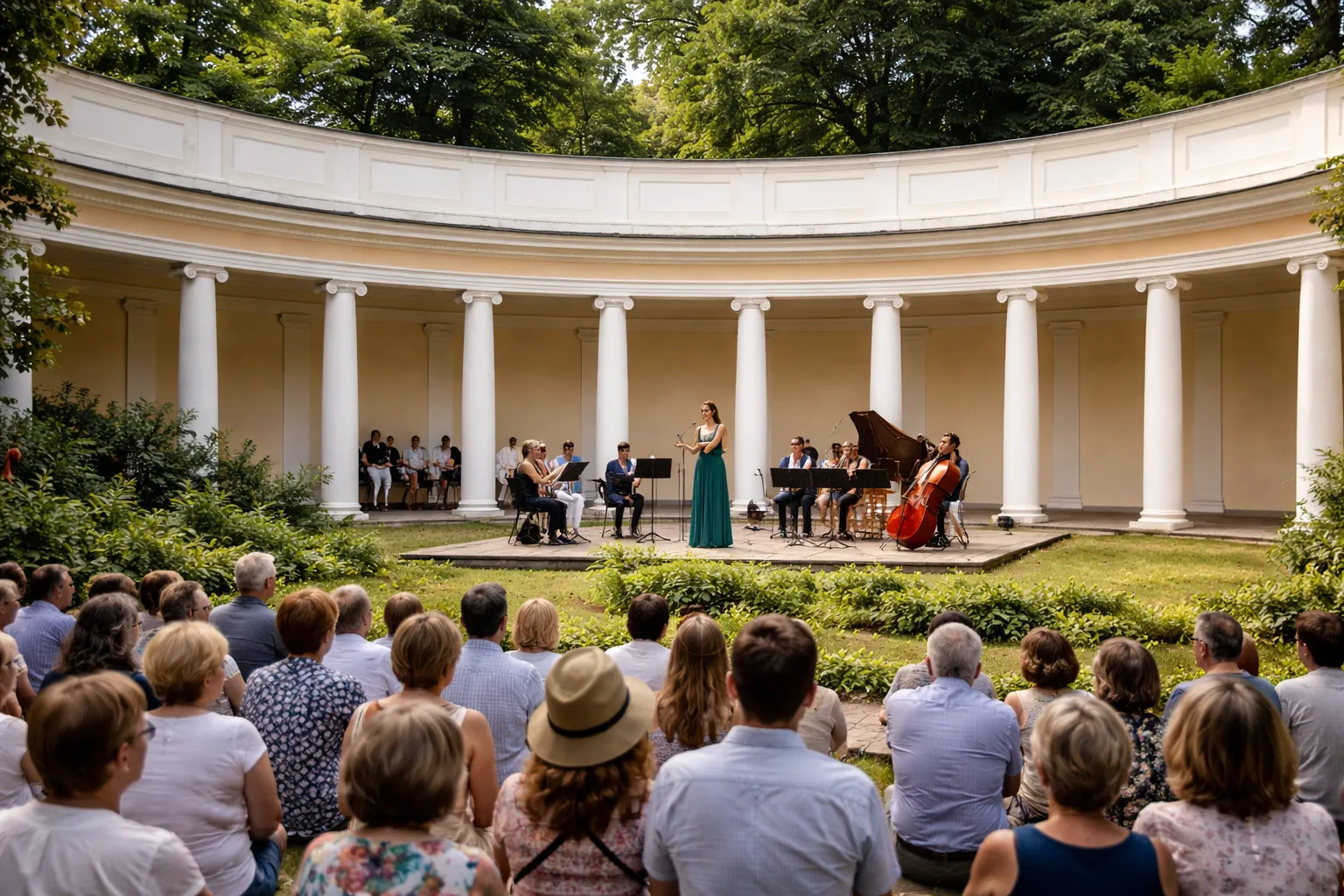
The main event of Oleksandriya Park is silence and calm. They gather the largest audience here every single day. Yet despite the harmony, various events, themed activities, and guided tours take place in the dendrological park throughout the year, adding a new dimension to its atmosphere. And while the park usually lives in an unhurried balance, during celebrations it turns into a living open-air stage.
Then the avenues fill with music, the lawns with spectators, and the historic structures become natural backdrops for cultural events. At the same time, the park preserves its character: even during events, there is no sense of big-city bustle — only the gentle rhythm of celebration amid the greenery. That is precisely what makes Oleksandriya Dendrological Park so special: it knows how to be quiet when needed and ceremonial when the time for events arrives. And, it seems, it does so without the slightest effort — like a true host with centuries of experience.
Seasonal Events, Flowering Periods, and Themed Activities
In spring, Oleksandriya Dendrological Park attracts visitors during the season of mass flowering — magnolias, tulip trees, and ornamental shrubs create the atmosphere of a true botanical celebration. In autumn, the park becomes a palette of gold, crimson, and copper shades — and cameras are busier than tour tickets.
Themed guided tours are regularly held in Bila Tserkva’s dendrological park: historical, botanical, and educational programmes for children and adults. A guided tour of Oleksandriya Park lets you see much more than avenues and lawns — guides reveal hidden stories, little-known facts, and the symbolism of the architectural sites.
- Historical walks about the Branicki family.
- Botanical routes for admirers of rare plants.
- Educational programmes for schoolchildren.
- Festive activities and open-air cultural events.
At times, the park becomes a venue for chamber music concerts, plein air art sessions, or environmental initiatives. And surely you will agree that listening to music among centuries-old oaks is far more atmospheric than in an enclosed hall — though, admittedly, the trees applaud only with their leaves. Thanks to such events, Oleksandriya Park remains not only a natural monument, but also a vibrant cultural centre of the region. It is a tourist destination that knows how to combine the calm of nature with the rhythm of modern life.
What to See in Oleksandriya Park — The Most Interesting Tourist Spots
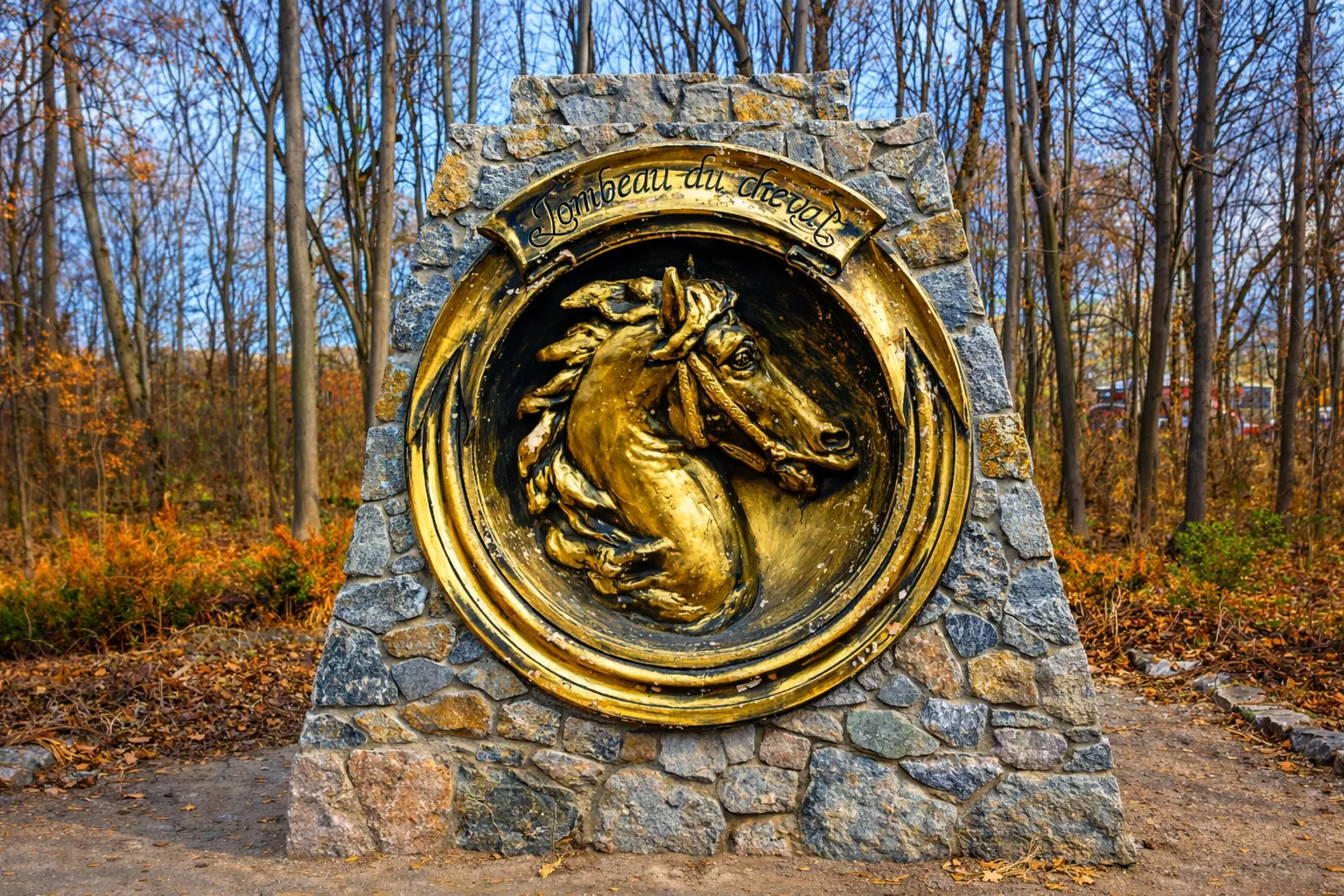
Oleksandriya Dendrological Park in Bila Tserkva is not the kind of place where you can say: “We have already seen it all.” The grounds conceal dozens of locations that reveal themselves gradually. And if you come to this tourist park for only an hour, there is a real chance you will want to stay much longer.
There are so many locations and routes here that it is difficult to take everything in during a single visit. Art objects, a huge number of sculptures, natural relaxation areas, a picturesque waterfall, viewing spots, waterside areas with ponds and cascades, architectural landmarks of the 18th and 19th centuries — and that is still far from a complete list of what the dendrological park has to offer.
Oleksandriya is a place where every bend in the avenue opens up a new landscape and a new impression. Here, you can move from a quiet wooded oak grove to an open lawn, from a historic rotunda to the mirror-like surface of a pond. Tourist routes are designed to combine nature, history, and art in one harmonious flow.
Still, it is worth beginning your acquaintance with the park at its most famous structure and true jewel — the “Echo” colonnade. It is always at the centre of attention during a tour of the State Dendrological Park “Oleksandriya”. Its semicircular shape creates unique acoustics — even a quiet voice sounds clear and ceremonial. It is the perfect place for photos, a romantic stroll, or simply a short pause amid the green silence.
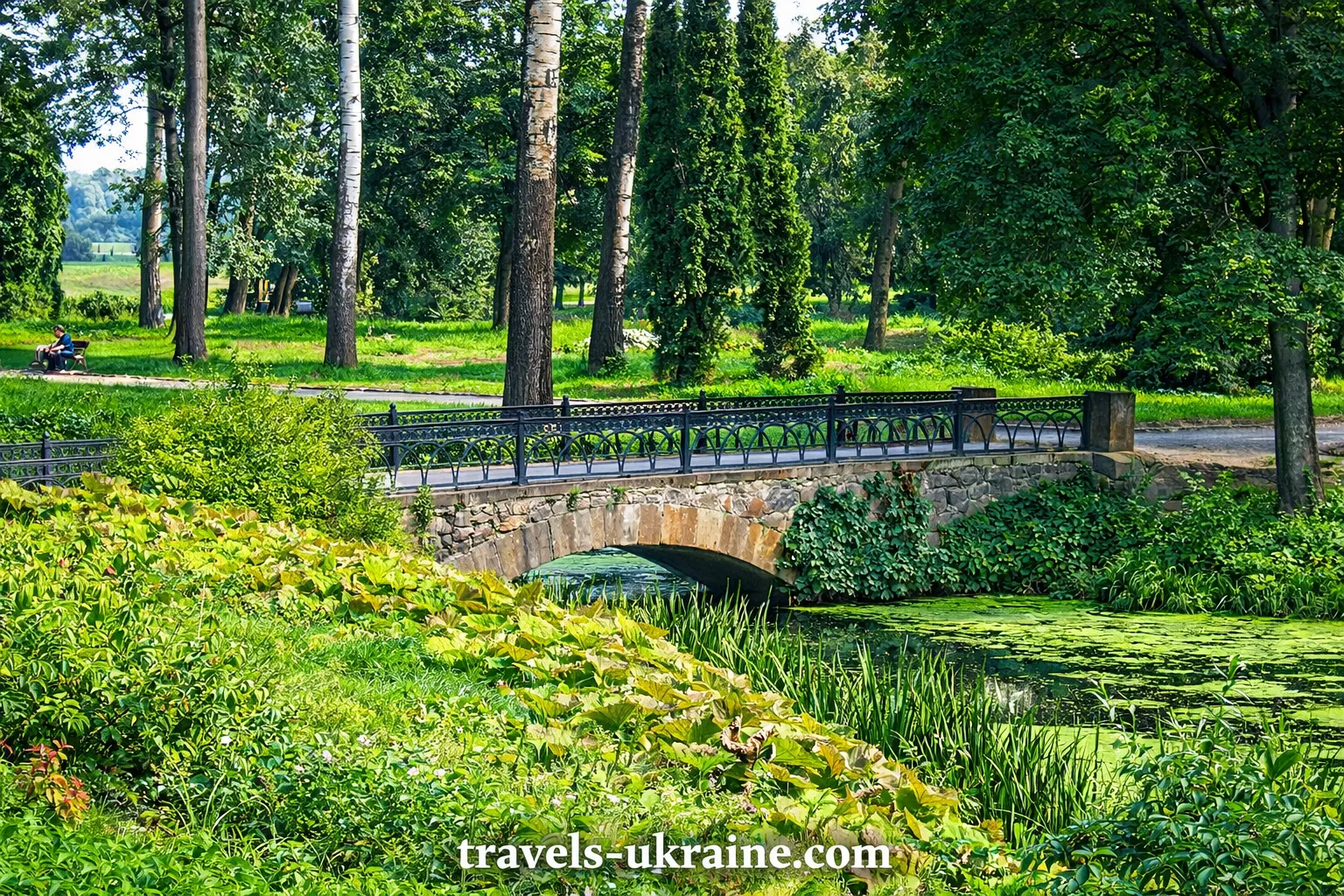
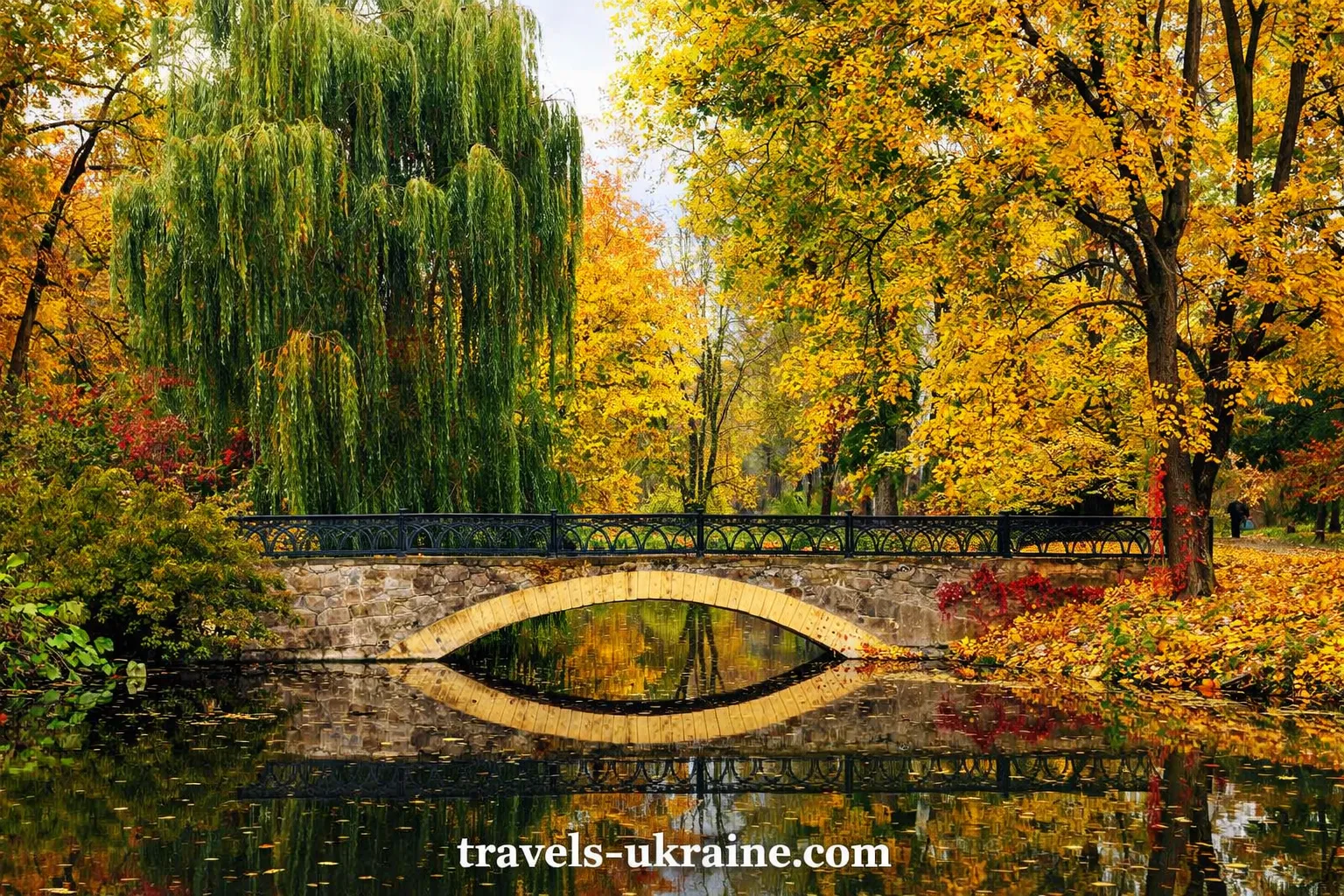
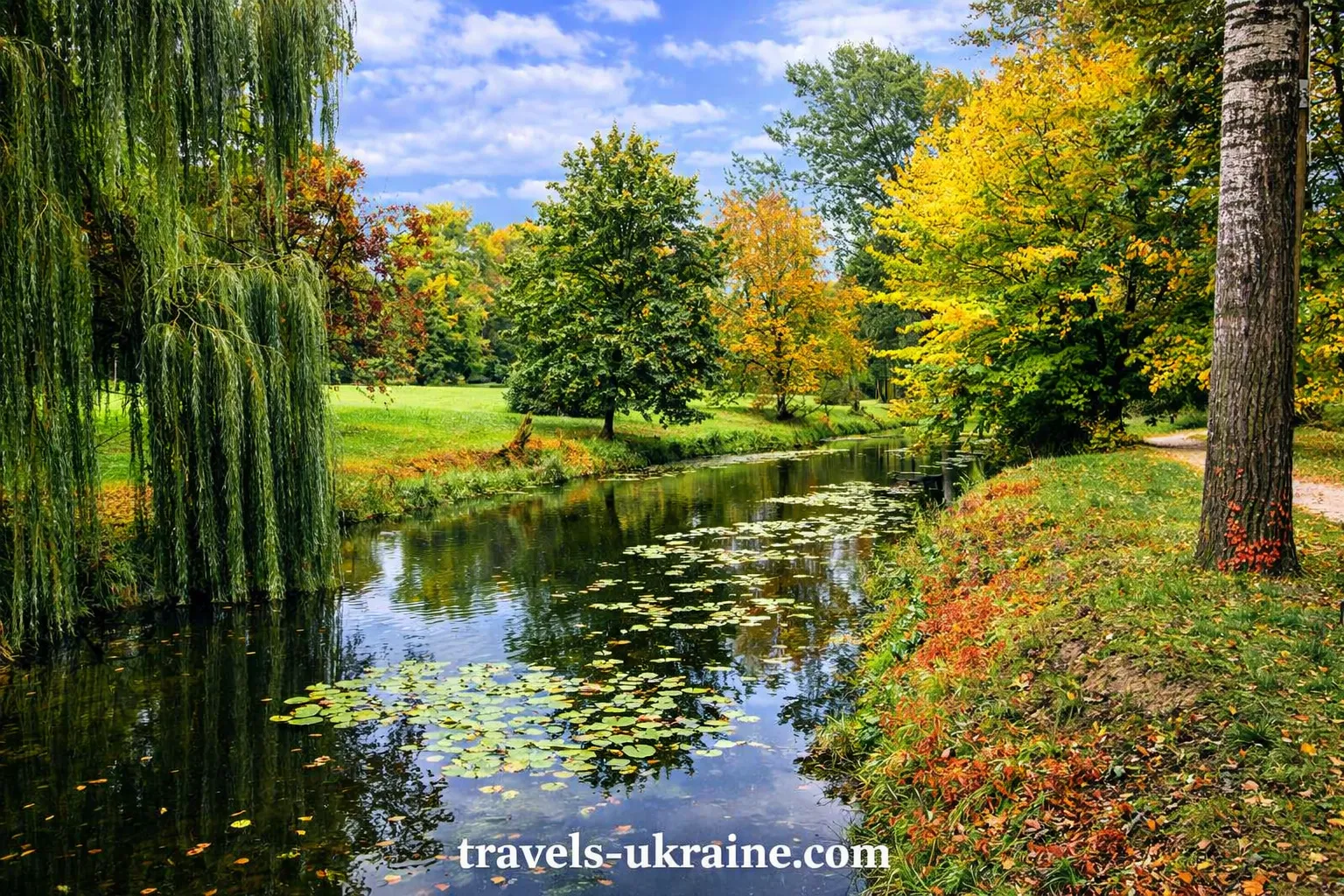
Next on the list is the elegant Chinese Bridge, which adds a light eastern accent to the landscape. Nearby are ponds and expanses of water reflecting the sky and the tree crowns. This is one of the most popular areas for walks in nature and family leisure. It is also a favourite place for photo spots and memorable pictures.
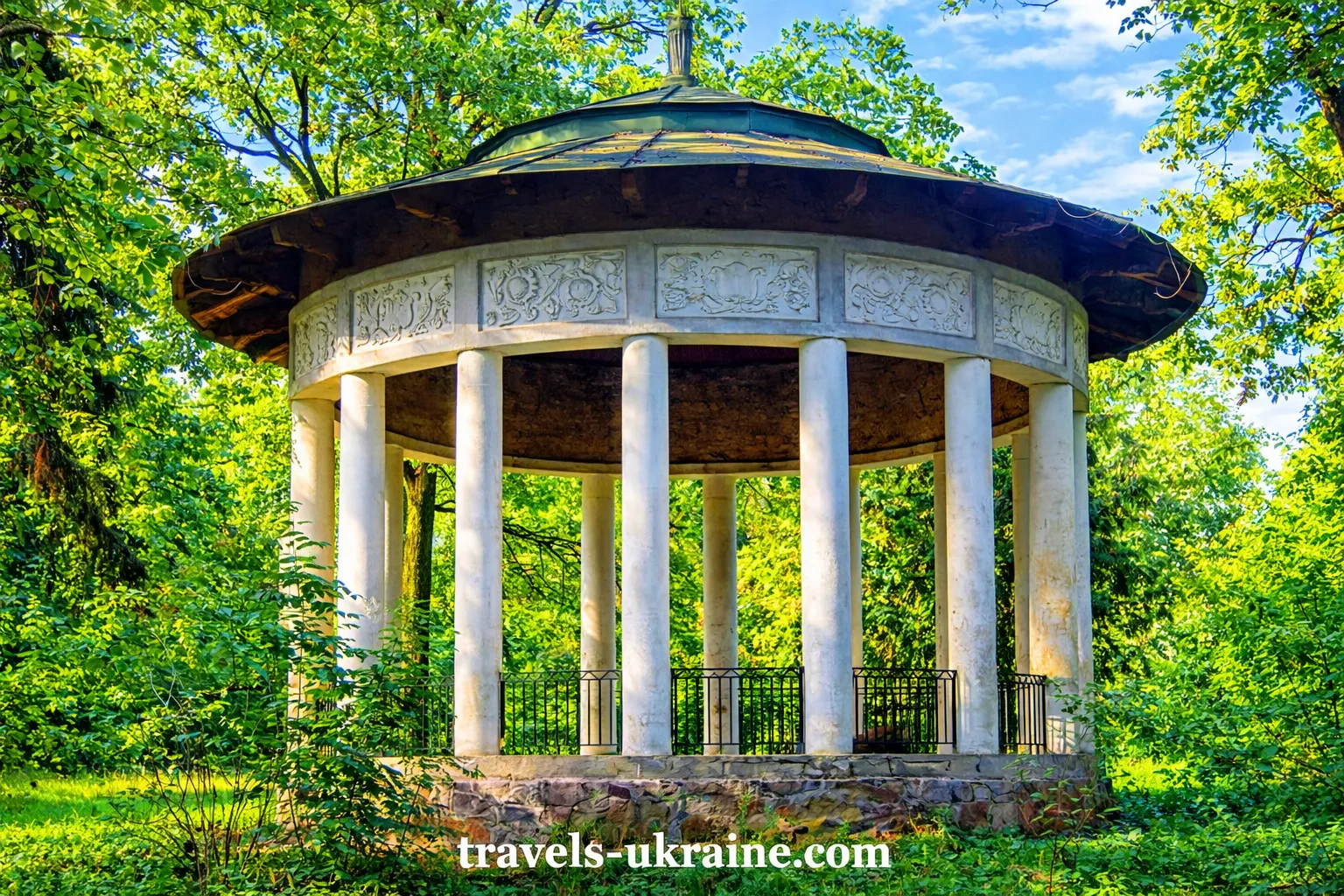
The next essential stop among the park’s popular locations, especially for those interested in educational tourism, is undoubtedly the Rotunda and the “Ruins” — symbols of elegance and reminders of the passing of time. Both structures create an atmosphere of European Romanticism, adding a special mood to any walk. And although the “Ruins” were built as a decorative element, they look so convincing that they seem to have genuinely survived several centuries of dramatic events.
And finally, once you have walked the avenues, rested on the Decembrists’ Bench, admired the many sculptures, enjoyed the views of the lake with swans, and touched the centuries-old trees, it is time to turn your attention to the Great Lawn — a place for relaxation and a kind of final note in the chapter of green tourism. It is the perfect spot to spread out a blanket, breathe in the fresh air at leisure, enjoy the panorama, and feel what true rest in the park really means. It is here that you best realise the scale of Bila Tserkva’s dendrological park and the beauty of its landscapes.
What to Visit Near Oleksandriya Park — Nearby Tourist Spots
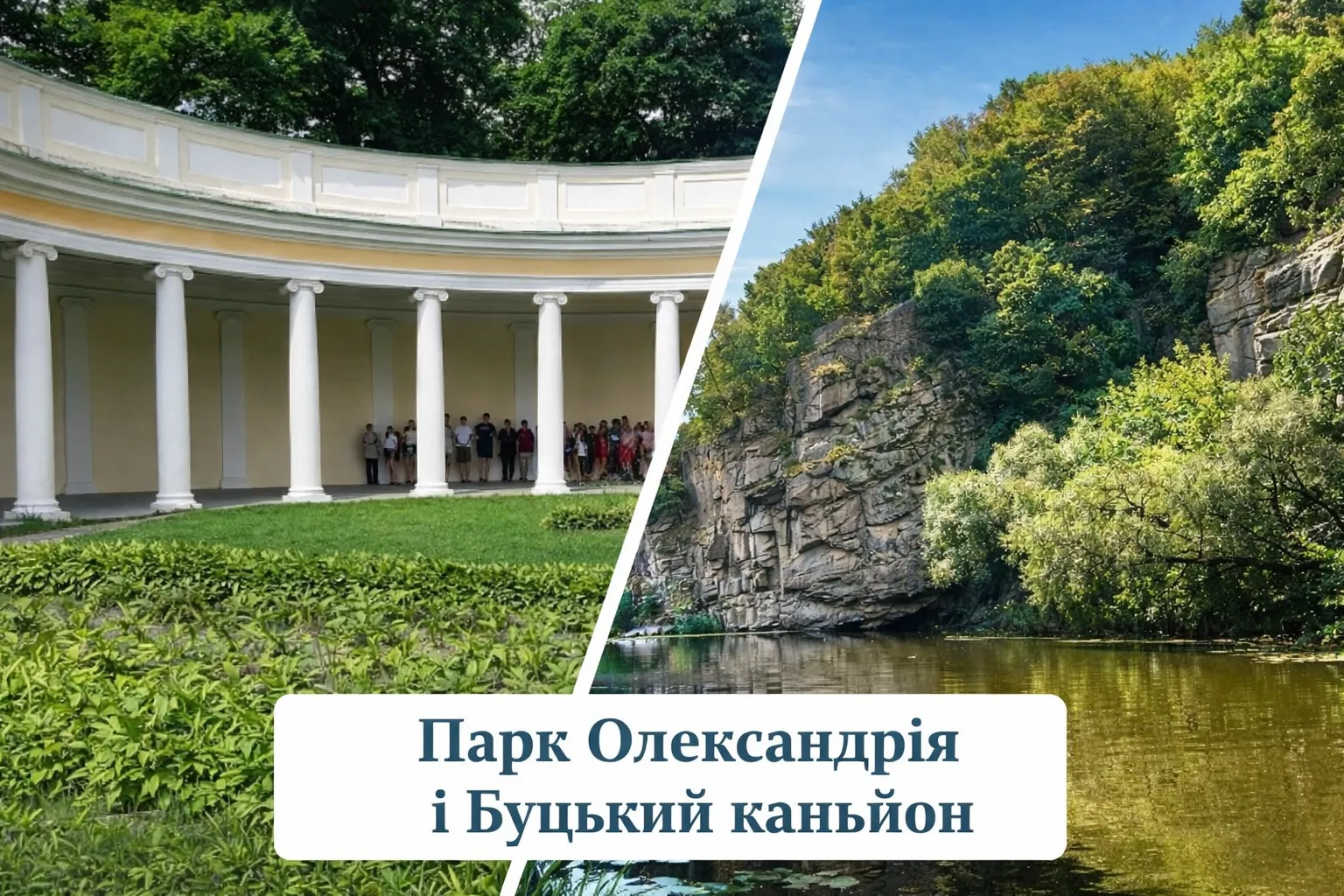
Bila Tserkva’s dendrological park often becomes the central point of a weekend route, but the journey certainly does not end at the park gates. The city of Bila Tserkva has its own history, architectural landmarks, and interesting tourist spots that are worth including in your journey through Ukraine. After all, after 400 hectares of walking, the body may crave not only beauty, but also fresh impressions (and perhaps coffee).
After a walk through the dendrological park, it makes perfect sense to head into the city’s historic centre. Here you will find churches from different eras, historic buildings, and atmospheric streets that let you feel the spirit of the past. It is a wonderful addition to educational tourism — and a chance to imagine yourself as the hero of a historical novel, albeit with a modern smartphone in hand.
The Ros River, which flows near the dendrological park, creates picturesque views and lovely walking areas. It is the perfect place to end the day — especially at sunset, when the water reflects the sky and the city takes on soft golden tones. In moments like these, even the most devoted lovers of a fast pace suddenly begin to slow down.
For those who want to dive deeper into the region’s history, it is worth visiting the local museums of Bila Tserkva and cultural centres. They reveal pages of the past connected with the Branicki family and the development of the city. It is also a nice way to test how attentively you listened during your tour in the park.
Surprising Surroundings: Where to Head Next?
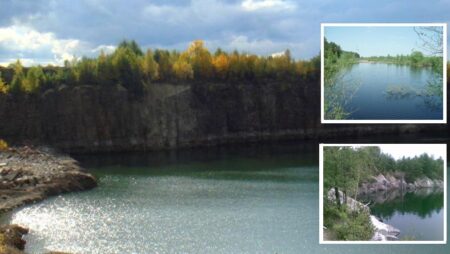
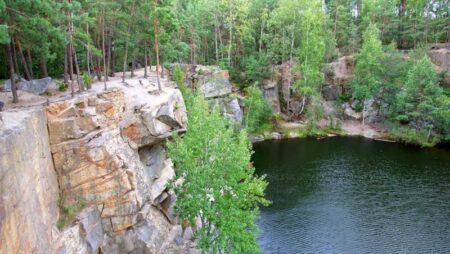
If, after a walk through Oleksandriya Park, you suddenly feel like even more space, adventure, and natural power — then it is time to go a little further. Around 120 kilometres from Bila Tserkva lies Buky Canyon — a place that effortlessly shatters the stereotype that you need to fly overseas for truly jaw-dropping scenery.
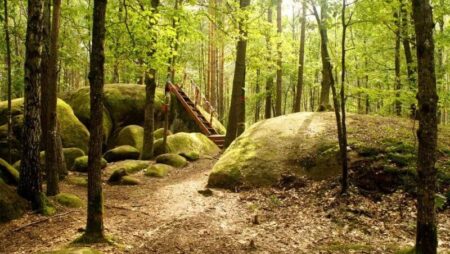
The canyon in the village of Buky is a world of granite cliffs rising above the Hirskyi Tikych River, steep precipices, bizarrely shaped stone boulders, and the sound of water that no longer feels like a park at all, but a real adventure. Here, nature shows its character — without decorative ruins or elegant colonnades, but with powerful energy and the distinct feeling that you have somehow wandered into a miniature Scandinavian landscape.
The place attracts tourists, photographers, and even rock-climbing enthusiasts. And if you simply want to stroll along the rocks and take striking photographs, that is a wonderful option too. The main thing is comfortable shoes and the readiness to charge your phone more often: the views practically force you to hit the camera button again and again.
Combining Oleksandriya Dendrological Park and Buky Canyon in one trip is like blending a romantic historical film with an adventure action story in a single weekend. First come the noble avenues and the silence of centuries, then the cliffs, water, and raw natural power. It is the perfect scenario for those who do not enjoy monotony.
Tourist Infrastructure — Relaxing in Oleksandriya Dendrological Park
Oleksandriya Dendrological Park is not only about history, nature, and architecture, but also about well-planned tourist infrastructure, perfectly adapted to a weekend getaway. The park area offers comfortable conditions for visitors of all ages — from families with children to older travellers.
Within the dendrological park, there are well-equipped walking avenues, along with information boards and signposts. The main tourist routes logically connect architectural landmarks, natural locations, and scenic viewpoints. It is difficult to get lost — but if you really try, that too may become part of the adventure.
For those who want more than just a walk, there is an opportunity to book a tour of Oleksandriya Park. You can arrange a tour in advance or join a group programme. Themed tours cover the history of the Branicki family, botanical collections, and the symbolism of the architectural structures.
A park for relaxation means benches, spacious lawns, shaded avenues, and areas for quiet rest. It is the perfect place for family leisure, a romantic stroll, or simply a pause in nature. Near the entrances, you will find essential services that make time outside the city comfortable and carefree.
- Walking routes of varying lengths
- Information boards and park maps
- The option to book a guided tour
- Areas for peaceful relaxation in nature
Oleksandriya Dendrological Park in Bila Tserkva shows that domestic tourism in Ukraine can be comfortable, thoughtful, and enjoyable. Here, the scale of a historic park is paired with a modern approach to visitor services — without unnecessary fuss, but with real attention to detail.
How to Preserve Oleksandriya Park for Future Generations
Oleksandriya Dendrological Park in Bila Tserkva has not only tourist appeal, but also scientific value as a monument of landscape architecture. That is why it is important to follow simple visiting rules in order to preserve this place in all its natural and historical beauty — both for ourselves and for those who come here after us.
So, taking care of this natural monument is the number one task for every guest. The dendrological park is a living ecosystem. It is not worth picking flowers, breaking branches, or straying from the designated routes. Even if you really want to get “just a little closer for a photo”, remember: the plants here are not decoration, but part of a unique botanical collection. And believe me, they are not especially keen on participating in photo shoots without their consent.
It is also important to treat the architecture with respect: the colonnades, rotundas, and decorative structures all require delicate care. The park has survived centuries, revolutions, and changes of era, so it would be rather unfair if its greatest challenge turned out to be modern-day graffiti on the walls.
Oleksandriya Park can be compared to a library, where silence matters greatly. It is much the same here — only instead of the rustle of pages, you hear the rustle of leaves; instead of footsteps between shelves, the breath of the wind and the sounds of nature. To keep the experience comfortable for all visitors, it is worth showing respect and observing good etiquette. Relaxing in nature is about harmony, not a competition in volume. So if you feel like singing loudly, it is better to do it in your head — or outside the park grounds.
When visiting the park, it is important not to leave rubbish behind, to stick to the marked routes, to treat the plants and architectural structures with care, and to respect other visitors. This kind of responsible behaviour helps preserve the harmony of the space and maintain its natural and historical value.
Oleksandriya Park in Bila Tserkva preserves its beauty thanks to the responsible attitude of its guests. After all, true ecotourism begins with respect — for nature, for history, and for the people who will come here after us and continue to value and promote the most beautiful park in Ukraine.
Frequently Asked Questions about the State Dendrological Park “Oleksandriya”
Where is Oleksandriya Dendrological Park located?
The State Dendrological Park “Oleksandriya” is located in the city of Bila Tserkva in Kyiv Oblast, approximately 80 km from Kyiv. It is one of the region’s most popular tourist destinations for a weekend trip.
How much time should you allow for a visit to the park?
For a full walk around Oleksandriya Park, it is worth allowing at least 3–4 hours. If you are planning a guided tour or a photo session, it is better to set aside half a day.
What makes Oleksandriya Dendrological Park in Bila Tserkva unique?
The park covers more than 400 hectares and contains a collection of over 2,500 plant taxa. It is an 18th-century monument of landscape architecture that brings together nature, history, and architectural structures in one space.
Is the park suitable for a family day out?
Yes, Oleksandriya Park in Bila Tserkva is an excellent choice for family leisure. There are convenient routes, spacious lawns, water features, and safe avenues for walks with children.
When is the best time to visit Oleksandriya Park?
The park is beautiful in every season. Spring draws visitors with its blossoms, summer with lush greenery, autumn with vivid colours, and winter with an atmosphere of calm, graphic beauty.
Can you book a guided tour of Oleksandriya Park?
Yes, guided tours of the State Dendrological Park “Oleksandriya” are available in the park. You can book a themed tour or join a group route.
How do you get to Oleksandriya Park?
Bila Tserkva is easy to reach by car or public transport from Kyiv. From the city centre to the entrance of the dendrological park, it is only a few minutes by car or public transport.
Is the park a nature reserve?
Oleksandriya Dendrological Park has the status of a nationally significant monument of landscape architecture and is also a scientific institution. It is not a classic national park, but it is a protected site.
What else can you visit nearby?
Besides the park, it is worth taking a walk through the historic centre of Bila Tserkva or planning a trip to Buky Canyon, located around 120 km from the city.
Ecological Note — Responsible Relaxation in Oleksandriya Park
Oleksandriya Dendrological Park is not only a tourist attraction, but also a valuable ecosystem that has taken shape over more than two centuries. This monument of landscape gardening art plays an important role in preserving biodiversity, maintaining climate balance, and supporting plant research. In fact, it is a living laboratory of nature.
The park complex is home to plants that include rare, introduced, and protected species. It preserves natural monuments and forms new collections that are important for botany and ecotourism in Ukraine.
Why Is It Important to Support Green Tourism?
Time in nature should be conscious and respectful. Green tourism means having minimal impact on the environment, respecting natural areas, and supporting local initiatives. Every visitor can make their own contribution: choose eco-friendly transport, leave no rubbish behind, protect the greenery, and avoid disturbing the natural balance.
Oleksandriya Park in Kyiv Oblast is an example of how history, science, and nature can come together to create a harmonious space. And it is precisely the responsible attitude of visitors that makes it possible to preserve it for future generations. After all, true ecotourism begins with one simple question: “What can I do to help this beauty remain?”
Conclusion — Why Oleksandriya Park Is Worth Visiting
The State Dendrological Park “Oleksandriya” is not just another green spot on the map. It is a place where tourism meets history, nature meets architecture, and an ordinary walk suddenly turns into a little journey through time. If you are looking for the perfect weekend route not far from Kyiv — the answer is obvious.
A tour of Oleksandriya Park will reveal far more than just avenues and lawns. It is a chance to see one of the gems among Ukraine’s tourist destinations, walk beside the ponds, and hear what silence sounds like. And yes, forgetting about your phone here is entirely possible — although rather difficult, because you will want to photograph almost every step.
Oleksandriya is a park for walking, for reflection, for family leisure, and for romantic meetings. It is the kind of place people come to “for a couple of hours” and end up staying for half the day. And even if you are convinced you have already seen everything — the park will certainly find a new way to surprise you next time.
Because the real value of Oleksandriya lies not only in its scale or its history. It lies in the sense of lightness with which you leave the park gates. And in the thought: “I should come back here.” And if a place inspires that feeling, then it truly is something special. So if you are looking for where to relax near Kyiv or which tourist spots are genuinely worth your time — do not look too far. Oleksandriya Park in Bila Tserkva is already waiting for you with its centuries-old oaks, mirror-like ponds, and avenues leading deep into the centuries.
Pack a rucksack, invite your loved ones, plan a tour of Oleksandriya Park — and allow yourself a day without haste. Because sometimes, to reset, you do not need a plane or a foreign stamp in your passport. A few hours in the right quiet and peaceful place are enough. And Oleksandriya is exactly that kind of haven.

One Response Comment
You can post first response comment.