
 English
 Українська
 Русский

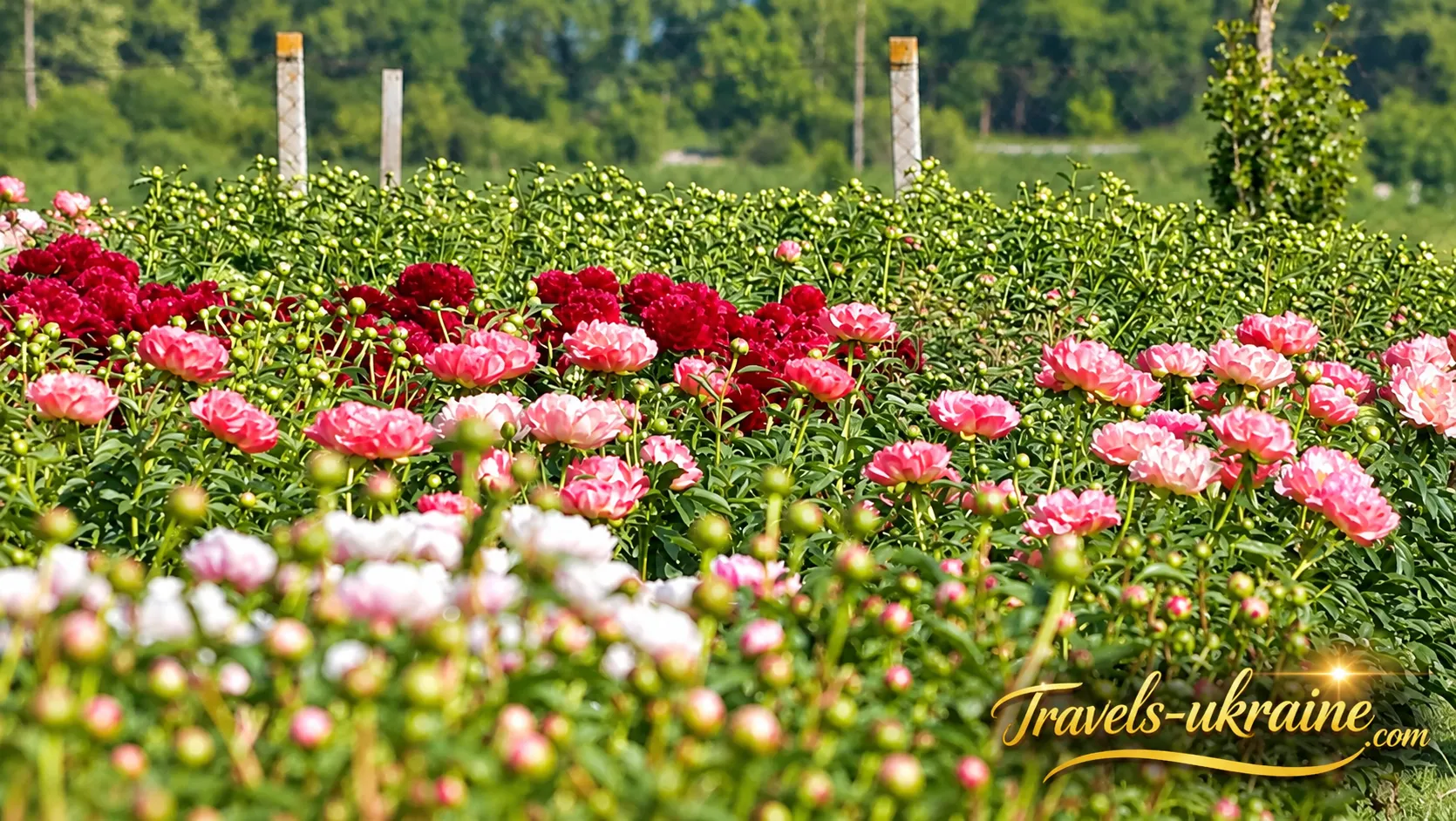
The peony is often called the "queen of flowers," and for good reason. In traditional Chinese culture, it has been associated with imperial gardens, wealth, nobility, and high social status for centuries. When tens of thousands of these magnificent flowers bloom simultaneously across a single field, it becomes easy to understand why the peony remains a symbol of luxury and springtime beauty.
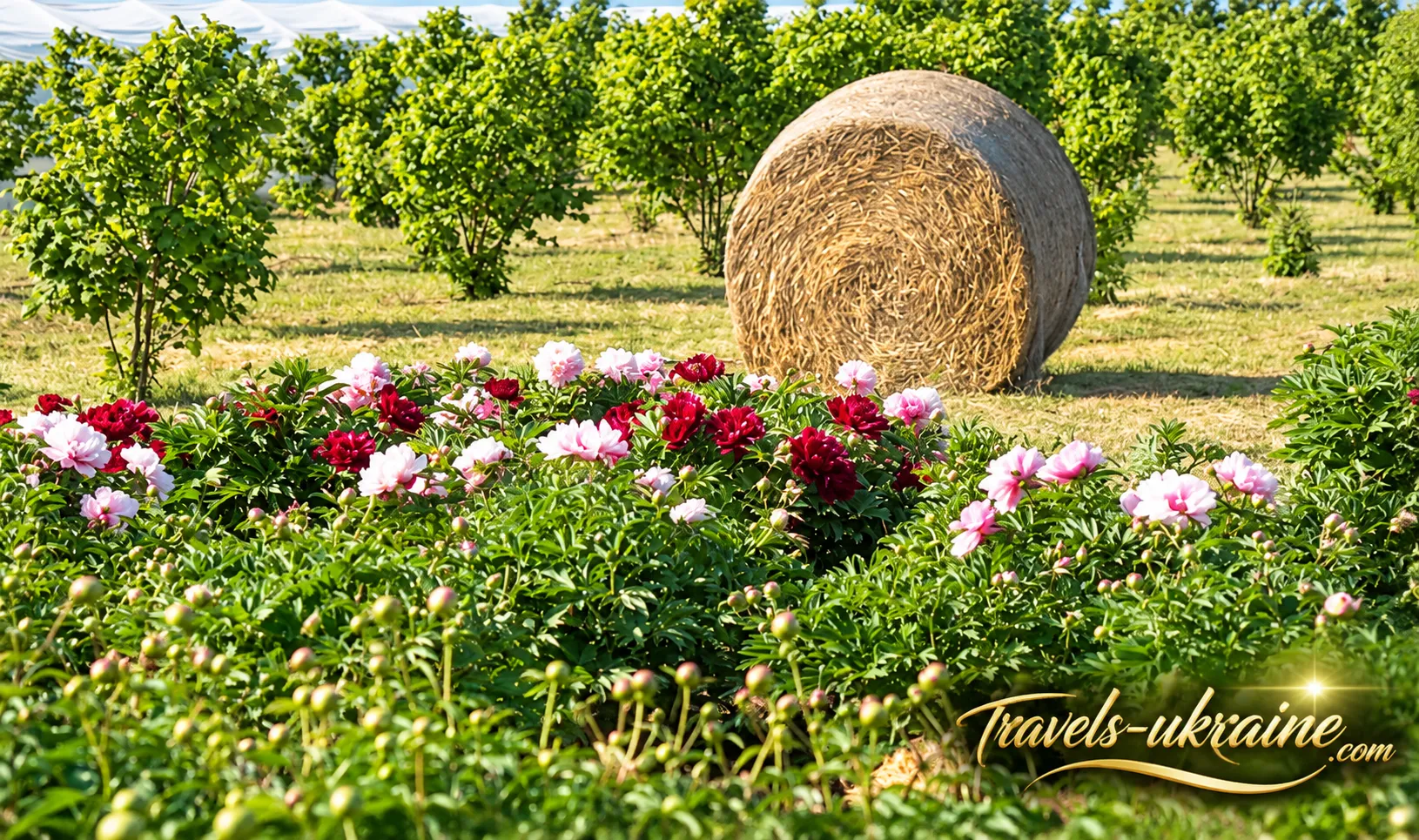
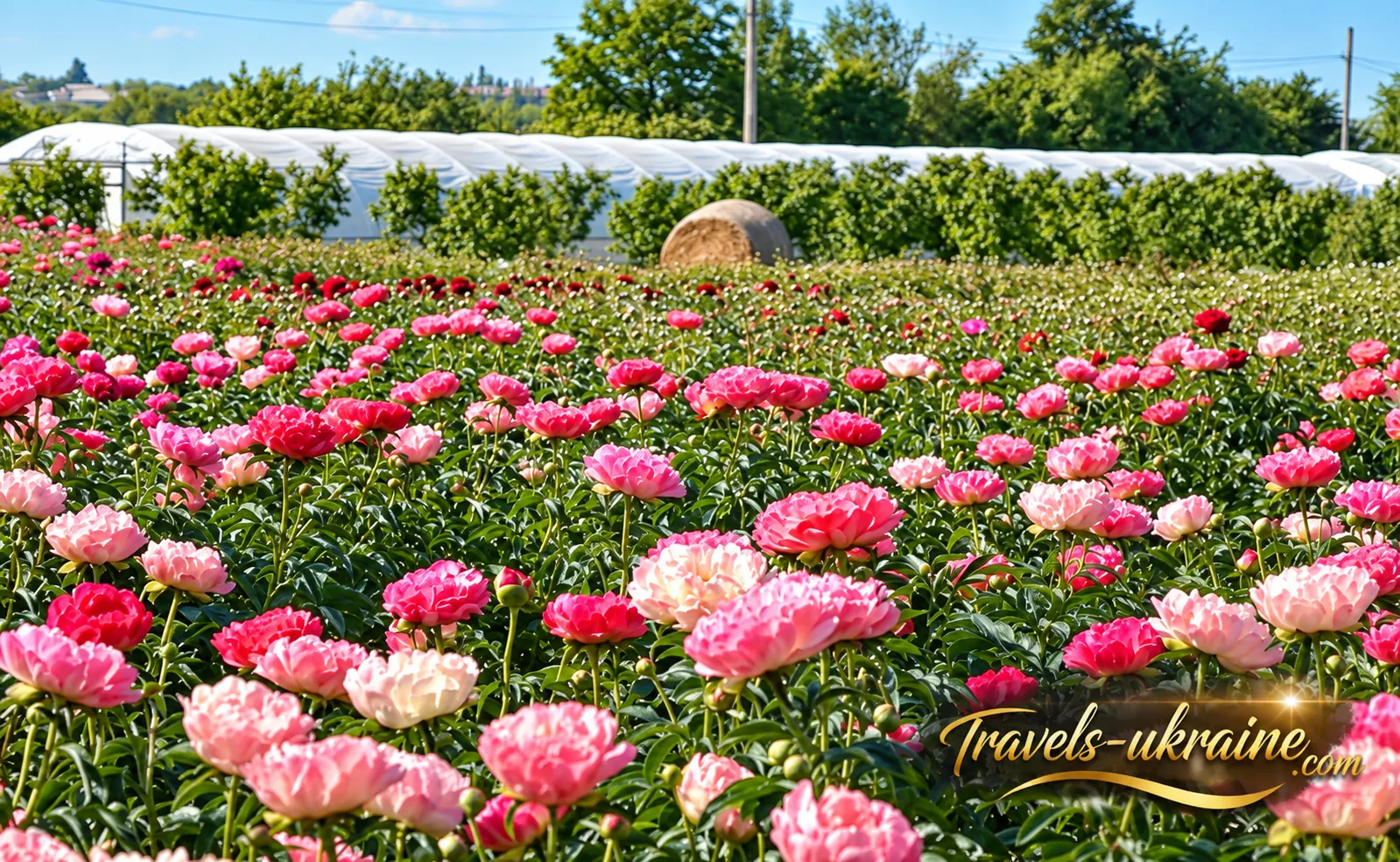
Every year, for a brief period, this spectacular sight appears in Bukovyna, in the settlement of Hlyboka, home to the largest peony field in Ukraine. In late May and early June, several hectares of land burst into bloom with thousands of pink, white, cream, burgundy, and yellow flowers, transforming an ordinary field into a breathtaking sea of peonies.
What makes this destination special is not just its impressive size. Visitors can admire dozens of peony varieties, each distinguished by its flower shape, size, color, and fragrance. Some resemble lush, densely packed double blooms, while others feature lighter semi-double or anemone-shaped flowers. Certain varieties surprise visitors with unusual colors rarely seen in ordinary gardens. However, one particular feature makes this experience truly seasonal: peonies have a relatively short blooming period. The most spectacular display lasts only a few weeks, with the exact timing depending on spring weather conditions each year. Seeing the field in full bloom therefore means arriving at just the right moment, when most of the plants are covered in magnificent flowers at the same time.
In this guide, we will discover the best time to visit the peony field in Hlyboka, explore what makes peonies so special, learn about the varieties grown in Bukovyna, find out how to reach this beautiful floral destination, and highlight other interesting attractions worth visiting nearby.
A Spring Fairytale in Bukovyna: A Magnificent Peony Field
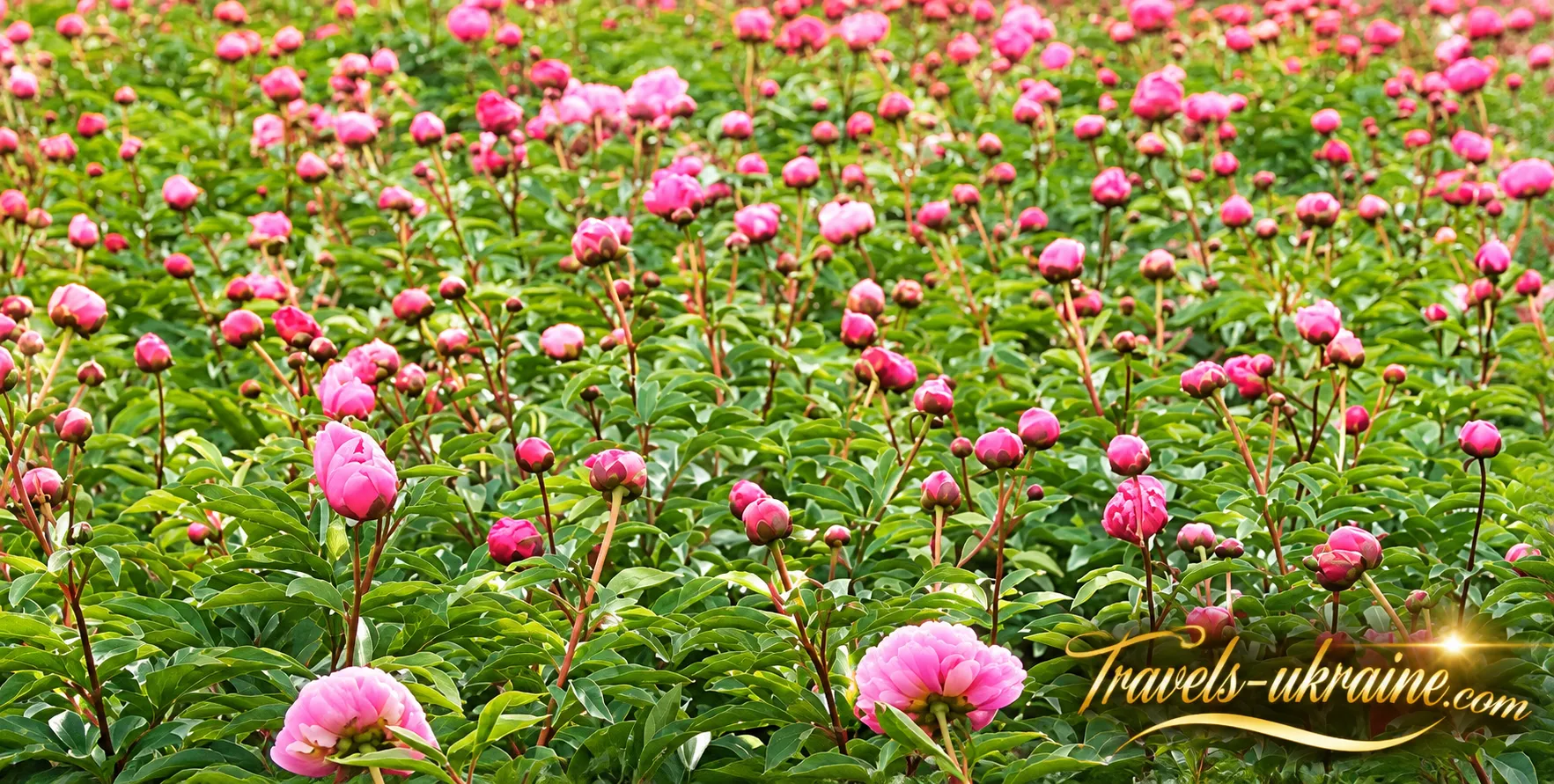
In the settlement of Hlyboka in Chernivtsi Oblast, there is a remarkable place that completely transforms the surrounding landscape in late spring. Tens of thousands of peony plants bloom simultaneously across several hectares, turning the fields into a colorful mosaic of pink, white, cream, burgundy, coral, and yellow. This is home to Peonita Farm, widely described as the largest peony field open to visitors in Ukraine.
The scale is truly impressive. According to the latest available figures, the farm is home to more than 70,000 peony plants, while the cultivated area reached approximately 5 hectares in 2026. Just one year earlier, around 150 peony varieties were being grown across four hectares. This makes the field fascinating not only for the sheer number of flowers but also for its exceptional diversity of varieties.
From a Demonstration Garden to a Tourist Attraction
Interestingly, the field was not originally created as an ornamental park or a specially designed photography location for tourists. Peonita initially developed as a flower farm and demonstration garden where visitors could observe different peony varieties under real growing conditions. Gradually, the number of plants increased, the collection expanded, and the spectacular mass blooming attracted more and more attention. What began as an ordinary agricultural site slowly transformed into a seasonal tourist attraction. Today, the farm welcomes not only gardeners and customers looking for planting material but also families, photographers, tourists, and travelers eager to witness several hectares of peonies at their most beautiful. In this way, the farming project has become an excellent example of how flower cultivation and agritourism can complement each other.
Why Are So Many Peonies Grown Here?
A large peony field is much more than a beautiful floral display. Such plantations also serve practical purposes. Peonies are cultivated for propagating varieties, producing planting material, growing cut flowers for floristry, and developing collections of rare and ornamental cultivars. The farm works with different groups of peonies, including herbaceous varieties, Itoh hybrids, tree peonies, anemone-flowered and Japanese-style forms, and other types. The official Peonita catalog now contains hundreds of listings.
This also gives the field considerable educational value. In an ordinary garden, visitors usually encounter only a handful of familiar varieties. Here, however, they can compare dozens of different flower shapes, colors, plant heights, and blooming characteristics. Some peonies produce enormous, densely layered double blossoms, while others have lighter, more delicate flowers. Certain hybrids stand out with striking coral, yellow, or unusual pastel shades.
Why Does the Peony Field Look So Spectacular?
A single peony bush can be incredibly beautiful, but the real magic happens when thousands of plants bloom together. From a distance, individual bushes merge into sweeping bands of color, while a closer look reveals just how different the varieties are from one another. This contrast between the vast scale of the field and the intricate details of individual flowers makes it an especially attractive destination for photography.
Moreover, not all peonies bloom on the same day. Early-flowering varieties open first, followed by mid-season and later-blooming cultivars. As a result, the field continually changes its appearance throughout the flowering season: some rows are already in full bloom, while others are only beginning to reveal their colorful buds.
That is why the peony field in Hlyboka is much more than just a beautiful place to take photographs. It is an extensive living collection where visitors can experience the scale of modern flower farming, discover an extraordinary diversity of peony varieties, and witness that brief moment each year when tens of thousands of flowering plants transform an agricultural field into one of Bukovyna's most spectacular seasonal attractions.

When Do Peonies Bloom and What Is the Best Time to Visit?
The peony field can only be seen in its full splendor, as captured in the most beautiful photographs, during a relatively short period each year. Peonies are among those flowers whose peak blooming season does not last very long. Therefore, choosing the right time to visit is much more important here than when planning a trip to an ordinary park or botanical garden.
In Bukovyna, the main flowering season generally falls between late May and the first half of June. However, there is no fixed date that remains the same every year. A warm spring can accelerate bud development, while cooler weather may delay flowering. Prolonged rainfall, intense heat, or sudden temperature changes can affect both the beginning and duration of the blooming season.
Even within the same field, not all plants reach full bloom simultaneously. The collection includes early, mid-season, and late-flowering varieties, so the flowering season unfolds gradually. Some peonies already display fully opened blossoms, while neighboring rows remain covered with large, unopened buds. This diversity allows the field to remain colorful and attractive for longer than it would if only one group of peonies were grown. Early varieties begin the season, followed by the main wave of mid-season flowers, while later varieties and some Itoh hybrids bring the display to a close.
How to Catch the Peony Field at Its Best
Because the flowering season is so short, the most reliable strategy is to avoid choosing a specific visiting date many months in advance based solely on the calendar. Instead, it is better to follow the latest updates from Peonita Farm toward the end of May and plan your visit once the farm announces that mass blooming has begun.
This brief flowering period is precisely what makes Ukraine's largest peony field such a special seasonal destination. Unlike a historical landmark that looks almost the same throughout the year, the peony field offers only a few weeks when visitors can experience its greatest beauty. Just a month later, those same hectares will look completely different, and anyone hoping to witness another spectacular sea of flowers will have to wait until the following spring.
Peonies in Bukovyna: What Makes This Royal Flower So Special?
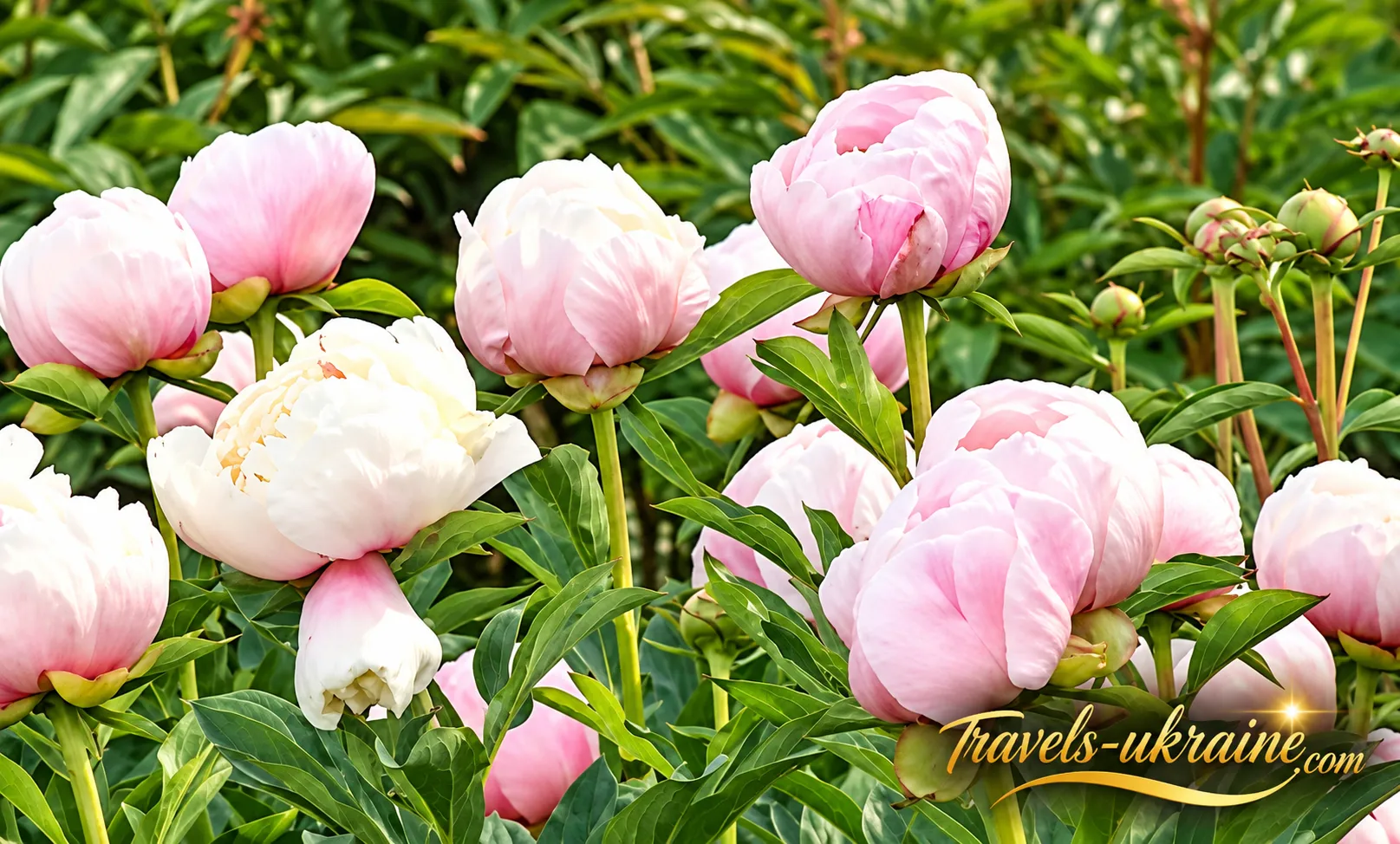
The peony is one of those flowers that is almost impossible to overlook, even among dozens of other ornamental plants. Its large buds, countless delicate petals, rich fragrance, and extraordinary variety of colors have made it one of the world's most beloved garden flowers. This is precisely why the peony field in Hlyboka leaves such a lasting impression: instead of a few familiar pink flowering bushes, visitors discover an entire collection of plants that sometimes look completely different from one another.
Peonies are admired for much more than their appearance. They are long-lived ornamental plants: a well-established bush can grow in the same location for many years, becoming increasingly lush and impressive with age. This is why mature peony plants often become true highlights of traditional gardens. Peonies are also widely cultivated as cut flowers. Their large blossoms look magnificent in bouquets, while the diversity of varieties allows florists to create everything from delicate pastel arrangements to bold, contrasting floral compositions. Another important aspect of peony cultivation is the propagation of different varieties and the sale of planting material, which has become one of Peonita Farm's main areas of activity.
Why Is the Peony Called the "King of Flowers"?
The peony's reputation as a "royal flower" has deep cultural roots. It has held a particularly important place in China, where tree peonies were highly prized at the imperial court as early as the Tang Dynasty. Their magnificent blossoms became symbols of wealth, high social standing, beauty, and prosperity, earning the flower the poetic title "King of Flowers."
This title is not a botanical classification, but it perfectly reflects the peony's cultural significance. The Smithsonian National Museum of Asian Art notes that, in Chinese tradition, the peony was known not only as the "King of Flowers" but also as the "Flower of Wealth and Honor." Even centuries later, the peony has retained its reputation as a luxurious flower, frequently featured in festive floral arrangements, wedding bouquets, and ornamental gardens.
What Are the Different Types of Peonies?
The general name "peony" encompasses a remarkable variety of species, hybrids, and cultivated varieties. They differ in height, plant structure, flowering period, color, and even petal shape. This diversity is especially noticeable in a large peony field, where visitors can compare the plants row by row.
Herbaceous peonies are the classic group most commonly found in Ukrainian gardens. Their above-ground stems and foliage die back during winter, while new growth emerges from the roots each spring. They are known for their large white, pink, red, cream, and coral-colored flowers, often accompanied by a distinctive fragrance.
Tree peonies grow differently. Their stems become woody and remain above ground throughout winter, gradually forming ornamental shrubs. They can produce exceptionally large flowers and often begin blooming earlier than herbaceous varieties.
Another distinctive group consists of Itoh peonies, also known as intersectional hybrids, developed by crossing herbaceous and tree peonies. They combine characteristics of both groups, including strong stems, attractive foliage, and remarkably large flowers. Itoh hybrids are particularly valued for their extensive color palette, ranging from white and pink to rich yellow, copper, red, and even complex multicolored shades.
From Simple Blossoms to Enormous Double Flowers
Peonies differ not only in color but also in flower structure. Their blooms may be single, semi-double, fully double, anemone-shaped, or Japanese-style. Single-flowered varieties reveal a clearly visible center with stamens, while densely double varieties contain so many petals that the blossom resembles an almost perfectly rounded ball.
Large double-flowered varieties are most often associated with the classic image of a luxurious peony. Individual blossoms can reach approximately 20 centimeters in diameter, and after rainfall, they may become so heavy that the stems of some herbaceous varieties require additional support. Alongside these magnificent blooms, the lighter Japanese-style and anemone-shaped varieties look entirely different, making a large peony collection feel anything but monotonous.
Beyond Pink: What Colors Do Peonies Come In?
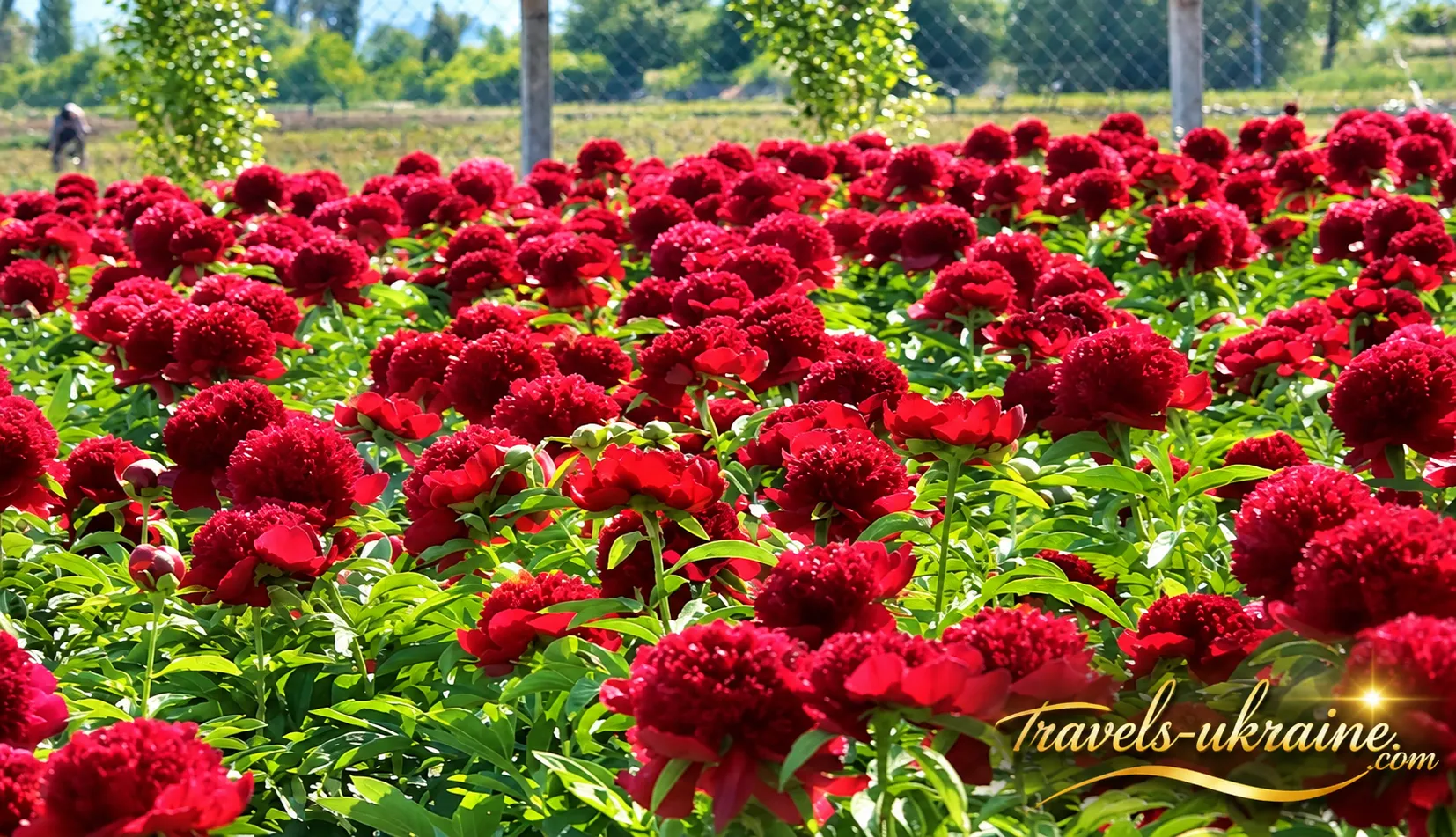
The classic peony is often associated with soft pink petals, but modern cultivated varieties offer a much broader color palette. Peonies can produce white, cream, raspberry, burgundy, coral, red, and yellow flowers, while some hybrids gradually change color as their blossoms open. Itoh hybrids are particularly fascinating, with varieties displaying golden-yellow, copper, and intricate two-tone flowers. This is why exploring a large peony field gradually becomes an experience of discovering subtle differences. Take a closer look, and what initially appears to be an endless sea of pink flowers reveals dozens of distinct shades and remarkably different floral forms.
What to See at the Peony Field in Hlyboka
The most impressive feature of the peony field is its sheer scale. A single flowering peony bush is a familiar sight in gardens and city parks, but here the flowers cover several hectares, with more than 70,000 peony plants growing across the farm. During peak blooming season, the long rows gradually merge into sweeping bands of color, transforming an ordinary agricultural field into an enormous floral canvas. The closer you get to the plants, the more noticeable the diversity of varieties becomes. Large, fully double blossoms stand beside lighter semi-double flowers, while delicate pink varieties contrast with burgundy, white, cream, coral, and yellow blooms. This combination of impressive scale and an extensive botanical collection makes the location entirely different from an ordinary peony flower bed.
Another defining feature of Peonita Farm is its remarkable collection of varieties. In previous seasons, the field featured approximately 150 peony varieties, including familiar classic forms and rare collector's cultivars. In 2026, the farm also announced an expansion of its cultivated area and the introduction of new exclusive varieties. As a result, walking through the field can be fascinating even for visitors who have never been particularly interested in flower gardening. Side by side, you can discover flowers so different in appearance that it is sometimes difficult to believe they all belong to the same ornamental plant group. Some varieties attract attention with their extraordinary number of petals, while others stand out because of their unusual flower centers, distinctive bud shapes, or colors that change as the blossoms open.
The Peony Field as a Natural Photography Location
The field looks especially spectacular during peak flowering, when many plants are already in full bloom while others remain covered with large buds. Because different varieties bloom at different times, even neighboring sections can look remarkably different, ranging from almost entirely pink landscapes to colorful combinations of white, red, coral, and yellow.
Color is one of the most striking features of the field. Visitors should not expect to see only traditional pink peonies. The collection includes plants with white, cream, raspberry, red, burgundy, coral, and yellow blossoms, while certain hybrids display complex transitional shades. However, flower color depends on more than the variety itself. The intensity of sunlight, the stage of bud development, and even the time of day can influence how the petals appear. As a result, the same field can look noticeably different in the morning, at midday, and closer to sunset.
It is hardly surprising that photography is one of the main reasons people visit the farm. Even during its earliest seasons, visitors began traveling here specifically to walk among the flowers and take photographs. This growing public interest was one of the reasons the original demonstration field developed into a tourist attraction open to visitors. Capturing beautiful photographs does not require elaborate decorations or artificial backgrounds. The long rows of flowers naturally create stunning compositions, while variations in plant height and color allow photographers to discover new perspectives just a few meters apart. The petals look particularly delicate in the soft morning or evening light, when the sun produces fewer harsh shadows.
A Fragrance That No Photograph Can Capture
Photographs can beautifully convey the scale and colors of the field, but they cannot capture another remarkable feature — the fragrance of thousands of blooming flowers. Different peony varieties have different scents, ranging from subtle, fresh notes to rich, sweet fragrances. During the peak blooming period, the aroma becomes especially noticeable between the rows, where large numbers of flowers open simultaneously. This sensory experience often comes as a pleasant surprise to visitors. In photographs, Peonita Farm appears primarily as a colorful photography destination, but being there in person reveals a much richer experience combining color, scale, flower shapes, and fragrance.
A Destination That Looks Slightly Different Every Year
Peonita Farm continues to expand its plantations. While reports from 2025 described a field covering approximately four hectares, by the 2026 season it had grown to around 5 hectares, with new varieties added to the collection. This means that even visitors who explored the field several years ago may discover a noticeably different landscape on their next visit. The number of plants changes, younger bushes mature, new varieties are introduced, and weather conditions influence the timing and intensity of flowering differently each year.
That is why the peony field in Hlyboka, Bukovyna, should be seen not as a static tourist attraction but as a living seasonal destination. Its greatest display is created not by decorators, but by tens of thousands of flowering plants — and the full spectacle can only be experienced during that brief period in spring when the peonies reach their magnificent peak bloom together.
Places to Visit Near the Peony Field in Hlyboka
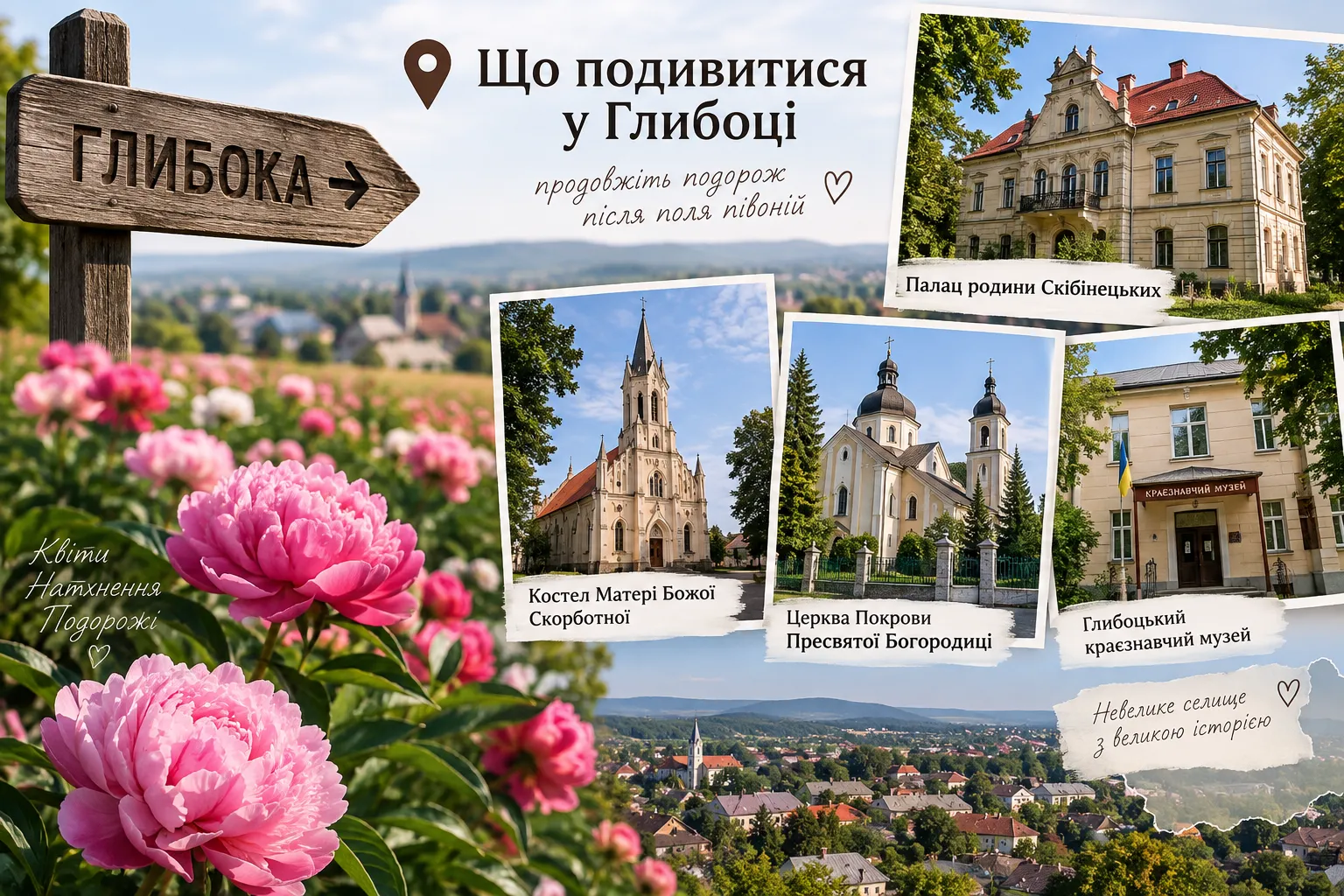
A trip to the largest peony field in Ukraine does not have to end immediately after a walk among the flowers. Hlyboka has its own historical heritage, shaped by different periods of Bukovyna's past. The center of the settlement preserves old villas, religious buildings from the early 20th century, a former noble estate, and a local history museum. Most of these attractions are located relatively close to one another, so a few additional hours are enough to explore them.
Skibinetsky Family Palace
One of the most interesting historical buildings in Hlyboka is the Skibinetsky Family Palace on Shevchenka Street. In the late 19th and early 20th centuries, the Skibinetsky family was among the town's most influential landowners, and their residence became part of the architectural landscape that developed here during the Austro-Hungarian period.
The palace has not survived entirely in its original form, as later renovations significantly altered its architecture. Nevertheless, the building still offers a glimpse into the noble residences of old Hlyboka. A park established alongside the residence has also been preserved, featuring mature trees and relict plantings.
This is not a traditional museum palace with fully restored historical interiors, so visitors should come primarily to appreciate the historic building and its parkland surroundings. As a stop on a sightseeing route after visiting the flower field, it reveals a completely different side of Hlyboka — one rooted in the historical traditions of Bukovyna rather than modern flower farming.
Church of Our Lady of Sorrows
Another notable landmark nearby is the Roman Catholic Church of Our Lady of Sorrows, built in 1906. The Skibinetsky family also played a significant role in its construction, linking the church's history directly to that of the local estate. The building is distinguished by its unusual façade featuring Neo-Gothic architectural elements. During the Soviet period, the church lost its original religious function and was used for various administrative and practical purposes. However, in the early 1990s, it was returned to the Roman Catholic community.
Today, the church is recognized as an architectural monument of local significance and remains one of the most distinctive reminders of Hlyboka's multicultural past. It is particularly interesting that within a relatively small area of the settlement, visitors can discover architectural heritage representing different Christian traditions of Bukovyna.
Church of the Intercession of the Holy Mother of God
Another important religious landmark in Hlyboka is the Church of the Intercession of the Holy Mother of God. Its construction took place between 1906 and 1909, almost simultaneously with the establishment of the Roman Catholic church. Together with its bell tower, the church is included in the register of architectural monuments of Chernivtsi Oblast.
The proximity of these religious landmarks beautifully reflects the historical character of Bukovyna — a region where different ethnic and religious communities lived alongside one another for centuries. As a result, even a short walk through central Hlyboka can reveal much more than visitors might expect from their first impression of the settlement.
Hlyboka Local History Museum
If you would like to learn more about the region after exploring the flower field, consider visiting the Hlyboka District Local History Museum. Its collections and exhibitions feature historical objects, documents, and materials connected with the history of Hlyboka and the surrounding settlements. The museum serves not only as a place for preserving artifacts but also as a venue for thematic exhibitions, local history events, and community meetings. It is an excellent option for travelers who want to complement the colorful experience of visiting the peony field with a little history and gain a deeper understanding of the multicultural heritage of this part of Bukovyna.
Frequently Asked Questions About Ukraine's Largest Peony Field
Where is the largest peony field in Ukraine located?
The largest peony field in Ukraine is located in the settlement of Hlyboka, Chernivtsi Oblast, in the Bukovyna region. Peonita Farm can be found at 62 Pershotravneva Street.
When do peonies bloom in Hlyboka?
The main peony blooming season in Bukovyna usually falls between late May and the first half of June. The exact flowering dates vary each year depending on temperatures, rainfall, and overall spring weather conditions.
What is the best time to visit the peony field?
The field looks most spectacular during peak blooming season, when a large proportion of early and mid-season peony varieties are flowering simultaneously. Before visiting, it is best to check Peonita Farm's latest updates on flowering conditions rather than relying solely on a specific calendar date.
How long does the peony blooming season last?
The most spectacular flowering period lasts only a few weeks. Because the farm grows early, mid-season, and late-blooming varieties, the overall flowering season extends over a longer period. However, the field's appearance gradually changes as some peonies finish blooming while others are just beginning to open.
How many peonies grow in the field in Hlyboka?
According to the latest available figures, the plantations cover approximately 5 hectares and contain more than 70,000 peony plants. This impressive scale is why Peonita Farm is described as the largest peony field of its kind in Ukraine.
How many peony varieties can you see at Peonita Farm?
The field features approximately 150 peony varieties, with the collection gradually expanding. Visitors can discover herbaceous peonies, tree peonies, and Itoh hybrids, as well as different flower forms ranging from single and semi-double to fully double, Japanese-style, and anemone-shaped blossoms.
Is the peony field open all year round?
No. Although Peonita Farm operates as an agricultural business throughout the year, tourist visits to the blooming peony field are seasonal. Visitors hoping to see the spectacular mass flowering should plan their trip for late spring or early summer, when the farm announces the opening of its visitor season.
Can you take photographs at the peony field?
The field is widely known as one of Bukovyna's most beautiful seasonal photography locations, making photography one of the main reasons people visit. However, rules for professional photo shoots and access to the planted areas may change, so visitors should check the farm's current photography policies before the season begins.
How do you get to the peony field from Chernivtsi?
From Chernivtsi, travel to the settlement of Hlyboka. The drive usually takes around 35–40 minutes, depending on traffic conditions. You can also reach Hlyboka by public transportation and complete the final part of the journey on foot or using local transport.
What attractions can you visit near the peony field in Hlyboka?
In Hlyboka itself, visitors can explore the Skibinetsky Family Palace, the Roman Catholic Church of Our Lady of Sorrows, the Church of the Intercession of the Holy Mother of God, and the local history museum. Thanks to the short distances between these attractions, they can easily be combined with a visit to the peony field during a single-day trip.
Ukraine's Peony Field — A Few Weeks of Floral Magic
Ukraine's largest peony field is the kind of tourist destination whose appeal lies not only in its impressive scale but also in the fleeting nature of its beauty. Approximately five hectares of cultivated land, tens of thousands of peony plants, and an extensive collection of varieties transform the surroundings of Hlyboka into a magnificent sea of flowers for just a few weeks each year. Visitors come here not for an elaborate sightseeing program or a wide range of entertainment activities. The main attraction unfolds right before their eyes, as thousands of peonies enter their brief flowering season together, displaying an extraordinary variety of colors, shapes, and fragrances. That is why a walk through the field is remembered not for any particular photography installation but for the sheer scale of the living floral collection itself.
The peony's cultural significance adds another fascinating dimension to this destination. A flower that has been celebrated in Chinese culture for centuries as the "King of Flowers" and associated with wealth, beauty, and high social status can be admired here not as a single garden plant but in thousands of different specimens. Double, single, Japanese-style, anemone-shaped, herbaceous, and Itoh peonies offer an entirely new perspective on this familiar flower. At the same time, the field serves as a reminder of how important it is to choose the right time for a visit. Just a few weeks after peak flowering, the colorful rows gradually fade, and the tourist attraction returns to its everyday life as a working flower farm. For this reason, it is better to plan a trip according to the actual flowering conditions of the particular season rather than relying on a fixed calendar date.
Another advantage is the field's proximity to Chernivtsi and the opportunity to combine a visit with a walk through Hlyboka and other interesting tourist attractions in Bukovyna. This kind of trip does not require several days or complicated preparations. All you need is to choose the right moment, set aside a few hours, and allow yourself to enjoy a leisurely walk among the flowers.
And perhaps this simplicity is the main reason behind Peonita Farm's popularity. There are no mysterious legends or monumental architectural masterpieces here — only the land, tens of thousands of plants, and a brief period when they burst into bloom together. But sometimes, that is more than enough to create an unforgettable travel experience.





No Comment
You can post first response comment.