
 English
 Українська
 Български
 Hrvatski
 Čeština
 Dansk
Dansk Nederlands
 Eesti
Eesti Suomi
Suomi Français
 Deutsch
 Ελληνικα
 Magyar
 Íslenska
 Italiano
 Latviešu
 Lietuvos
 Polski
 Português
 Română
 Русский
 Српски
 Slovenčina
 Slovenščina
 Español
 Svenska
 Türkçe
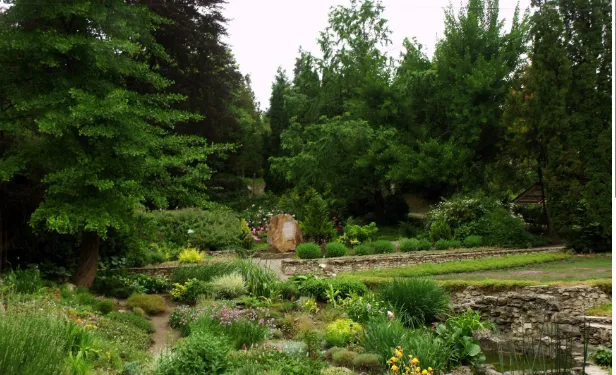
Kremenets Botanical Garden is a landmark of landscape and garden art and a research institution, where serious science peacefully coexists with the hush of tree-lined alleys. Its status as a botanical garden of national importance in Ukraine isn’t felt in official plaques, but in every leaf and the shade of old trees, in its unique plants and thoughtful landscape design.
Among the many tourist spots in the area, the Kremenets botanical garden stands out for its special atmosphere of calm and harmony. It’s not just a typical botanical institution in the usual sense, but a unique and scenic complex of the city, where even a short walk in nature unexpectedly turns into a proper rest — without rushing and without the “just five more minutes” plans.
Travellers, families with children, photographers, and fans of green escapes will all feel equally at home here. A walk through the botanical garden lets you catch nature’s rhythm, enjoy the views, and see Kremenets’ unique plants without crowds, queues, or the need to hunt for the perfect angle — here, it finds you.
If you’re planning a trip around Ternopil region and wondering what to see in Kremenets, or simply looking for a place where nature doesn’t hurry, this botanical garden will be a logical, meaningful, and wonderfully pleasant stop on your route. So go on — pack your bags and set off for new horizons of adventures and impressions, because the best journeys don’t start at a far-off border, but with the decision to finally leave home. Don’t put it off: nature is already waiting, and Kremenets knows how to surprise.
The history of Kremenets Botanical Garden
Kremenets Botanical Garden has a respectable age and an excellent memory: it was founded back in 1754 as an apothecary garden at the Jesuit Collegium. Back then, plants didn’t grow here for beauty or selfies, but for a very practical purpose — to heal, to save, and to prove that nature knows a thing or two about medicine.
In 1805, the garden changed its status and became the botanical garden of the Volhynian Gymnasium. Its first director was František Šeidt — a person who clearly loved order in flowerbeds and system in science. From that moment, the botanical garden began to develop not chaotically, but according to a well-thought-out programme, where each plant knew its place (and perhaps even felt proud of it).
The idea of large-scale development for the botanical garden was proposed by the director of the Higher Volhynian Gymnasium, Tadeusz Czacki — someone who looked at plants strategically and understood that greenery can be not only beautiful, but scientifically useful too. Thanks to this idea, the garden stopped being just a “well-kept plot” and started turning into a serious scientific base.
➤ In 1806, the territory was partly redesigned by the Irish gardener Dionysius Mikler (also known as Makler). He added a touch of European charm and proved that the Irish know greenery no worse than local soils. On an area of about 4.5 hectares, there were then 460 species of local plants and 760 brought in from different corners of the world — real botanical cosmopolitanism long before the word existed.
The garden’s research base also enjoyed solid financial support: among its patrons were certain members of the tsar’s family and the government of the Russian Empire, who willingly sponsored the purchase of collection plants. Clearly, even in high offices they understood: investing in botany is always an investment in the future — even if that future is green and quiet.
➤ From 1809, the botanical garden experienced a true green boom. Thanks to the garden’s director, Professor Wilibald Besser, the number of trees and shrubs grew to an impressive 12,000 specimens. This was the moment when plants in Kremenets began appearing faster than new terms in botanical textbooks, and the garden confidently became one of the most respected botanical locations.
Especially valuable was the fact that a significant part of this green collection consisted of rare and very rare species. Some of them at that time could be seen only in European botanical gardens or on the pages of scientific publications — and certainly not on an ordinary stroll through town. Kremenets Botanical Garden was confidently gathering the “green elite”, inviting it to receptions.
➤ In 1811, the first catalogue of the garden’s plants was printed — a kind of botanical bestseller of its day. Among the listed species were real stars: sweet chestnut, fig, and even the tulip tree, along with many other plants. Today these names sound exotic, but at the beginning of the 19th century they looked downright fantastic — living, green, and entirely real. Thanks to such diversity, Kremenets Botanical Garden finally cemented its reputation as a place where plants travelled the world before people did, and where botany was not only a matter of science, but also a great passion.
However, the history of Kremenets Botanical Garden includes not only pages of rapid development, but also moments of forced pauses. In 1832 the garden was closed — a decision dry in wording, but loud in consequences. For the plants, it meant not an end, but rather the beginning of an unexpected relocation.
➤ During 1832–1834, the most valuable plant species were transported to Kyiv, to the garden of St Volodymyr University. Today this green heir is known as the Academician Oleksandr Fomin Botanical Garden. This is how Kremenets plants became a kind of botanical travellers, leaving their native hills while preserving their scientific and cultural value.
Some might say that was the end of the story, but in fact it was only a new chapter. The plants from Kremenets didn’t disappear — they continued their life and development in the capital, reminding us that even in the 19th century, relocations weren’t just a human affair. Some trees then saw more roads than the average resident of the empire.
This period became a pause rather than a finale, and it later helped to rethink the role of the botanical garden as an important natural and scientific centre that deserves a new life.
Kremenets Botanical Garden: today
Today, the Botanical Garden in Kremenets is an example of how history, science, and nature can successfully coexist in the modern rhythm of life. After all the trials and pauses of past centuries, the garden has not only preserved its essence, but has also become a living green system, where every tree has its own biography and every alley has a personality.
Nowadays, the botanical garden plays several roles at once: a research institution, a conservation hub, and a comfortable green space. Here they care for plant collections, run guided tours, teach schoolchildren and students, and at the same time allow visitors to simply stroll, breathe slowly, and not rush — a luxury that today is valued no less than exotic plant species.
The garden has organically fitted into modern Kremenets tourism, becoming an important part of domestic and eco-tourism in Ternopil region. People come here not to tick a box on a “natural landmarks” list, but for the feeling of contact with living nature — nature that doesn’t shout about its beauty, but calmly shows it.
Kremenets Botanical Garden today is a place where the past doesn’t gather dust in archives, the present doesn’t hurry, and the future grows slowly but surely. And, pleasantly, without any deadlines.
Behind the scenes of history: why Kremenets Botanical Garden was really closed
Once you start getting to know Kremenets Botanical Garden, the feeling shifts quickly: instead of pure admiration, intrigue appears. How did it happen that a successful and widely known scientific centre — where the botanical garden not only existed, but actively developed — suddenly found itself under threat of disappearing? Who, and why, hit the brakes just as this green machine of knowledge was picking up speed? And most importantly — were the reasons really botanical, or should we look for answers much deeper, beyond the alleys and flowerbeds?
The answer begins to take shape as soon as we step beyond botany and look into the political context of the era. At the beginning of the 19th century, the town of Kremenets was not just a settlement with a garden and a gymnasium — it was an active educational and intellectual centre, where ideas spread no slower than new plants in the collections.
It was here, among teachers and students, that a community formed which did not stand aside during the uprising of 1830–1831. Members of Kremenets’ educational circles took an active part in it — some openly, some indirectly — but it was enough for the town to end up on the list of “unreliable”. In moments like these, imperial authority didn’t differentiate between lecture halls, libraries, or botanical gardens — responsibility was collective.
That is why what followed looks less like a coincidence and more like a logical chain. The closure of educational institutions, the liquidation of research centres, and the removal of valuable collections became a silent, yet very tangible, form of payback for political activity. The botanical garden of Kremenets ended up in this process not as the culprit, but as a hostage to circumstances. So the liquidation of the green space was not the result of decline or a loss of scientific value, but rather a cold administrative decision. The garden was closed not because it was weak, but because it was part of a living intellectual environment that dared to think and act. In this story the plants were silent — but decisions were made for reasons that had nothing to do with them.
At the same time, a new university was actively taking shape in Kyiv, and it urgently needed ready-made scientific resources. Kremenets Botanical Garden had what the new institution lacked: well-established collections, rare plant species, and years of scientific experience. Accordingly, during 1832–1834, the most valuable plants were systematically transported to Kyiv. There they became the foundation of the university botanical garden, known today as the Academician Oleksandr Fomin Botanical Garden. In effect, this was not a “rescue”, but a redistribution of scientific capital in favour of the new imperial centre.
The irony is that Kremenets plants set off on a long journey not because the garden was weak, but, on the contrary, because it was exceptionally valuable. Some of these “green emigrants” still grow in Kyiv today, continuing a story that began among the hills of Kremenets.
Landscape features of Kremenets Botanical Garden
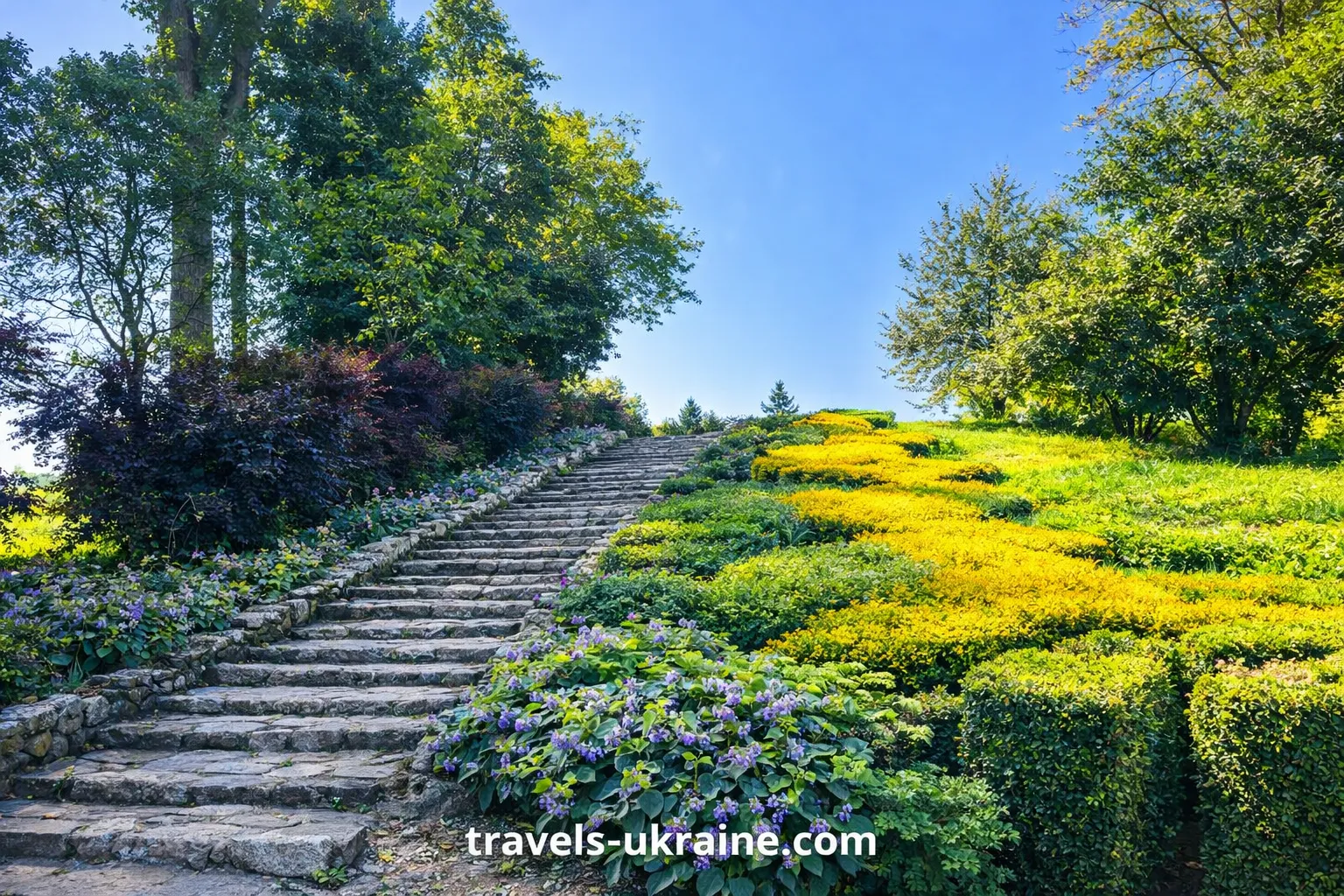
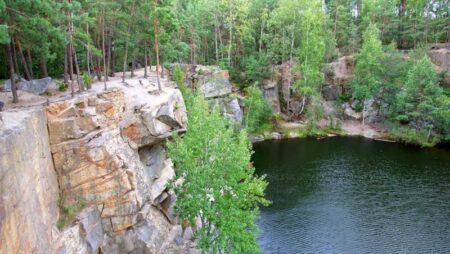
Kremenets Botanical Garden stands out not only for its history, but also for its unique natural setting. It lies within the hilly landscape of the Kremenets area, where the terrain itself works as a natural designer. Here the hills don’t get in the way of a walk — quite the opposite: they create a sense of space, depth, and unexpected panoramas.
The complex terrain is one of the main features of the Kremenets botanical garden. Plants here don’t grow “by the ruler”, but in harmony with natural slopes, terraces, and changes in elevation. Thanks to this, the garden looks less like an artificially created park and more like a natural continuation of the surrounding landscape — as if it has always been here.
Kremenets arboretum and floral diversity
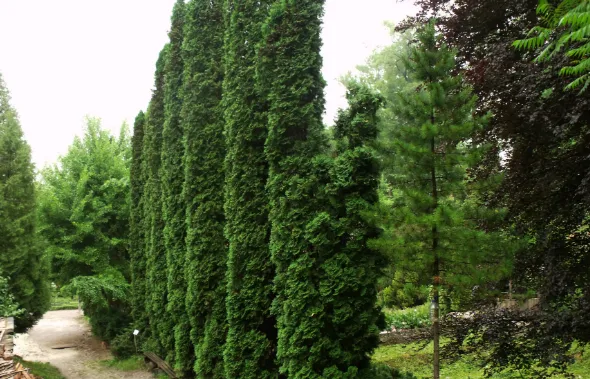
An important part of the garden is the Kremenets arboretum, which brings together collections of trees and shrubs from different natural zones. Native species and introduced plants coexist side by side, creating a kind of botanical dialogue between continents. For visitors it looks simple: lots of greenery, shade, and calm. For specialists, it’s an example of a successful blend of biology and landscape thinking.
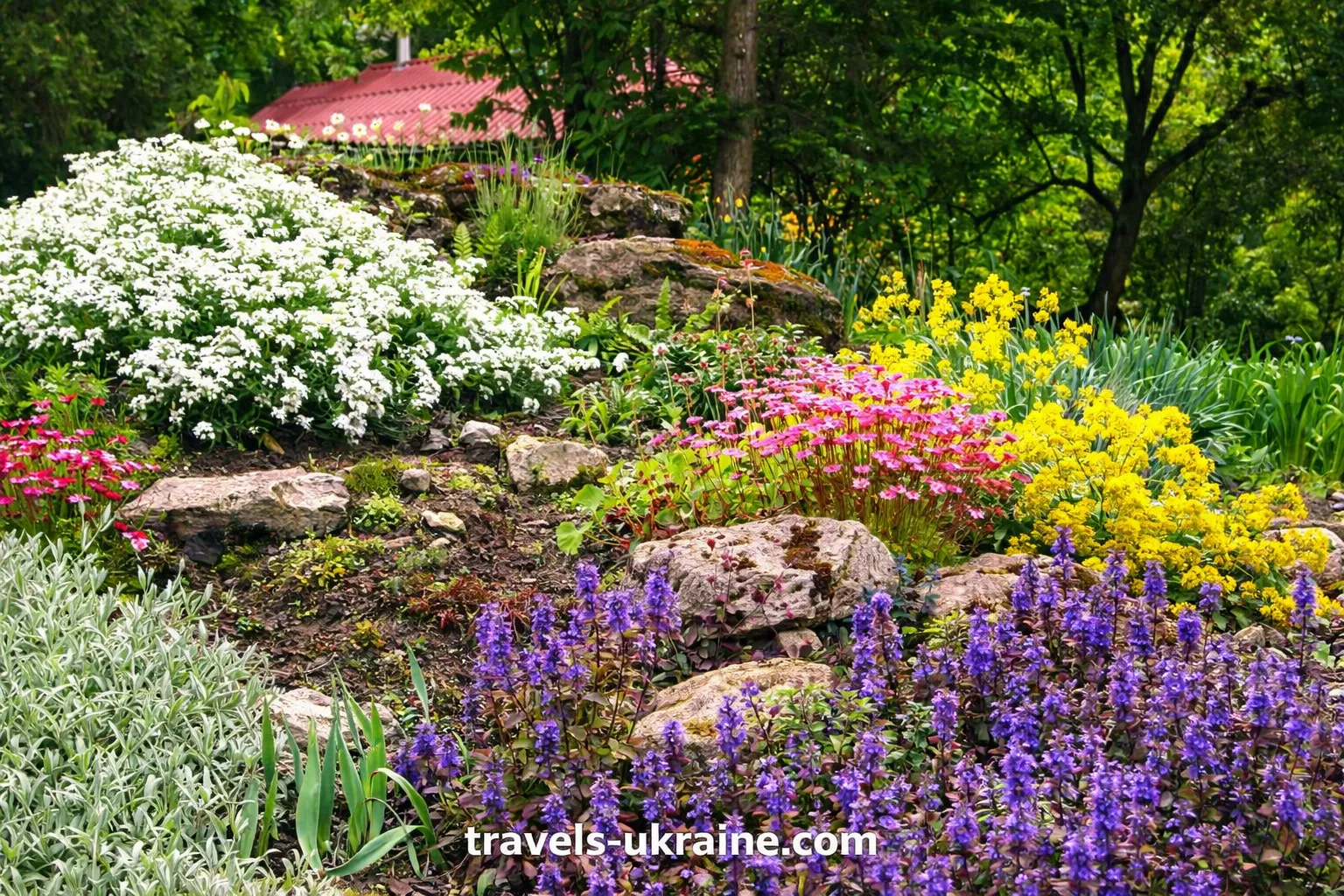
The flora of Kremenets Botanical Garden creates different natural zones within a single area: from open clearings to shaded sections with a more humid microclimate. This is exactly why ornamental, rare, and medicinal plants thrive here — including species listed in the Red Data Book.
A picturesque botanical complex of the city
In the end, Kremenets’ botanical hub is not just a collection of plants, but a picturesque botanical complex of the city, where every turn of the path changes the scene. It’s easy to lose track of time here, because the landscape works better than any anti-stress remedy: step by step, hill by hill, your thoughts slowly become lighter.
These natural and landscape features are exactly what make the Kremenets botanical garden a favourite place for walks and a peaceful nature break, where beauty doesn’t shout — it quietly convinces.
Photo and video gallery
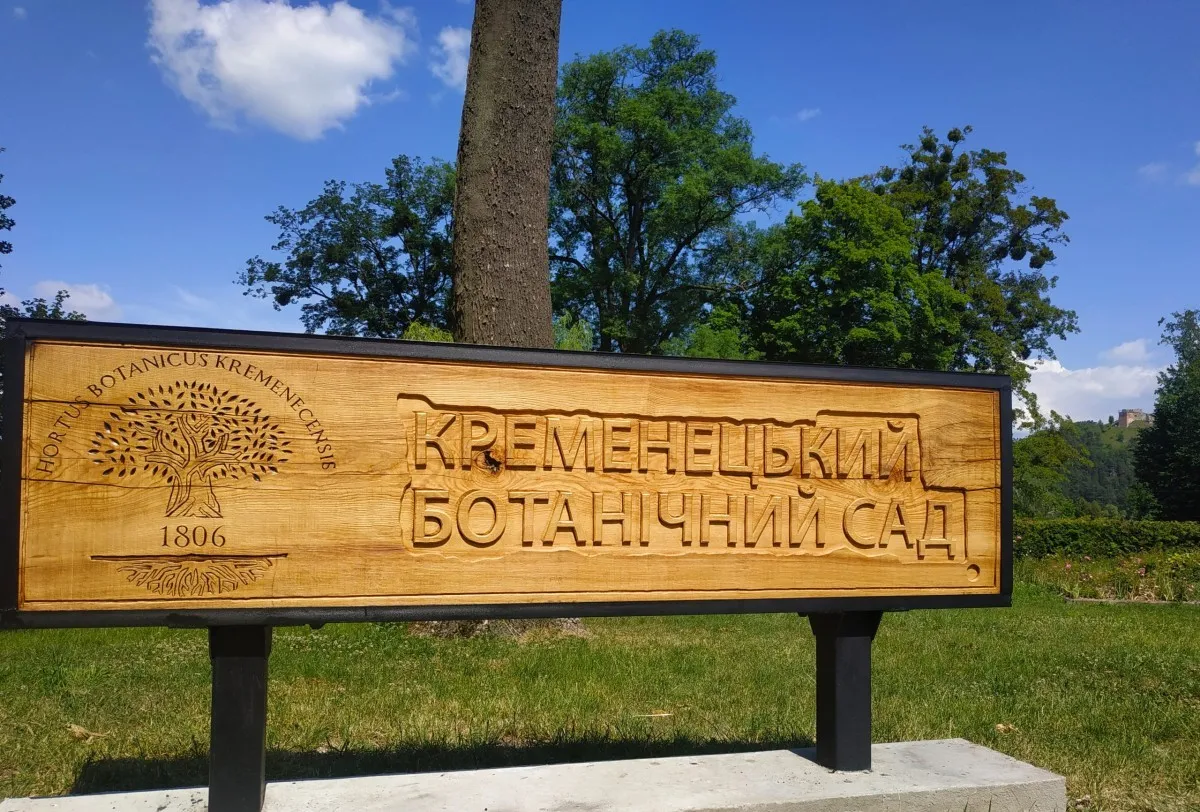
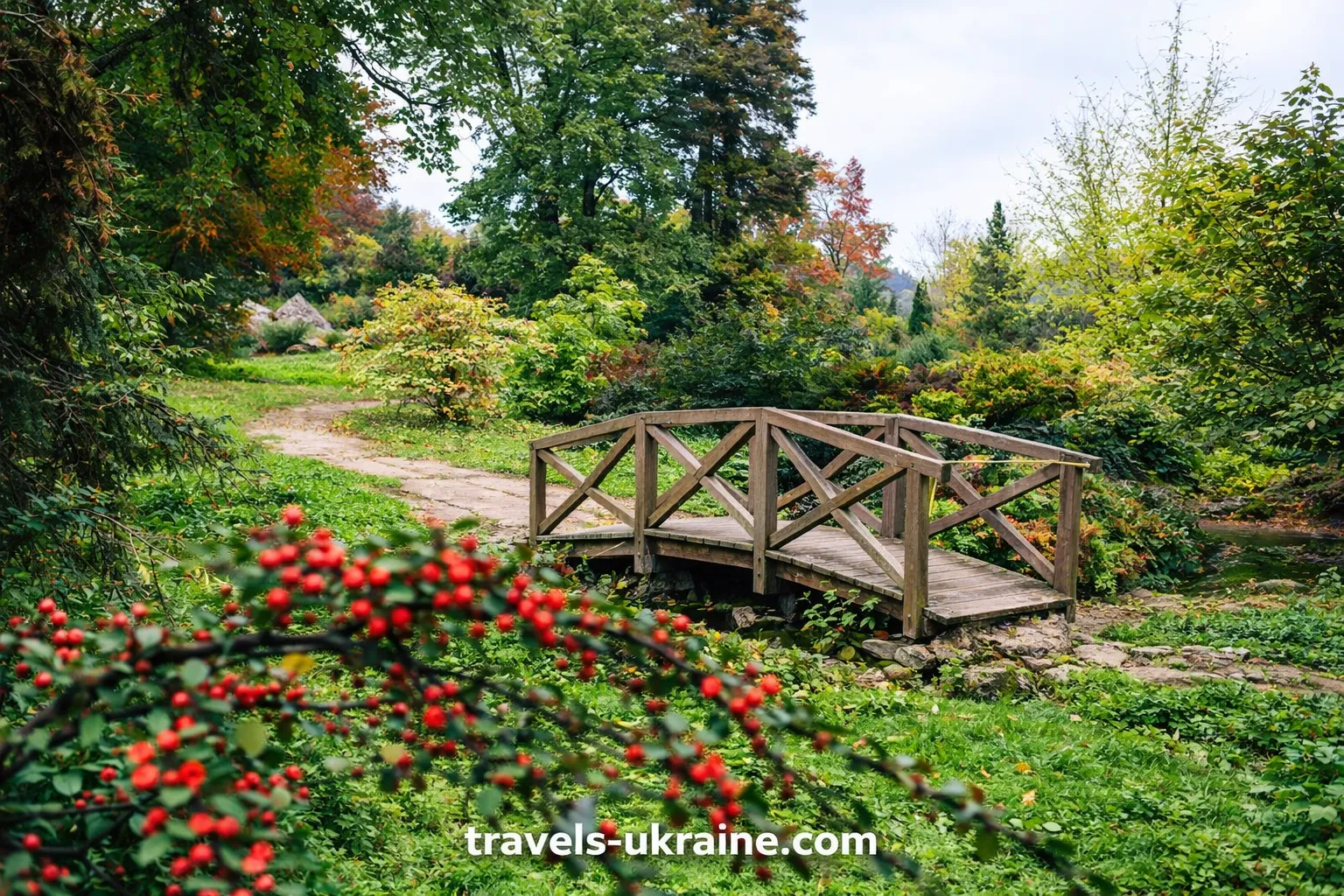
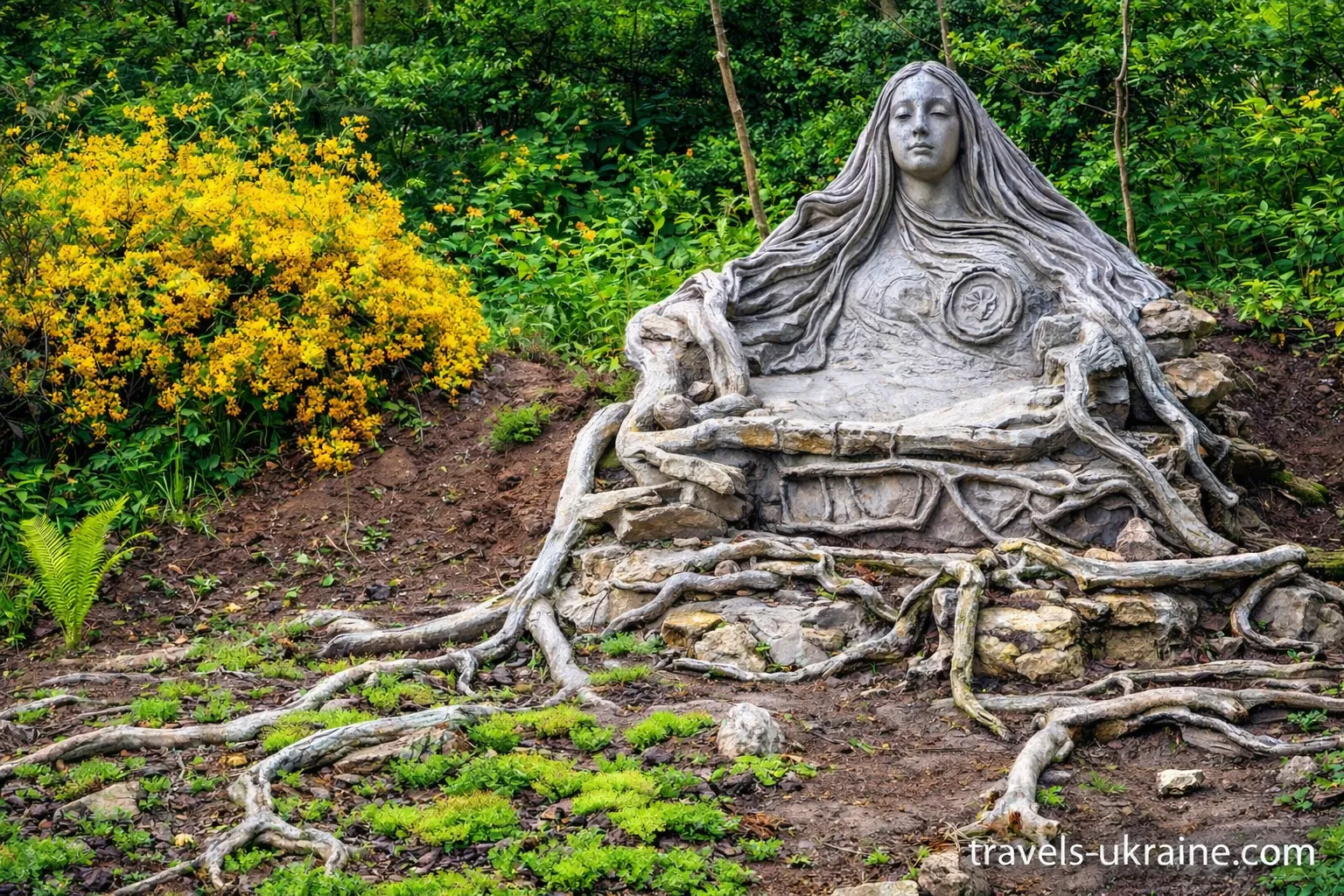
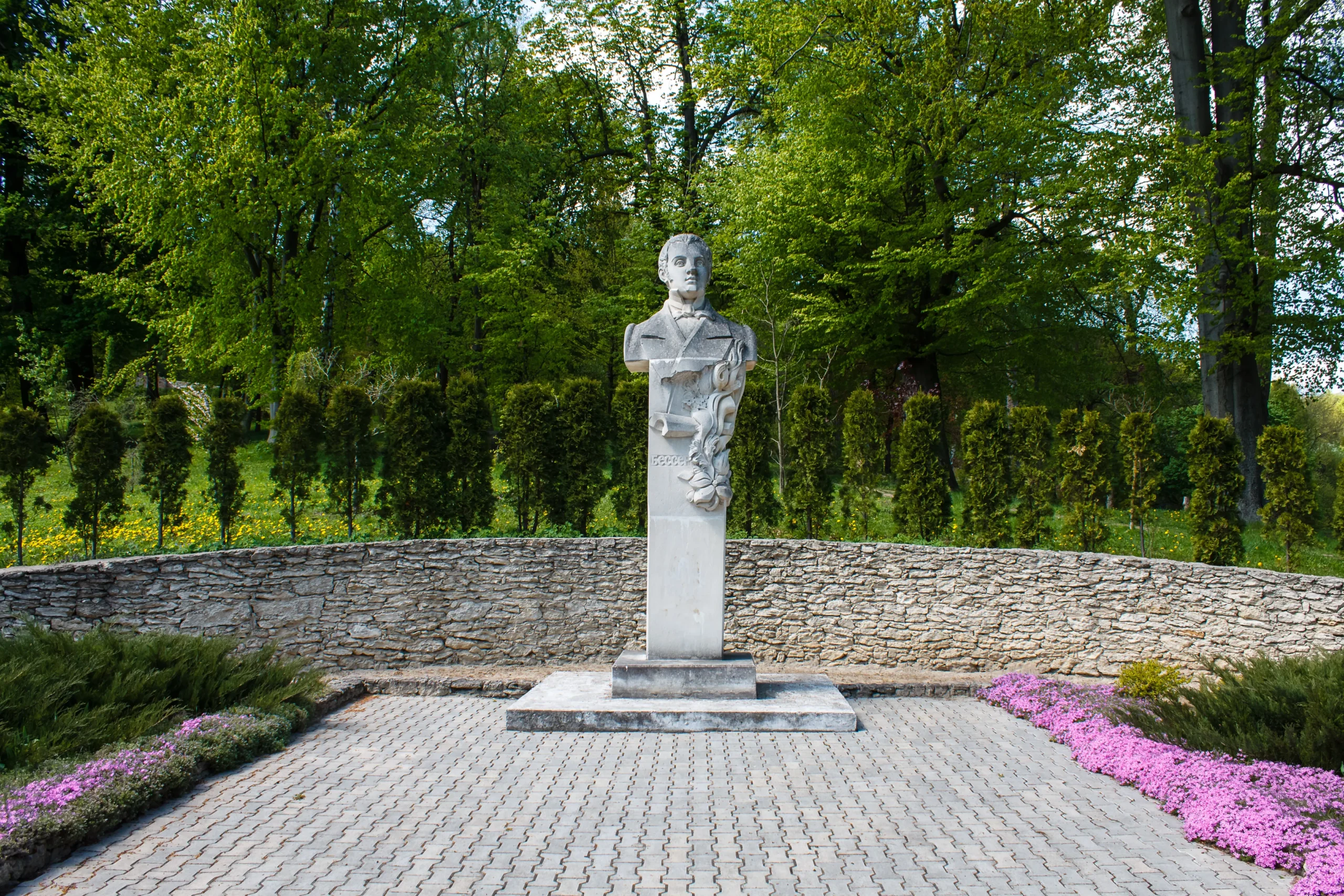
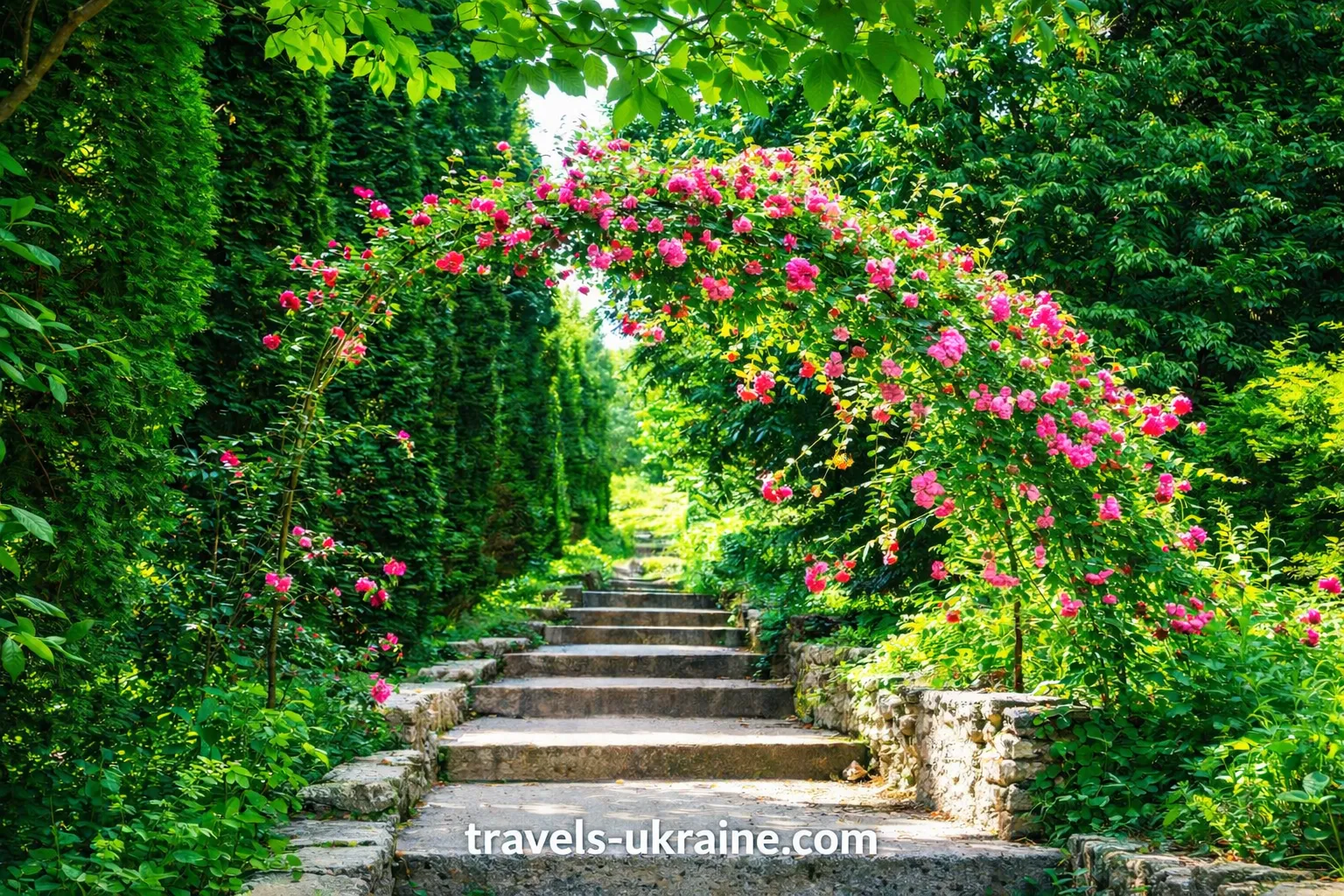

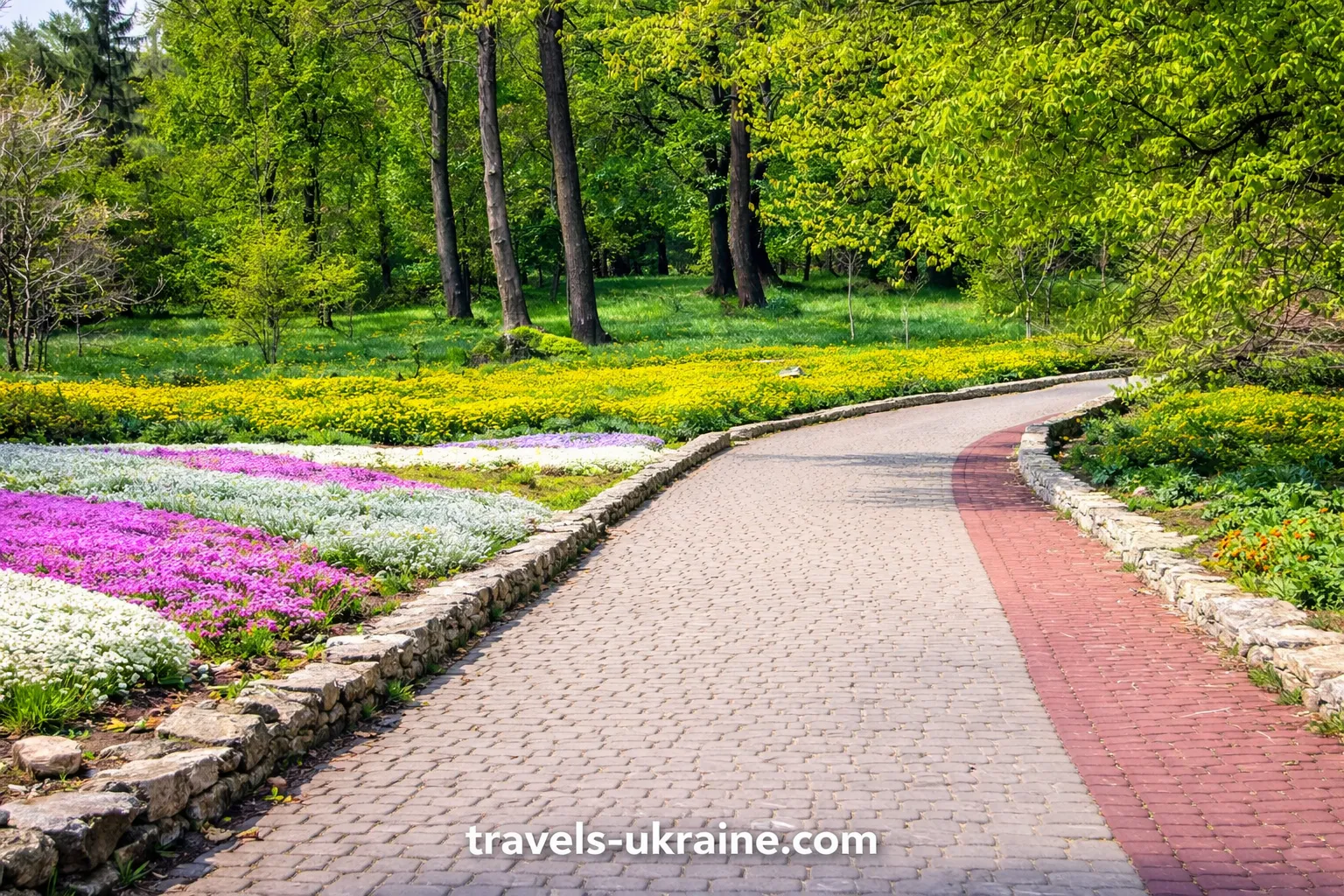
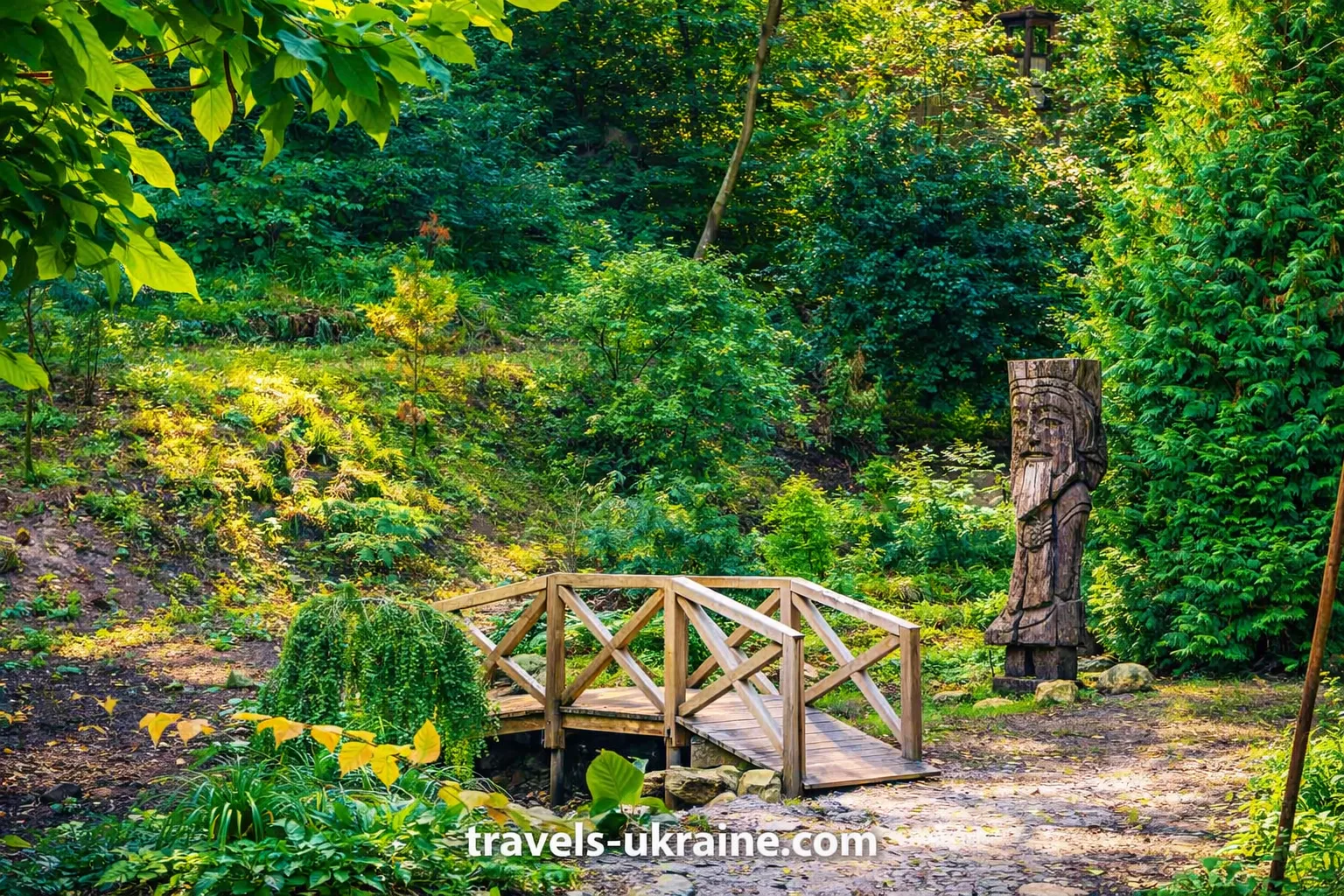
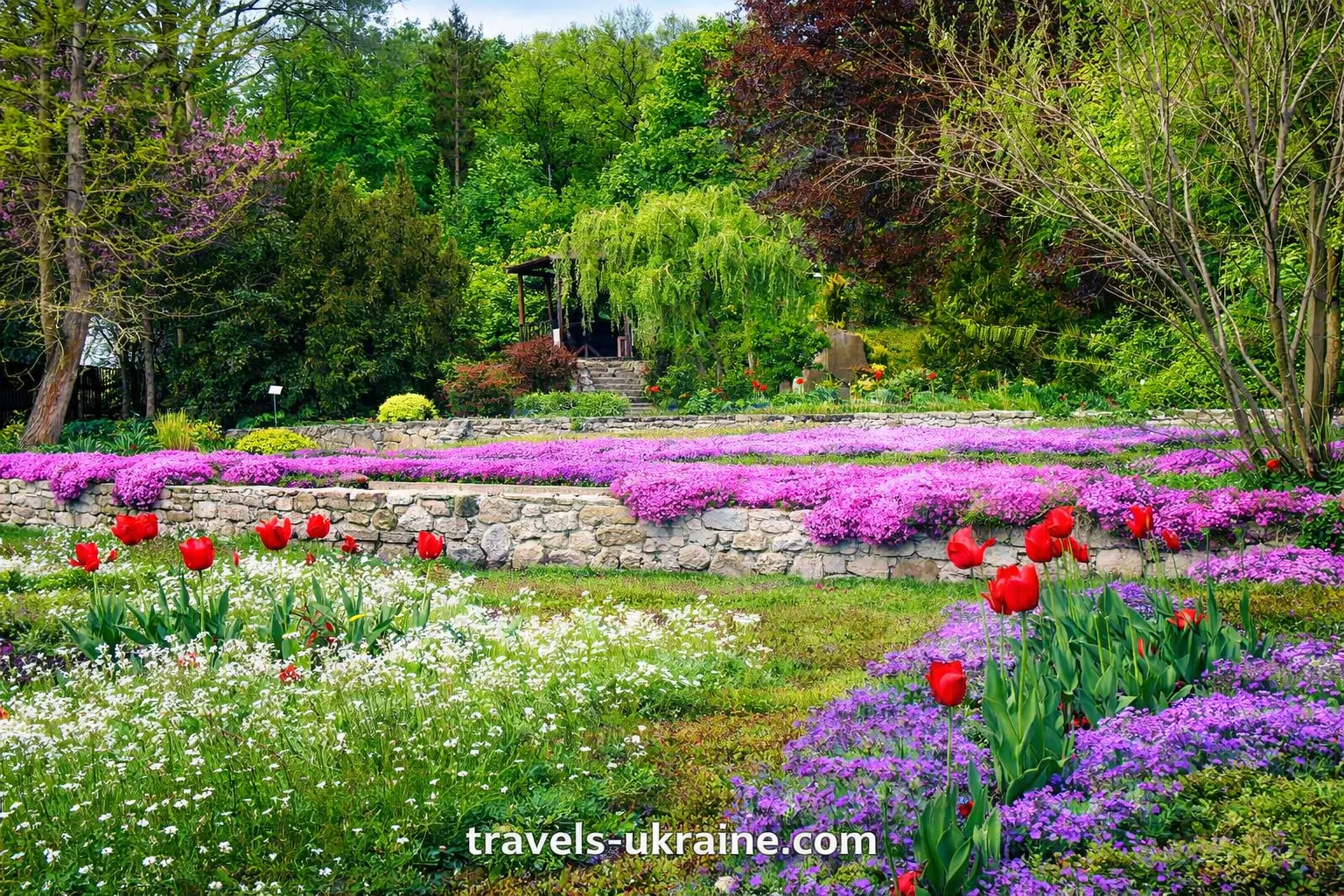
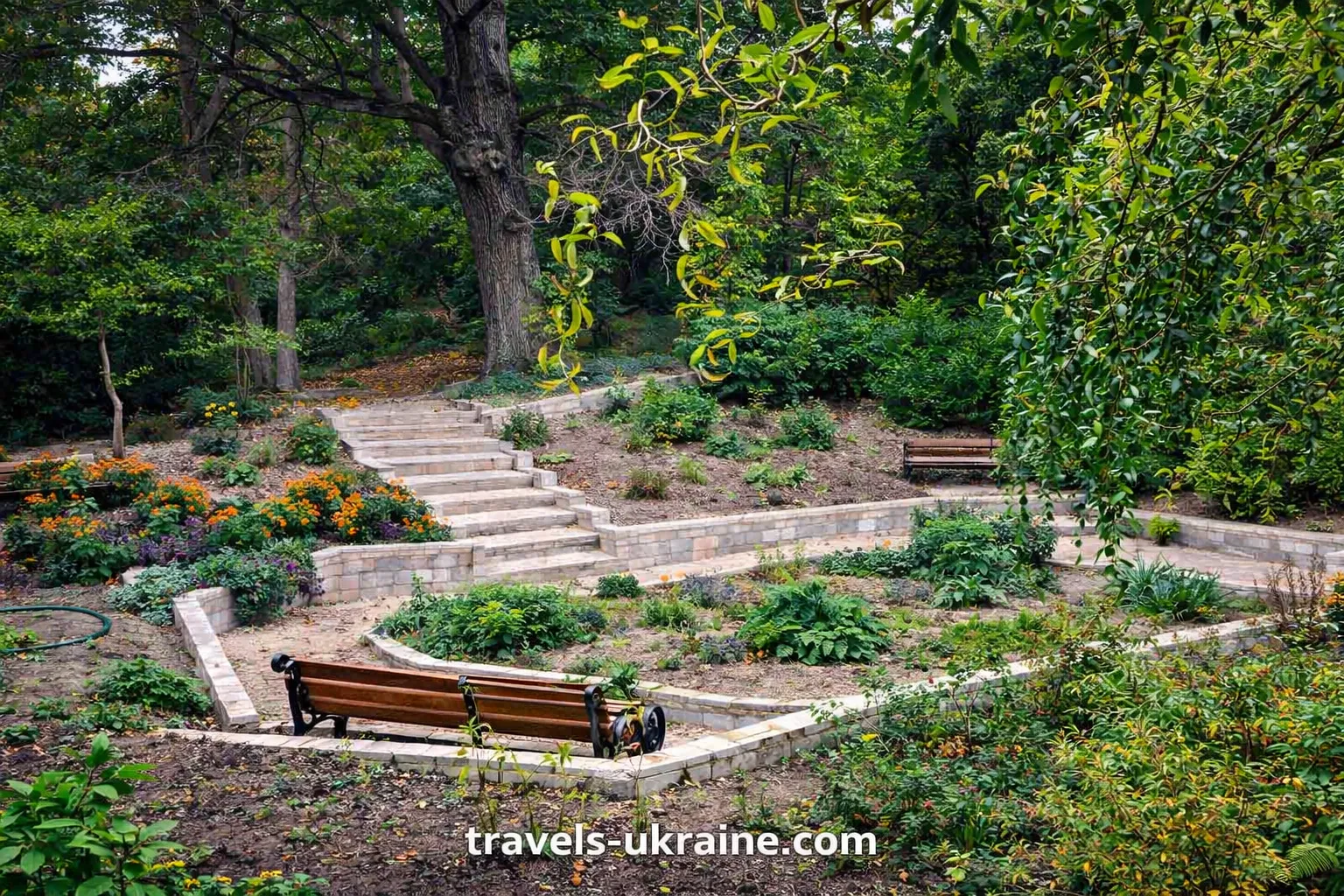
Kremenets Botanical Garden — a quick guide for travellers
The botanical garden of the Kremenets area is a conservation and research location that also serves as a comfortable green recreational space for the city. It combines the functions of a botanical institution, a leisure area, and a tourist attraction, accessible to visitors of all ages.
Accordingly, the location belongs to the sphere of landscape and garden art and is part of Ternopil region’s protected natural reserve fund. Visits are possible both as an independent walk and as an excursion visit — educational or informative in format.
p>The botanical garden’s routes do not require special physical preparation. At the same time, because of the hilly terrain, it’s worth keeping in mind the moderate climbs and descents, for those to whom it matters. Walking routes through the park suit adults, children, and older travellers, as long as you choose comfortable shoes and don’t rush.Visit duration and visiting budget
The optimal time for a visit is 1 to 2 hours. That’s enough to stroll slowly along the alleys and park areas, see the main plant collections, and stop for photo breaks. Still, the Kremenets botanical garden has a habit of “holding you back” — many people spend far more time here than they planned.
Visiting the Kremenets botanical garden is usually affordable, which makes it an attractive option for domestic tourism and family trips, or simply a place that can offer a lovely nature break. Additional costs arise only if you book a guided tour of the park or a themed event.
Thanks to its combination of affordability, natural value, and an easy-going visit format, the Kremenets botanical garden is a universal spot — both for a short stop on a journey and for a separate, peaceful day in nature.
Guided tours and educational events
Although Kremenets’ botanical institution isn’t associated with loud festivals or mass shows, its event life has a completely different character — calm, meaningful, and informative. Events aren’t announced from a stage here, but they take place regularly and have their own loyal audience. The basis of its activities is Kremenets Botanical Garden tours, held for schoolchildren, students, tourist groups, and families. Such guided visits combine a walk with a live explanation, allowing you to see not just plants, but their story, origin, and role in natural ecosystems.
As a botanical institution, the garden actively engages in educational outreach. It hosts educational tours and themed classes in botany, ecology, and nature conservation. For participants, it’s a chance to learn not from textbooks, but right among living nature.
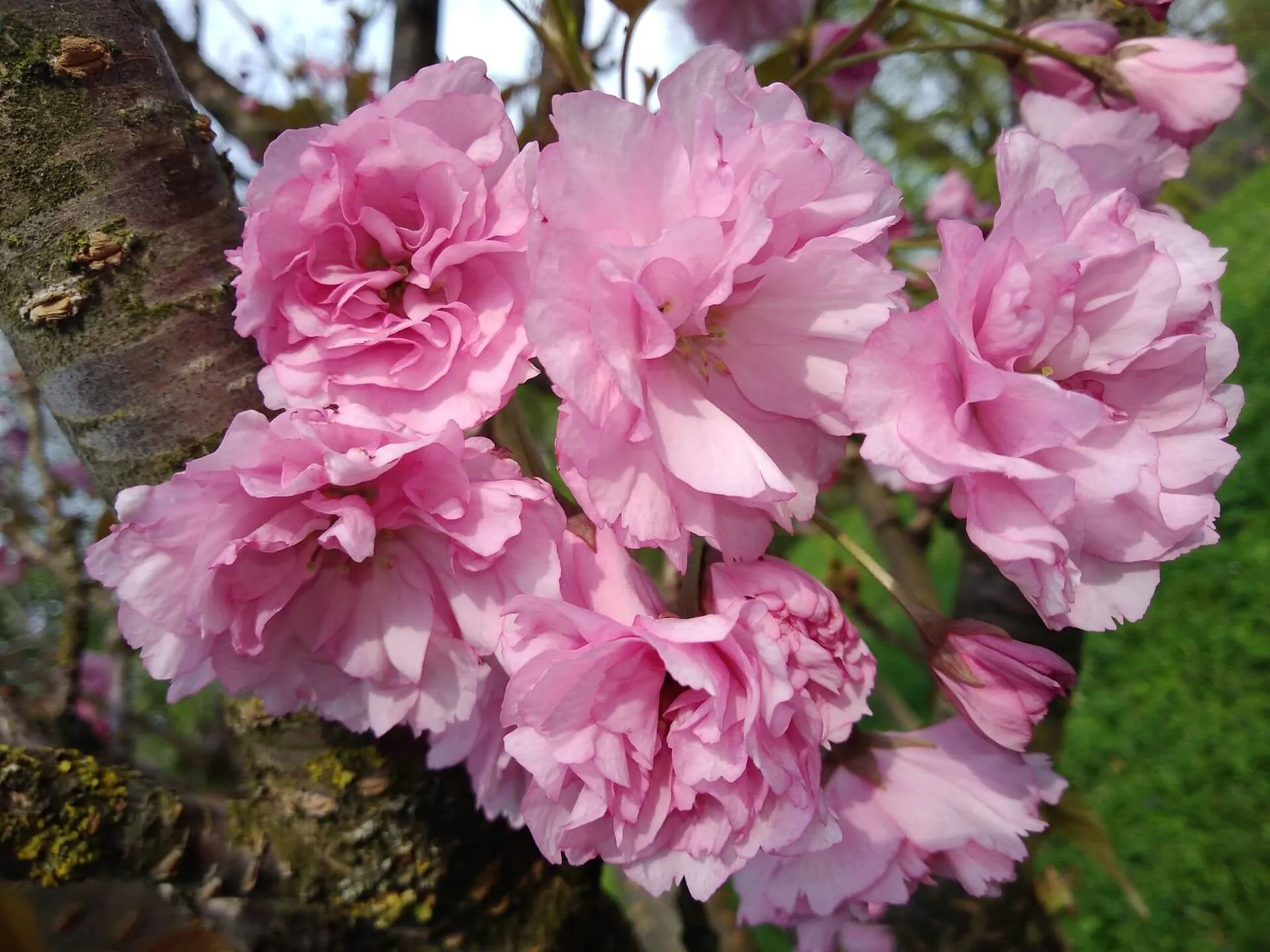
Seasonal periods deserve special attention, when the plants of Kremenets Botanical Garden change their look. Spring with its blossom, summer with its dense greenery, and autumn with warm colours become natural “events” that attract lovers of photo walks in the botanical garden and quiet relaxation.
What to see and what to do in Kremenets Botanical Garden
Kremenets Botanical Garden is exactly the kind of place where “just going for a walk” turns out to be a full plan for the day — or even a planned tourist route. You don’t need to look for special entertainment here: the best bits happen naturally, without a script.
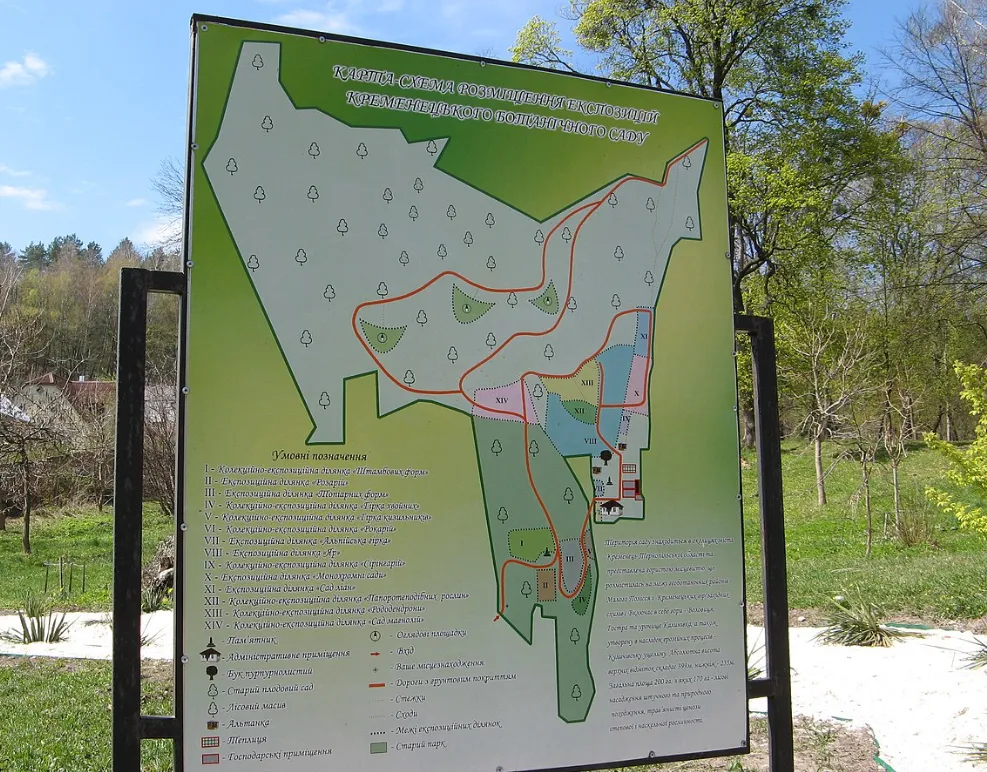
Of course, the first thing worth doing is getting to know the botanical garden a little better. Alleys and paths will lead you through different landscape zones, where collections of unique plants, the arboretum, and areas with ornamental and medicinal species gradually reveal themselves. There’s no strict route here — and that’s the main advantage. You’re your own guide!
Photo walks and discovering rare plants
Special attention goes to the unique plants of Kremenets, among which you’ll find rare and Red Data Book species. Some of them are hard to spot in the wild, so the botanical garden becomes a kind of “showcase” of the region’s biodiversity — without glass, but with real, living impressions.
A photo walk through the botanical garden is one of the most popular activities. Thanks to the hilly terrain and changing perspectives, every season looks different. It’s easy to find a cosy shot without crowds and catch the moment when nature looks as if it’s posing especially for you.
Peaceful rest and “doing nothing”
For many visitors, the main value of Kremenets Botanical Garden is the chance to simply be alone with nature and not hurry anywhere. Sit on a bench, watch the light between the tree crowns, listen to the silence, feel the breath of the wind. In a world of constant routes and plans, this suddenly becomes the most useful activity of all.
That’s exactly why the Kremenets botanical garden appeals equally to those looking for new impressions and to those who want a little rest from them. Everyone finds something to do here — even if that “something” is simply not rushing anywhere.
What to visit near Kremenets Botanical Garden
Kremenets Botanical Garden is conveniently located within the city, so it’s easy to combine with other tourist spots. This makes it possible to put together a rich, but not overloaded route — without suitcases in your hands, unnecessary transfers, and that constant glance at the clock. Everything is close by here, which means your trip turns into a pleasant stroll rather than a tourist marathon.
After visiting the botanical garden, don’t rush to put a full stop — on the contrary, it’s only a great beginning to your day out. Below, we’ve collected interesting tourist locations worth visiting nearby, so that a day in Kremenets is remembered not only for green alleys, but also for new discoveries. So here’s the answer to the question: what to see in Kremenets?
Historical and cultural landmarks of Kremenets
Within walking distance from the botanical garden you’ll find the city’s key historical locations. So a quiet, unhurried walk in nature is easy to continue with a closer look at Kremenets’ architectural heritage — and this is exactly where the route becomes truly varied and well-balanced.
The undisputed number one is a slow stroll through the old town, where the streets know more stories than travel guides. Next come religious landmarks of Kremenets from different eras, changing one after another as smoothly as centuries on a calendar. And to finish, like a real cherry on top of the tourist cake — Kremenets Castle, or rather its majestic ruins, which still confidently defend the views — and the cameras. More often it’s called Castle Hill.
Natural locations in and around Kremenets
For fans of eco-tourism, the botanical garden can be just the starting point. Around the city there are plenty of natural landmarks of Kremenets that deserve attention and perfectly complement a walk through the region’s green spaces. Hills, forests, and viewpoints in Kremenets form a natural ring around the town, so after visiting the botanical garden you can continue your journey along hiking trails or walking routes without complicated logistics.
Or you may have the chance to explore the Kremenets area in the format of cycling tourism — for those who love movement, fresh air, and the feeling that the road itself suggests the direction. Local routes let you combine nature, panoramas, and small discoveries without rushing, but with a pleasant tiredness at the end of the day.
Tourist locations beyond Kremenets
If, after walking around Kremenets, you feel like continuing the trip and widening the geography of your impressions a little, it’s worth paying attention to tourist locations beyond the city. The surroundings of Kremenets pleasantly surprise: there’s no sense of a “long trip”, but there is a bonus of new landscapes and unexpected stories.
One such iconic stop is the Vyshnivets Palace — a luxurious 18th-century residence often called the “Volhynian Versailles”. The contrast between Kremenets’ restrained nature and Vyshnivets’ palace grandeur adds a special charm to the route and lets you see different faces of the region in a single day.
The combination of the botanical garden, the old town, and Vyshnivets Palace creates a balanced tourist route: from green alleys and silence — to architectural splendour and stories of noble families. An ideal option for those who like it when travelling around Ukraine has a clear logic, yet still leaves room for pleasant surprises.
Frequently asked questions about Kremenets Botanical Garden
Where is Kremenets Botanical Garden located?
Kremenets Botanical Garden is located within the town of Kremenets, within easy walking distance of the historic centre and the main tourist spots.
How much time do you need to visit the botanical garden?
The optimal time for a walk is 1–2 hours. Still, many visitors linger longer, because the garden doesn’t like rushing.
Is the botanical garden suitable for walks with children?
Yes, the botanical garden is suitable for families with children. The main thing is to follow safety rules and stay on the designated paths.
What makes Kremenets Botanical Garden special?
The garden combines a unique terrain, historical heritage, and collections of rare and ornamental plants, serving both as a scientific institution and a green leisure space.
Can you take photos in the botanical garden?
Photography for personal use is allowed. That’s exactly why the botanical garden is a popular spot for photo walks.
Are pets allowed to visit?
Visiting with pets is possible as long as you follow the rules: animals must be on a lead, and other visitors’ peace should be respected.
When is the best time to visit the botanical garden?
The best periods are spring and autumn, when the garden is most expressive in colour and comfortable for walks.
Can you combine the botanical garden with other locations in one day?
Yes, the botanical garden is easy to combine with the old town, Castle Hill, and other Kremenets sights within one tourist day.
Eco note: how to preserve Kremenets Botanical Garden for future travellers
Kremenets’ green oasis isn’t scenery for a quick stroll, but a living conservation area that has достойно added to the list of botanical gardens of Ukraine and taken an honoured place in the hearts of its visitors. Here every plant has its role in a complex ecosystem, and some species need especially careful treatment.
That’s why guests’ eco-culture is part of a shared responsibility — without it, no botanical garden will last long. It’s like a crystal vase: it pleases the eye, gives beauty and delight, but only with the right care. In the botanical garden everything works by the same principle — the more respect, the longer the miracle lasts.
Take nothing but impressions
A landmark of landscape and garden art has the simplest and, at the same time, the most important rule: don’t pick flowers, don’t break branches, and don’t “borrow” a leaf as a keepsake. In a botanical garden, the best souvenir is a photo, not a twig in a bag. Plants, of course, won’t complain out loud — but the garden certainly doesn’t become better after such “gifts”.
This is exactly how the protected natural areas of Kremenets are preserved — through simple actions, respect, and the understanding that beauty lives longer when you don’t try to take it with you. After all, the true value of the botanical garden is in the chance to return and see it just as green and alive.
Cleanliness is respect too
Leaving litter behind is about as strange as visiting someone and leaving biscuit crumbs on their table. So everything you bring with you should go back with you. That’s how this protected natural reserve site will remain pleasant and well cared for for everyone, and the plants of Kremenets Botanical Garden will continue to grow to visitors’ delight — without any extra “surprises” under the bushes.
Silence and observation instead of fuss
The flora of Kremenets Botanical Garden is a space where nature works “at full capacity” — but without noise. It’s better to watch and listen here than to organise loud activities. After all, silence is part of eco-tourism, and it costs nothing. Observe, admire, and enjoy!
Careful treatment of nature is the best contribution to keeping the botanical garden in Kremenets green, alive, and welcoming. Let it delight not only us today, but also those who will discover Kremenets tomorrow.
Kremenets Botanical Garden — wrapping up a journey to a green pearl
Kremenets Botanical Garden is a place where history doesn’t gather dust in textbooks, but quietly breathes together with the trees; where nature needs no loud advertising because its beauty speaks for itself. As a landmark of Ukrainian landscape and garden art, it has lived through periods of flourishing and forced pauses, changing eras and political storms — yet it has preserved what matters most: its own character, silence, and inner balance.
Today, the green space of Kremenets is not only a scientific institution, but a living legend — a place where you can slow down, take a deep breath, and finally let your thoughts rest. Here, rest in Kremenets Botanical Garden, educational walks, and getting to know history blend naturally — without overload, but with a genuine sense of being present among greenery.
Kremenets Botanical Garden is especially valuable because it preserves rare and Red Data Book plants of Kremenets, which need careful treatment and attentive observation. Walking along the alleys, it’s easy to realise that this is not just a park, but a living natural space where every plant has its own story and meaning. It fits organically into a Ternopil region tourist route: it’s easy to combine with the city’s historical landmarks, natural locations, and trips beyond Kremenets. It’s an ideal place for those who aren’t chasing ticks on a “been there” list, but are looking for real impressions and a calm connection with nature.
So if you’re wondering how to spend time in Kremenets, where to enjoy an unhurried day, or where to start getting to know the region — the answer is already close. Kremenets Botanical Garden doesn’t hurry you and doesn’t demand speed, but it generously rewards the attention of anyone ready to observe, admire, and enjoy.
So go on — pack your backpack, choose comfortable shoes, and discover Kremenets: a town where greenery, history, and silence somehow find a common language and invite you to stay a little longer than planned.


No Comment
You can post first response comment.