
 English
 Українська
 Русский
Deep in the Polissia forests, where your satnav has already started falling into anxious silence and the stillness sounds louder than any words, there is a mysterious place that is rightly called Ukraine’s answer to Stonehenge. Stone Village does not imitate the famous British monument — it has a completely different character, one entirely its own and impossible to mistake for anything else.
There are no perfect stone circles here, no solemn geometry, no theatrical sense of order. Instead, there is something even stronger: the feeling that you have accidentally stepped into a place where nature has, for centuries, let only a few people in — and never all at once. This is not a place that reveals itself from the very first step; it seems to look at you first. And within a few minutes, you catch yourself walking among the stones with the same cautious curiosity people usually feel when entering an old house where “absolutely no one lives”, yet for some reason you really do not want to speak too loudly.
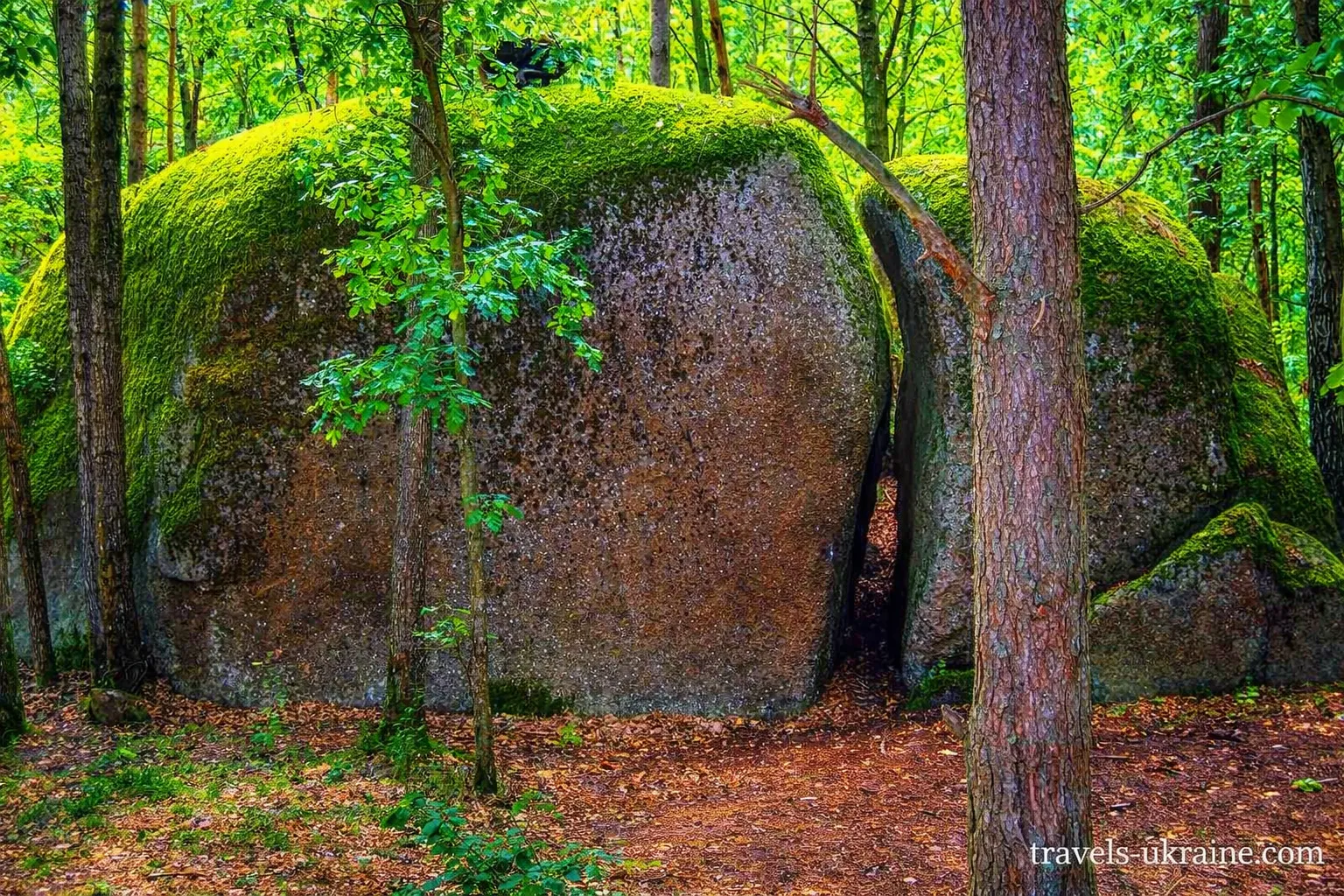
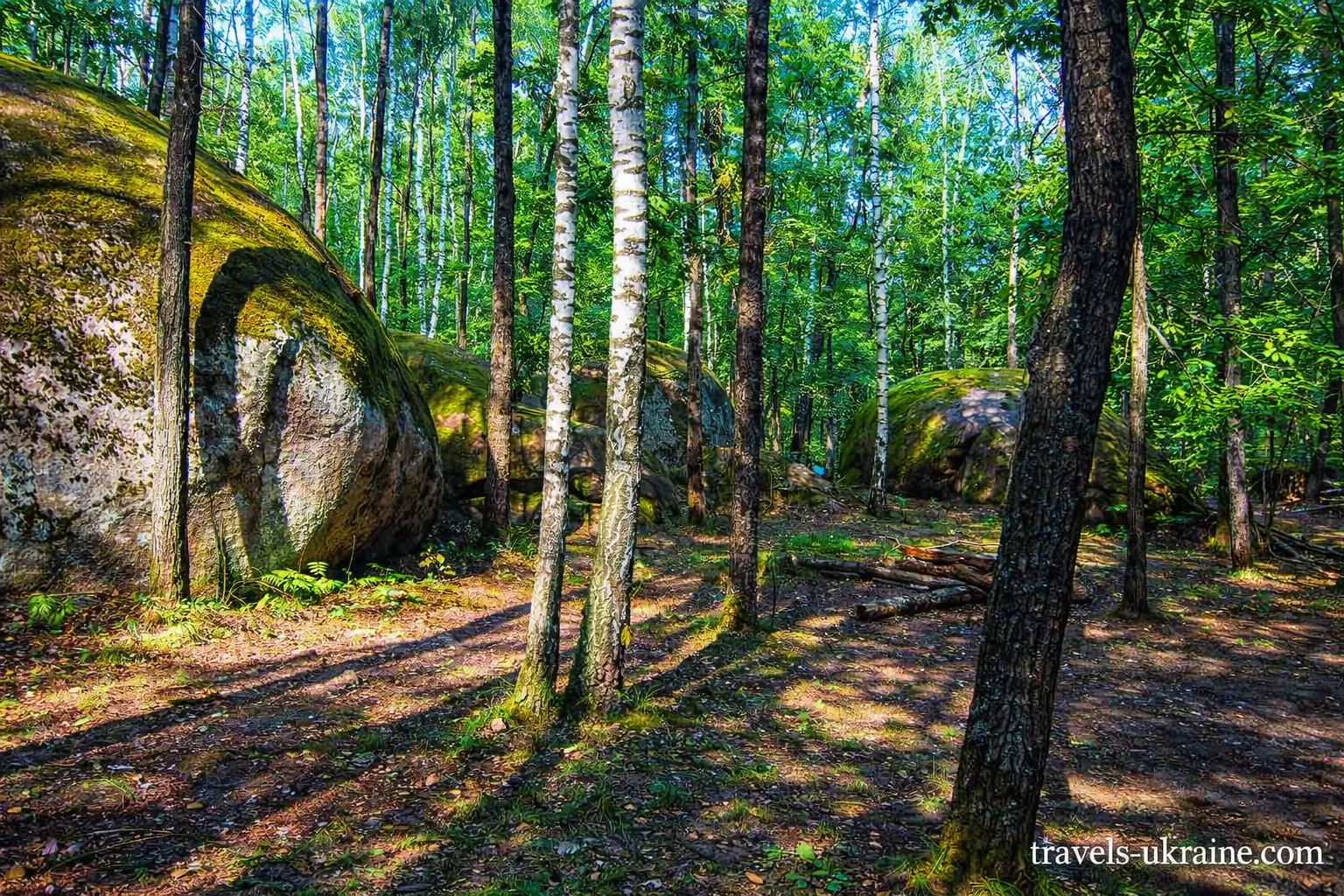
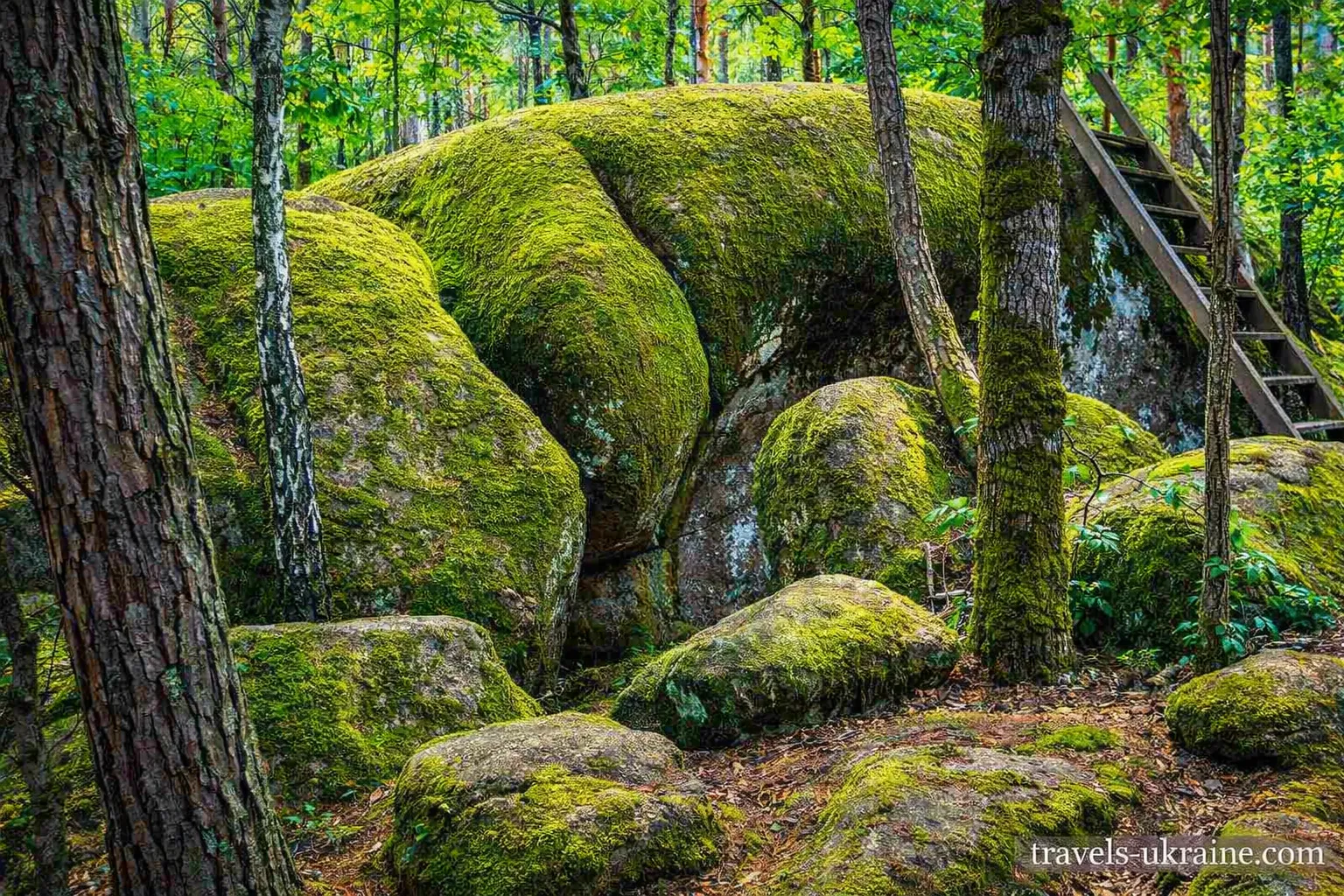
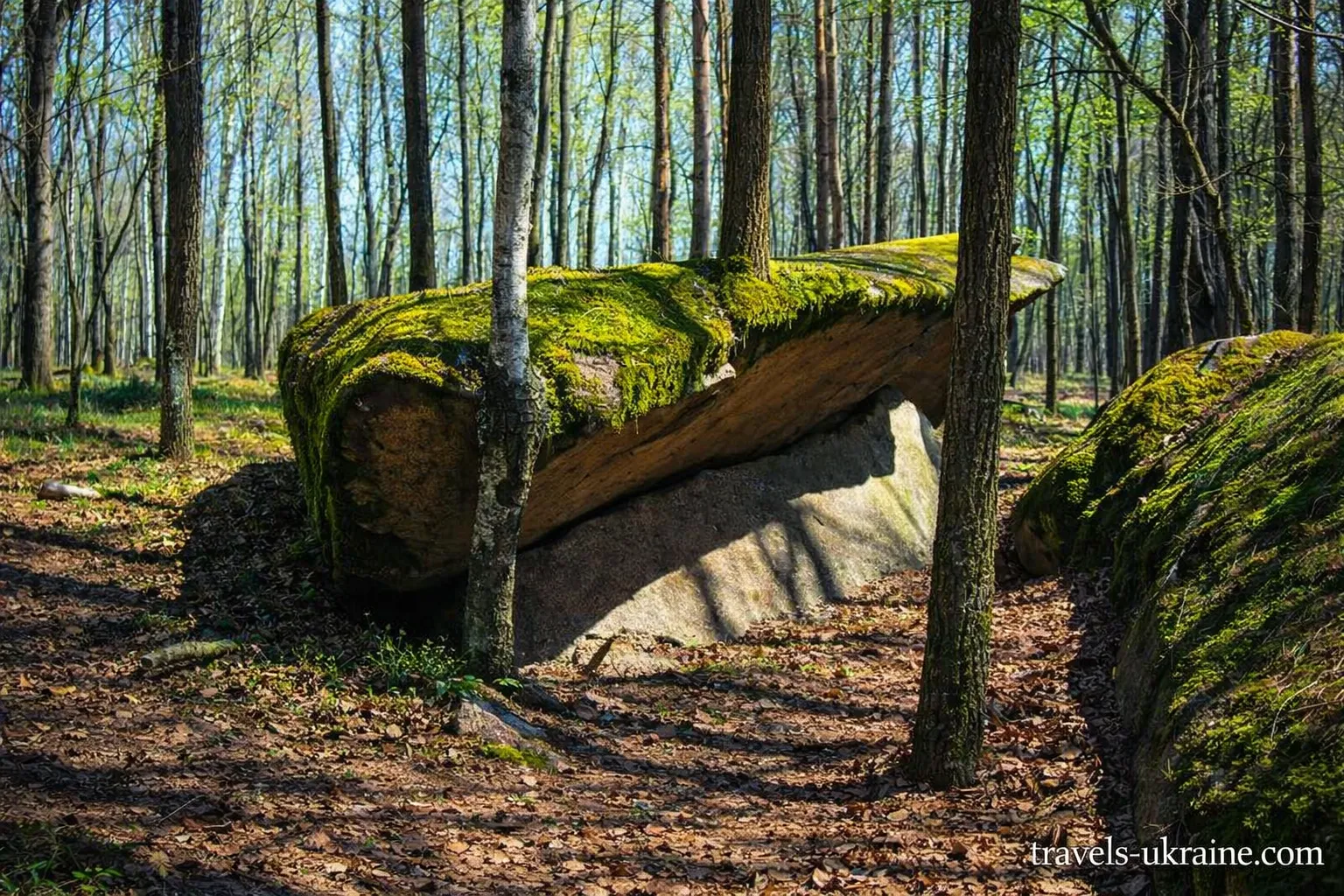
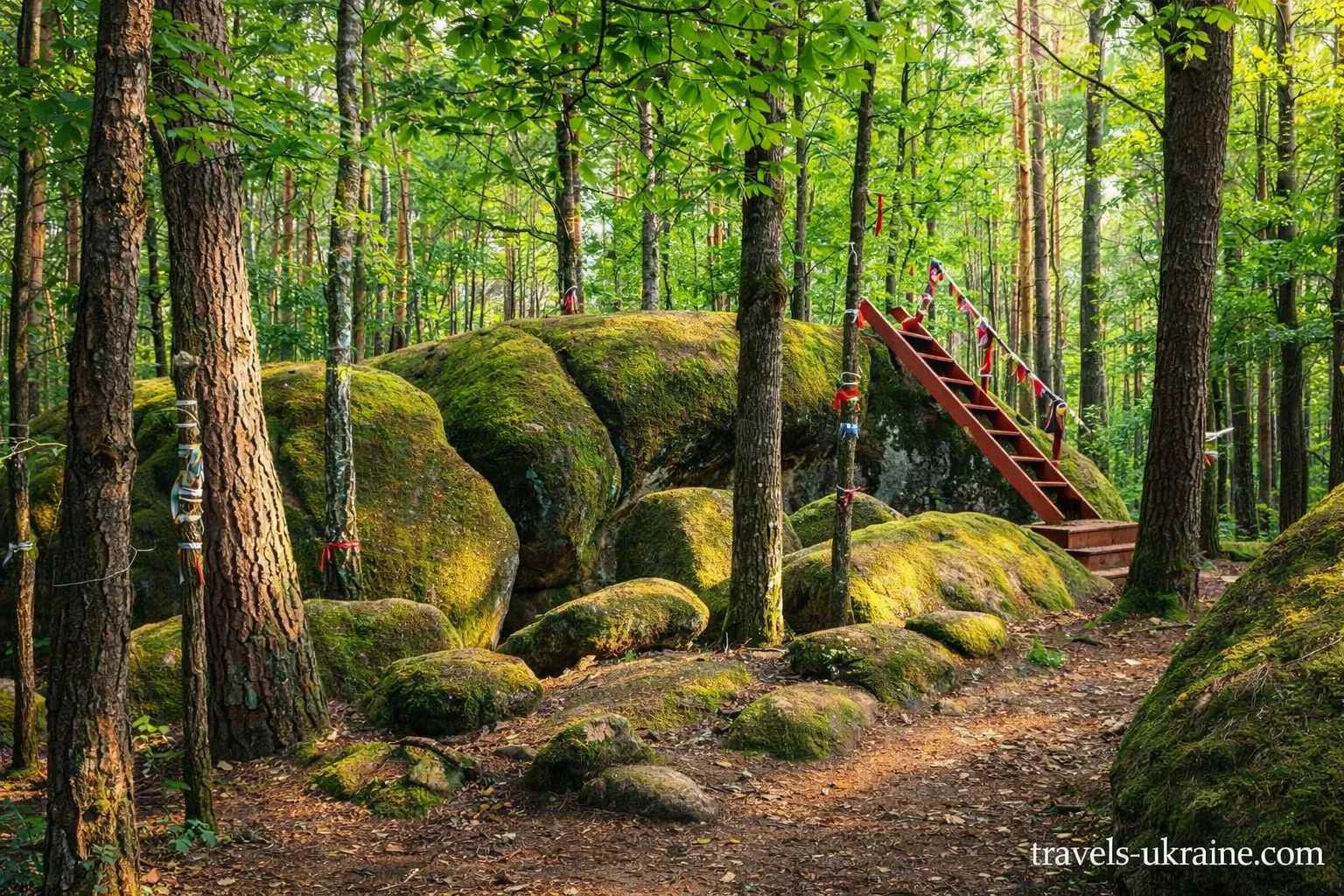
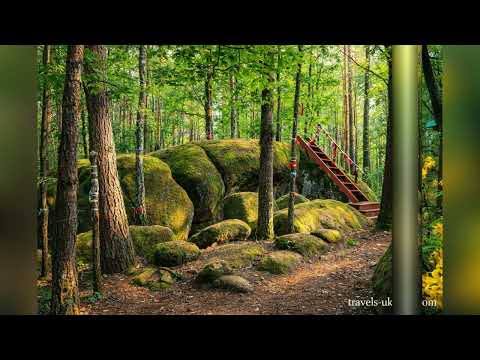
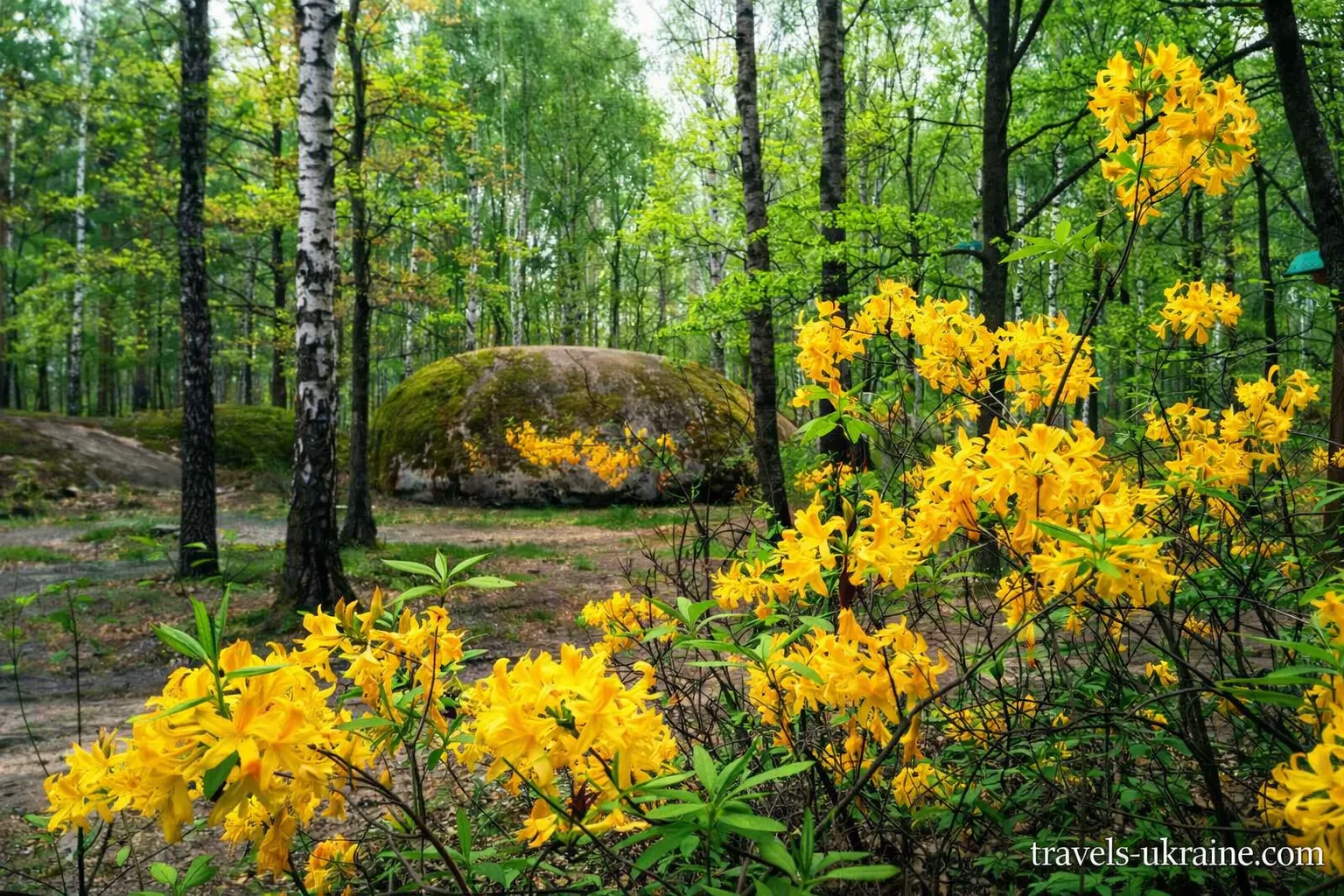
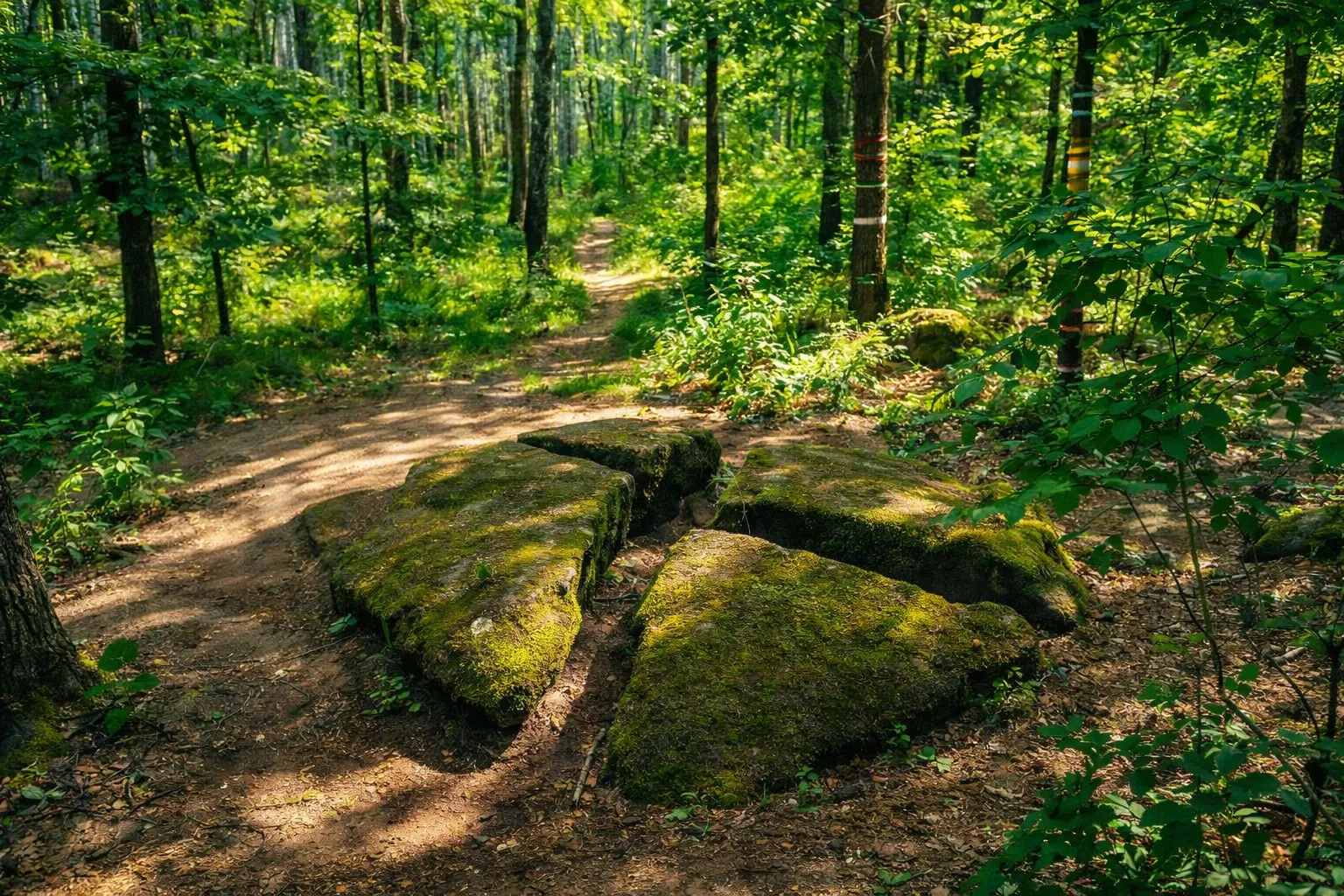
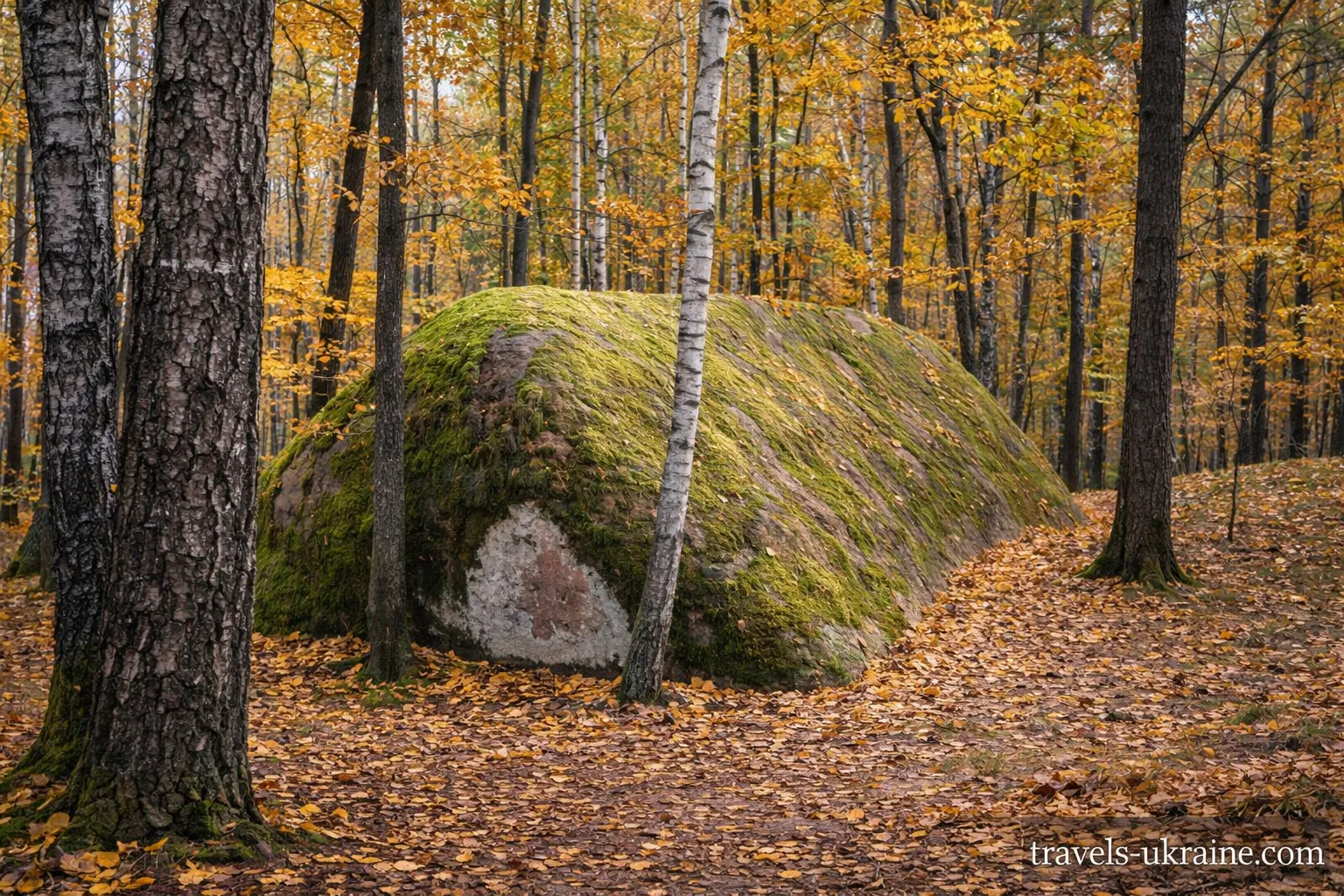
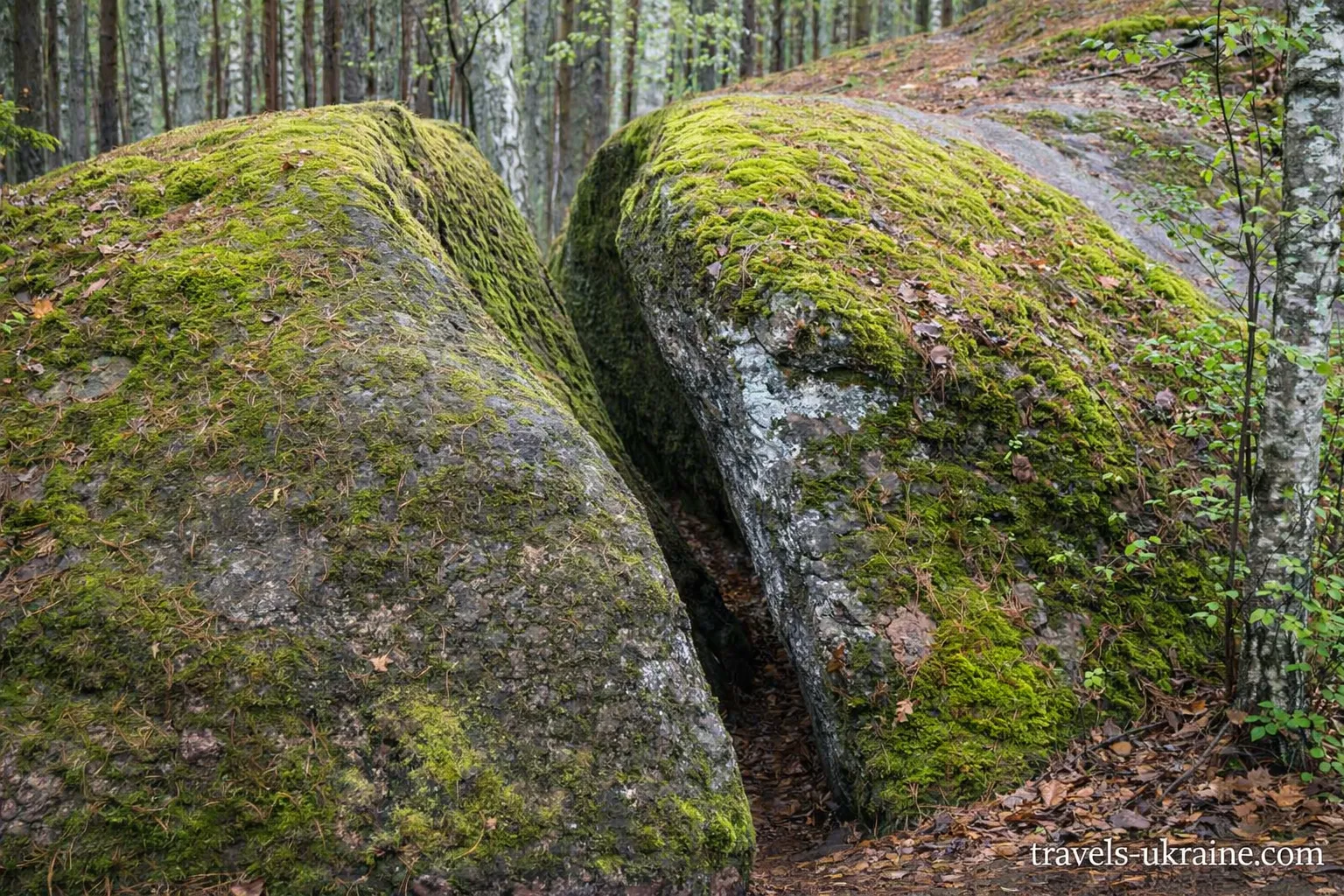
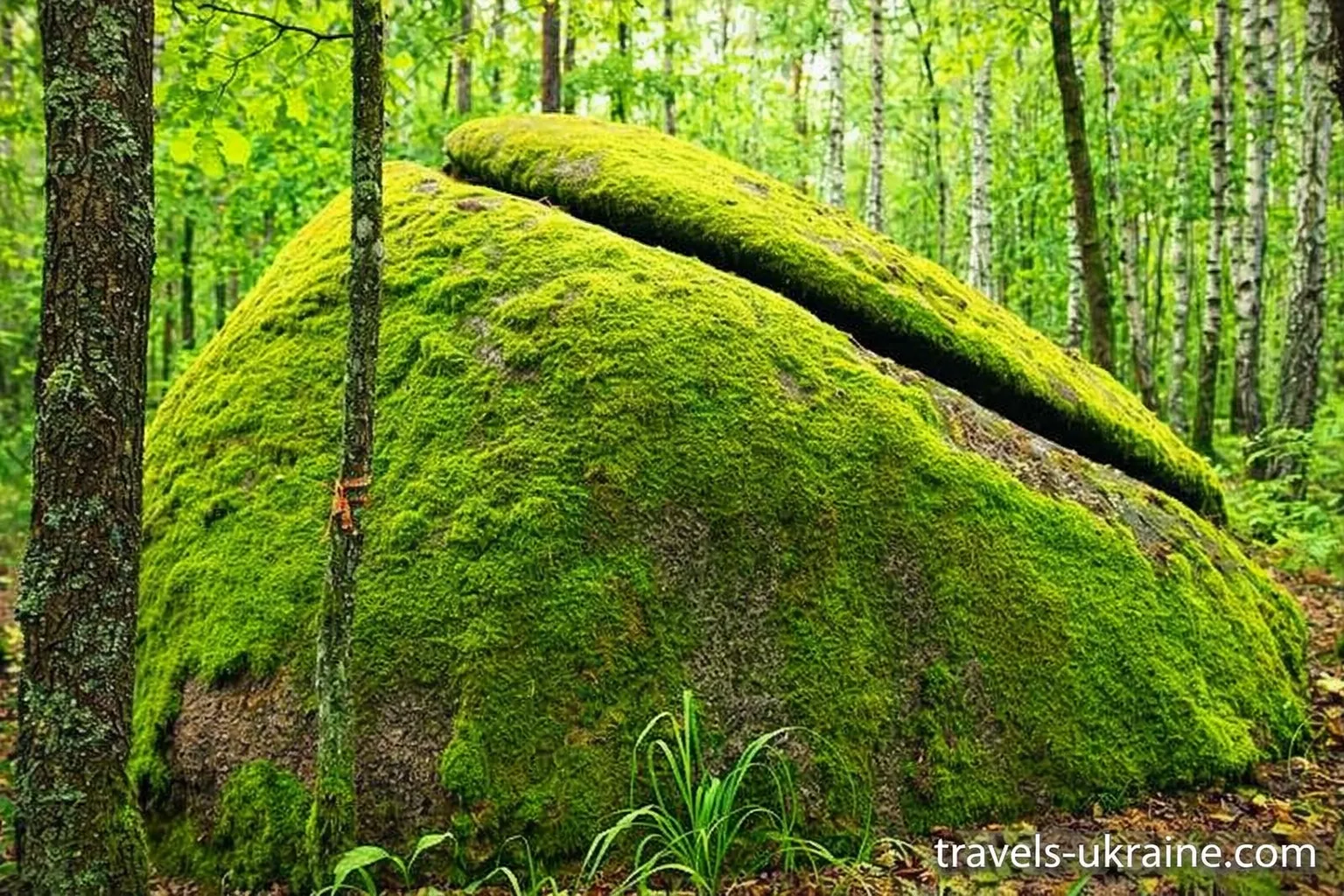
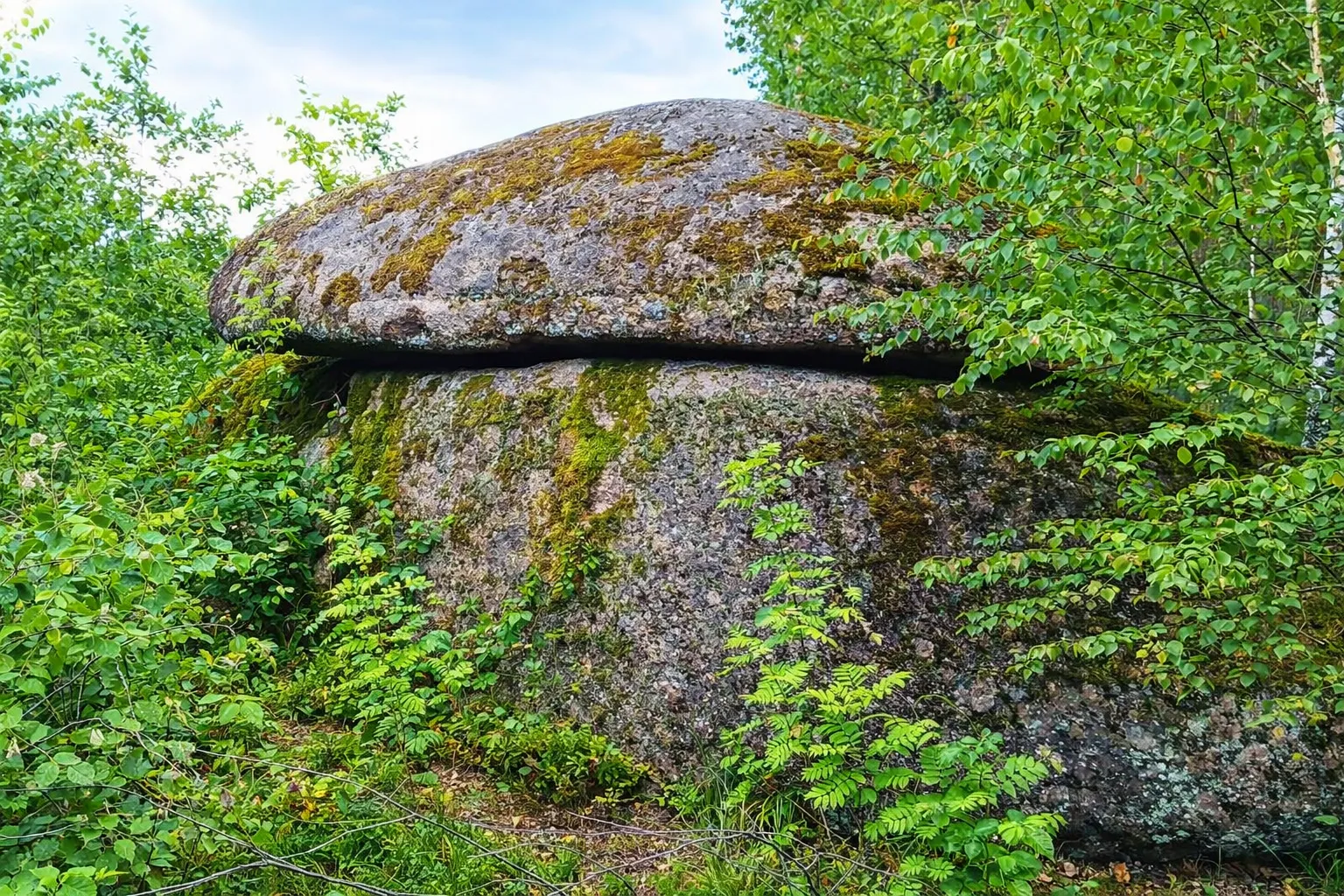
Here, giant stone boulders lie among pines, moss and the half-darkness of the forest so convincingly that it feels as if they were arranged not by nature, but by some ancient, stubborn and deeply mysterious will. Some of the blocks resemble squat cottages, others gates, yards or stone “streets” along which, it seems, the invisible master of this strange settlement — one that appears to be hiding from people — might walk at any moment.
That is exactly why Stone Village among the forests of Polissia feels like much more than simply a scenic spot. It has character, mood and its own silent sense of drama. Here, nature seems to have played a little joke, hidden a little message, and decided to test whether people still know how to be amazed without prompts or special effects. And, honestly, this place passes that test brilliantly.
Want to look deeper into the mysteries of Polissia? Then discover the Stone Village tract not simply as a tourist destination, but as a true riddle of nature. Imagine that you have been given the role of the explorer setting out on a fascinating expedition among giant boulders, silent pines and ancient legends. Here, every stone may become a clue, every path a new discovery, and every step part of a larger story that still waits to be unravelled.
The history of Stone Village: origins, age and theories of how it came to be
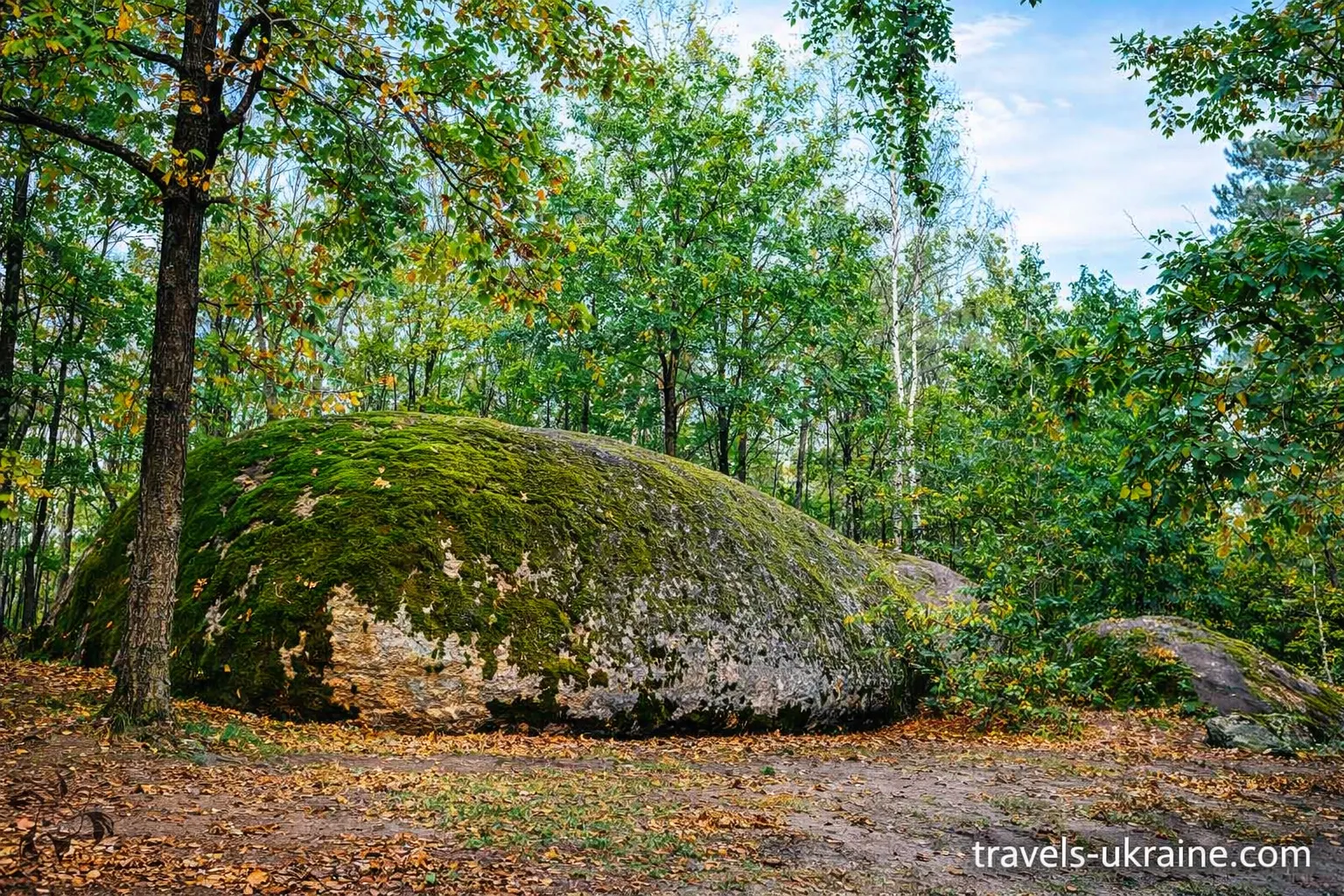
The history of Stone Village begins not with human settlements, but much earlier — in deep geological time, when the landscapes of Polissia were being shaped by powerful natural processes. That is why this natural monument cannot be explained by a single romantic legend alone. What we see here are not the ruins of an ancient town and not the remains of a pagan sanctuary, but a unique tract where nature created a composition that still looks as though it had been carefully planned by some silent architect of the Ice Age.
The scientific explanation links the origin of Stone Village to denudation remnants, which are fairly widespread within the Ukrainian crystalline shield. These formations changed under the influence of wind, moisture, temperature shifts and soil processes. That is exactly why the Stone Village geological reserve attracts so much interest not only from travellers, but also from researchers of natural history.
The stones do not lie here in neat order, yet they resemble a settlement so clearly that the imagination immediately starts filling in the rest. In short, nature worked so carefully here that people still argue over whether this is geology — or extremely convincing mysticism. Whenever the origin of the Stone Village tract comes up, two lines of storytelling almost always appear. The first is scientific: the huge stone boulders are part of the ancient geological processes of Polissia. The second is folk-based: once, a real village stood here, and for the sins of its people it was turned to stone. And while scientists see the blocks as part of natural history, local legends see them as a warning frozen in place. Strangely enough, both versions coexist perfectly well within the same space.
That very duality is what makes Stone Village in the Zhytomyr region so captivating. You can come here as if to a small open-air museum to see traces of ancient natural processes, or as if to a place where every stone seems to have its own personality and its own silent biography. That is the power of this location: it does not impose one single answer, but leaves room for imagination. And, honestly, that is exactly why visitors return from here not only with photographs, but with the feeling that the mystery still has not been fully solved.
How the name Stone Village came about
At first glance, the name Stone Village may sound almost like a play on words, but its origin is quite easy to understand. When people first saw this cluster of boulders in the forest, they naturally compared it to a settlement. The stones really do resemble the outlines of buildings, and the passages between them look like old village lanes. That is how this figurative and very accurate folk name was born, and in time it became firmly attached to the tract. As a result, today Stone Village in Polissia is known not by some dry scientific term, but by a name that immediately paints a picture in the mind.
Local legends also played a special role in making the name popular. According to the best-known tale, a prosperous village once stood on this very spot. One day, a traveller came here and asked for bread, but the villagers refused to help him. After that, the whole settlement supposedly turned to stone. Such stories were passed down by word of mouth for centuries and turned the tract into more than just a natural monument — it became part of the living imagination of Polissia. And here, it must be said, folk imagination did a better job than many a marketing department ever could.
Stone Village, Stonehenge and UFOs: Polissia’s most mysterious theory

What could Stonehenge, Stone Village and UFOs possibly have in common? At first glance, about as much as a Polissian forest, a British professor and the script of a science-fiction film. But that is exactly where the charm of this story lies: the more unbelievable it sounds, the more you want to keep reading.
According to one of the most intriguing versions, British researcher Andy Jones supposedly noticed mysterious markings on a quartz stone at Stonehenge. Legend has it that these symbols appear only once a year — on 22 June, the day of the summer solstice, when the light falls across the stone in a very particular way. According to the same version, under moonlight the lines form a complete composition resembling a map. And the most interesting part is that this map supposedly points to Ukraine — more specifically, to Stone Village in the Zhytomyr region.
Once such bold suggestions began to circulate, interest in the Ukrainian site grew even more. The Stone Village tract started being mentioned not only as a natural monument, but also as a place around which increasingly daring theories were beginning to form. Researchers, local historians, ethnographers, biologists and simply people for whom “it is all just nature” is not quite enough started coming here. And it must be admitted: when you are standing among giant boulders in the silence of Polissia, scepticism no longer feels quite as confident as it does on the sofa at home.
Among the stories surrounding the study of Stone Village, one can also come across the claim that samples of the rock supposedly contained minerals characteristic of meteorite matter. That is what gave rise to the theory of the extraterrestrial origin of the boulders. Scientifically, this remains highly debatable, but for lovers of mysteries it sounds almost flawless: ancient stones, silent stones, giant stones — and with a hint of outer space on top of that. It is, admittedly, quite a strong combination.
Against this backdrop, an even bolder theory appeared: Stonehenge and Stone Village may have served as a kind of platform or marker for UFOs. Of course, this idea has no widely accepted scientific confirmation, but in the world of legends it feels perfectly at home. All the more so because both natural monuments really do have something in common: great age, symbolic stone compositions, origins that remain unclear to many, and an ability to raise more questions than answers.
Supporters of this version also like to point out that the Zhytomyr region has long had a reputation as a place where stories about unusual phenomena and unidentified objects are regularly born. Whether there is any real connection between this and Stone Village remains an open question. But these are precisely the kinds of stories that create the site’s distinctive atmosphere — the one that draws people here not only for photos among the boulders, but for the feeling that the world still has not been explained in full.
And perhaps that is the main strength of this place: Stone Village, Rudnia-Zamyslovytska works equally well for supporters of science and for lovers of legend. Some see a geological mystery here, others the trace of an ancient force, others almost a cosmic beacon. And most visitors, if we are honest, simply stand among the boulders, look around and think: “All right, perhaps it is not a UFO base after all… but this place really is extraordinarily unusual.”
Scientific research into Stone Village: what is actually confirmed
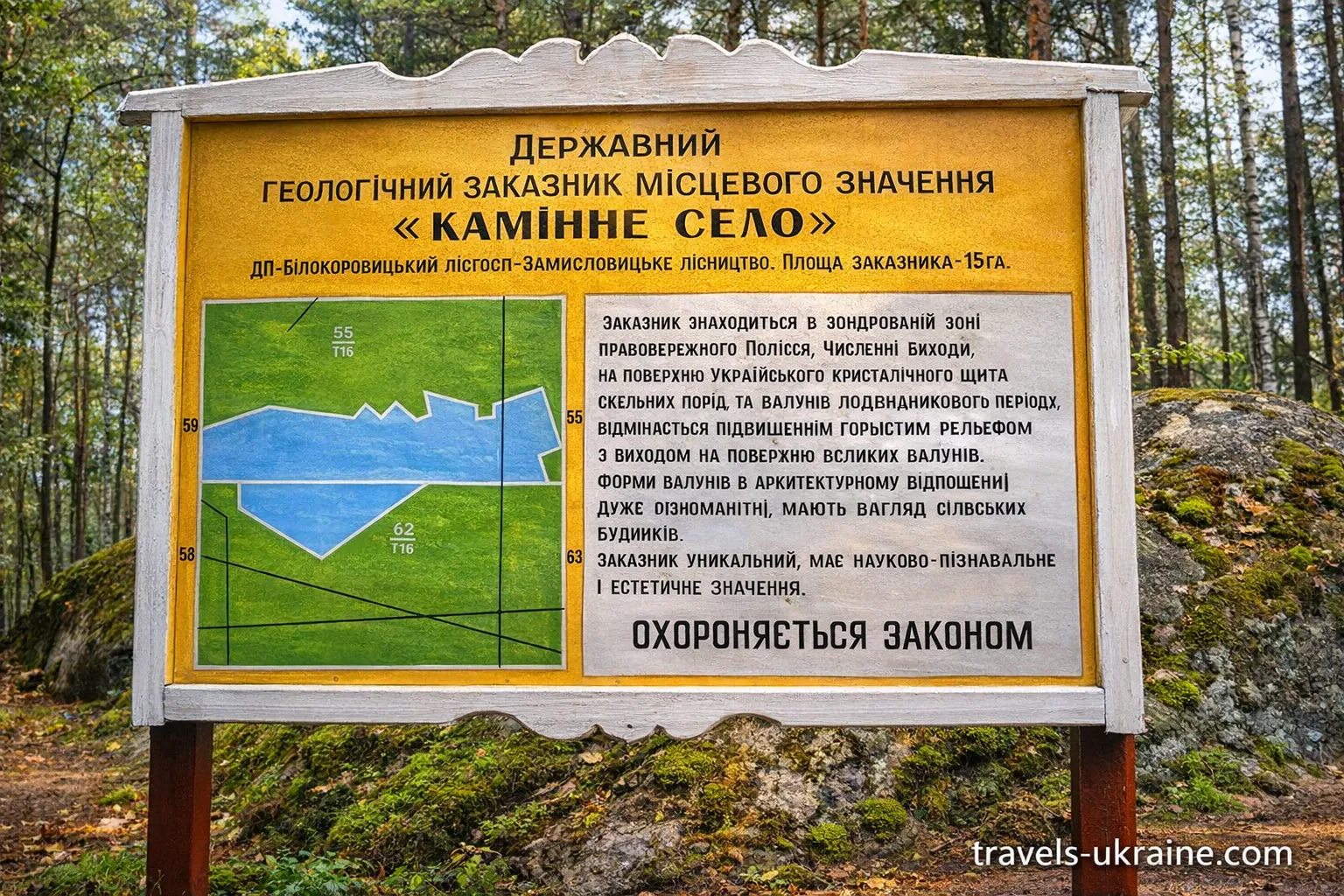
The Stone Village tract is not just a picturesque place to visit, but a geological reserve of local significance, established in 1988. It covers an area of 15 hectares and is located in a forest massif near the village of Rudnia-Zamyslovytska in the Zhytomyr region. Its protected status alone means that the value of this location has been officially recognised — and not only in tourist tales about Stonehenge or UFOs.
The most important confirmed fact is that the stones of Stone Village are large granite boulders and outcrops of crystalline rock. In regional descriptions of the site, specialists link them to the rocks of the Ukrainian crystalline shield and note that, morphologically, the boulders do not differ from the native bedrock of the area. In particular, the Zhytomyr tourist information centre presents a professional version according to which the remnants of the rocks survived here after the long destruction and weathering of the surrounding massif.
Today, this explanation of the boulders’ origin appears far more cautious and scientifically sound than the popular legend about “stones brought by a glacier”. In popular science and local history materials, both hypotheses can be found, but the specialist descriptions of the site emphasise that these blocks resemble the local granites in both form and composition. That means there is no real basis for describing them as “foreign” in origin, let alone “cosmic”.
What scientists can say about the age of the stones
When discussing the age of Stone Village, it is important to distinguish between the age of the tract as a landscape and the age of the rocks themselves. The landscape in its present form emerged much later, but the granite and other crystalline rocks of the Ukrainian shield belong to very ancient Precambrian formations. So we are dealing with genuinely deep geological time, not with “ageless stones”, as admirers of mysticism sometimes like to write. The Earth can, of course, be astonishing — but science has not yet recorded any immortal boulders, even if some of them do look as though they remember a time when the dinosaurs would have been “the new neighbours”.
Is there any evidence of meteorite or extraterrestrial origin?
No, there is no confirmed scientific evidence that the boulders of Stone Village are of meteorite or extraterrestrial origin. In accessible official, encyclopaedic and specialist sources, the site is described specifically as a geological object of natural origin. Accordingly, claims about “meteorite minerals”, a “UFO platform” or a “stone with no age” belong to the realm of legends and tourist myths rather than verified research findings.
What exactly makes Stone Village valuable to science?
The scientific value of this place lies not in sensation, but in how clearly it can be read. Here, you can literally see how ancient crystalline rocks shape an unusual relief and how natural processes create objects that look almost man-made. That is why Stone Village is interesting to geologists, local historians, ecologists and anyone who wants to understand how nature works without special effects, but with an extremely convincing result. And yes, in this case geology is genuinely more fascinating than half the invented sensations.
- Confirmed: it is a geological reserve of local significance, established in 1988, covering 15 hectares.
- Confirmed: the boulders are linked to the crystalline rocks of the Ukrainian shield, in particular to local granites.
- Probable and scientifically grounded: their origin is explained by denudation, weathering and long-term geological processes.
- Not confirmed: meteorite origin, “cosmic energy”, connections with UFOs and other similar sensational claims.
Photo and video gallery
A quick guide to Stone Village: type of location, visit duration and difficulty
Stone Village in the Zhytomyr region is exactly the kind of place where visitors want the key answers before they go: what sort of site is it, how much time should you allow for a walk, is it easy to reach, and will you have to sell half your rucksack just to enjoy the trip. In short, the tract is a natural location for a calm outing, an unhurried walk through the Polissian forest, and a chance to get to know one of the most interesting geological sites in the Zhytomyr region. You do not need climbing skills, specialist gear or a dramatic soundtrack in your head — just comfortable shoes, a little time, and the desire to see something genuinely unusual.
For most travellers, Stone Village in Korosten district works as a half-day trip or a full-day outing if you combine the visit with other tourist sites. The location itself does not require marathon-level endurance, but it does ask for attention: this is not a city park with level paving, but a site in the forest where the tourist route runs through natural terrain among trees, sandy sections and stone blocks. That is why a trip here suits those who enjoy living nature, a slower pace and routes without excessive crowds.
Type of location, difficulty and accessibility
What is Stone Village in practical terms? It is a geological reserve and a striking natural monument for walking, photography and a more thoughtful kind of outdoor leisure. People do not come here for attractions or a classic экскурсионный service, but for atmosphere, landscape and that sense of discovery. It works beautifully for family outings, trips for two, short escapes into nature, and anyone looking for interesting places in Polissia beyond the obvious routes.
In terms of difficulty, this tourist location is on the easy side. There are no long mountain climbs or technically demanding trekking sections, but there is natural relief, uneven ground, tree roots, sand and large boulders, which means you do need to move carefully. For most adults, the route will be comfortable; for children, it will be exciting, though best enjoyed under supervision. Visitors with serious mobility difficulties should bear in mind that the site is not fully barrier-free. Stone Village in Polissia is beautiful, but nature has, unfortunately — or perhaps fortunately — not laid an asphalt path through it.
What to see at Stone Village and what visitors can do there
What is there to see at Stone Village? Above all, the very logic of this strange space. People do not come here for one single “main attraction” that can be photographed quickly before rushing on, but for the overall impression. This natural wonder of Ukraine reveals itself in movement: when you are not simply looking at separate boulders, but walking between them, noticing passages, “yards”, darker and lighter stretches of forest, moss on the stone surfaces, and the play of light between the pines. At times, it feels less as though you are exploring the site and more as though it is, very slowly, introducing itself to you.
At the entrance to the tract, you can find a map marking the best-known stones and natural points that most often catch visitors’ attention. That is one of the reasons why Stone Village for tourists is especially convenient: here, you can combine a free walk with a small “hunt” for the site’s local symbols. Among the most frequently mentioned objects are “God’s Stone”, “The Broken Loaf” and “The Pyramid Stone”, while nearby you may also come across old bee trees — traditional hollowed-out Polissian beehives. This adds not only visual interest to the route, but an ethnographic flavour as well.
The boulders of Stone Village are fascinating because every visitor sees something different in them. Some look for outlines of houses and farm buildings, while others notice shapes that resemble gates, streets or even small stone squares. That is the site’s special appeal: you do not need anyone to explain at length “where exactly to look”. The location works without intermediaries. All you really need is to give yourself time to slow down, lift your eyes from your phone, and let your imagination do a little work. It usually finds its rhythm here very quickly.
The Stone Village tourist route: the best way to explore the site
The Stone Village tourist route does not require difficult navigation, but it is best experienced as an unhurried loop with frequent pauses. Most people allow around 1–1.5 hours to walk the area itself, though if you want to fully take in the atmosphere, it is worth giving yourself extra time. This is exactly the kind of place where rushing spoils everything. If you dash through the tract in twenty minutes, you may leave thinking, “Well, they are just stones.” If you walk it attentively, the feeling is entirely different: as though the place is slowly opening up, layer by layer.
Relaxing at Stone Village is not only about walking among the boulders. It is also a wonderful place for photography, observing nature, having a quiet family picnic in a respectful way that does not harm the environment, pausing for tea from a flask, or simply allowing yourself a few minutes of silence — something ordinary life rarely offers enough of. For many travellers, that silence becomes the strongest impression of all. In the forest, it does not feel like emptiness, but like a full part of the place itself — almost a landmark in its own right, only without a sign.
- The main things to do here: walk among the boulders, see the most famous stones, take photographs and observe the landscape.
- What to look for: “God’s Stone”, “The Broken Loaf”, “The Pyramid Stone”, natural passages and old bee trees.
- What to do: walk, photograph, listen to the forest, notice the details, and rest without rushing.
So, there is plenty to do at Stone Village both for those who like a meaningful route and for those who simply want to spend time surrounded by nature.
What you can visit near Stone Village: interesting places in Polissia
What is there to see near Stone Village is one of the most practical questions for those who do not want to limit themselves to just one stop. And it is the right approach, because Stone Village pairs very well with other natural and historical locations in Polissia. The most convenient way to build a route is via Olevsk, then add one or two nearby places to the trip — that way the journey feels rich without feeling rushed. Most importantly, this region does not work on the principle of “one landmark and back home”, but as a complete space where nature, history and silence come together remarkably well.
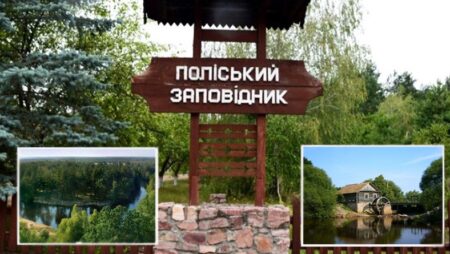
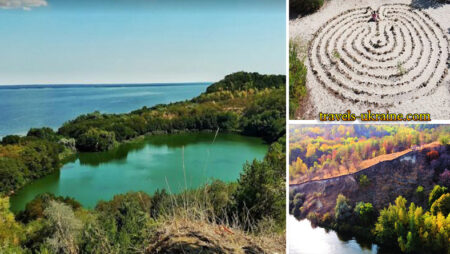
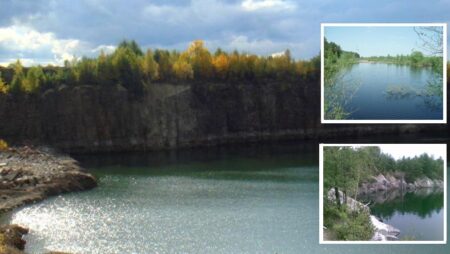
It is also worth noting that Stone Village near Olevsk and Korosten is often included in combined weekend tourist routes. Travellers experienced in independent travel most often recommend combining the tract with Olevsk, the Polissian Nature Reserve or Druzhbivskyi Quarry, while some add Dido Lake to the route as well. In other words, there are plenty of nearby options — you simply need to decide what appeals to you most: wild landscapes, the history of the Drevlians, or relaxing by the water.
The easiest option is to combine Stone Village in Korosten district with Olevsk within a single day. If you have more time, you can extend the route to Druzhbivskyi Quarry or set aside a separate programme focused on the natural sites of Polissia. For those seeking a more ecological and peaceful format, it makes sense to look towards protected areas, while keeping current access rules in mind. And for those travelling by car or with family, the most practical formula is “Olevsk + Stone Village + one more location of your choice”.
- Olevsk: historical context, ancient hillfort, older architecture, and a convenient point on the route.
- Polissian Nature Reserve: forests, wetlands, wildlife — though with access restrictions.
- Druzhbivskyi Quarry: water, open views, leisure, and a strong contrast to the forest atmosphere.
- Dido Lake: an option for a longer nature route or a two-day trip.
So, what you can visit near Stone Village is not just one accidental extra stop, but a whole selection of locations from which it is easy to build a trip that suits your own pace and mood.
Tourist infrastructure near Stone Village: road, signal, everyday essentials and practicalities
Stone Village is not the kind of place people come to for polished service, souvenir rows, or a café serving artisan coffee two minutes from the boulders. And that is exactly part of its honesty. This tourist gem of Polissia has retained the character of a wild natural monument, so the infrastructure here is basic and, in some ways, almost ascetic. For some, that is a drawback; for others, it is the main advantage. The place does not try to be “convenient at any cost” — it offers a real forest experience without decorative civilisation. And yes, here nature still has the last word, not the parking machine.
That is why the location requires a little more preparation than a standard trip to an urban landmark. It is worth planning your water, snack, footwear, phone charge and return route in advance. Stone Village has minimal infrastructure: the final stretch of the journey often runs along an unpaved road, and part of the route often has to be completed on foot. It is not a difficult expedition, but neither is it a “from the car to the ticket office in forty seconds” kind of outing.
Parking, mobile signal, internet and navigation
There is no large, specially equipped car park right by the site. Visitors usually leave their cars as close as the road and the condition of the vehicle allow, and then continue through the forest on foot. That is why Stone Village in the forest creates no illusion of “driving right up to the main stone”. And, honestly, that is a good thing: those first few minutes walking through the pines act as the perfect introduction to the whole journey. You do not simply arrive — you gradually enter the atmosphere of the place.
One of the most practical things to know in advance is that mobile signal here can be unstable or absent altogether. This means it is not wise to rely solely on online navigation. It is better to download an offline map beforehand, save your route, and let someone know where you are going if you plan to visit at a quieter time. There is even something slightly therapeutic about this: the place itself will cut you off from unnecessary notifications, though rather decisively.
Stone Village guided tour or independent trip?
For those who do not want to sort out all the logistics themselves, a Stone Village guided tour can be a good option. Tour operators regularly put together one-day nature routes, often with weekend departures. That takes away some of the guesswork about access, travel time and the order of stops. An independent trip, on the other hand, gives you more freedom, but requires more attention to the route and the conditions on site. So the choice is simple: either you are the captain of the expedition, or someone has already made sure you can just enjoy the trip without arguing with your satnav in the middle of the forest.
- The road: the final stretch may be unpaved, and part of the way is sometimes done on foot.
- Parking: a large equipped parking area near the tract should not usually be expected.
- Signal: mobile coverage may be unstable or weak.
- Infrastructure on site: minimal, so it is best to bring your own water and snack.
- Best format: independent trip or organised guided tour.
Of course, the tourist infrastructure near Stone Village is basic, but more than sufficient for those who understand the format of a natural location and are not expecting a major resort level of service from a Polissian forest.
FAQ: frequently asked questions about Stone Village
Where is Stone Village located?
Stone Village is located in the Zhytomyr region, near the village of Rudnia-Zamyslovytska, within Korosten district. This Stone Village tract lies among the forests of Polissia, so the road here leads through woodland, and the place itself retains a strong sense of distance from the familiar rhythm of town life.
What is Stone Village: a natural monument or a legendary place?
Stone Village is a geological reserve and a natural monument known for its huge stone boulders scattered through the forest. At the same time, the site has gathered countless stories around it, which is why it is often seen as one of the mystical places of Polissia as well. In practice, it is a combination of genuine geological uniqueness and a powerful atmosphere that gave rise to local legends.
How do you get to Stone Village?
How to get to Stone Village is one of the most common questions among travellers. Most often, people plan the route via Olevsk towards the village of Rudnia-Zamyslovytska, and then continue along forest roads closer to the tract. The final stretch can be unpaved, and sometimes the last part is easier done on foot, so it is best to prepare your route and offline navigation in advance.
How much time do you need to visit Stone Village?
For a relaxed walk, it is worth allowing on average 1.5–3 hours. If you enjoy photography, wandering slowly among the boulders, reading about the legends, or simply spending time in silence, you may want more. Stone Village in the forest is best experienced without haste, so a rushed “quick stop” often does not do the place justice.
Is Stone Village suitable for children and family outings?
Yes, Stone Village for tourists is perfectly suitable for a family trip as long as basic care is taken. Children usually enjoy searching for shapes that resemble cottages, yards and unusual forms in the stones. At the same time, parents should remember that this is a natural location with uneven paths, sand, roots and boulders, so supervision during the walk is essential.
When is the best time to go to Stone Village?
The most comfortable period for a visit is from late spring to early autumn. At this time, Stone Village among the forests of Polissia is especially striking: the forest is green, the route is easier to walk, and the light brings out the texture of the boulders beautifully. Autumn adds colour and atmosphere, while misty mornings make the place feel even more mysterious. After heavy rain, it is best to plan the trip a little more carefully because of the condition of the forest roads.
What does science say about the origin of Stone Village?
The origin of Stone Village is scientifically linked to ancient geological processes and to the crystalline rocks of the Ukrainian shield. The stone boulders and rock outcrops here are explained by the natural formation of relief, weathering and denudation. Claims that the boulders are of meteorite or extraterrestrial origin belong to the world of legend, not to confirmed scientific evidence.
What are the best-known legends of Stone Village?
The best-known legend of Stone Village says that a real village once stood here and turned to stone because of human greed or cruelty. That is why the boulders supposedly resemble cottages, yards and streets. There are also other stories — about a place of power, unusual energy and strange signs on the stones. These versions have no scientific confirmation, but they have strongly shaped the tourist image of the site.
Are there cafés, toilets and other tourist facilities near Stone Village?
You should not expect developed tourist infrastructure right next to the tract. Stone Village in the Zhytomyr region is a natural location with very limited facilities, so it is best to bring water, a snack, tissues and other essentials with you in advance. That is part of the nature of the place: less service, more living landscape.
What is Stone Village known for and why is it worth visiting?
What is Stone Village known for? Above all, for its unique composition of boulders that looks like a stone-built settlement in the middle of the forest. It is one of the best-known natural — and at the same time mystical — locations in Polissia, combining geological value, a powerful atmosphere, legends and a memorable travel experience. It is worth coming here for the silence, the unusual landscape, beautiful walking routes and the feeling that nature sometimes creates things far more compelling than any scenery ever could.
Environmental note: how to preserve Stone Village for future generations
The rock formations of Stone Village impress not only through their shape, but also because they still preserve the feeling of genuine nature, not overly “edited” or polished for display. That is exactly why the tract requires not only admiration from visitors, but environmental responsibility too. This is not a decorative picnic zone for every possible format of leisure, but a geological site where the stone boulders, the forest environment and the very atmosphere of natural silence all matter. In short, the best thing a traveller can do for this place is leave no visible trace behind except good memories.
Stone Village among the forests of Polissia is especially vulnerable to small but repeated disturbances. One discarded bag, one scratch on a stone, one careless fire or one patch of moss trampled underfoot may seem insignificant on its own. But once such “small things” begin to multiply, the place starts losing exactly what people came here for. Nature took a long time to shape this space and certainly did not plan for someone to “complete” it with a plastic bottle or a tissue left under a bush. In that sense, a traveller’s environmental awareness really matters here.
How to behave responsibly during your visit
The best rule for any traveller here is very simple: take nothing from nature and leave nothing behind. Do not break branches, tear moss from the stones, move small natural objects “as souvenirs”, leave packaging, cigarette ends or disposable tableware behind. Stone Village is valued precisely for its naturalness, not for the number of human traces left on it. And if you do want to pause for a snack, it is better to choose a calm, tidy format with no unnecessary rubbish and without acting as though the forest should automatically become a service zone for your picnic.
This environmental note is not only about litter. Sound matters here too. Loud music, shouting and excessive noise disturb not only other visitors, but the very logic of the place itself. People come here for a natural rhythm, not for a forest version of a noisy urban courtyard on a festive evening. Stone Village sounds best in silence — and this is one of those rare cases where “less” truly means “better”.
What every visitor can do to help preserve Stone Village
In truth, quite a lot — even without grand environmental manifestos. Take your rubbish with you, leave no trace, move carefully, do not damage the stones, explain the basic rules to children, avoid turning the place into a chaotic picnic ground, do not pick plants, and do not turn the location into a loud public platform. That is how Stone Village for tourists can remain not just popular, but genuinely alive and preserved. Sometimes the greatest help to nature looks very modest indeed: you came, you admired it, you thanked it — and you did not spoil anything.
- Take your rubbish away with you and leave behind not even the smallest scraps.
- Do not damage the boulders, moss or trees, even “for the sake of a photo” or a souvenir.
- Avoid loud noise so the natural atmosphere of the location can remain intact.
- Do not light fires in unauthorised places and do not put the forest at risk.
- Explain the rules to others, especially if you are travelling with children or in a group.
Environmental respect for places like this is not a formality and not some “extra bonus” to the trip. It is the basic condition that will ensure that, years from now, people can still come here for that same silence, that same atmosphere and that same feeling that an entire stone world is hidden in the middle of the forests of Polissia.
Conclusion: why Stone Village is worth a trip of its own
Stone Village is one of those places that does not try to impress by being loud, yet stays with you for a long time. It does not compete for attention with bright scenery, it does not need advertising, and it does not rely on cheap effect. Its strength lies elsewhere: in the combination of silence, forest, giant boulders, natural antiquity and an atmosphere that is difficult to recreate anywhere else. That is exactly why this mystical place has long become more than just a natural monument — it is one of the most interesting destinations for those looking in Ukraine not for a predictable forest route, but for a place with character, depth and a legend of its own.
Stone Village in the Zhytomyr region is fascinating because it allows you to experience several dimensions of one journey at once. For some, it is a geological reserve where you can touch extremely ancient rock and see how nature shapes relief better than any architect. For others, it is a captivating eco-trail, where stories of a village turned to stone, strange signs and the mystery of Polissia sound especially convincing. And for others still, it is simply the perfect chance to relax in nature, switch off the noise of the outside world, and remember that silence can be deeply meaningful too.
Stone Village for ecotourists is a wonderful choice for families, couples, photographers, nature lovers and anyone tired of routes that all feel the same. It promises nothing excessive, but honestly gives exactly what people come for: boulders, silence, the Polissian forest, an intriguing story, powerful legends, natural beauty, and the feeling that even a country you know well can still surprise you. And that, surely, is already quite a lot — especially at a time when many places try harder to look good on social media than to be genuinely worth the trip.

No Comment
You can post first response comment.