
 English
 Українська
 Български
 Hrvatski
 Čeština
 Dansk
Dansk Nederlands
 Eesti
Eesti Suomi
Suomi Français
 Deutsch
 Ελληνικα
 Magyar
 Íslenska
 Italiano
 Latviešu
 Lietuvos
 Polski
 Português
 Română
 Русский
 Српски
 Slovenčina
 Slovenščina
 Español
 Svenska
 Türkçe
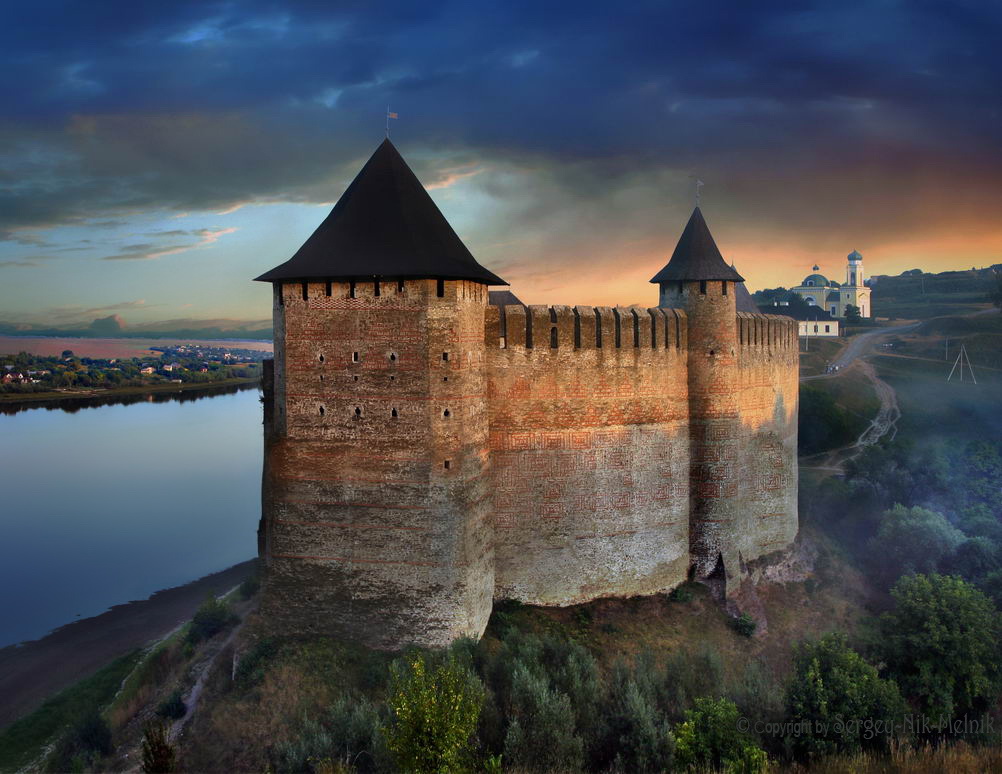
Khotyn Fortress is not just an old defensive structure on the banks of the Dniester. This is a place where history isn’t written in textbooks — it’s literally set into the stone. Mighty walls, tall towers, sweeping views over the river canyon and a real breath of the Middle Ages create an atmosphere that’s hard to compare with any other tourist spot in Ukraine.
The legendary stronghold of Bukovyna was, for centuries, a strategic point at the crossroads of trade routes and state borders. Empires changed here, cannons thundered, alliances were forged, and the fate of entire regions of Europe was decided. Today, it’s one of Ukraine’s best-known historic and architectural landmarks, popular with travellers, families with children, photographers, history lovers and film-makers alike.
So if you’re planning a trip across Ukraine and looking for somewhere to go at the weekend or a place to truly feel a medieval atmosphere, the fortress in Khotyn is an ideal choice. It brings together a grand history, striking architecture, the natural beauty of the Dniester Canyon and well-developed tourist infrastructure.
Why tourists should visit Khotyn Fortress
This place draws you in not only with its age. It’s easy to combine an educational break, walks through scenic spots and vivid impressions for the whole family. Adults admire the walls and listen to stories of battles, children imagine themselves as knights or princesses, and someone is always hunting for the perfect photo angle — as if they’re preparing a blockbuster cover.
Here, history doesn’t gather dust behind glass — it’s literally under your feet, in the stone, in the views above the Dniester and in that light feeling that a guard might step out from behind a tower any moment. It’s also a rare place where you can boost your history knowledge, take dozens of atmospheric photos and hit your daily step count without even noticing. Khotyn Castle knows how to blend serious historical grandeur with real, live эмоtions — no boring lectures, just a full-on immersion into the past.
The history of Khotyn Fortress — from ancient Rus’ fortifications to the battles of empires
The history of Khotyn Fortress is definitely not just one chapter — not even one volume. This landmark could easily deserve its own library, preferably with thick walls to hold the weight of all the events. For centuries, the destinies of states, ordinary people and warriors intertwined tightly here, and each of these silhouettes left its mark in stone for good.
Of course, we can quickly run through the key events and periods, but that would be only a drop in the ocean — and quite a stormy ocean at that. The full depth of this story is best left to historians and professional guides, who can tell it so vividly that even the walls seem to listen more closely.
But first, let’s take a short yet captivating journey through the key eras in the life of this legendary stronghold — a story spanning more than a thousand years and resembling a long-running historical drama with constant changes of scenery and rulers. Flags, languages, weapons and even armour fashions shifted here, yet the hill above the Dniester and the mighty walls of Khotyn remained a constant point of gravity for anyone who wanted to control these lands.
Every historical period left its own character on the fortress: some added to the walls, others strengthened the towers, some fought, and others tried to keep the peace — though usually not for long. That’s why the Khotyn defensive complex today looks like a stone chronicle: instead of pages — layers of masonry, and instead of chapters — architectural styles from different eras.
So next we’ll step into the past, one stage at a time: from the first fortifications of Kyivan Rus’ to the period of Moldavian rulers, the famous Battles of Khotyn, and the times when the fortress became part of great imperial stories. And believe it — it was never boring here. This stronghold has seen more drama than most historical TV series.
The first fortifications and the era of Kyivan Rus’
Archaeologists believe that the first defensive structures on the site of today’s stronghold existed as early as the 10th–11th centuries. Back then, these were simple fortifications controlling crossings over the Dniester and protecting trade routes. In plain terms, there was already “border control” here — just without passport stamps, but with very convincing arguments in the form of spears and bows.
Khotyn gradually became an important frontier point where the interests of different principalities met. Merchants carried goods, warriors carried their rulers’ ambitions, and local residents simply tried to live amid all this historical motion. Even then it was clear: whoever controlled this hill above the Dniester controlled far more than just a beautiful view.
Over time, the defences grew more serious — because the neighbours were not exactly modest in their military plans. That’s how Khotyn’s long story began as a strategic point on the map of Eastern Europe — a place many states wanted to keep “within reach”, preferably вместе with the walls.
The stone fortress of the Moldavian period
Khotyn stronghold truly flourished in the 14th–15th centuries, when these lands came under the rule of the Principality of Moldavia. That’s when wooden defences were gradually replaced with stone walls — because, as practice showed, wood burns nicely, while stone is far more persuasive in military arguments.
Powerful walls, tall towers and a complex system of inner fortifications were built, parts of which have survived to this day. The Fortress of Khotyn became ever more formidable: no longer just a fortified hill, but a true defensive complex that made one thing clear — it’s best to come here with good intentions. Better still, don’t come without an invitation at all.
In this period, the Khotyn citadel became one of the region’s key defensive strongholds. It controlled important routes, crossings and borderlands, and its walls gradually got used to being witnesses to big politics, alliances and no less громкие conflicts. It was then that the majestic image of the fortress took shape — the one we recognise today in photos, postcards and films.
The Battles of Khotyn and wars between states
In the 16th–17th centuries, the historic fortress of Khotyn found itself at the heart of major European politics. The Ottoman Empire, the Polish–Lithuanian Commonwealth, Cossack forces and later the Tsardom of Muscovy fought over it. The most famous were the Battles of Khotyn in 1621 and 1673, which had a significant impact on the balance of power in Eastern Europe.
The battle of 1621, in which the combined Polish–Cossack forces stopped the advance of the Ottoman army, became one of the largest events of its time. The Medieval fortress served as a key defensive hub then, and its walls withstood serious bombardment. Later, the fortifications were rebuilt, strengthened and adapted to new kinds of оружие time and again — history here literally “grew” layer by layer.
Under the rule of empires
In the 18th century, Khotyn changed hands between the Ottoman Empire and the Russian Empire. The fortress lost its role as a frontier castle and became a military base. Gradually its defensive importance declined, but the architectural complex survived thanks to the sheer massiveness of the structures and their distance from major industrial centres.
Today, the history of Khotyn Fortress can be felt not only in dates, but in the very structure of the site. Each period left its trace here — from medieval walls to later bastions. Walking around, visitors literally pass through different eras, even if they don’t notice it at first glance.
The architecture of Khotyn Fortress — defensive engineering and views above the Dniester
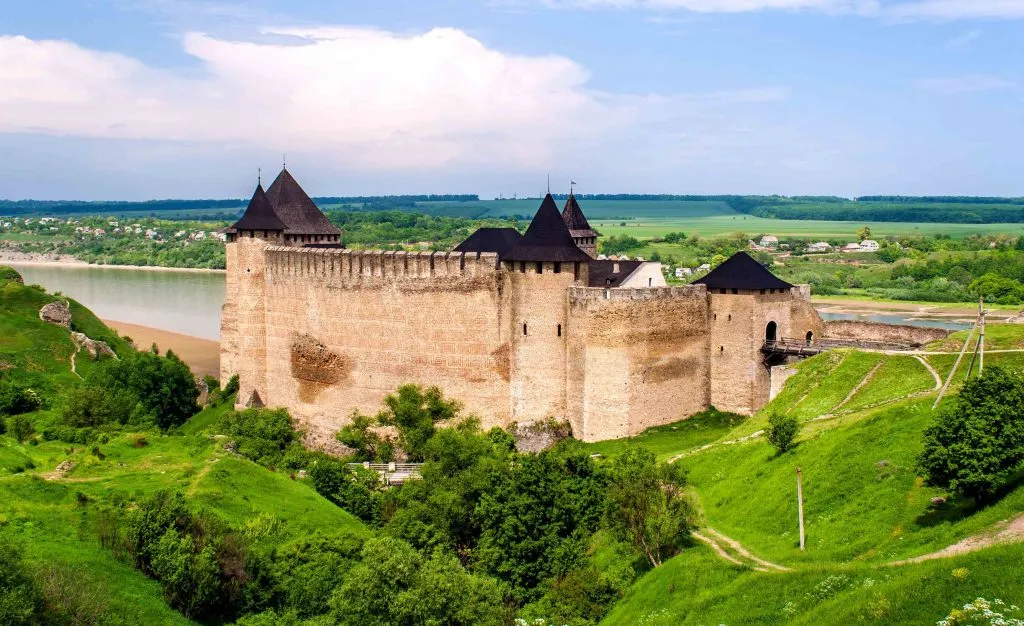
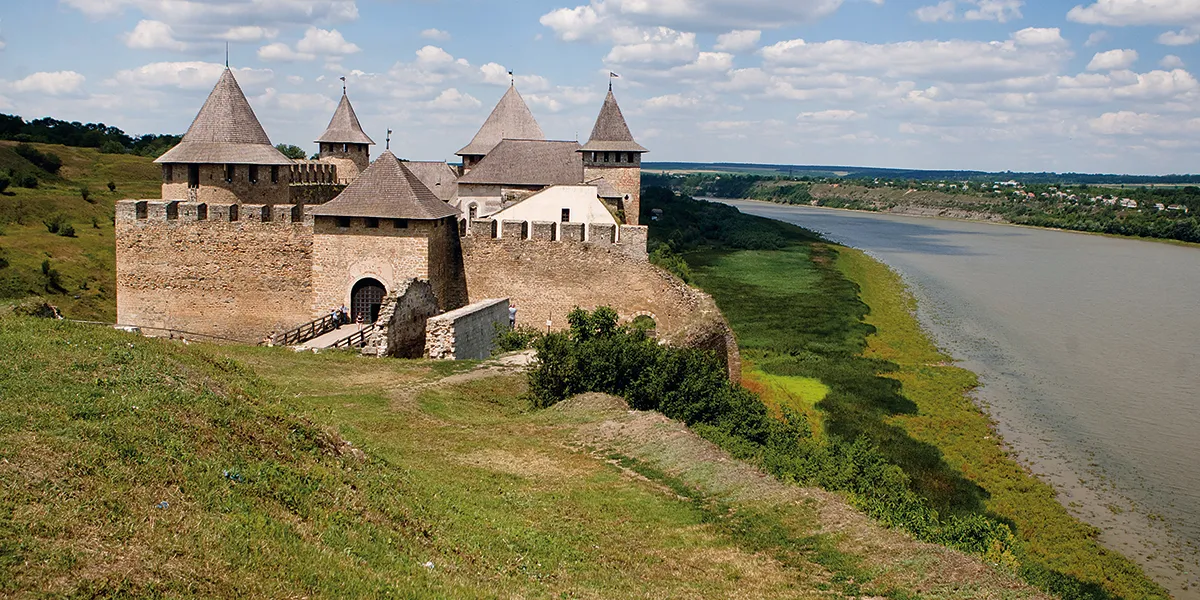
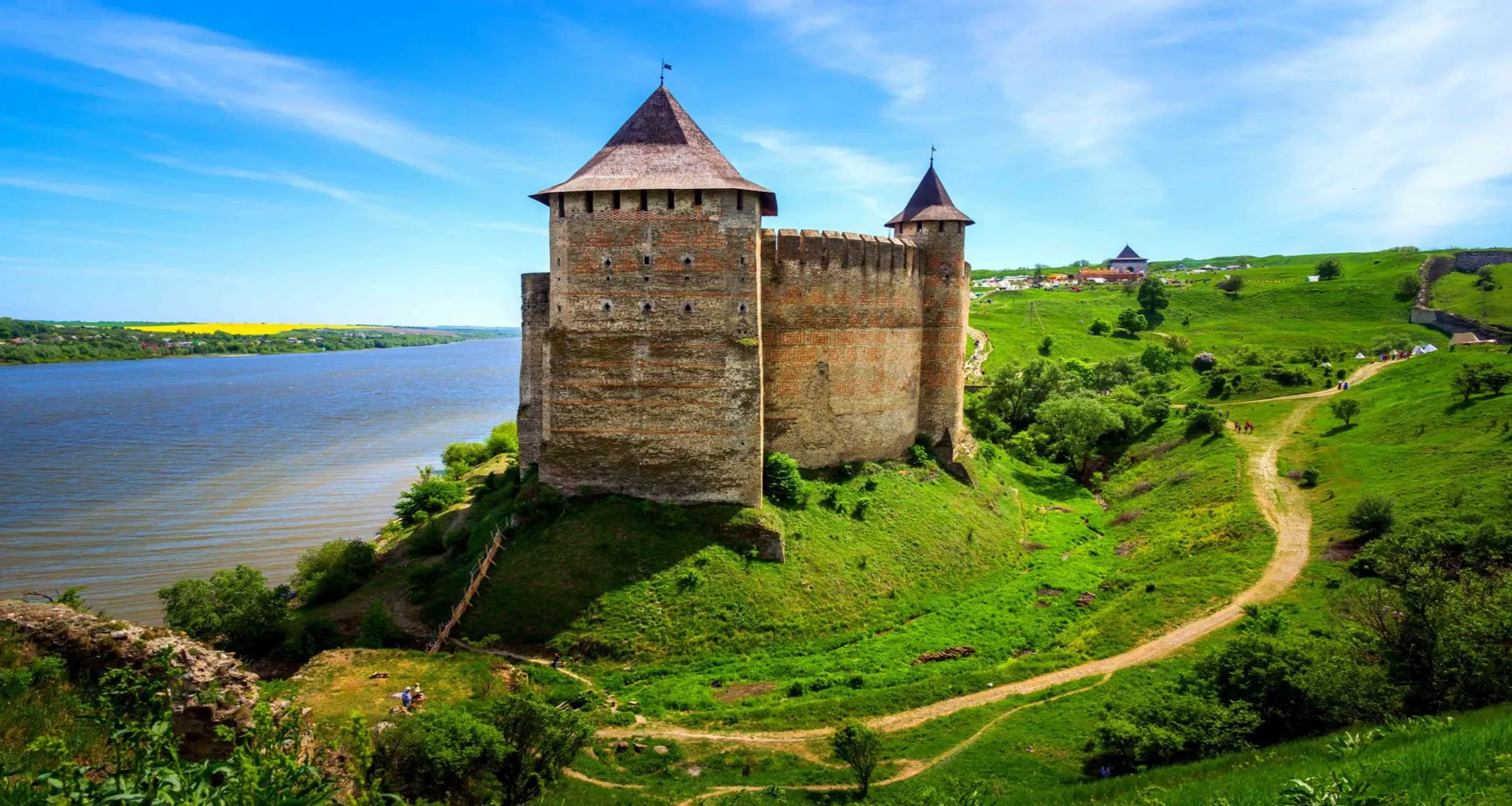
The architecture of Khotyn Fortress is a vivid example of how medieval engineering could combine practicality, defensive logic and even a certain sense of style. The fortress wasn’t built “for beauty”, yet today it looks so striking it can easily rival Europe’s most famous castles. All thanks to its thoughtful position, massive walls and harmony with the landscape of the Dniester Canyon.
Layout and defensive system
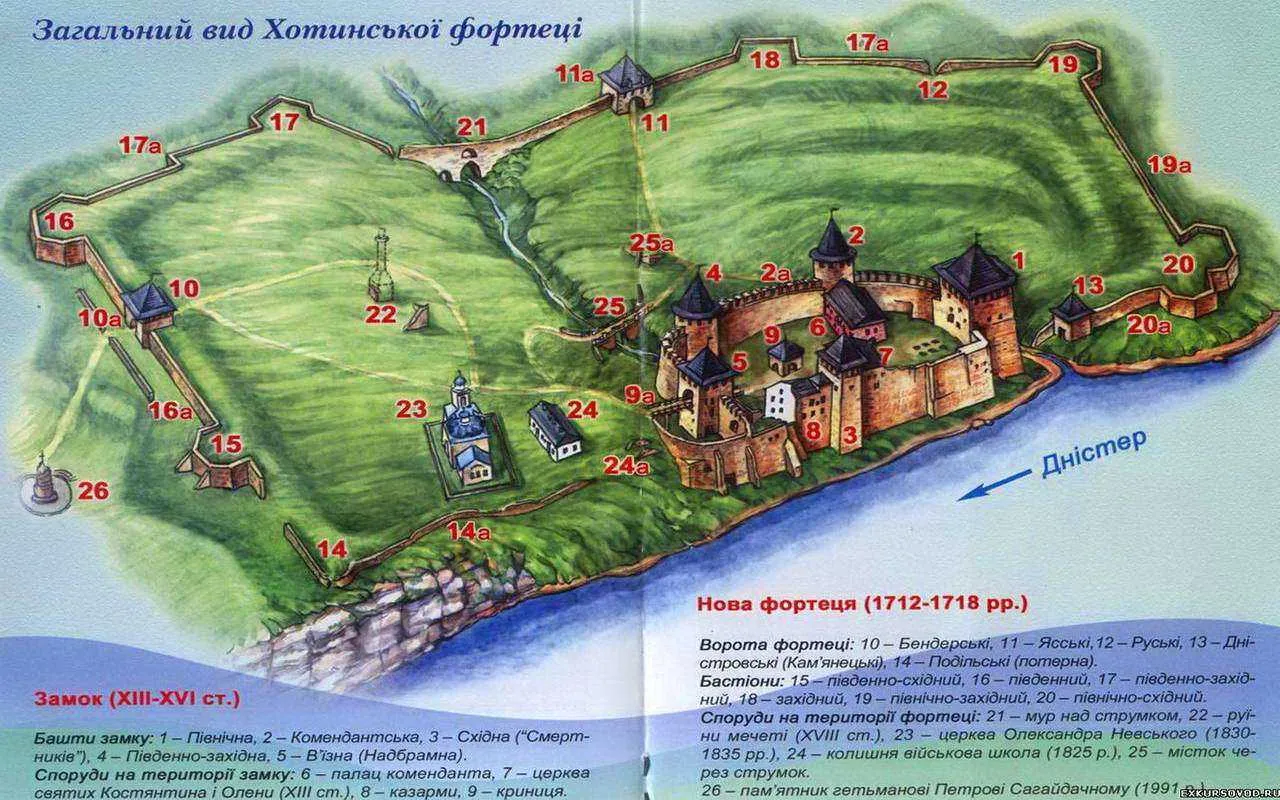
The complex consists of an inner castle (citadel) and outer fortifications. Walls up to several metres thick, tall towers and narrow passages created serious difficulties for attackers. In other words, the architects of the past understood perfectly: if guests arrive uninvited, it’s best to make their visit максимально “uncomfortable”.
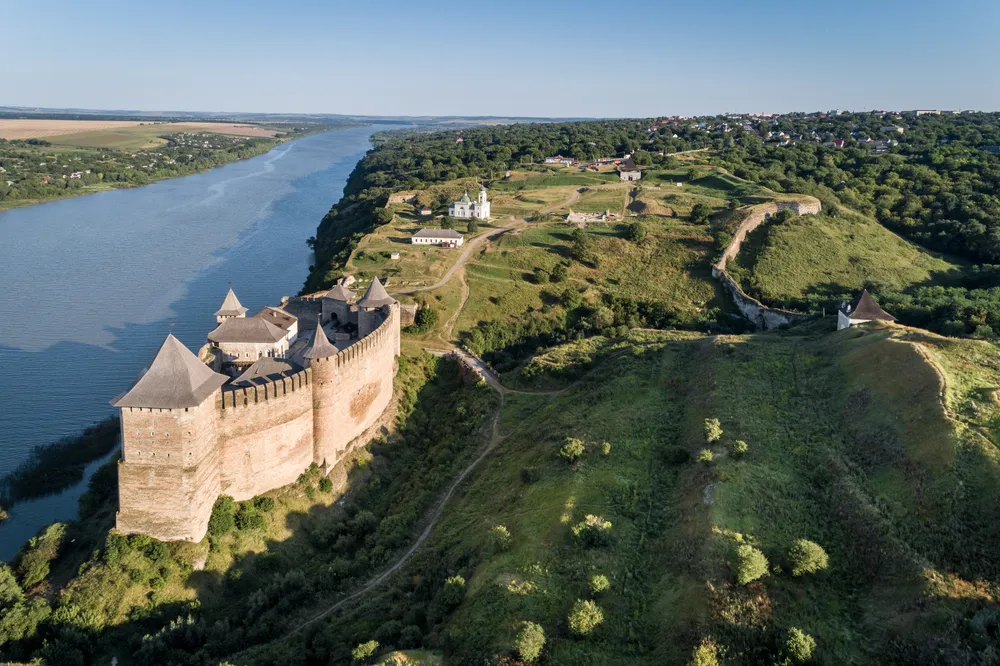
Khotyn’s medieval gem stands on a high bank of the Dniester, which in itself was natural protection. On one side — steep slopes down to the river; on the other — deep ditches and extra fortifications. This system made the stronghold hard to reach and allowed defenders to контролировать approaches from far away.
Towers, walls and the inner courtyard
Today, visitors can see several towers of different shapes and purposes — combat, guard and corner towers. Each had its own role in the overall defensive strategy. And they also offer the views that modern travellers cross hundreds of kilometres for — with no sieges, just cameras.
The inner courtyard has preserved the spirit of the Middle Ages: this is where utility buildings, living quarters and the famous deep well were located. Its depth still inspires respect — and a slight dizziness in anyone brave enough to peer inside.
All of this makes Khotyn Fortress not only an important historical monument, but also a unique example of defensive architecture. It’s easy to imagine how garrison life looked, how guards took their turns and how cannons thundered — although today the loudest sounds are usually excited турист exclamations and camera clicks.
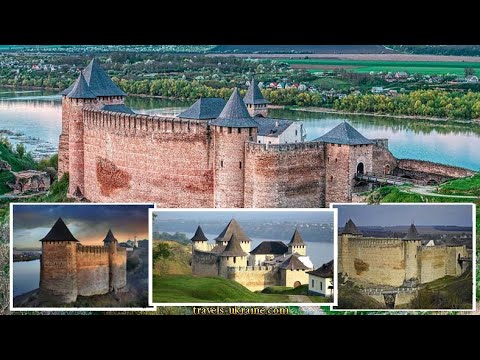
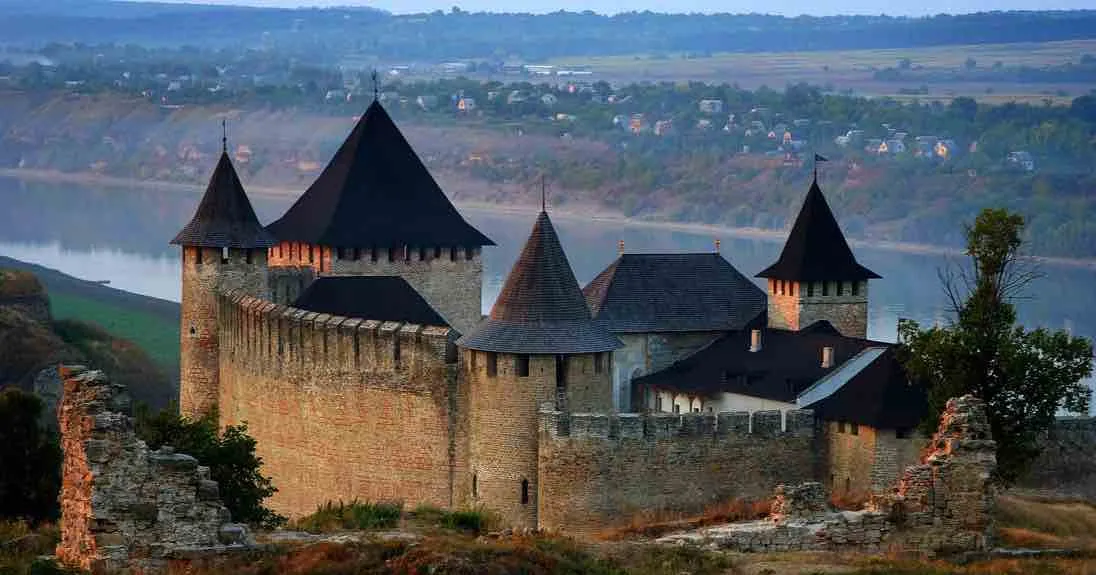
Photo and video gallery
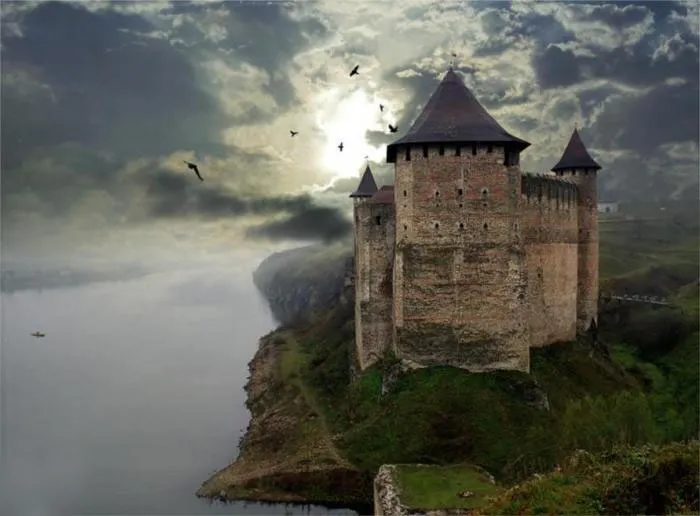
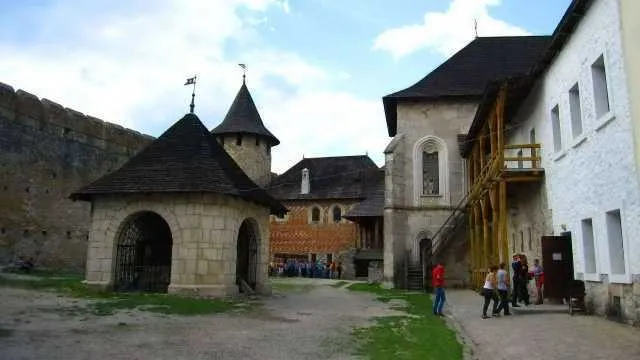
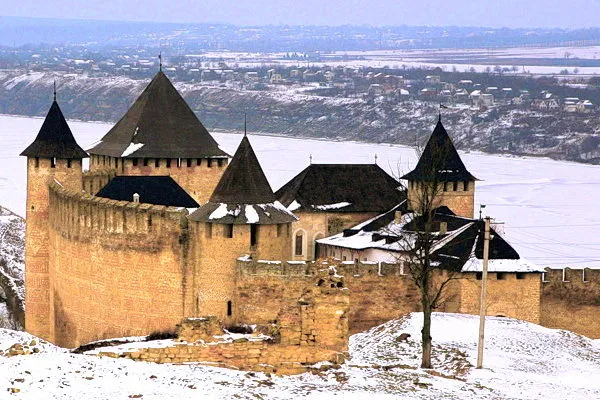
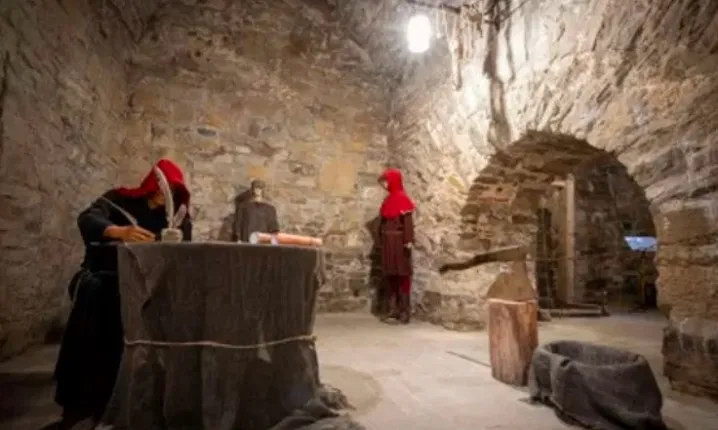
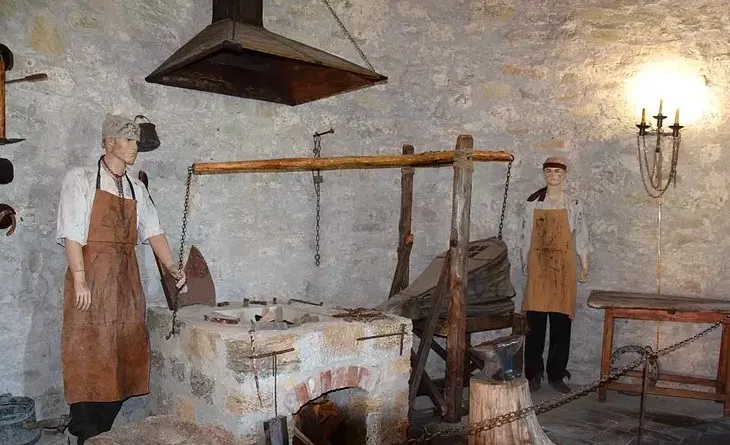
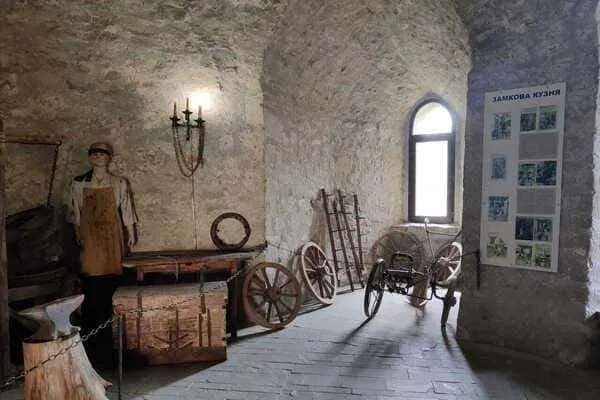
Khotyn Fortress — a quick guide for visitors
When planning a visit to Khotyn Fortress, it’s worth picturing the format of your trip in advance. This isn’t the kind of place where you “pop in for 10 minutes and run on” — it’s a full tourist attraction where it’s easy to spend a few hours without noticing, even if you’re not a fan of long history lectures and memorising dates.
Khotyn has a simple but time-tested magic trick: you walk in “just for a moment”, and you walk out with a full photo gallery, pleasantly tired legs and the feeling that the day was well spent. Add Dniester panoramas, unexpected tower viewpoints and thoughts like: “Right, one more круг — and then we’re definitely leaving.” The medieval fortress above the Dniester knows how to make you stay — and it does so with the dignity of a true historical landmark of Chernivtsi Oblast.
Type of tourist attraction
Khotyn Fortress is a national-level historic and architectural monument, an open-air museum complex and one of Ukraine’s best-known fortresses. In short, it’s a place where history isn’t behind glass — it’s all around you, and you can get closer to it than to exhibits in a regular museum.
It combines the functions of a museum, viewing platform, экскурсионная zone and a popular location for events and film shoots. Here you’ll see Khotyn guides with groups of visitors, photographers hunting for the perfect light, and film crews trying to pretend it’s the 15th century and nobody is checking their phone. In other words, this stone stronghold above the Dniester is wonderfully versatile: for serious history, for a great shot, and for a walk that makes you feel like you’ve stepped into the past.
How much time you need for a visit
On average, visitors spend between 1.5 and 3 hours here. Add a guided tour, unhurried walks along the walls and photo stops with Dniester views, and time flies by. People tend to linger longest when they’re trying to capture “that exact tower photo” they saw online — usually a bit of an “expectation vs reality” moment, but it doesn’t stop the effort.
And then there are those who solemnly say, “We’ll be quick, just a look,” and an hour later are debating which tower has the best view and whether to do another lap along the wall. This architectural monument in Khotyn has a strange ability to stretch time: you’re not rushing, yet by the end of the day you’ve done more steps than on a fitness hike.
Trip budget, accessibility and route difficulty
The fortress grounds are fairly comfortable for walking, but it’s worth remembering: this is a medieval structure, not a shopping centre. There are cobblestones, stairs, climbs up towers and narrow passages. So comfortable shoes aren’t just a recommendation — it’s friendly advice from those who have already made the mistake and know well that this ancient citadel on the Dniester bank can seriously tire you out.
Entry to Khotyn Fortress remains affordable for most travellers. Guided tours of Khotyn Fortress and some special events are paid separately. Extra costs may include souvenirs, a snack in the town of Khotyn or a trip to nearby attractions. A приятный bonus: the Dniester views are still free — and there’s no limit on how many photos you take.
Interesting facts and legends about Khotyn Fortress
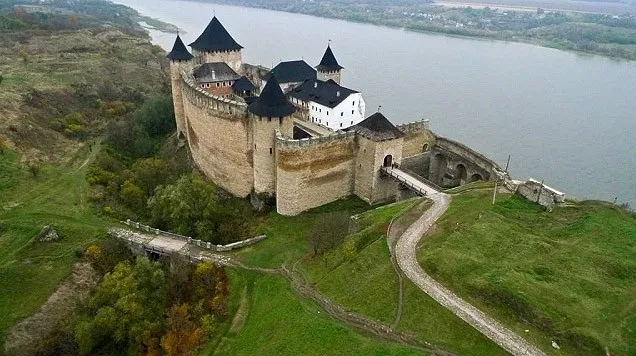
Khotyn Fortress is not only about dry dates and military chronicles. Over the centuries it has gathered legends, little-known facts and stories that guides tell with such expression, as if they themselves once stood on the walls with a sword in hand. Sometimes it feels as though these walls remember more than some archives — and in places, more than certain school textbooks.
Here every stone has its own “biography”, every tower its own character, and every visitor sooner or later starts looking at it all with respect… and a phone in hand. Because when history is this масштаб, you really want to take home at least a few “proofs” — in the form of photos, videos and a solemn pose against walls that have seen more events than most of us have plans for a year.
The legend of the dark stain on the wall
One of the most famous legends tells of a girl who was supposedly bricked into the fortress wall during construction so that the defences would stand stronger. Since then, a dark damp stain can be seen on one of the walls, believed to be her tears. Historians, of course, have more rational explanations — from особенностей of the stone to the effects of moisture — but admit it: the version with “medieval engineering magic” sounds far more atmospheric.
Guides love to linger by this wall a little longer, lower their voice and glance towards a tower — for dramatic effect. Visitors peer closely at the stain, trying to make out a face, and someone will cautiously check whether it moves. It doesn’t — but the impression stays with you for a long time.
Legends like these are an essential part of the atmosphere of old fortresses. They add emotion and mystery, reminding us that history isn’t only dates and battles, but also human lives, fears, hopes — and, of course, a little medieval imagination, without which no self-respecting stronghold would be complete.
A fortress that has appeared on film
Khotyn’s landmark has repeatedly served as a filming location for historical movies. Its walls have “played” medieval towns, castles and outposts of different countries. So as you stroll around, you can feel not only like a time traveller, but also like an accidental extra on a film set — just don’t start commanding an imaginary army.
Khotyn Fortress has appeared on camera in well-known titles, including historical and adventure films such as “D’Artagnan and the Three Musketeers”, “Taras Bulba” and other projects. Its textured walls look so convincing on screen they barely need any make-up — a true star of the historical genre.
They say some towers could уже have their own agents and demand better lighting on set. But jokes aside, it’s precisely thanks to its authenticity and масштаб that the Khotyn outpost has become one of Ukraine’s most popular locations for historical film shoots.
Khotyn Fortress on the list of the “Seven Wonders of Ukraine
The fortress rightly belongs to the “Seven Wonders of Ukraine” — a national project recognising the country’s most valuable historical, cultural and architectural sites. And in this case, the big title truly matches reality: you only need to see these walls above the Dniester once to understand it wasn’t awarded “just for show”.
The list includes sites of outstanding historical significance, with a well-preserved architectural appearance and strong tourist appeal. Khotyn Fortress ticks every box: it has survived centuries of wars, смена of states, реконструкции and even film shoots — yet it still stands as if it’s simply paused for a moment between eras.
It’s the combination of scale, authenticity and setting. The site isn’t just beautiful in itself — it’s also located in one of Ukraine’s most scenic places, above the Dniester Canyon. Together, it creates a real “wow” effect that hardly needs any filters — except maybe the sun catching the towers at the perfect moment.
Being one of the Seven Wonders of Ukraine not only highlights the fortress’s importance, but also helps preserve it for future generations. When a site is officially признано a “wonder”, it tends to be treated a bit more carefully — by visitors and by the state. Although, honestly, these walls look as if they decided long ago to stay in history for the long haul.
Events and festivals at Khotyn Fortress — when history comes alive
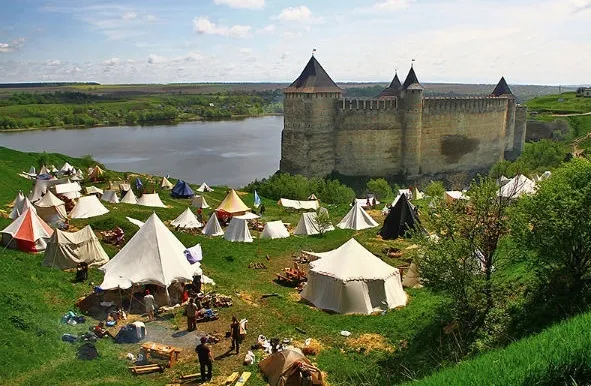
Khotyn as a tourist attraction is not only a silent witness to the past — it’s also a very much living venue for modern events. At different times of year, historical festivals, battle reenactments and themed celebrations take place here. And if on ordinary days the fortress tells its story calmly, during festivals it does so loudly, ярко and very convincingly.
On such days, the ancient walls seem to wake up: the courtyard fills with the sound of drums, the clank of armour and the smell of dishes inspired by medieval recipes (thankfully adjusted for modern hygiene standards). Visitors with cameras blend with reenactors so naturally that it can be hard to tell who’s a guest and who’s “temporarily from the 15th century”.
The atmosphere is especially striking in the evening, when light falls on the stone walls and the old stronghold takes on an almost fairy-tale look. In moments like these, it’s easy to believe that history isn’t only the past — it’s an event that returns from time to time to remind you of itself more loudly, more spectacularly and with great lighting for photos.
Historical festivals and reenactments
Some of the brightest events are historical reenactment festivals. On these days, armoured knights, medieval craftspeople, musicians and actors appear on the fortress grounds. You can watch staged combats, old dances and even hear how ancient instruments sounded. The vibe is such that it feels as if you’ve wandered not into a guided tour, but straight into “the 14th century — second right”.
Cultural events, concerts and seasonal highlights
Thanks to its unique acoustics and atmosphere, the historic outpost in Khotyn sometimes becomes a venue for concerts, theatrical performances and arts events. The stone walls create a special sound, and evening illumination adds drama. Just don’t expect a medieval guard to appear afterwards asking you to “keep it down after ten”.
Most events take place in the warm season — from late spring to early autumn. That’s when the fortress grounds turn into a large historical and cultural space where you can not only watch, but also take part: in мастер-классы, interactive zones and themed excursions.
If you’re lucky enough to visit Khotyn Fortress during a festival, the experience will feel completely different from an обычная walk. Here, history stops being just a story — it moves, it звучит, and sometimes it rattles armour quite loudly.
What to see near Khotyn Fortress — nearby attractions
A trip to Khotyn Fortress can easily turn into a packed full-day route — or even a lovely weekend mini-break. The surroundings of Khotyn are rich in natural scenery, historical landmarks and atmospheric towns where it’s приятно to stop for a walk or lunch with a view.
Everything here is arranged so well it feels as if someone carefully scripted the perfect tourist day: a bit of fortresses, a bit of canyons, a bit of old cobbled streets — and there you have it, a travel route that practically plans itself. You can wander from place to place at an easy pace, stopping for photos, coffee or the occasional solemn “wow, look at that view”.
This style of trip especially suits those who don’t like rushing. There’s no need to sprint from one landmark to the next — just move at a comfortable pace and let the landscapes and history do their thing: surprise you, calm you down and fill your journey with the feeling of a small adventure.
Kamianets-Podilskyi and the Kamianets Fortress
Just about 30 km away — and you’re in Kamianets-Podilskyi, one of Ukraine’s most beautiful historic towns. This is home to the famous Kamianets-Podilskyi Fortress, the old town with cobbled streets, and the canyon of the Smotrych River. It’s a perfect continuation of the “fortifications theme” if you’re craving even more walls, towers and history-filled photo backdrops.
Kamianets-Podilskyi is the kind of place where a simple walk turns into a small exploration: around every corner there’s a historic townhouse, a viewpoint or a cosy café overlooking the canyon. And the fortress, rising majestically above the river, looks as though it’s специально posing for travellers who already have a hundred photos from Khotyn on their phone — yet still insist, “Right, this one is definitely the last.”
Pairing two fortresses in one trip is a great way to feel the scale of defensive architecture from different eras and compare them side by side. After a route like this, even the word “tower” starts to feel oddly familiar — almost homely.
The Dniester Canyon and the town of Khotyn
The Dniester Canyon is one of the region’s most scenic natural attractions. Steep slopes, panoramic viewpoints and the winding ribbon of the river create landscapes that perfectly complement a visit to the fortress. It’s lovely to simply stroll, have a small picnic, or stand there for ages pretending you’re meditating — when really you’re hunting for the best photo angle.
Khotyn itself is a small but cosy town with local cafés, viewpoints and a riverside promenade. After exploring the fortress, it’s a nice place to rest, grab a bite and discuss which tower had the best Dniester view — and who took the most photos.
So, what to see near Khotyn Fortress is a question with plenty of answers. The region lets you combine history, nature and unhurried отдых without spending too much time on transfers. An ideal scenario for anyone who likes their trip around Ukraine to be насыщенная — but without exhausting марафоны.
Frequently asked questions about Khotyn Fortress
Where is Khotyn Fortress located?
Khotyn Fortress is located in the town of Khotyn, Chernivtsi Oblast, on a high bank of the Dniester River. It is one of the most famous historical landmarks in Western Ukraine.
How do I get to Khotyn Fortress?
The easiest way is by car via Kamianets-Podilskyi or Chernivtsi. You can also take a bus to the town of Khotyn and then reach the fortress on foot or by local transport.
How much time do you need to explore the fortress?
On average, visitors spend between 1.5 and 3 hours at Khotyn Fortress. If you plan to take a guided tour and photograph a lot, it’s worth allowing more time.
Is Khotyn Fortress suitable for visiting with children?
Yes, children usually love it thanks to the масштаб, towers and medieval atmosphere. However, it’s important to keep an eye on children on stairs, walls and viewing platforms.
Can you take photos inside the fortress?
Yes, photography for personal use is allowed. Khotyn Fortress is a popular spot for photo shoots thanks to its scenic views and medieval architecture.
Is it difficult to get around the fortress grounds?
The site has stone paving, stairs and climbs, so it’s best to wear comfortable shoes. People with limited mobility may find it difficult to reach certain parts of the complex.
When is the best time to visit Khotyn Fortress?
The best time is spring, summer and early autumn. On hot days, it’s better to come in the morning or closer to the evening for a more comfortable walk.
Is there anywhere to eat near the fortress?
In the town of Khotyn, there are cafés and places to eat where you can grab a snack or have a full lunch after your walk around the fortress.
What else is worth seeing near Khotyn Fortress?
Nearby, it’s worth visiting Kamianets-Podilskyi with its fortress, old town and the Smotrych River canyon, as well as viewpoint locations along the Dniester Canyon.
Conclusion: why Khotyn Fortress is worth visiting
The fortress in the town of Khotyn is a historic and architectural complex where the past isn’t “somewhere in books” — it’s right there: in the stone, in the wind above the Dniester, in the shadows of the towers, and in that special quiet that sometimes speaks louder than any speech. The site has lived through centuries, смена of states, sieges and restorations — and it has remained so impressive that even the most sceptical traveller instinctively stands a little taller, as if becoming part of history for a moment.
If you’re wondering what to see in Ukraine, where to spend the weekend, where to go with the whole family, or which spot to add to a Western Ukraine itinerary, a visit to Khotyn Fortress is a decision you won’t regret. It has everything: scale, views, legends, photogenic angles and that “wow atmosphere” that doesn’t need extra words.
Khotyn Fortress does one simple thing brilliantly: it reminds you that Ukraine has places of world-class calibre — and they’re closer than you might think. So plan your leisure route, pack comfortable shoes, charge your phone and leave a little time to “just stand on the wall and look into the distance”. These are the moments that stay with you the longest.
And if after the trip you feel a strange urge to rewatch a historical film or find the next fortress on the map — don’t worry. It’s a normal reaction: Khotyn has a way of inspiring new journeys.


No Comment
You can post first response comment.